iPhone app iPad app Android phone app Android tablet app More

Featuring fresh takes and real-time analysis from HuffPost's signature lineup of contributors
Meathead

GET UPDATES FROM Meathead
 

Why Raw Sprouts May be the Riskiest Food in Your Grocery Store

Posted: 06/11/11 02:30 PM ET

Everybody knows that undercooked ground beef is risky. But there is one innocent looking food that is probably riskier: Raw sprouts. Mike Doyle, director of the Center for Food Safety at the University of Georgia has been quoted as saying "I consider sprouts to be among the most risky foods sold at retail".

How could this be? How could innocent crunchy, juicy, delicious sprouts, full of nutrients and beneficial compounds, be dangerous? Because they are grown differently than any other vegetable, in an environment practically ideal for bacteria.

Let's get a close look at the problem and consider solutions.

In June 2011 vegetable sprouts from Germany contaminated with bacteria killed more than 30 people and sickened more than 3,000, and the outbreak has still not run its course.
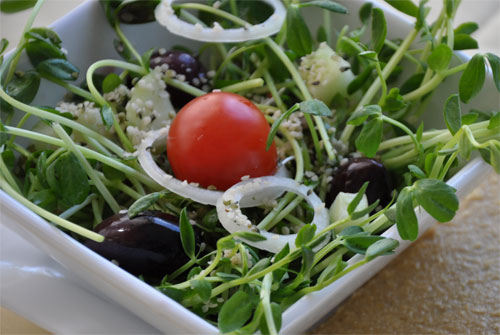
2011-06-10-sprouts.jpgThe survivors had more than tummy aches. Many of their kidneys shut down, many have anemia, many were hospitalized, many were near death, and there almost certainly were thousands more who never reported their illness and just gutted it out at home.

In Germany it was Escherichia coli O104:H4 on the sprouts. Sometimes it is Escherichia coli O157:H7, sometimes it is Listeria, sometimes it is Bacillus cereus, but most often it is Salmonella on sprouts. Tangy tasty radish sprouts also caused one of the world's largest food-borne illness outbreaks in Japan in 1996, sickening about 10,000 people (that we know of), many of them children. In the US there have been at about 40 sproutbreaks since 1990 according to Bill Marler, a personal injury attorney who specializes in food-borne illness.

Mark Bittman of the New York Times interviewed Dr. David Acheson, an MD who was the chief medical officer in Center for Food Safety and Applied Nutrition at the FDA. He said "only 5% of food-borne illness is linked to big outbreaks 95% is sporadic". He told me Bittman that there are 1.5 million cases of salmonella in the US each year, and few are linked to outbreaks. Marler and Doyle and the Center for Disease Control and other safety experts only know when there is an "outbreak", when many people get sick and when they go to a doctor and when their doctor does the right tests and then reports the results to the authorities.

Some probably thought they had the "24-hour flu". Well there is no such flu. Look it up in WebMD. Zero hits. If you had the flop sweats and were on the toilet for a day or three, you probably had a food-borne illness caused by something you ate perhaps as long as a week ago. That's one of the reasons it takes so long to trace the cause of an outbreak.

FDA says "If you purchase a sandwich or salad at a restaurant or delicatessen, check to make sure that raw sprouts have not been added".


What makes sprouts risky


More on safety


Food, knife, and grill safety. How to live to cook again and how to not kill your spouse, by accident that is. Important info on cooking burgers.


Meat temperature guide. Here are the optimum serving temps. The best table you'll find anywhere.

Thawing meat. How to defrost meat safely.

Does grilling pose a cancer risk? No. Not unless you do it badly. Read the facts.

Do nitrites & nitrates in hot dogs, pastrami, and lunch meats cause cancer? Read the facts.

Freezing & reheating leftover meats. I always cook more food than needed so nobody goes hungry. That means leftovers. Here's how to handle them.

Sprouts are seeds that have just begun to grow, usually less than a week old. Inside every seed is a "germ", a sort of a baby plant, waiting for water and warmth to germinate. This is not a bad germ. It is part of the seed. Sprouts are easy to grow, and many people do it at home, you just soak the seeds in warm water until the germ is awakened, then rinse the seeds daily keeping them wet, and preferably warm and dark. So how do they turn into high risk disease vectors?

Alfalfa is a grass, that grows just like your lawn, but in a big field, and when you don't cut it, it produces lovely lavender flowers that eventually are fertilized and go to seed. The plant reproduces itself by developing scores of new seeds per plant, and each seed contains the germ of another alfalfa plant. But the seeds can be contaminated right there in the field and it is pretty hard to prevent it.

The sources of contamination are myriad. Critters are a strong possibility. Birds flying over, rabbits munching on the green shoots, deer grazing in the field, raccoons, field mice, rats, even feral hogs can poop in the fields and it is impossible to prevent them. Heck, sometimes farm workers are the source. I know we want perfectly safe food for our children, but as long as food is grown outdoors it is impossible to prevent unwanted intruders.

Another possible source of pathogens is water. Rain is pretty safe, but irrigation may not be. Lakes, streams, and wells can host the bad guys easily. They can come from improperly treated human waste in sewage or seepage from septic tanks. It can come from runoff from livestock pastures, where rainwater mixes with manure and drains into the water supply. It can come from fertilizer made from manure that has not been properly pasteurized. And it is hard to pasteurize manure. Manure, of course, is the fertilizer of choice for organic farmers, so organic seeds may, in fact, be more risky than others.

It can be amplified in water tanks or hoses where the bacteria can continue to reproduce. The problem is greater in areas that have less control over pollution such as third world countries that sell to the US market.

Addendum: Treating Sprouts

Several readers have offered treatments for sprouts ranging from chlorine, to vinegar, to hydrogen peroxide, to ozone. And other readers ask them for the recipe.


My science sources tell me there is now way to eliminate contamination. These methods may reduce contamination, but they cannot eliminate it because much of it is actually within the fiber of the sprouts, not just on the surface. The only known 100% effective method is irradiation, and sprout lovers do not seem to be enthusiastic about this. Nor have I seen double blind taste tests about the impact of irradiation on flavor and texture.


Now think about this: If there was an effective treatment, don't you think the growers would be using it? They are facing extinction. Don't you think they would be doing everything possible?

Once the bugs are on the seed and in the seed, yes, they can get down into the seed where they cannot be washed away, they can survive in a dormant state for weeks. They can even get down past the shell and into the germ. Then the seeds are harvested, mixed together in hoppers, and thus the seeds of a single plant that had bird poop on it can be distributed widely among millions of clean seeds. They are often then bagged in cloth, and stored in warehouses or sent overseas in the holds of ships where mice and rats have a chance to do their business on the seeds


So why aren't things like celery seeds used in our potato salad dangerous? Because the microbial load, which means the number of microbes, is usually very small on seeds. Even if you ingest them, there are usually not enough, and they don't grow fast enough in our gut to do us any harm. Many spice companies, knowing that they sell a product that is easily contaminated, treat their seeds and leaves with a special grade of radiation that sterilizes the product.

The problem is when the microbial load gets heavy. When microbes reproduce in a lab, they can double in 20 minutes, so within a few hours they can reach a deadly level. And that's why sprouts are uniquely dangerous when compared to other vegetables. Sprouts are grown indoors in a warm room. The seeds are soaked in water for up to 12 hours. The seeds can absorb up to three times its weight in water in this first phases. The seeds and water are stirred often to make sure they are all soaking properly, so if there are unwanted bacteria in the soup, they are spread among the whole mass. Warm water speeds the germination of the seed. The problem is, warm water also awakens the dormant bacteria.

Sprouting systems are essentially incubators, and it is very hard to prevent microbes from growing. They've tried chlorinated water and other purifying systems with only limited success. The problem is that the bad guys get down past the surface into the flesh of the seed. Germs get into the germ in a manner of speaking. A solution may yet be found, and believe me, people in the sprout biz have tried just about everything.

Finally, the wet sprouts are bagged and shipped to stores. They are chilled to keep them from growing too large, and that inhibits both the sprouts and bacteria. But it doesn't kill them. If the truck's AC is on the fritz, if they sit on the loading dock a while, or if they sit outdoors at the farmer's market too long, things can start growing again. A food safety scientist I know calls the packaging a "culture chamber". According to the scientists at FDA "Rinsing sprouts first will not remove bacteria". And before you know it, people are falling face down in their salads.

Admittedly German authorities never found the smoking gun. All the contaminated sprouts had been eaten or destroyed by the time they got to the organic farm that probably grew them, but epidemiological research showed that it is highly likely that all the victims had eaten sprouts. Regardless, it doesn't diminish the fact that sprouts are risky, especially to children, the elderly, and the immune compromised.

Growing at home is only slightly safer

It is easy and fun to grow sprouts at home and there are scores of companies that sell kits. But the risk is only slightly less. You can start with an impressive range of tasty seeds. The first catalog I found offered this enticing array in their customer favorites list: Adzukis, alfalfa, almonds, amaranth, arugula, barley, broccoli, clover, cress, dill, fenugreek, garbanzos, garlic, groats, kamut, lentils, millet, mung beans, oats, peanuts, peas, pumpkins, quinoa, radish, rye, sesame, spelt, sunflower, and wheat. There are many more options.


But the procedure is the same: Soak, rinse, grow. The home sprouter is subject to the same concerns as the commercial operation: Contaminated seeds, ideal growing conditions for both sprouts and their unsavory passengers. And the risk isn't much lower if you buy from an organic farmer right around the corner whose kids go to school with yours and they are always immaculately groomed. In 1987, Harmon et al recovered Bacillus cereus from 57% of commercially sold alfalfa, mung bean, and wheat seeds.

The only reduction in risk is that you usually are growing small batches, so there is a slightly smaller chance that there will be a bad seed or three.

How big is the risk?

Some say that the risk is much less than eating burgers, but that's because we eat so much more hamburger than sprouts. And most of that is cooked properly. Nobody knows the odds for sure, but I'll guess that it is probably less than driving your car, and probably more than eating eating raw burger.


If this number of deaths and illnesses were caused by terrorists, governments and the populace would be willing to spare no expense to cure the problem. But many people who love sprouts seem to be in denial, touting their taste and health benefits, and as I have learned in writing about the subject, they are having difficulty understanding the real risk.

Whose fault is it and what can be done?

E-coli is more common in cattle than in sprouts. There are dozens of strains, and most are harmless, but some glom onto your intestines and grow and produce toxins. There are some, like Dr. David Katz, who want to place blame on the meat industry for this. But remember, runoff from livestock is only one potential source of the bug. Bambi, Porky, Bugs, Tweetie, Mickey & Minnie, and other cute little critters who refuse to use sanitary stations to do their business can easily be the source.


Marler told Bittman that "Maybe somewhere in the far distant past, before we started feeding grain to cows, these shiga toxins weren't in cows. And maybe because of a higher acid content in the gut these bugs evolved to become pathogenic. There isn't a lot of good science on this, and there have been studies that have gone either way in whether feeding grass to cows will create a lower level of pathogenic E. coli in their guts. What you can say is that cows fed DDGS [Distiller's Dried Grains with Solubles from ethanol production] may have a higher level than cows that weren't fed them. If you're anti-CAFO [Concentrated Animal Feeding Operations commonly called "factory farms"] and anti-corn subsidies, you jump from that study to 'get rid of this and you get rid of e-coli,' and it would be great if things were that simple but they're not."

But attacking the meat industry is not likely to solve the problem. We are not going to be able to ban meat or significantly reduce consumption. People love to eat meat and will not likely give it up in significant numbers. In fact, the trend is going the other way as meat consumption is rising around the world.

That cow has left the barn. E-coli is in the soil, and water. It likely has been there a long time, and it will not go away in the visible future.

The alternative to CAFOs is to grow livestock free in pastures where they can eat grass. But the all poop. We can't put cattle in diapers. And the microbial populations in that manure gets into the water table, rivers, streams, lakes, and wells.

Some try to blame big ag like ConAgra, ADM, or Monsanto, but the sad fact is that many of the sprout growers are small family operations. I fear they are in an endangered industry.

The FDA, which regulates sprouts, and the USDA which regulates meat, can mandate more controls on pollution and inspections. Marler proposes that sprouts be given the raw milk treatment: Have the Feds make them illegal for interstate commerce. Of course this will not keep them out of intrastate commerce or home growing, but it would go a long way to protecting the public. Not likely in this political climate where mandates are a dirty word, even if they save lives. Just before Republicans took control of the House, the Obama administration got a new Food Safety Modernization Act of 2010 through that will help with more funds for inspections, but Republicans want it repealed. Even so, the strain found in Germany is not on the wanted list in the US, and hardly anybody tests for it.

Another possibility is that groceries will stop selling sprouts. In May 2010, tainted alfalfa sprouts were sold by Walmart and 22 people got sick. Walmart should take the lead and remove sprouts from the shelves the same as they would remove risky toys.

Irradiation will clean them up, but surveys show the public clearly doesn't like the concept of irradiation, and, despite the fact that it is approved in more than 40 countries, there are some who argue it is dangerous, or that it alters the flavor and nutrition.

The one solution that is foolproof: Throughly cook your sprouts. Cooking kills the bad guys.

Will you still eat raw sprouts?

Now you have the facts. Still want to eat raw sprouts? Serve them to grandma and the kids? In the words of Dirty Harry "You've got to ask yourself one question. 'Do I feel lucky?' Well, do you punk?"


Photo by gleangenie

All text is Copyright (c) 2011 By Meathead, and all rights are reserved

For more of Meathead's writing, photos, recipes, and barbecue info please visit his website AmazingRibs.com and subscribe to his email newsletter, Smoke Signals.

Friend Meathead on Facebook


Follow Meathead on Twitter: www.twitter.com/ribguy

Everybody knows that undercooked ground beef is risky. But there is one innocent looking food that is probably riskier: Raw sprouts. Mike Doyle, director of the Center for Food Safety at the Universit...
 
 
  • Comments
  • 182
  • Pending Comments
  • 0
  • View FAQ
Comments are closed for this entry
View All
Favorites
Recency  | 
Popularity
Page: 1 2 3 4  Next ›  Last »  (4 total)
photo
HUFFPOST SUPER USER
mary896
Tea Loving Liberal
06:56 PM on 06/14/2011
Part of the modern, freakin' fast paced world is NOT making anything yourself. We want others to do it, we want it fast and NOW! Making and growing your own foods is WAY healthier, tastier, better for our planet and CHEAP!!!!! Grow your own sprouts folks.
photo
HUFFPOST COMMUNITY MODERATOR
hp blogger Craig "Meathead" Goldwyn
BBQ Whisperer/Hedonism Evangelist/AmazingRibs.com
11:30 AM on 06/15/2011
You have made this statement several times. Before you do spam us again, please tell me you read the article, especially the part that says that growing them at home is not much safer.
photo
HUFFPOST SUPER USER
mary896
Tea Loving Liberal
06:54 PM on 06/14/2011
Okay, one more time:
Grow your own sprouts in a large mouth canning jar using the metal ring and a piece of screen. I've been growing brocolli spruts (the healthiest I know of) for years. It's CHEAP, simple and if you use two jars in rotation, you always have these tasty little health packed goodies ready to eat. Take a pita pocket, spread some almond butter on and top with a big handfull of sprouts. Heaven on earth and NO BAD BUGS. :)
09:44 PM on 06/14/2011
I suggest you read the paragraph headed "Growing at home is only slightly safer" more carefully. As mentioned therein, if the contamination is in the seeds, growing them at home will not eliminate the pathogens. Unfortunately, the conditions required to sprout the seeds are the same conditions that the bacteria love, even if you sprout them at home.
09:55 AM on 06/15/2011
I grow my own sprouts and buy the seed from the Sprout House which has seed that I consider safe. I use a plastic growing tray that gets washed often.

You can believe what you want about the issues with sprout growing at home being almost as dangerous as getting them from a commercial grower. I don't believe that it's true. In fact, I just fed 40 people my "home-grown" sprouts yesterday, with no ill effects.

I do NOT eat sprouts that come from the supermarket. That's risky.

Do you eat meat? That's even riskier. But the beef industry won't likely tell you that.

We all get to make choices.
This user has chosen to opt out of the Badges program
Feanor
I want my jewels back.
01:13 PM on 06/14/2011
Life is dangerous. But on the list of risky things we do, eating sprouts is pretty far down there.

The reason we know that more than 30 people died from eating sprouts in Germany is because it is such a rare and unusual occurrence.

The really risky things people do - such as drive or ride in cars - kill so many people every day that it is not really news, unless they are Princess Diana or something.
photo
HUFFPOST SUPER USER
Beth Grierson
05:01 PM on 06/14/2011
"Mark Bittman of the New York Times interviewed Dr. David Acheson, an MD who was the chief medical officer in Center for Food Safety and Applied Nutrition at the FDA. He said "only 5% of food-borne illness is linked to big outbreaks 95% is sporadic"."

Translation, food poisoning happens a LOT more often than people realize. What's rare is the scope of the outbreak and the fact that we know about it.
This user has chosen to opt out of the Badges program
Feanor
I want my jewels back.
06:32 PM on 06/14/2011
Food poisoning causes about 5000 deaths in the US per year.
Automobile accidents, over 40,000.

Plus, everyone eats, every day. Not everyone drives every day.
12:33 PM on 06/14/2011
Don't buy it for a minute. This is part of a new meme being put out by a certain large ag co. to imply organic and naturally grown veggies are bad, GMO's are good.
12:25 PM on 06/14/2011
Raw ANYTHING is dangerous.

You can't cook the E. Coli out of a salad.

EAT STEAK!
photo
HUFFPOST SUPER USER
mary896
Tea Loving Liberal
06:51 PM on 06/14/2011
That's ignorant. And terrible for your health AND the planet. Knee jerk reactions won't get you ANYWHERE good.
photo
Flying Dutchman
Don't judge what you don't yet understand
06:34 AM on 06/15/2011
Ever heard of a dish called Carpaccio?
If raw anything is so dangerous, why on earth are there so many species eating anything raw?
09:07 AM on 06/14/2011
I wonder if soaking the seeds in a colloidal/ionic solution of silver would kill the bacteria without harming the seeds. That would be completely non toxic to us, but would kill any single celled organism. Soaking would get the solution into the germ section. Hmm.....
photo
HUFFPOST COMMUNITY MODERATOR
hp blogger Craig "Meathead" Goldwyn
BBQ Whisperer/Hedonism Evangelist/AmazingRibs.com
11:00 AM on 06/14/2011
Have you seen the price of silver lately?
08:09 PM on 06/14/2011
We're talking 10ppm silver ions. It costs pennies to make gallons of the stuff. I do think it would be a solution. Silver ions have acutally made plants grow faster and bigger as silver is non toxic to multi-cellular organisms but deadly to single celled ones.
photo
Flying Dutchman
Don't judge what you don't yet understand
06:36 AM on 06/14/2011
"But remember, runoff from livestock is only one potential source of the bug. Bambi, Porky, Bugs, Tweetie, Mickey & Minnie, and other cute little critters who refuse to use sanitary stations to do their business can easily be the source."

The EHEC bacteria that killed those people in Europe is a antibiotic resistant bacteria, just like DR Katz pointed out, that means that killing it with antibiotics is very hard and sometimes even impossible, that's the reason those people died, they couldn't get treated, makes sense doesn't it?

There are two places antibiotic resistant bacteria can and do develop;
1) Prisons in third world countries, inmates get sick and get treated with antibiotics but don't finish that treatment, bacteria that didn't get killed will become resistant.
2) Factory farms, healthy animals are exposed to antibiotics, it has the same effect as not finishing treatment, bacteria inside those exposed animals can get resistant.

This problem is way more complicated than some critters not using a sanitary station, especially when dealing with mutated bacteria. Those critters usually don't run around with antibiotic resistant bacteria in their bodies. It also is unlikely that some diseased inmates have been taking a crap in a bed of sprouts, so I guess that's not the source.. However, it's quite likely that infected manure has been used to fertilize the soil those sprouts were growing on. It makes way more sense than blaming critters for it.
photo
deepintheheartoftejas
Middle o/t Road = Yellow stripes & dead armadillos
08:46 AM on 06/14/2011
The single main reason antibiotic-resistant bacteria develop is not because of prisons or factory farms (per se), but simple over-user of antibiotics. The first penicillin-resistant bacteria showed up just a couple of years after penicillin began to be mass-produced. It certainly wasn't being given to prisoners or cows in the mid-40s.

Antibiotic drugs have a natural limited lifespan. And it certainly doesn't help whenever doctors reflexively prescribe them anytime someone comes into their office, even if it's viral infection or mere allergies. Overuse of them in factory farming is also a problem.
photo
Flying Dutchman
Don't judge what you don't yet understand
06:28 AM on 06/15/2011
"It certainly wasn't being given to prisoners or cows in the mid-40s."

I agree, however, nowadays it does happen, and happens way to often. In my country (the Netherlands) the export of cheap meat is very important to keep the GDP in balance, so everything threating that export has to be dealt with, also bacteria. The solution; over medicate every piece of livestock. Many experts and scientists do warn for the consequences, but the sector and it's political representatives try to evade the imminent. Profit out ways public health. It happened one and a half years ago with some sort of goat disease, our secretary of agriculture was more interested in keeping profits in check and totally underestimated the situation, the result; dead people, people who had nothing to do with goats of agriculture, let alone the huge profits made in that sector. I think it's important to point this out.
photo
HUFFPOST COMMUNITY MODERATOR
hp blogger Craig "Meathead" Goldwyn
BBQ Whisperer/Hedonism Evangelist/AmazingRibs.com
11:03 AM on 06/14/2011
I do not believe these were resistant e-coli. People died from the toxins they produced before the treatments had an effect. The toxins did little things like shut down kidneys and cause anemia. You are conflating two separate issues.
12:34 PM on 06/14/2011
It was widely reported this strain of ecoli was resistant to virtually all anti-biotics. They are, however, discussing a possible vaccine.
photo
Flying Dutchman
Don't judge what you don't yet understand
06:09 AM on 06/15/2011
Thanx for replying mr Meathead,

I didn't want to contradict your story, I felt the need to point out that the origin of those lethal bacteria is not a natural one. You, me, everybody carries E.coli bacteria in our guts, that's the place where they belong (don't smear them in your eyes though, they do not belong there), they make vitamin k, quite essential for our body.
In the recent case of E.coli outbreak in Germany, Europe, it was definitely a antibiotic resistant E.coli bacteria variant named Escherichia coli O104:H4 (EHEC), DNA research institutes in Europe and China confirmed that.
EHEC bacteria produce toxins, and the recent mutation found in Germany produced a lot of them, and was insensitive to antibiotics, that's what made it really dangerous.
photo
deepintheheartoftejas
Middle o/t Road = Yellow stripes & dead armadillos
10:28 PM on 06/13/2011
Oh! Since you're great about responding, I have a question! I've known about the dangers of sprouts for years, and always cook mine. Most of the time when I use sprouts, I use them in stir fries... However...

Is simply blanching them in boiling water for about 30 seconds sufficient? Should I go longer? Most of the sprouts I eat are soy bean or mung bean sprouts, so they're bigger than some sprouts.
photo
HUFFPOST COMMUNITY MODERATOR
hp blogger Craig "Meathead" Goldwyn
BBQ Whisperer/Hedonism Evangelist/AmazingRibs.com
11:04 AM on 06/14/2011
I cannot say for sure, but I think that 30 seconds in boiling water should do the job. The key is to get the sprout internal temp up to about 155 for at least 10 seconds.
photo
HUFFPOST SUPER USER
howeverfaraway
What a long strange trip it's been....
06:30 PM on 06/13/2011
How much do you have to cook them? I love them stir fried with snow peas, and I add them after the peas have begun to soften. I let them cook until hot, but still firm. Is that enough, or do I have to cook until soft?
photo
HUFFPOST SUPER USER
howeverfaraway
What a long strange trip it's been....
06:42 PM on 06/13/2011
I see you already answered the queston on the second page of comments. Thanks!
02:04 PM on 06/13/2011
Good article, thank you.
Ayla McIntosh
This comment has been removed due to violations of our [Guidelines]
theaustralian
to the far left of right wing democrats
10:52 AM on 06/13/2011
a little birdie told me that ground beef is also full of e.coli.
photo
HUFFPOST COMMUNITY MODERATOR
hp blogger Craig "Meathead" Goldwyn
BBQ Whisperer/Hedonism Evangelist/AmazingRibs.com
01:34 PM on 06/13/2011
It certainly can be! But we usually cook ground beef. We don't eat it raw. Cooking kills e-coli. We eat sprouts raw. That is a HUUUUGGGGEEE difference.
photo
deepintheheartoftejas
Middle o/t Road = Yellow stripes & dead armadillos
10:23 PM on 06/13/2011
Don't eat it raw? Not normally, but when you're in Belgium, just passing through, and looking over the menu for something you can eat and are confronted with a bunch of French dishes that you have no idea about.... and then you see "Steak Americain" and go "Aha!"

It was 1984, and I survived it--probably only because of the amount of beer consumed that night. Though I'm not up for trying the experience again.
09:00 AM on 06/13/2011
Meathead? Is that Michael Stivic?
photo
HUFFPOST COMMUNITY MODERATOR
hp blogger Craig "Meathead" Goldwyn
BBQ Whisperer/Hedonism Evangelist/AmazingRibs.com
01:35 PM on 06/13/2011
Guess again.
HUFFPOST SUPER USER
robert horwitz
08:54 AM on 06/13/2011
I'm not a real picky eater but though I do like some vegetables prepared some ways I have eaten sprouts and I can't think of anyway that anyone under any circumstances could prepare them that I would enjoy eating them. In fact if you put a gun to my head I wouldn't eat them. In a World where most folks feel badly about the endangerment of countless species this is one that mankind should actively work to eradicate.
photo
HUFFPOST SUPER USER
mary896
Tea Loving Liberal
12:00 PM on 06/13/2011
Veggies come from sprouts. All sprouts taste unique and different. You've probably only tried the 'bean spourts and alfalfa sprouts'. BORING. You can buy or grow radish sprouts for some peppery kick. My fave is brocolli sprouts. Light, airy and crispy with a hint of pepper. Sprouts have the highest concentration of nutrition per calorie of any food. Plus, GROW THEM YOURSELF, you'll have a cheap, tasty, mega-healthy veggie available year round and no grocery store needed. No illness either.
HUFFPOST SUPER USER
robert horwitz
12:18 PM on 06/13/2011
Thanks I didn't know that but they don't sound that great either.
photo
homer winslow
Truth in Beauty, Beauty in Truth
04:10 PM on 06/13/2011
Totally agree. Even the Boring sprouts taste better when fresh grown at home. We keep several sprouting jars going all the time. Radish sprouts are one of my favorites.
This user has chosen to opt out of the Badges program
photo
08:49 AM on 06/13/2011
This is a perfect example of why food needs to be irradiated for public safety. How many more people need to die, how much more of our food needs to be banned before the new ludites get over their fear of modern technology? We should be demanding irradiated food for the safety of all.
photo
homer winslow
Truth in Beauty, Beauty in Truth
04:10 PM on 06/13/2011
No, thank you anyway.
photo
HUFFPOST SUPER USER
sensimilla
Lead with your heart, and your mind will follow...
06:45 PM on 06/15/2011
no friggen way! I'll grow my own COMPLETELY before i allow irradiated food on my table. Just because they "tell" you it is safe, doesn't mean it is. It just means agripak lobbyists paid off the scientists and legislators to say it is.
This user has chosen to opt out of the Badges program
photo
08:01 PM on 06/15/2011
It takes just 4 cells of ecoli to kill a man. Your home grown food is at risk as well. Irradition is the only way to be sure unless the food is cooked.