
More

Featuring fresh takes and real-time analysis from HuffPost's signature lineup of contributors
Craig K. Comstock

Craig K. Comstock

Posted: November 23, 2010 12:46 PM

The cover of the current Atlantic promises to tell "why the future of clean energy is dirty coal," but the article is necessarily sparing with evidence that emissions from burning coal can be economically "sequestered" (or kept out of the atmosphere).

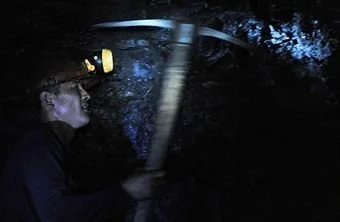
The author, James Fallows, argues that coal "will be with us" for a crucial while. Why? Because there's a lot of it (even if we pay attention to Richard Heinberg's careful assessment of reserves). Because the infrastructure for getting, transporting, and burning it already exists. Because it's cheap relative to other sources of power that can be expanded And because substantial indirect costs of coal are "externalized" (which is economist-speak for "not paid by the producer"). It should be added that the main subject of the article is not moving vehicles (oil) but generating electricity (coal, more than any other fuel).

An admirable journalist, Fallows in recent years has been breathing the coal soot and other pollution in China to report firsthand on life in the middle and burgeoning kingdom. Here he does the service of arguing that renewable sources of energy won't soon replace coal (which generates 43% of U.S. electricity; 70% of China's); and that it's in our interests to collaborate with the Chinese to develop ways to "sequester" the carbon dioxide released by burning coal. The article gives examples of collaboration that has grown since Bill Clinton's time in the White House.

Mentioning the concept of "underground coal gassification," Fallows gives the example of the Texas Clean Energy Project, but offers few details about new technology that has come out of collaboration with China, apart from the fact that they're building many coal-fired power stations and thus, to the extent they are trying to sequester greenhouse gas, could help us scramble up the learning curve.

Much of the public debate on energy in the U.S. boils down to unrealistic policies fighting with the marginally acceptable. On one side are those who refer to "demand" as if it's preordained and who assume we can safely and economically go on using as much energy as we do (though the mix may shift to bitumen from Alberta's sands, shale extracted by fraking, one of the varieties of nuclear power being hawked, natural gas, and the so far tiny category of renewable sources). On the other side are those who conclude that we have to conserve, "live more lightly," or as the transition movement says, plan for "energy descent." It is fair to add that many people are less than glowingly aware of the whole issue.

Unless techniques for sequestering carbon dioxide are both thorough and economical, the price of continuing to burn coal would be very high, at least if we credit scientific findings. These findings on climate change are widely denied by those with an economic stake in present energy sources, who take care to support elected officials ("campaign contributions") and who manipulate a news corps that often acts as if its job is not determining facts but simply quoting "both sides."

If sequestration can be made to work, and power plants are retrofitted, the climate won't suffer from the availability of cheap coal, but given the long planned lifetime of coal-fired power plants, here and throughout the world, time for proof is short: hope is not enough. Meanwhile, let's collaborate openly and energetically, with thanks to Fallows for highlighting this effort.

 
The cover of the current Atlantic promises to tell "why the future of clean energy is dirty coal," but the article is necessarily sparing with evidence that emissions from burning coal can be economi...
 
 
  • Comments
  • 12
  • Pending Comments
  • 0
  • View FAQ
Comments are closed for this entry
View All
Favorites
Recency  | 
Popularity
10:08 AM on 11/24/2010
Just like locating new nuclear power plants, nobody will want a carbon sequestration project in their town. What happens when it leaks? There is no evidence that the CO2 remains underground after it's placed there.

Richard Heinberg's assessment of coal reserves and his questions about how to sequester the CO2 from coal should be studied by everyone thinking about this issue. Go to the Post Carbon Institute and read his "Searching for a Miracle"
http://www.postcarbon.org/report/44377-searching-for-a-miracle) free online.
photo
HUFFPOST SUPER USER
dsws
No owning ideas. Limit only commercial use.
06:13 AM on 11/24/2010
The least-unlikely scenario for dealing with global climate change, by my guess, is to deal with climate directly. There are "butterfly effects": tiny changes can lead to big differences in the weather a few months later. With sufficient computing power, we may be able to identify changes that lead to more transport of heat up through the atmosphere at low latitudes, less transport from the tropics toward the poles, more reflection of sunshine from clouds, less humidity where it's just acting as a greenhouse gas instead of condensing, fewer of the most damaging hurricanes, and more snow where it will do the most good. The hard-to-predict variables within the atmosphere/ocean system have bigger effects than the exogenous variables like CO2 concentration, so it may be possible to intervene effectively.

More likely, though, we'll just wind up living with higher sea level, more droughts and floods, etc. At least until we start fertilizing the oceans to get more food and stuff out of them. Then we'll be losing carbon to the sediment, and burning coal like mad just to replace it. (We'll turn the entire sea floor beyond the continental shelves into a giant dead zone by doing that, but based on our past and present record it's a pretty safe bet that we won't care. The alternative will be a minuscule decrease in conspicuous consumption, where we all have to keep up with the Joneses at a slightly lower level of unrewarding consumer garbage.)
photo
HUFFPOST SUPER USER
khanti
Cultivator
09:35 PM on 11/23/2010
Giants like China and US will need to produce a huge amount of electricity to feed both their power hungry industries and consumers. The onus here is electricity. Both these Giants have large reserve of fossil fuel so their electricity production is dependable on these cheap fosil fuel. That cannot change overnight.
The best way out is to have a program to phase out fossil fuel by way of alternative sources. While solar, wind and even tides can be good clean source but are only be limited to certain city, province or even county. Hydro electricity is the best substitution again this method had been stretched to the limits.
So nuclear enregy with safe, modern reactors are the only way out. While China had taken steps to go for non fossil source like the hydro electric power generation from the three gorge dam, wind power for the Mongolia autonomous region and also agreement with France to build nuclear power reactors nevertheless this was done due to their rising richness. The worry is in the US, with the economic doldrums how will the country be less depend of fossil fuel in the future?
HUFFPOST SUPER USER
Genep34
stop the nightmare, end the GOP
05:46 PM on 11/23/2010
no such thing as clean coal - now or never.
05:43 PM on 11/23/2010
Hmm coal isn't just dirty because of CO2.
HUFFPOST SUPER USER
Lance Manling
02:44 PM on 11/23/2010
It would be irresponsible for this country to ignore its largest energy resource. In many ways coal could reduce dependency of foreign oil, but this is being held back by environmentalist based on the notion that coal is dirty so we cannot use it.
HUFFPOST SUPER USER
Genep34
stop the nightmare, end the GOP
05:47 PM on 11/23/2010
coal is dirty and it will never be clean - it should go the way of the dodo bird
HUFFPOST SUPER USER
Lance Manling
08:27 PM on 11/23/2010
Anything that is organic and burned has byproducts. The differences are relative.
photo
HUFFPOST BLOGGER
Craig K. Comstock
06:13 PM on 11/24/2010
Thanks for raising the issue of responsibility. If energy independence were the sole or most crucial issue, we could go on burning fossil fuels such as coal and oil without worrying about greenhouse gases that produce climate change, but unless we join those who dismiss climate change as a "hoax," do we not have a responsibility to the next generation?
HUFFPOST SUPER USER
Lance Manling
07:01 PM on 11/24/2010
Mr. Comstock,

I think the present generation does has some sort of obligation to future generations. The problem, as I see it is that how can we determine the wants and needs 50 or 100 years from now. When speaking about the issue of sustainability, the term is vague and easily manipulated.

I would not go as far as to say that climate change is a hoax but I would say that it is a subject that requires further research. Clearly there is not a scientific consensus on the subject. My opinion is further research is required before major monetary commitments are made by the country.

As with any energy source, there are always negative consequence with using that source. Some alternative energy sources are more developed than others. Again, further research will determine the correct path for the country.

Finally the topic of sequestering carbon dioxide/carbon is a technology which is still in its infancy. With further research, this technology will become cheaper and efficient.