Mahatma Gandhi was once asked by a reporter what he thought about western civilization, and in light of the uncivilized treatment by the British government of his nonviolent actions, he immediately replied, "Western civilization? Yes, it is a good idea." Likewise, if he were asked what he thought about "scientific medicine," he would probably have replied in a similar manner.
The idea of scientific medicine is a great one, but is modern medicine truly, or even adequately, "scientific"?
Modern medicine uses the double-blind and placebo-controlled trial as the gold standard by which the effectiveness of a treatment is determined. On the surface, this scientific method is very reasonable. However, serious problems in these studies are widely acknowledged by academics but remain unknown to the general public. Fundamental questions about the meaning of the word "efficacy" are rarely raised.
For instance, just because a drug treatment seems to eliminate a specific symptom does not necessarily mean that it is "effective." In fact, getting rid of a specific symptom can be the bad news. Aspirin may lower your fever, but physiologists recognize that fever is an important defense of the body in its efforts to fight infection. Sleep-inducing drugs may lead you to fall asleep, but they do not lead to refreshed sleep, and these drugs ultimately tend to aggravate the cycle of insomnia and fatigue, while conveniently (for the drug companies) tend to create addiction. Long-term safety and efficacy of many modern drugs for common ailments remains unknown, despite the high hopes and sincere expectations from the medical community and the rest of us for greater certainty.
The bottom line to scientific research is that a scientist can set up a study that shows the guise of efficacy. In other words, a drug may be effective for a very limited period of time and then cause various serious symptoms. For example, a very popular anti-anxiety drug called Xanax was shown to reduce panic attacks during a two-month experiment, but when individuals reduce or stop the medication, panic attacks can increase 300-400 percent (Consumer Reports, 1993). Would many patients take this drug if they knew this fact, and based on what standard can anyone honestly say that this drug is "effective"?
To get FDA approval to market a drug, most of the studies for psychiatric conditions last only six weeks (Angell, 2004, 112). In view of the fact that most people take anti-depressant or anti-anxiety medicines for years, can these short studies be scientifically valid? What is so little known and so sobering is that research to date has found that placebos are 80 percent as effective and have fewer side effects and a lot cheaper (Angell, 2004, 113).
Marcia Angell, MD, the former editor of the New England Journal of Medicine and author of the powerful book The Truth about Drug Companies, said it plainly and directly: "Trials can be rigged in a dozen ways, and it happens all the time" (Angell, 2004, 95).
She further expresses real concern about research reliability:
It is simply no longer possible to believe much of the clinical research that is published, or to rely on the judgment of trusted physicians or authoritative medical guidelines. I take no pleasure in this conclusion, which I reached slowly and reluctantly over my two decades as an editor of The New England Journal of Medicine. As reprehensible as many industry practices are, I believe the behavior of much of the medical profession is even more culpable.
Angell gives many examples of why reading research studies is not reliable:
A review of 74 clinical trials of antidepressants, for example, found that 37 of 38 positive studies were published. But of the thirty-six negative studies, thirty-three were either not published or published in a form that conveyed a positive outcome (Turner, 2008).
Conventional drugs used today are so new that there is very little long-term research on them. There are good reasons why a vast majority of modern drugs used just a couple of decades ago are no longer prescribed: they don't work as well as previously assumed, and/or they cause more harm than good.
Sadly and strangely, many physicians do not see that there is something fundamentally wrong with the present medical model. Once a drug is found to be ineffective or dangerous, doctors and drug companies simply find another drug that, at least initially, seems to have good short-term results, that is, until longer term studies establish that it doesn't work as well as assumed and/or is more dangerous. Although some people consider these failures as evidence of the wisdom of the scientific process, these problems are evidence of the limitations of a model of medicine that over-emphasizes a biochemical, biomechanical pharmacological approach to healing that ultimately seeks to "attack" disease, "combat" illness, and wage "war on cancer" or on the human body itself (Ullman, 2009) This paradigm can be invaluable in emergency medicine and help us survive certain infectious diseases, but for the large majority of people facing day-to-day chronic illnesses, it provides short-term results, serious side-effects, and stratospherically high costs.
The vast majority of drugs have a quick turnover in the medical marketplace, making them more akin to fashion more than science. Despite this recurrent pattern, doctors are prescribing drugs at record-breaking rates. Polypharmacy (the use of more than one drug concurrently for a patient) is becoming routine, even though there is very little evidence for the safety or efficacy of such practice. Some scary details about the serious problems that result from polypharmacy was discussed in an earlier article.
The primary reason that modern medicine fails so many times is that it tends to assume that symptoms are just something "wrong" with the person that then needs to be managed, controlled, or suppressed. Distinct from this medical viewpoint is an ancient and futuristic model that recognizes that symptoms represent DEFENSES of the body that should be nurtured and augmented as a way to treat disease processes. This latter approach to treating the sick is the naturopathic and homeopathic models of the West, the Ayurvedic approach of India, and the various styles of acupuncture from the East.
One hopes that the American public would greatly benefit from receiving the "best" and certainly most expensive care that modern medicine has to offer. However, this simply isn't true. In fact, the following statistics powerfully state the results from what some people mistakenly refer to as the "best" medical care in the world:
- According to 2006 data, the infant mortality rate in the United States was ranked twenty-first in the world, worse than South Korea and Greece and only slightly better than Poland.
- Data from 2006 also showed that the life expectancy rate in the United States was ranked seventeenth in the world, tied with Cyprus and only slightly ahead of Albania (InfoPlease, 2007).
Even "Good" Research is Often Bad
Medications that can allay pain or any type of serious discomfort are a great blessing, but let's not fool ourselves into believing that modern pain drugs are curative agents. In fact, although they provide blessed short-term relief, they create their own pathology, addiction, and demand for increasing doses over time.
Such pain relief is akin to unscrewing a warning light in your car. It does turn off that irritating light, though it does nothing to change the underlying problem.
However, when a drug company's scientific trial "proves" that their drug reduces pain, it then markets this treatment as "scientifically proven" and is able to sell the drug to doctors and to consumers with a marketable spin that makes them the big bucks. What is so brilliant about the cozy relationship that drug companies have with "science" is that most people have insurance these days and don't have to pay out-of-pocket for these "proven" drugs. Even though their (and our) insurance premiums sky-rocket, many employers distance the patient from the real costs of paying the bill.
It is so impressive how proving that one can use conventional drugs to "unscrew a warning light" can make big big bucks. My previous article noted that the combined profits ($35.9 billion) of the ten largest drug companies in the Fortune 500 in 2002 were more than the combined profits ($33.7 billion) of the remaining 490 companies together (Angell, 2004, 11). In a civilized world, no industry should have this amount of profit without being considered a criminal enterprise.
And let's also not fool ourselves into believing that conventional medical treatment is the sole method of providing pain relief. Back in 1983, I coined the term "medical chauvinism" as a common assumption that there is only one type of education with which to learn the science and art of healing or that there is only one type of health professional suitable to provide health care (Ullman, 1983a; 1983b). Despite its recent prevalence, medical chauvinism is an anomaly historically and internationally.
Equally problematic to medical chauvinism is "scientism," which is the common assumption that science is the only way to acquire knowledge about reality. There is a great amount of human experience that cannot be tested in a "double-blind and placebo controlled trial," and the lack of "scientific evidence" for these experiences does not make them invalid, unproven, or non-existent.
It is more than a tad ironic that there are extremely few double-blind and placebo-controlled trials testing surgical procedures, and yet, physicians and skeptics do not refer to surgery as "quackery." Surgeons appropriately note that it is impossible to conduct such studies because it is unethical to open up a patient for surgery to provide a "placebo surgery." And yet, these same physicians and skeptics use this offensive term, "quackery," with regularity and without parity, to a host of alternative therapies that have similar challenges to providing placebo treatment. How does one give a placebo meditation, and how can many naturopathic protocols be tested when the combined treatment regiment includes an herb, a vitamin, a homeopathic medicine, AND some type of physical therapy.
Scientism is a type of fundamentalism where science is the religion (Milgrom, 2010). A significant problem with scientism is that its believers are often even more arrogant than religious fundamentalists. Perhaps worse, they don't even acknowledge that their belief system is a belief system. This problem may explain the lack of humility of many doctors and scientists.
Understanding and Rewriting History
Who controls the past controls the future: who controls the present controls the past.
George Orwell, author of 1984
History provides us with diverse evidence about our past, but ultimately, only a small portion is told in history books. The interpretation of our past and the select use of facts and figures influence our understanding of what happened.
Historians commonly remark that whichever country wins a war or whichever worldview dominates another, the history is told through that country's perspective or that dominant point of view. This is certainly true in the history of medicine. For instance, medical historians commonly portray conventional medical practice of the past as barbaric and dangerous, and yet they have asserted that today's medical care is at the apex of "scientific medicine." The assertion that today's medical care is "proven" is a consistently repeated mantra.
History also tends to portray those who lose a war and who represent a minority point of view as having less than positive attributes. For instance, those physicians practicing medicine differently than the orthodox medical practice might be called cranks, crackpots and quacks. Such name-calling is a wonderfully clever way to trivialize potentially valuable contributions, whether or not one understands what these contributions really are.
Besides name-calling, practitioners of the conventional and dominating paradigm often spin facts to make the strong and solid features of a minority practice into something strange and weird. Homeopaths are accused of using smaller doses than used in orthodox medicine, and this is portrayed as homeopaths using doses that "theoretically" could not have any physiological effect. The medical fundamentalists purposefully ignore the significant literature that posits different theories about how homeopathic medicines work (Chaplin, 2010; Bellavite and Signorini, 2004; Homeopathy, 2010), and they (again) show their lack of humility because there are innumerable conventional medical treatments today for which the mechanism of action remains unknown. Even good skeptics know that we still do not understand how tobacco smoking causes cancer, and yet, no one advocates that we ignore this good health information just because the precise mechanism remains a mystery (Spector, 2010).
Accusations that homeopathic medicines could not possibly have any effect are made without knowledge, experience or humility. Such accusations simply become evidence of the accuser's unscientific attitude and his or her ignorance of the diverse body of basic scientific work on the effects of nanodoses of certain substances in specific situations.
The fact that homeopaths have used their medicines for more than 200 years is spun as evidence that this system of medicine has not "progressed." Another interpretation here is that the same homeopathic medicines used 200 years ago are still used today, along with hundreds of new ones, primarily because the old ones still work. The art of using homeopathic medicines is that they are not prescribed for a localized disease but for a syndrome or pattern of symptoms of which the localized disease is a part. It is clever how some people try to spin positive attributes in hyper-negative ways.
The fact that homeopaths interview a patient to discover his or her unique symptoms has been spun to make homeopathy seem like a quirky system that revels in inane facts about a patient. However, the detailed symptoms and characteristics of the patient that homeopaths collect may not be comprehended by those unfamiliar with the unique and critical nature of individualizing features in each person. Homeopathy provides a sophisticated method by which a patient's characteristics are applied to selecting and prescribing the most effective homeopathic medicine. Today, a large majority of practicing homeopaths use expert system software to help them prescribe their medicines in a highly individualized way to patients.
Homeopaths use the term "vital force" in a fashion similar to how acupuncturists use the term "chi" to refer to the underlying forces in a living system that connects mind and body. Although antagonists to these systems of natural medicine try to make them sound "woo-woo," homeopaths and acupuncturists confidently respond by asserting that living systems are not machines or simply bodies of chemical interactions.
I personally have no problem with "skeptics" of homeopathy, though most people who think of themselves as skeptics are really simply "deniers" or "medical fundamentalists." A skeptic is one who may not believe that homeopathy works, but che (my preferred alternative to s/he) strives to be familiar with the body of literature, not just the "negative" trials. Further, a good skeptic evaluates clinical trials, basic science trials, animal studies, cost-effectiveness comparisons, outcome studies, consecutive case reports, and epidemiological data. A good skeptic is simply a good scientist who evaluates a whole body of evidence.
Sadly, most deniers of homeopathy simply and directly lie about the subject. They commonly assert that "there is no research on homeopathy" or "there is no possible mechanism of action for how homeopathic medicines work". These fundamentalists KNOW that this is not true. Several of my previous articles have referenced this body of evidence (Ullman, 2009b; Ullman 2010a, Ullman, 2010b).
Some of the most recent reviews of research include one meta-analysis of clinical research published in the prestigious Journal of Clinical Epidemiology (Ludtke, Rutten, 2008) and two full issues of the peer-review journal, Homeopathy (2009, 2010) which reviewed basic sciences research.
What is so interesting to watch is the questionably honest or ethical behavior of these medical fundamentalists. They have been informed of the many studies and meta-analyses that have verified the clinical efficacy of homeopathic medicines, as well as hundreds of basic sciences trials, many of which have been replicated by other researchers. One review of replications of basic science work is of special interest (Endler, et al, 2010).
The deniers of homeopathy love to say that homeopaths "cherry-pick" the positive studies and ignore the negative ones. They then incredulously assert that we should ignore ALL of the positive trials. Such statements and viewpoints are profoundly misguided and simply daft. Will these same people say that Thomas Edison "cherry-picked" his positive study and ignored all of his "negative" studies in his efforts to invent electric lights? The (il)logic of the deniers is that they would recommend ignoring Edison's discovery because the vast majority of his studies were not positive.
Finally, medical history sheds light on what is and isn't real.
In 1832, the esteemed founder of homeopathy, Samuel Hahnemann, MD, was granted honorary membership in the Medical Society of the City and County of New York. And yet, 11 years later, the minutes of this medical society confirm that once this conventional medical association recognized the "major ideological and financial threat" that the growth of homeopathy represented, the medical society rescinded his membership (Gevitz, 1988, p. 102). It is the ideological and financial threat that homeopathy poses that motivates the antagonism to it, not whether it works or not.
In light of the fact that history tends to be written by the victors, this writer predicts that history will soon be rewritten.
References
Angell M. The Truth about Drug Companies. New York: Random House, 2004. This fact is extremely startling, but the source is reputable: Marcia Angell, MD, is former editor of the New England Journal of Medicine.
Angell M. Drug Companies & Doctors: A Story of Corruption. The New York Review of Books. 56, 1: January 15, 2009. http://www.nybooks.com/articles/archives/2009/jan/15/drug-companies-doctorsa-story-of-corruption/
Bellavite P and Signorni A. The Emerging Science of Homeopathy: Complexity, Biodynamics, and Nanopharmacology. Berkeley: North Atlantic, 2002.
Chaplin M. Water Structure and Science. London South Bank University. http://www1.lsbu.ac.uk/water/homeop.html and http://www1.lsbu.ac.uk/water/memory.html
Consumer Reports, High Anxiety. January 1993, 19-24.
Endler PC, Thieves K, Reich C, Matthiessen P, Bonamin L, Scherr C, Baumgartner S. Repetitions of fundamental research models for homeopathically prepared dilutions beyond 10-23: a bibliometric study. Homeopathy, 2010; 99: 25-36
Gevitz N. The Other Healers: Unorthodox Medicine in America. Baltimore: Johns Hopkins University: 1988.
Homeopathy (a peer-review journal published by Elsevier) (October, 2009)
Homeopathy (January, 2010)
Levi R. Science Is for Sale, Skeptical Inquirer, July/August 2006, 30:4, 44-46.
Ludtke R, Rutten ALB. The conclusions on the effectiveness of homeopathy highly depend on the set of analyzed trials. Journal of Clinical Epidemiology. October 2008. doi: 10.1016/j.jclinepi.2008.06/015.
Milgrom L. Beware scientism's onward march.
Roberts WH. Orthodoxy vs. homeopathy: Ironic developments following the Flexner Report at the Ohio State University, Bulletin on the History of Medicine, Spring 1986, 60:1, 73-87.
Spector R. The War on Cancer: A Progress Report for Skeptics. Skeptical Inquirer. January/February, 2010.
Turner EH, et al., "Selective Publication of Antidepressant Trials and Its Influence on Apparent Efficacy," The New England Journal of Medicine, January 17, 2008
Ullman D. Beyond Medical Chauvinism, California Living (the Sunday supplement magazine of the San Francisco Chronicle and San Francisco Examiner, August 21, 1983a, 4-7.
Ullman D. Medical Monopoly vs. Alternative Health Care, Social Policy, Summer, 1983b, 27-28.
Ullman D. 2009a. When Militarism 'Invades' Medicine...Doctatorship Happens
Ullman D. 2009b. The Epidemic Of 'Medical Child Abuse' And What Can Be Done.
Ullman D. 2010b. Homeopathic Medicine: Europe's #1 Alternative for Doctors
Walsh JJ. History of the Medical Society of the State of New York. New York: Medical Society of the State of New York, 1907.
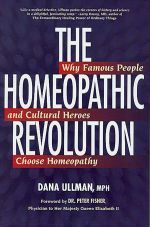
Dana Ullman, MPH, is America's leading spokesperson for homeopathy and is the founder of www.homeopathic.com. He is the author of 10 books, including his bestseller, Everybody's Guide to Homeopathic Medicines. His most recent book is, The Homeopathic Revolution: Why Famous People and Cultural Heroes Choose Homeopathy. Dana lives, practices, and writes from Berkeley, California.