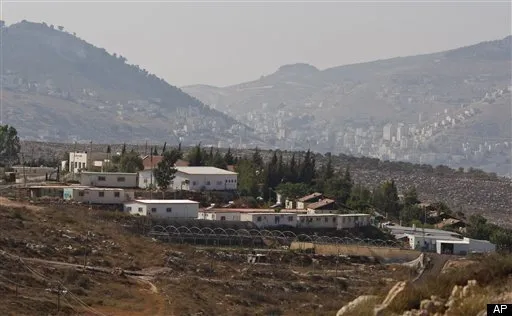
Palestinians have finally started to act in a different way. Instead of cursing the occupation, the new strategy is aimed at building up the desired Palestinian state. The idea is to force the Israelis to the negotiating table rather than beg them to come. The way to do that is to work for a state as if there were negotiations. This idea has been brilliantly developed by the Palestinian prime minister.
Salam Fayyad proposal for the de facto creation of a Palestinian state within two years is a brilliant idea that is hard to ignore or oppose it.
Fayyad's blueprint includes plans to end the Palestinian economy's dependence on Israel, unify the legal system and downsize the government. The idea, submitted by him after weeks of meetings with his ministers and staff, also involves building infrastructure, harnessing natural energy sources and water, and improving housing, education and agriculture.
An airport in the Jordan Valley, the reclaiming of the Qalandia airport and the creation of an oil refinery are some of the strategic ideas that are included in the Fayyad plan.
Talking to the press, the Prime Minister said that he wanted the American president arriving in Palestine on Airforce One, to an international airport, and not just a small airstrip.
Fayyad told the Times of London that he made the plan public in order to "end the occupation, despite the occupation". The former World Bank official kept his positive and determined attitude in his talk with the British paper.
"We have decided to be proactive, to expedite the end of the occupation by working very hard to build positive facts on the ground, consistent with having our state emerge as a fact that cannot be ignored. This is our agenda, and we want to pursue it doggedly," he told the Times.
Previous Palestinian efforts required Israel to quit the occupied territories as a prerequisite for peace. This allowed the Israelis and the international community to declare hundreds of peace plans, to which the Palestinian's strongest card was the power of saying no to anything that fell short of the publicly declared Palestinian position.
Unable to declare a counter-proposal, the hands of negotiators were tied and the public image of Palestinians was that of rejecting peace offers.
Perhaps the Bill Clinton-Ehud Barak attempt during the Camp David summit with Yasser Arafat stands as the most prominent example in which the Israelis boasted of their "generous offer" that was rejected by the Palestinian leader.
By taking the initiative and moving forcefully into a Palestinian-state-creation mood (rather than defeating occupation) the Palestinian prime minister has been able to keep the accepted Palestinian pre-June 1967 borders while appearing to all as a moderate leader. If the talk is about a de facto state declared by one side, Palestinians are not obliged to make border compromises. If the other side wants compromise, it must show serious intentions about peace in the negotiating room and not just in public declarations.
Fayyad stressed the idea of a de facto state rather than a unilateral declaration of statehood because of the existence of a congressional resolution (H CON RES 24) of the 106th Congress "expressing congressional opposition to the unilateral declaration of a Palestinian state and urging the president to assert clearly United States opposition to such a unilateral declaration of statehood".
Fayyad's two-year plan of a de facto state sounds much more realistic than Bush's Annapolis promise of an independent state within one year. By putting a two-year ceiling, the Palestinian leader requires Palestinian institutions to work effectively and efficiently, but also puts the ball squarely in the Israeli court where lack of progress in the peace talks will cost the Israelis a heavy price, namely having to accept a reality on the 1967 borders.
Politically, it will be difficult for radical Palestinian groups, whether nationalist or Islamist, to oppose this plan. The Fayyad action plan doesn't compromise on Jerusalem or the right of return and is in line with the consensus issues agreed on by Palestinians.
The methodology of reaching statehood is also interesting here. Coming after the Fatah conference -- shifting from armed resistance to popular non-violent resistance -- the Fayyad plan provides a clear, doable alternative to what President Mahmoud Abbas has opposed, namely the "militarisation of the Intifada and the 'senseless' rockets".
Even Israelis will have a hard-time publicly opposing this plan. It meets rather than contradicts Israeli Prime Minister Benjamin Netanyahu's calls for an economic peace while exposing the futility of continuing any settlement activities in areas that are the focus of this plan for a de facto Palestinian state.
With this plan, Fayyad has clearly separated what is required of the civilian leadership (Cabinet) and what is expected of the political (presidency).
This is a brilliant plan that works with or without Israeli cooperation. If the Israelis want a negotiated settlement, the plan gives negotiators two years to reach it. However, if the Israelis drag their feet, a Palestinian state will exist in reality by then.
Once these tangible elements of a genuinely viable Palestinian state come into being, all that will be needed is the political will to declare statehood and enjoy worldwide recognition.
Follow Daoud Kuttab on Twitter: www.twitter.com/daoudkuttab
Amjad Atallah: Hamas vs. the Fundamentalists
There should be a reconsideration of how and when the US can find common cause with nationalist Islamist groups willing to condemn violence against civilians to promote long term US goals for the region.
Heavy price? Like it's a heavey price for a car thief that he return a car he's stolen?
Whatever the justness of the process and plan adopted, it was as much an international endorsement of a Palestinian as well as Jewish state. That Palestinians--in the form of unelected leaders--many from Arab states--not Palestinians, rejected that edict as beign inherently unfair. But the UN gave its imprimatur and decision to accept of a Palestinian state. There could be no "unilateral" declaration of statehood given UN 181.
Get a grip on reality.
And who gave congress the right to veto a Palestinian state? Who made them the rulers of the universe anyway?
Americans need to get their hands off them and look at the real world.
israel is a rogue non-state that has been fostered and nurtured by morons on Wall street and in Congress for far too long.
While ever the US continues this they will never regain any moral authority, not that they have had much in the last 65 years.
Irrespective of what political settlement is ultimately embraced, Palestinians need a unified strategy for confronting and overcoming Israeli racism, apartheid and oppression.
Palestinians have only two choices before them, either to continue to evade the struggle, as some have been trying to do, or to summon the collective national resolve to engage in it.
The latter option does not necessarily entail a call to arms. Clearly Israel has the overwhelming advantage in this respect in both conventional and unconventional (nuclear) weapons. Just as obviously, neighbouring Arab countries have neither the will nor ability to go the military route.
However, the inability to wage war does not automatically mean surrender and eschewing other means to wage struggle.
The Rest:
http://www.wearewideawake.org/index.php?option=com_content&task=view&id=1369&Itemid=223
Reality check. Israeli Arabs whom you're quick to claim as yours are not so quick to embrace you. Ironically enough they want NO part of Palestinian rule. Ditto for Jerusalem Arabs. Unsurprisingly, they and thousands Arabs who desperately try to get Israeli citizenship, prefer what you call Israeli "discrimination."
Why? Because they can see thru' the speeches and know that Israeli democracy, social benefits accorded to ALL is far, far better than what Arabs ( P-nian and otherwise) call freedom.
Reality always has a way to infringe on cute speeches.
http://www.1948.org.uk/partition-and-the-law/
Under International Law, Palestine, throughout the Mandatory period, was, therefore, to receive administrative assistance and advice from the Mandatory to help it set up its own government. Palestine already had its fixed boundaries, its government institutions, its own currency and, in 1934, its national anthem.
http://www.youtube.com/watch?v=8ajDgudMC18&feature=related
http://www.1948.org.uk/picture/palestine_currency010.jpg?pictureId=2905602&asGalleryImage=true&__SQUARESPACE_CACHEVERSION=1249924209945
http://www.1948.org.uk/picture/palestine_currency008.jpg?pictureId=2905600&asGalleryImage=true&__SQUARESPACE_CACHEVERSION=1249924250623
Palestine’s legal position under International Law was clear: it was a provisionally independent state receiving administrative assistance and advice from the Mandatory. The sovereignty was vested in the people of Palestine. It was a dormant sovereignty exercised by the Mandatory power on behalf of the people of Palestine.
Article 28 of the Mandate stipulated that at the end of the Mandate, the territory of Palestine would pass on to the control of ‘the Government of Palestine’. The termination of the Mandate on 15 May 1948 was to signal the birth of a free and sovereign Palestine in fulfilment of Paragraph 4 of Article 22 of the Covenant of the League of Nations. It was supposed to pave the way for the establishment of an independent and sovereign government in Palestine without the intervention of either the United Nations or any other foreign government for that matter.
“The trouble is that you come into the hypothetical assumption that it's *your* car. But the land didn't *belong* to the Palestinians, and it wasn't theirs.”
Part 1
After the end of WW1, at the Paris Peace Conference of 1919 (PPC), the principles of nationality and self-determination of peoples was advocated by President Wilson with two dozen other world leaders marking the beginning of the end of Colonialism.
The PPC decided to recognise the territories under the mandatory system as “provisionally independent nations subject to the rendering of administrative advice and assistance by a Mandatory until such time as they are able to stand by themselves”. It follows from this phrase that the mandatory mission is not intended to be prolonged indefinitely, but only until the peoples under tutelage are capable of managing their own affairs.
Class A mandates (Syria, Palestine, Iraq, Lebanon and Transjordan) recognised the peoples of these territories to have reached advanced stage of development and their independence could be recognised once they have achieved a capacity to govern themselves. It is universally and legally accepted that sovereignty in the mandatory territories lie in the inhabitants of the territory in question (Article 22 of the Covenant of The League of Nations).
Notice Palestine and Transjordan are two separate territories.
"Article 28 of the Mandate stipulated that at the end of the Mandate, the territory of Palestine would pass on to the control of ‘the Government of Palestine’. The termination of the Mandate on 15 May 1948 was to signal the birth of a free and sovereign Palestine in fulfilment of Paragraph 4 of Article 22 of the Covenant of the League of Nations. It was supposed to pave the way for the establishment of an independent and sovereign government in Palestine without the intervention of either the United Nations or any other foreign government for that matter."
At the time of thePPC the Jewish population of Palestine was 65,000
10% of the total population.
The British Government had changed its mind on the establishment of a jewish homeland.
The White Paper of 1939 stated the following:
1. “The proposal of partition recommended by the Royal Commission, namely the establishment of self-supporting independent Arab and Jewish states within Palestine, has been found to be impracticable.
2. His Majesty’s Government now declares unequivocally that it is not part of their policy that Palestine should become a Jewish state.
3. The object of His Majesty’s Government is the establishment within 10 years (i.e., by the end of its Mandate) of an independent Palestine State…in which Arabs and Jews share in government in such a way as to ensure that the essential interests of each community are safeguarded”.
If sucessful, lthis may re- create a positive vibe with Israelii electorate-- THE most important factor in this paradigm.
Now if only Arafat could've understood this...8 years of pain could'vbe been avoided..
Now about those Swiss accounts.....
.
"Fayyad's blueprint includes plans to end the Palestinian economy's dependence on Israel, unify the legal system and downsize the government. The idea...also involves building infrastructure, harnessing natural energy sources and water, and improving housing, education and agriculture."
Exactly how do they pull this off? With the existing aid they've been receiving? And isn't this what they should have been doing all along?
It also sounds like a fantasy because the very reason they're still stateless is because so many Palestinians refuse to recognize Israel's right to exist. How do you change that attitude, and if you don't, how does this force Israel to the table?
Seriously--I'm not taking sides, but I just don't get it.
With a shift in focus and attitude they can now start building up a stable economy and a self-sustaining government which will force Israel to recognize them. What's more, is if this works, and they can make a peaceful revolution that actually helps their people, if Israel does anything to harm or hinder them they will be the bad guys, internationally. No more tit for tat. End the attacks on Israel, build a nation, end the cycle.
My hopes are with them.
How was the PA "unable." That's nonsense. "Unwilling" appears to be more accurate.
In any event, it is good for peace, for the PA and for Israel that the PA is taking this step. Transitioning from a resistance movement to a governing institution is difficult but necessary.
But ultimately the PA still will need to find the will, courage and commitment to make a counter-proposal, if this conflict / tragedy is to end. Saying "No" is not enough.