iPhone app iPad app Android phone app Android tablet app More

Featuring fresh takes and real-time analysis from HuffPost's signature lineup of contributors
Darell Hammond

GET UPDATES FROM Darell Hammond

Is Bullying Getting Worse? Four Preventative Actions for Parents & Schools

Posted: 10/26/10 04:04 PM ET

It's no fun to be bullied. Wherever there is a schoolyard, there is likely to be a bully -- to some extent, dealing with the schoolyard bully is as much a part of growing up as losing baby teeth or memorizing multiplication tables.

But parents and teachers worry that today's schoolyards boast more bullies, and that these bullies are becoming more vicious. At the Federal Bullying Prevention Summit in August, Secretary of Education Arne Duncan remarked:

"One out of nine secondary school students, or 2.8 million students, said they have been pushed, shoved, tripped, or spit on during the last school year. Another one-and-a-half million students said they were threatened with harm, and one million students reported they had their property destroyed during the school year."

The recent suicide of Rutgers student Tyler Clementi has put cyber-bullying in the national spotlight, proving that peers can be just as vicious online as offline.

And it's not just parents of older kids who are worried. The New York Times recently reported that "according to a new Harris survey of 1,144 parents nationwide, 67 percent of parents of 3 to 7 year olds worry that their children will be bullied; parents of preschoolers and grade-school-age children are significantly more likely to worry than parents of teenagers."

The Times goes on to say:

"One recent survey of 273 third graders in Massachusetts found that 47 percent have been bullied at least once; 52 percent reported being called mean names, being made fun of or teased in a hurtful way; and 51 percent reported being left out of things on purpose, excluded from their group of friends or completely ignored at least once in the past couple of months."

Our preschool and grade-school bullies are both male and female. While "mean girls" are nothing new, the same New York Times article reports that now there seem to be more of them, and they seem to be getting meaner younger.
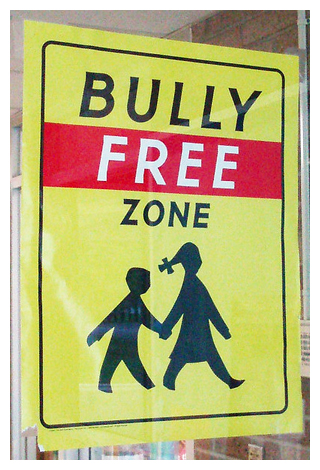
2010-10-26-AntiBully.jpgIn honor of National Anti-Bullying Month, I feel compelled to ask: What is going on? One theory is that the effects of cyber-bullying on older kids are "trickling down" to the younger grades. Possibly, but I would make a different argument: The effects of the play deficit on younger kids are trickling up.

There's no doubt about it: Childhood ain't what it used to be. Kids are spending more time inside in front of screens, more time in scheduled activities, more time in the classroom, and more time being hovered over by "helicopter parents." All of this means less free play, and that doesn't just mean less fun. Play is essential to the proper development, socialization, and physical, emotional, and mental health of children.

What happens when kids don't get enough play? Dr. Stuart Brown, a prominent scientist, doctor, and founder of The National Institute for Play, first discovered the importance of play by discerning its absence in a carefully studied group of homicidal young males, beginning with the University of Texas Tower mass murderer, Charles Whitman. While these young males represents extreme examples, Dr. Brown recognizes that "play is a powerful catalyst for positive socialization." In his book, Play: How it Shapes the Brain, Opens the Imagination, and Invigorates the Soul, he points out:

"In authentic rough-and-tumble play, the participants squeal, smile, and laugh while hitting, diving, wrestling, chasing, and heckling, and they remain friends after the bout is over... If rough-and-tumble play is squelched because it is seen as chaotic, loud, out of control, its benefits will not be acquired. Kids need a certain amount of this play so that later stages of development will proceed more smoothly. On the other hand, bullying and exclusionary over-the-top behavior is forestalled if it is nipped in the bud in preschool situations."

While younger girls may be less likely to engage in rough-and-tumble play, "socio-dramatic" play, like playing "Doctor" or "House," has similar benefits. As the Alliance for Childhood reports in Crisis in the Kindergarten: Why Children Need to Play in School:

"Research shows that children who engage in complex forms of socio-dramatic play have greater language skills than nonplayers, better social skills, more empathy, more imagination, and more of the subtle capacity to know what others mean. They are less aggressive and show more self-control and higher levels of thinking."

While I doubt that more play will singlehandedly "solve" the problem of bullying once and for all, it's an essential step. And it's not as hard as you might think. Here are four actions that parents and schools can take now:

  1. Make sure kids get at least 30 minutes of recess a day. I've written before about the devastating effects of depriving kids of recess during school hours. But, since most bullying takes place during recess, it's equally important to foster a positive, cooperative environment that keeps bullying to a minimum. Playworks and Peaceful Playgrounds are two great organizations that offer tools and resources for improving school recess.
  2. Limit screen time. Whether it's TV, video games, or computer time, 7.5 hours in front of a screen (the current national daily average for kids ages 8-18) is way too much. Set limits, and make sure your kids get at least 60 minutes of outdoor play a day, preferably in addition to structured activities like P.E. and after-school sports.
  3. Model appropriate behavior. You can't tell your kids to go outside and play if you don't. Set aside time, especially on the weekends, for outdoor outings. Not only do kids adore nature play, but the growing nature deficit is just as dangerous for our children as the growing play deficit. The Children and Nature Network offers great resources to help families get outside.
  4. Encourage neighborhood play. Kids don't like playing alone. Make sure that other neighborhood kids are getting a chance to play by forming a playground watch, organizing a play street, or even turning your front yard into a neighborhood hangout spot.

Simply put, for kids to learn how to play well with others, they must be able to play.

Do your children get along with their peers? Have they been bullied? How did you respond?

Photo by Eddie~S (cc).


Follow Darell Hammond on Twitter: www.twitter.com/kaboom


  • Comments
  • 5
  • Pending Comments
  • 0
  • View FAQ
Comments are closed for this entry
View All
Recency  | 
Popularity
06:22 PM on 10/29/2010
I WANT TO BELIEVE IT GETS BETTER!
Bullying (cruel remarks and behaviors) begins at home, at church, at work, at clubs, in circles of people where there's competitiveness, jealousy, anger, and a threat to be 1st.
Happens anywhere--- even within family, relatives, siblings, and children.
The victim is vulnerable, and obviously...sensitive to it.
Human beings use hot spot topics to hurt someone else. Most comments become taunts that equal assaults as brutal as physical abuse.
In my own opinion, the intended effects are to prevent someone from taking the lime light.

If prolonged, the true effects on a person's life can be the death of spirit. A person who has suffered through years of bullying-taunting feels emotionally scared. Even with help, this pain is like a loss of a loved one-oneself.

I was bullied in school. I loved school, wanted to be a journalist. The bullying got fierce. I quit school, and entered the world so unprepared. Years later, thought I'd put my life back on track, was confident, almost free. I was talking to a new friend who didn't know me...they'd mentioned my name to another . who in turn happened to know me from school. When I heard that persons name I fainted. Moments later I was being helped to regain consciousness. I avoided the new friend after that. I didn't even respond to say I was okay, when called on.
TO BE CONTINUED....
photo
Gonzo36
Pro-awesome!
08:35 PM on 10/27/2010
As the mother of an 8 year old boy, I am distressed with this new definition of bullying. Bullying is NOT getting into a single fight, or having some jerk push you into the lockers. Bullying is one person or persons who single out a another person or persons and over a sustained period of time and intimidate, threaten, or physically/verbally abuses them. Though I do NOT condone bullying, I do think there is some amount of crap everyone has to take when growing up- it makes each person stronger when they learn how to deal with jerks- and well all know we have to deal with jerks for our whole lives.
01:29 AM on 10/27/2010
Why wouldn't we have a huge increase in bullying, what is happening in our civil ... or uncivil society more than rudeness and bullying. Disrespect and abuse of power are rampant, and the people in authority are paid to let this dysfunction escalate because it lessens the ability of average people to communicate and work together politically.

100 years ago we have strong big families. Then we spread out to have the nuclear family and portable jobs, now we do not even have nuclear families, we just have a bunch of isolated people who are very easily stressed out made sick and ineffective for themselves and their country by this constant uncertainty and stress.

There's a great documentary called Unnatural Causes: Is Inequality Making Us Sick that shows the science on this.
09:41 PM on 10/26/2010
I think you're exactly right, Darell, about the connection between bullying and play deprivation. Here's another piece of evidence: studies showing that today's young people have less empathy and are more narcissistic than earlier generations. (See this article from the Boston Globe: http://www.boston.com/bostonglobe/ideas/articles/2010/10/17/the_empathy_deficit/.)

As you point out, dramatic make-believe play in early childhood develops empathy. It's not hard to see why. Pretending that you're someone else, rather than yourself, is in fact the precursor of the universal standard of morality--treating others as you would yourself want to be treated. It all starts with imagining what it's like to be that other person.
01:46 PM on 10/29/2010
Most of the children I have seen have parents that are so busy working they are always being shuffled around and left with childcare or stuck in a corner somewhere to mark time. Yes, this is unnatural for child development, and it seems to say to me that either no one is looking at this or someone does not want it to change because this is exactly what contributes to our dysfunctional status quo.