iPhone app iPad app Android phone app Android tablet app More

Featuring fresh takes and real-time analysis from HuffPost's signature lineup of contributors
David Berri

GET UPDATES FROM David Berri
 

What Sports Illustrated Didn't Tell You About Paying College Athletes

Posted: 11/11/11 08:05 PM ET

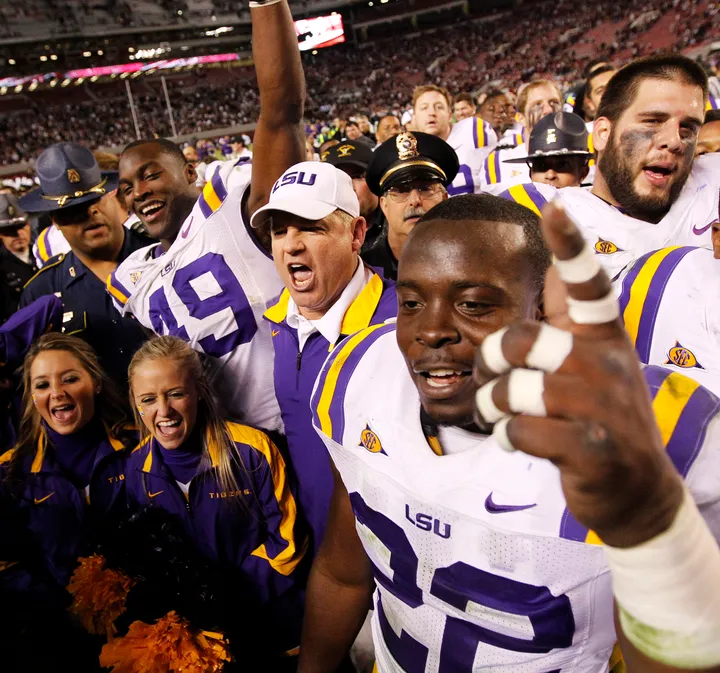
So far, the biggest game of the 2011 college football season was when the Alabama Crimson Tide hosted the LSU Tigers. The game featured the top two ranked college football teams and was played before a sold-out stadium. It was also watched by 11.5 percent of all households on national television.

Without a doubt, such an event generates substantial revenues. But the people who everyone came to see -- the college athletes on the field -- were prohibited from receiving this revenue. This prohibition comes from the NCAA, which has decided that college athletes must not be paid for their work. It's certainly seems okay for the NCAA to promote these athletes and generate as much revenue as they can from their efforts. But if these athletes try and take some of the revenue they generate -- as Cam Newton's father tried -- then this is a huge scandal and clear evidence that the athlete doesn't know right from wrong.

Sports Illustrated, -- in the November 7th issue -- made an effort to correct what seems to be an obvious injustice. In "Pay for Play", SI writer George Dohrmann presented a "feasibility model" designed to see if there is any money available to pay college athletes. Unfortunately, Dohrmann's approach is flawed from the outset.

Early in the article, Dohrmann makes the following two statements:

The vast majority of athletic departments do not generate enough profit to pay athletes. The fact is the majority of schools would need to cut expenses significantly to pay athletes even a nominal amount.

Thinking back on the LSU-Alabama game, one wonders how this is possible. It certainly looked like large numbers of people paid to watch the game. And certainly there was some sort of fee to broadcast the game on national television. Where did all this money go?

To Find the Money, Look at the Sidelines

One obvious place to look is the people walking the sideline. In 2009, Nick Saban signed an extension that increased his pay to more than $4 million per season until 2017. In January of 2011, Miles also signed an extension that maintained his average salary of $3.75 million across an additional three years.

Economist Andrew Zimbalist -- in an article published in 2010 at the Harvard Business Review -- notes that it is not unusual to see football coaches in the Football Bowl Subdivision (FBS or formally Division I-A) paid extremely well. As Zimbalist notes,

... virtually every head football coach in the FBS -- including those of perennially losing teams -- earns more than $1 million, plus lavish perks and the potential for significant outside income.

One might argue that this level of pay reflects market forces. Zimbalist, though, finds this argument less than compelling. According to Zimbalist, there are five reasons -- yes, five -- why the salaries of coaches DO NOT reflect free market forces. As Zimbalist argues...

... collegiate athletics market forces are artificially influenced by several factors: (a) no monetary compensation is paid to the workforce, the athletes; (b) intercollegiate sports benefit from substantial tax privileges; (c) there are no shareholders demanding dividend distributions or boards demanding higher profits; (d) athletic departments are nourished by university and state financial support; and (e) coaches' salaries are negotiated by athletic directors whose own worth rises with the salaries of their employees.

These forces result in a level of pay for coaches at the college level that cannot be explained by the level of revenues generated by the college teams. Again, we turn to the words of Zimbalist:

The outsize pay packages defy one of the central principles of a competitive market. College football and basketball coaches earn, on average, almost the same amount as their NFL and NBA peers, although college programs generate a fraction of the revenue of professional teams. The top 32 college football programs bring in $40 million to $80 million, whereas NFL teams generate an average of about $230 million. The disparity is even greater in basketball, where the top 30 Division I teams average about $15 million in revenue, one-tenth the average NBA team revenue of approximately $150 million.

Zimbalist's work makes it clear that college coaches are paid beyond what one would expect from a reasonable examination of the revenue the coaches generate. And it is obvious why this is possible. In college sports, the workers -- or the players on the field -- are not paid.

Of course, players do receive a scholarship. However, published research -- from Robert Brown and R. Todd Jewell -- makes it clear that at least some players are worth far more than the scholarship the players receive. These two economists estimated* the amount of revenue created by a premium college football player in 2004. This estimate - utilizing data from the mid-1990s -- suggested that a college football player who is ultimately drafted into the NFL will create more than $400,000 each year he plays college football. And again, this is an estimate based on data from more than a decade in the past. Today it must be the case that elite athletes are worth much more.

The NCAA, though, has passed a rule that every firm would love to pass. Workers cannot get paid! And that means the revenues the players generate are free to go someplace else.

A Free Market Approach to the Pay of College Athletes

Of course, Sports Illustrated claims there is no way to pay athletes what Brown's research indicates they are worth. After all, college athletics doesn't generate a profit. The problem with this approach is that decision-makers in college sports don't have much of an incentive to generate profits. Any revenue that comes into these programs tend to be spent on enhanced living facilities for student-athletes, better weight rooms, expanded stadiums, and yes, salaries to coaches and athletic departments. Much of this spending doesn't necessarily lead to better outcomes. And if the NCAA market was a free market -- where economic losses led firms to go to out of business -- much of this spending wouldn't happen.

And this leads one to wonder: What if the NCAA was a free market?

Then the Cam Newton "scandal" would be the norm. Elite players would do what every worker does in the labor market. They would sell their labor on an open market and accept the offer they deem to be "best".

Should there be a limit on this compensation? Well, is there is a limit on your compensation? And is there a limit on the compensation received by the coaches? Of course not!! That's not the nature of a free market.

Now a free market approach doesn't necessarily mean all players will be paid beyond a scholarship. Many athletes -- especially those in sports other than football and basketball -- do not generate much revenue. And those athletes in a free market would be treated in the same way universities treat music students or those receiving academic scholarships. But for the elite players -- or those generating the wins and revenue that make the pay to coaches and others possible -- a free market approach will lead to higher wages. And, of course, this approach means that coaches will ultimately get less (which tells you why coaches do not seem to spend much time advocating a completely free market approach to athlete compensation).

Dohrmann does argue that if players were paid, the teams with the money would sign the best players and competitive balance would suffer. Again, the data tells a different story. A few years ago, economist Jim Peach looked** at competitive balance in college football and found that from 1950 to 2005, 50 percent of the top 8 finishes in the AP final poll were claimed by just 12 different schools. Similar stories were told in basketball, baseball, and women's softball. In other words, the NCAA currently doesn't have much competitive balance. And paying players is not going to change this reality.

Paying the players that generate the revenue, though, is the right thing to do. When
that happens, some of the problems associated with college football will go away. And when that happens, maybe fans of the game can spend a bit more time talking about the game; and less time wondering if the players they enjoy watching are really breaking a rule that the fans would never accept at their place of employment.

*Brown, Robert W. and R. Todd Jewell. "Measuring Marginal Revenue Product of College Athletics: Updated Estimates," in Economics of College Sports, edited by Rodney Fort and John Fizel (Westport, CT: Praeger Publishers, 2004).

**Peach, Jim. "College athletics, universities, and the NCAA." The Social Science Journal, 44, (2007): 11-22


So far, the biggest game of the 2011 college football season was when the Alabama Crimson Tide hosted the LSU Tigers. The game featured the top two ranked college football teams and was played before...
 
 
  • Comments
  • 122
  • Pending Comments
  • 0
  • View FAQ
Comments are closed for this entry
View All
Favorites
Recency  | 
Popularity
Page: 1 2 3  Next ›  Last »  (3 total)
photo
HUFFPOST SUPER USER
becky bradshaw
"In a time of universal deceit, telling the truth
09:55 PM on 11/13/2011
A few schools could afford to pay their jocks in revenue sports like FB and BB. But a rule change would have to account for all the universities, and for Title 9, which demands that female sports be equally funded.
03:55 AM on 12/02/2011
When will all the republicans and tea party attack the socialist NCAA. Some liberals might support them.
photo
WhoIsNoOne
What I need is a Micro-Brew-o
12:46 PM on 11/13/2011
I disagree. Although I think there is much room for
improvement in the allocation of funds generated from college sports,
I don’t think paying the athletes is the answer.
the post mentions scholarships in passing, but it is an important factor. The
prime student athletes are paid in the form of 5 yrs of free education and living expenses.
I played Div II football, and was on scholarship. For my efforts, I received tuition, 2 meals per day, books, and housing at a medium sized state school, so in reality I was paid.
At the larger schools the majority of top sports athletes are on full scholarship.
Although I was not a large income producer as some of the top D I athletes are, for them
you need to factor in future earning potential as well. For those top athletes this is a sort of apprenticeship program for potential future pay (professional).
I do think that there should be more rules re: allocation of funds to more benefit the
entire school and entire student body, but that is a different issue.
03:59 AM on 12/02/2011
since hardly any kickers go to the NFL, how do you factor in their earning potential? Most points scored in the NFL and CFB almost every year are by kickers.
maxfax
Taa - dah!
12:28 PM on 11/13/2011
Did anyone catch what any of the Sunday morning NFL programs said about Penn Street, the sex abuse scandsl, before they moved on to commercials, their bread and butter? What did I miss?
04:21 AM on 11/13/2011
I was a div 1 college athlete and NCAA All American. The argument that college football players should get paid is ridiculous. If you think they should you are that insufferable jock-fanboy who over-emphasizes the relevance of sports in the world. There are many places in the university where there are unpaid apprenticeships: eg how bout grad student researchers who work 100 hours per week in some professors lab who makes 230k a year-with results going to the pharmaceuticals who turn around and make huge money. Apprenticeships are one of the great ways to learn and they are opportunities to get into a field. Any football player who wants to be a professional and get paid can just enter the draft.
HUFFPOST SUPER USER
SpreadthePanic
11:55 AM on 01/10/2012
I'm willing to bet that grad student is getting paid in addition to going to school for free. If the professor is making 230k and it is a pharmaceutical lab, I'm willing to bet they are paid pretty well.
12:09 PM on 11/12/2011
I'd be happy to see a law enacted that would deny any publically funded institution from giving athletic scholarships at all.
02:47 PM on 11/12/2011
Why? So poor kids would have no chance of ever attending these institutions? Remember, the vast majority of full and partial scholarships go to kids who really are in it for the education. Only like 4% ever get paid a cent for sports and far less actually make it to the majors.
This user has chosen to opt out of the Badges program
Hiddenfangs
Four legs good, two legs bad
05:01 PM on 11/12/2011
And poor non athletic kids? Do you know how few full ride scholarships there are unless you are an athlete?
04:05 AM on 12/02/2011
I'm with you and give back every dollar made by these universities over the last 20 years. Most of these campuses were stuck in the 60s before the 90s sports money. Hell we need the time machine because pro sports wouldn't exist without the popularization and foundation of collegiate sports. Shut down all the fast food joints, gas stations, candy companies, retail sales, insurance companies, and any other company/ business that hurts the environment. In fact shut down every school that uses paper.
HUFFPOST SUPER USER
inmyhumbleopinion
Vote third party.
12:00 PM on 11/12/2011
This is so misguided. The NCAA is not, and should not be, a professional farm league for football and basketball. The NFL and NBA need to take the millions of dollars they're making on their professional leagues and create a farm system like the MLB.

The athletes are supposedly getting a free education worth up to $300,000 over four years. That's not enough?
04:08 AM on 12/02/2011
keep inflating that number it is already worth more than any education is actually worth. Education is free when you pick up a book. The NCAA allowed the pro sports leagues to be created. The instituted a farm system and the pro leagues followed.
12:00 PM on 11/12/2011
While I think there are many things screwed up in the NCAA, I think a free college education, unlimited access to trainers and tutors, plenty of travel opportunities, a nice hotel and meals the night before a home game, and first priority on classes is a pretty good school. I know, I know - way to old school thinking here.
HUFFPOST SUPER USER
Warhammer Jones
11:28 AM on 11/12/2011
Sports are the most important thing in America. We need young people to spend less time in class and more time on the practice field! How else will we ever hope to compete as a nation?
photo
HUFFPOST SUPER USER
hawkeye58
Open to the truth...
11:42 AM on 11/12/2011
You'd certainly think so judging fby the way people carry on about it. Personally, I don't think sports and college should be linked at all. College should be about getting an education, not playing games. But college is just about profit and sports is the cash cow.
photo
Lilliputian
If someone asks me again what a Lilliputian is...
07:39 PM on 11/12/2011
Europe agrees with you... they don't have collegiate sports. Instead, there are clubs and pro systems if someone wants to try for an athletic career. If one can succeed at both, great for them, if not.. make a choice. But the higher education system there does not have to deal with compromising its academic mission nor pay coaches far in excess what a college president is making, or even raise the college president salary to o.bscene levels.
04:12 AM on 12/02/2011
college has always been about profit. Education is free when you pick up a book. The amateurism came when they couldn't entice enough people to waste time going to college when you could work and eat now. Now you can't work so go to school and wait for old people to die then you can enter the privileged working class.
11:26 AM on 11/12/2011
This notion that sports do not make a profit is a lie or "creative accounting". There is no way to fill a stadium, charge admission and not make a profit, unless a Tony Soprano type is your accountant.
11:47 AM on 11/12/2011
If you constantly overpay certain employees (like coaches, etc.), overpay for things like travel and perks for the staff and players and university officials (first class flights, 5 star hotels, etc.) then the money gets used up pretty quickly.
photo
Lilliputian
If someone asks me again what a Lilliputian is...
07:40 PM on 11/12/2011
don't forget hotels for home games... still happens sadly
03:00 PM on 11/12/2011
It is a slight of hand trick. It piles all of the sports together even those that are followed only by a few. Create a profiting sharing system and the whole argument against payment falls apart.
11:11 AM on 11/12/2011
I always found it odd that the athletes (the workforce) at these majof Div 1A schools are being compensated with free tuition and other items that can't be easily liquified. A free tuition is nice, but how does that help a person in real time? A free tuition is only valuable once a person graduates and has no debt. But a lot of these guys recruited to play football don't have any plans on graduating college, so a free tuition is meaningless to them. These young men are employees of a business, they need to be paid a minimum wage, at the very least. Don't pay them in books and cute perks. I think Wu Tang Clan put it best "Cash Rules Everything Around Me." We live in a capitalist society where you get paid for your service. It's time for major college football to realize this. After all, they have no problem paying their coaches.
photo
HUFFPOST SUPER USER
cyberfringe
When the going gets weird, the weird turn pro.
10:57 AM on 11/12/2011
NCAA football programs should be spun out of universities as stand alone businesses. Athletes are clearly employees, so pay them. Universities should get a guaranteed royalty stream to their general fund for the use of their brand. Students can be athletes just as many students have other kinds of jobs, but athletes need not be students if they are not committed to their education. Fiction dispelled. Everyone wins.
photo
HUFFPOST SUPER USER
cyberfringe
When the going gets weird, the weird turn pro.
10:48 AM on 11/12/2011
This article doesn't use the word education once. Truth is, NCAA football is independent of higher education. It is all about big business. Unlike Major League Baseball which has a farm team system to train future players, the NFL has nothing except college football. Are there any players on top college teams who don't want to go to the NFL? If you don't believe me, look at how much athletic dept revenue goes back into a university's' general fund. Zero in most cases. I wouldn't care one bit about coaching salaries if successful teams helped fund education. They do not, and that is a great disappointment.
ThatsTheTheWayItIs
religion, ideology, partisanship are delusional
10:39 AM on 11/12/2011
College athletes ARE paid through scholarships, $25K is a decent salary, and most unlike others they graduate with no debt. __ Basketball players that are anxious for pro money skip college or come out early, the NBA now has a minor league. College basketball and March Madness are still popular. I don't see why college football has to be different. Amateur athletes are college football's appeal, otherwise it is just competition to the NFL, like the AFL was.
This user has chosen to opt out of the Badges program
photo
Celebrindan
M=1∞/R=dM>1
10:54 AM on 11/12/2011
How many people on a football team?
How many scholarships are these schools allowed to spend on football recruiting?
How many get 'career ending' injuries while earning millions 'for their school', and then have their scholarships yanked from them when their on-field exploited, er, performance ends?

AirBalloon

Didn't meet.
ThatsTheTheWayItIs
religion, ideology, partisanship are delusional
11:00 AM on 11/12/2011
They are allowed to spend unlimited amounts on scholarships. And obviously a player would get a full scholarship before any pay, and only the best would get paid. Scholarships include room, board, books, computers, anything they need. It's not just tuition.

As to injury, the college athlete keeps his scholarship, will get a free college degree, with no debt.
photo
HUFFPOST SUPER USER
Alva Mahaffey-Johnson
Renegade Woman and Modern Day Goddess
12:17 PM on 11/12/2011
spoken like a person who knows absolutely nothing about what it is like to be a college athlete. As a former division 1 college athlete, a scholarship is attractive and definitely a perk to being a great athlete, but it is not enough when you are playing a sport that generates million of dollars into a university system and the NCAA. College athletes, in addition, receive small stipends for "entertainment" such as movies, dinner away from the cafeteria, gas (if you have a car) and clothing. When you see fellow classmates buy nice cars due to having jobs, buy clothing, have nicely furnished dorm rooms, have money to go out and enjoy the college experience- you feel robbed. You feel cheated. Your classmate won't have to get up at 5am for conditioning. Your classmate isn't required to travel every weekend and miss out on a social life. Your classmates aren't required to maintain strict eating and weight standards or grades. Your classmates are free to work and generate as much income as possible while a student. You receive fame but you're unable to help your family. It is a shrewd business and often it felt like slavery. But of course, you feel as long as I received a free education it is worth having every other aspect of my life monitored, controlled, limited, and managed by people making millions off of my blood, sweat, and tears. So you also agree with Wall Street and the wealthiest 1% too?
03:28 PM on 11/12/2011
they will also leave school with a mountain of debt that will take the rest of their live to pay off. If it was so terrible why didn't you just quit?
This user has chosen to opt out of the Badges program
Hiddenfangs
Four legs good, two legs bad
05:05 PM on 11/12/2011
Please. None of my college classmates earned enough to buy a car or nice furniture. Those who had that came from wealthy families. The poor worked to get food and pay bills--oh and got loans to pay the school. As an athlete, you chose that scholarship. No one made you do it. And only Division 1 schools make 'millions'. So quit and have the cushy life you want.
10:38 AM on 11/12/2011
At the very least, college football players need serious insurance benefits- workers comp and disability. They may enjoy the sport, but they are at serious risk from a health perspective. The potential for catastrophic harm and long-term brain damage as we now know are great. My understanding is that whatever benefits do exist are quite slim. That is a travesty.
photo
Lilliputian
If someone asks me again what a Lilliputian is...
07:32 PM on 11/12/2011
"slim" would be an improvement over reality

even the NFL has been fighting giving these kinds of benefits that are reserved only for those who played 5 years and qualify for pension.

The vast majority of NFL players don't make it to 5 years
This user has chosen to opt out of the Badges program
photo
okim5150
I only drink to make you more interesting
09:49 AM on 11/12/2011
Profits? Salaries? Is this college or the NFL? If a student wants to play, has the talent and can keep his grades up fine. If his grades start to suffer, he should be suspended. All the money and the hype need to go, they are polluting the spirit of college sports.
photo
HUFFPOST SUPER USER
cyberfringe
When the going gets weird, the weird turn pro.
10:50 AM on 11/12/2011
I totally agree. Realize what you suggest brings down the whole system as it exists today.