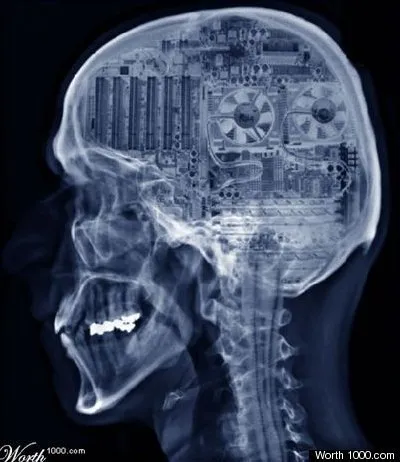
When I started medical school, over 20 years ago, the dean met with us on the first day and told us "half of what we're going to teach you is wrong... the problem is, we don't know which half." It turns out that the nature of brain development was one of those areas where our existing assumptions and knowledge were less than fully accurate. At that time, it was widely assumed and taught that brain development was essentially complete by the age of 3. Today, we realize this is far from the case.
Recent research has demonstrated that the brain continues to change and mature throughout childhood and adolescence. We now understand that the teenage years, in particular, are actually a very active time of growth and development at the physical level of the brain. Specifically, we see a rapid increase in the interconnections between the brain cells, followed by a refinement, or "pruning", of these pathways. We also see the progressive development of an insulating layer, called myelin, around the nerve cells. This process of "myelination" facilitates communication at the cellular level. It is essential for the development of coordinated thought, action and behavior.
We have also learned that the primitive, or instinctual part of the brain develops first, followed by the parts of the brain that control reasoning and help us think before we act. In terms of neuroanatomy, we have identified a specific region of this "early" or "ancestral" brain, called the amygdala, which is responsible for gut reactions, including fear and aggressive behaviors. We have also identified a more advanced area, called the frontal cortex, which help us control our emotions and modify our actions and responses.
Research using functional magnetic resonance imaging has demonstrated that adolescents actually use their brains differently than adults when reasoning or solving problems. For example, they tend to rely more on these instinctual structures, like the amygdala, and less on the more advanced areas, like the frontal lobes, which are associated with more goal oriented and rational thinking. They also tend to misread social cues, such as the emotions associated with facial expressions.
These findings mean that from a biological perspective, an anxious adolescent with a gun in a gas station or a convenience store, is significantly more likely to pull the trigger than an adult would be under the exact same circumstances. Based on the stage of their brain development, they are more likely to act on impulse, more likely to misread or misinterpret social cues and emotions, and less likely think twice, change their mind, or pause to consider the consequences of their actions.
This research has particular relevance to the question of sentencing juvenile offenders to life without parole. From a scientific standpoint, it is now quite clear that the brains of adolescents are biologically and developmentally different from the brains of adults, particularly in the areas that govern reasoning and complex behavior. Fortunately, these findings also imply that young people are more likely to mature and change over time, enhancing the possibility of rehabilitation. In recognition of these facts, there is a growing consensus that children and adolescents who commit crimes, even serious crimes, require a different response than adults who commit comparable offenses.
I am not suggesting that these developmental issues in any way excuse violent criminal activities, but I do think the information is relevant and helpful as we try to understand the impact of biology and brain development on adolescent behavior. For this reason, both the American Academy of Child and Adolescent Psychiatry, representing 7,000 child psychiatrists, and the American Psychiatric Association, representing some 35,000 psychiatric physicians, have issued strong and unambiguous policy statements opposing life without parole for juvenile offenders.
In 2005, the Supreme Court ruled that the juvenile death penalty was unconstitutional. Writing for the majority, Justice Anthony Kennedy said, "It would be misguided to equate the failing of a minor with those of an adult, for greater possibility exists that a minor's character deficiencies will be reformed."
In 2010, the court relied on similar reasoning when it ruled that juveniles could not be sentenced to life without parole for crimes that do not involve murder. Next month, the court will be asked to extend its ruling to all juvenile offenders. Hopefully, their decision will be informed by the recent scientific data and our contemporary understanding of adolescent brain development.
The writer is a Clinical Professor of Psychiatry at the University of Vermont and the Director of Advocacy and Public Policy at the Vermont Center for Children, Youth & Families.