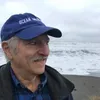
Nancy loved the ocean. We spent years together diving, snorkeling, sailing and walking its shores. When she died from breast cancer at the age of 43 we had a memorial service at her favorite beach on the Marin California headlands.
It was a windy day, feisty like the gal. Although she used to say I never looked happier than when I was coming out of the water after getting beaten up by the waves, the ocean can also provide solace, remind us that we are part of something larger, even when large parts of our own souls have drifted away.
Five years later I returned to Rodeo Beach where oil had come ashore. Behind the orange plastic fencing and pollution warning signs fifty-eight contract workers in yellow hazmat suits were removing oil stained boulders and scraping away the contaminated sand with a front loader called a Bobcat. We'd seen real bobcats around there and I just hoped they didn't find any dead seabirds to feed on as toxins tend to bio-accumulate up the food chain. I'd come to the beach for a Coast Guard press conference before going out with them to do a damage assessment in parts of Richardson Bay where Nancy and I used to live and it all felt like sacrilege.
This was during the 2007 Cosco Busan spill when a large container ship hit the San Francisco Bay Bridge spilling 53,500 gallons of toxic bunker fuel into the Bay, though the initial estimates by the Ship's captain were far lower. Three years later you can still find remnant oil in the wetlands near where I live and the Bay's herring fishery has yet to recover.
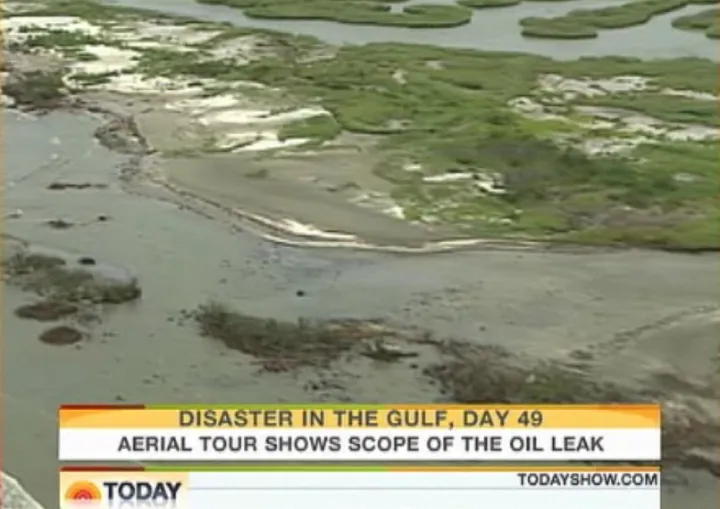
According to conservative government estimates the BP Deepwater Horizon's almost mile-deep wellhead has pumped 500 times a Cosco Busan spill worth of raw petroleum into the Gulf of Mexico since the rig exploded in April.
I remember after Hurricane Katrina spending an evening with a dozen displaced Cajun fishermen who were living in a carport below a three-story office building in Bell Chasse Louisiana. They slept at night on dry patches of carpet in one of the water damaged law offices above. They insisted on sharing the food and beer they had in big coolers with me and told me they weren't sure they'd move their families back to Buras or Empire or other storm devastated towns I'd seen in Plaquemines Parrish where the world had turned upside down with boats on the land and houses in the water. They would keep catching fish out of the Bayou however. Of that they were certain. Now their livelihoods are at risk from BP's oil spill as are the wetlands that have sustained their people and culture since 1699 when Pierre Le Moyne landed on the Gulf Coast and reported an abundant game, "and some rather good oysters."
Oil, unlike some chemicals and vast amounts of plastic polymers we're also dumping into the sea, will biodegrade over time. In about 40 years much of the damage we're seeing as the BP spill begins to come ashore will naturally remediate. Of course by then changing weather, ocean productivity and sea level rise linked to the burning of oil and coal will also have radically altered the 40 percent of America's coastal wetlands now at immediate risk.
I'm deeply tired of wake up calls that don't seem to wake us up to our intimate and essential connections to the everlasting sea. If the rapid loss of Arctic sea ice linked to climate change won't do it, if the industrial overfishing of the world's oceans that threaten commercial extinction of edible fish by mid-century won't do it, if the loss of over a third of the world's coral reefs in the blink of an eye in which I've lived my life won't, then I'm not sure an oil spill the size of Connecticut spread throughout the water column and still growing will do it either.
What's most frustrating is the solutions are known. If you stop killing fish faster than they can reproduce, if you stop producing 100 million tons of single use plastic every year, if you don't build and dump on salt marshes, mangroves and other protective coastal habitat, if you repair aging sewage systems and don't use storm drains as toilets, if you move from oil and gas to new energy systems including offshore wind, waves and tides, you can turn the tide. All it takes is our personal and political will.
After Nancy died I thought about returning to war reporting because I knew it was an effective antidote to depression. Instead I founded a non-profit group dedicated to the ocean and seaweed (marine grassroots) organizing thinking that while we'll probably always have wars we may not always have healthy and abundant seas - or coastal wetlands. I don't know if it's too late. All I know for certain is if we don't try we lose and this salty blue world of ours is too beautiful, scary and sacred to lose.