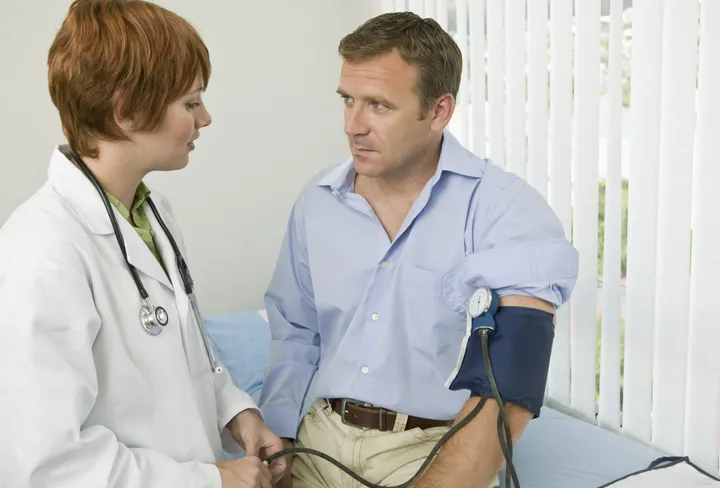
In an age of highly specialized medicine, primary care is vulnerable to the Rodney Dangerfield syndrome of getting no respect. That's a mistake, perhaps best demonstrated by what can happen when primary care isn't provided. Some years ago, I was practicing primary care internal medicine, and saw a medical student for an acute visit because of worsening back pain. When their son's pain first developed, his parents -- both physicians -- took matters into their own hands. They arranged for their son to bypass humble primary care and get right to the specialist -- in this case, an orthopedist.
I don't recall off hand the details of the orthopedic workup, but the basic conclusion was that the patient had a severe strain of the muscles in his lower back. He was referred for physical therapy, which played out over a period of a couple of months. It was at the end of this period, when the pain suddenly got worse, that the patient wound up seeing me.
Being a primary care doc, I did the things we do: took a general and reasonably comprehensive medical history, and did a comparably general physical exam. The history was notable for certain peculiarities -- the patient at times perspired at night for no apparent reason. The exam was noteworthy for hard lymph nodes ("swollen glands" in the vernacular) in the neck and elsewhere.
The patient had advanced lymphoma. The back pain was the result of massive inflammation of internal lymph nodes, progressing the entire time the patient was receiving physical therapy for a back injury he didn't have. Fortunately, cancer treatment was started in the nick of time, the patient responded, and his life was saved. To my knowledge, he is well to this day.
But now, let's be careful about the moral of this story. The orthopedist didn't do anything wrong, and would eventually have seen the patient again and realized this wasn't muscle strain. Generally, though, since specialists such as orthopedic surgeons see patients who have already passed through the filter of primary care, they can be fairly secure in the knowledge that what they are dealing with is an orthopedic problem. If it weren't, they wouldn't be seeing the patient in the first place.
It should come as no great surprise that if you see and treat muscle, bone, ligament and tendon injuries all day, every day, that's what you tend to think about. Similarly, cardiologists would not be faulted for the tendency to think that chest pain is related to the heart; infectious disease specialists think the patient referred to them is apt to have an infection. And of course, when you have a hammer, the world tends to resemble a nail.
The value of specialization is that it allows a great deal of concentrated expertise to be focused on specific problems within a given domain. The inherent limitation is some degree of tunnel vision. My role in the story of the medical student is no particular credit to me -- I did what any primary care provider would have done. Rather, it's testimony to the importance of primary care.
Because primary care providers are the initial contact for patients with a wide array of conditions, we are, in some sense, the proverbial Jack of all trades, master of none. But we make up for that liability by thinking broadly about what may be wrong. In fact, we are all taught to consider not only a wide array of specific diagnoses, but a wide array of categories of illness, represented by the mnemonic "VINNDICATE": vascular, infectious, neoplastic (cancer), neurological, drug-related, etc.
Sometimes the condition is something we can treat ourselves; sometimes, it warrants referral to a specialist. That tendency to refer for specialty care has resulted in the often denigrating term, "gate keeper," for the primary care role. But a gate keeper may, in fact, be of vital service to you if you are at risk of going through the wrong gate on your own. The above anecdote exemplifies this.
Unfortunately, along with a potential lack of respect for primary care comes a lack of financial reward. The cost of medical education -- generally well into six figures -- is the same for a family practitioner as for an ophthalmologist specializing in Lasik surgery; but their salaries at the end of training may differ ten-fold!
This discourages many medical students -- particularly those paying for medical school with loans -- from choosing primary care. They would be stuck with enormous debts for years -- limiting their ability to buy a home, support a family, or take a vacation.
The cost of these disparities is an enormous national shortage of primary care providers, estimated at over 40,000 by the American Medical Association. Inadequate primary care in turn means delayed access, higher costs, a burden of preventable illness, and the potentially tragic consequences of patients guessing wrong when choosing a "gate" on their own.
Fixing this requires loan forgiveness and other potential incentives for medical students choosing primary care careers, expanded reliance on non-physician providers, and medical reimbursement rates that show as much respect for good thinking as for procedures. It also requires the appreciation of patients, among health care's greater rewards. Health care reform legislation addresses some of this, but not all, and does not go far enough according to most authorities.
So please, care about primary care -- and advocate for the respect and rewards it deserves. No matter how expert, care cannot be good, or do you good, if it isn't the care you need. Sometimes, we all need a little help right at the starting gate.
Dr. David L. Katz, www.davidkatzmd.com