
More

Featuring fresh takes and real-time analysis from HuffPost's signature lineup of contributors
David Petrie

GET UPDATES FROM David Petrie
 

How Family Dinners with Young Children Could Help Curb Bullying

Posted: 11/26/10 11:58 AM ET

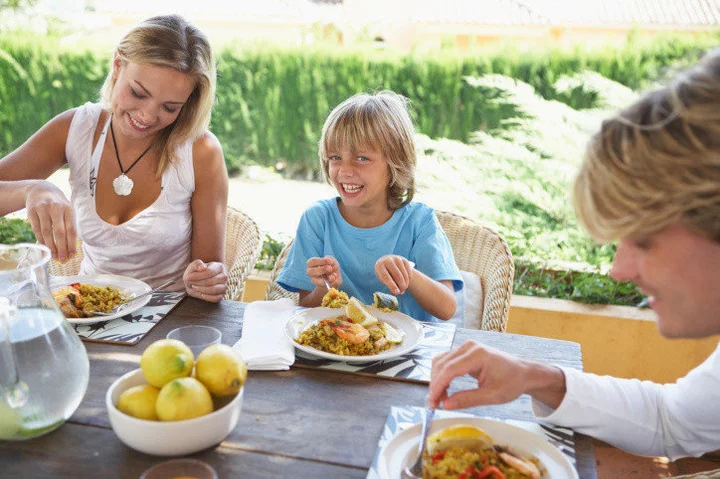
If you're ever struggling to make dinner-table conversation with a young child, one question will save you every time: "So tell me, what was the favorite part of your day?"

My family has turned this question into a family dinner ritual. My younger daughter always raises her hand as soon as the question is asked, hoping to go first. My kids always roll their eyes when I tell them my favorite part of the day was my drive home from the office. And my father always uses the question to remind people that one day he'll be dead.

I'll explain more about that later.

I originally hoped to shed light on what appeared to be a new and under-reported positive impact that family dinners had on young children: a decrease in bullying. Ever since 1996, when the National Center on Addiction and Substance Abuse at Columbia University reported a decrease in the rate of teen substance abuse that was tied to a higher frequency of family dinners, researchers have spent thousands of hours studying the dinnertime habits of the American family. Experts all agree that quality conversation at the dinner table has a significant, positive impact on a teenager's behavior.

This research generated a cottage industry of people writing cookbooks and how-to manuals to get teens talking over food. The Huffington Post even launched Family Dinner Downloads: every week the editors provide a list of questions tied to current events, like voter turnout, the background of the term "shellacking" and Willow Palin's Facebook tirades.

Unfortunately there aren't many conversation starters for the little kids' table. Let's face it, my six-year-old cares more about the salt shaker than the midterm elections. And when my eight-year-old hears about a Tea Party, she wants to join, no questions asked.

The Dairy Council of California jumped onto the family-dinner bandwagon by issuing a press release claiming that family dinners could create lifetime benefits including better grades, lower intakes of sugary soft drinks (which means more milk) and a possible 40-percent reduction in the chance that a child will bully someone else.

This last statistic is what caught my attention. A 40-percent reduction related to bullying was huge. Did certain conversation topics make a difference? Was there an average time parents spent talking to kids? Did lecturing count?

I tracked down the lead researcher for the study. Dr. Rashmi Shetgiri is an Assistant Professor of Pediatrics at the University of Texas Southwestern Medical Center. She agreed to answer a few questions.

"I'm not sure where the 40 percent number came from," she wrote. "The study unfortunately didn't examine some of the very important aspects you mention, such as what parents talked about, how long they talked, or where the talking happened. One of our conclusions was, however, that improving parent-child communication and parental involvement with their children could have a substantial impact on child bullying."

While I was disappointed to learn that the 40-percent figure didn't hold water, I wasn't completely discouraged. Our "Favorite Part of the Day" family dinner ritual could help keep kids from bullying. Maybe. It's simple enough to try.

Here's how it works:

  1. Each person needs to share something good that happened that day.
  2. The good thing can't be "right now" (meaning dinner). The person needs to share something about his or her day that other people (like me, who is stuck in an office all day) might not know.
  3. "Screens" don't count. This means kids (or adults) can't talk about television shows, online social networking or video games.
  4. A person can ask to "pass," but a pass only allows the person to go last. Each person still needs to share.
  5. No one can leave the table until everyone has shared a favorite part of the day.


Sometimes a child will say, "I didn't have a favorite part of the day. Nothing good happened." This presents an opportunity to help that child turn the day around. And then there are times when a child mentions an event that makes you cringe, like when they witnessed some other child do something embarrassing, or even something that qualified as bullying. These instances present opportunities to help the child realize his or her favorite part of the day might have been someone else's least favorite. Then the parent can explain what the child should do the next time around.

Most nights at my house we hear about good things. One night my younger daughter demonstrated a jump rope move she had learned at school. My son often recounts amazing soccer moves. My oldest has been skimping on details lately. She might be afraid we'll figure out that she was goofing off in class -- again.

When my parents visit, my mother carefully finds a favorite thing that happened with each person at the table. As I mentioned earlier, my father takes a different approach. "My favorite part of the day was waking up this morning," he says with a laugh, as if the image of him not waking up is something his grandchildren would find to be funny.

It kind of makes me want to ask, "How about those midterm elections?"

What are your dinnertime rituals? Do you think there are benefits to eating quietly? What was your dinner table like when you were growing up?


Follow David Petrie on Twitter: www.twitter.com/davidpetrie

If you're ever struggling to make dinner-table conversation with a young child, one question will save you every time: "So tell me, what was the favorite part of your day?" My family has turned this...
 
 
  • Comments
  • 22
  • Pending Comments
  • 0
  • View FAQ
Comments are closed for this entry
View All
Recency  | 
Popularity
Mountain Momma
Seemed like a good idea at the time
02:35 AM on 11/29/2010
We sit down to dinner every night, even if it's only that we're all at the table to eat our take-out food together. My parents worked odd hours when I was growing up, so I don't know why I decided we would all eat together - it just made sense. It hasn't always worked; sometimes my husband has worked swing for months at a time, so it'd just be me and the kids. But even when one of the kids has had sports practice until 7:00 or 7:30, we just pushed dinner back til 8:00. No big deal. At one point we went to family counseling because the intense bullying my daughter suffered at school was affecting all of us, and she complained to the counselor, "They make us all eat dinner together EVERY night!" The counselor told her, "Do you know how lucky you are to have that?" Sometimes we play the gratitude game, other times we have the news on and discuss current events. My daughter has gotten extra credit in class because she can name the chief justice in the Supreme Court or explain the Tea Party, things she mainly learned in dinner conversation. I think it makes a huge difference in our family in lots of ways.
06:31 AM on 11/28/2010
If you want to do all these things at dinner just once a week do what the French used to do. Gather together in a group of around 12 persons (including children all ages) and spend around five hours having dinner.
08:58 PM on 11/26/2010
Is there evidence that it is the dinner part or quality time of any kind? Does this need to be the whole family or are one-on-one sessions OK? Is the scheduled part a must? I've had some great conversations with my kids in the car schleping to activities, or food shopping, or working in the yard, or walking the dog, or working on homework, or playing board games, or going to a museum, or star gazing, etc. Getting everyone together at the same time everyday for dinner during the week would have been tough.
photo
HUFFPOST BLOGGER
David Petrie
09:22 PM on 11/26/2010
Great question about whether other conversations matter. The answer is -- of course. The big source for all the family dinner research is CASA at Columbia University. The "proven" statistic was that adolescents in families who ate dinner 5 times or more each week were much less at risk for substance abuse. Did these families talk at other times? Of course -- but not in a common way that made a nice statistic OR that led to regular daily communication. Research shows that parental involvement is the key, and that includes one-on-one communication, group discussions, and, at times, quiet affection.

I hope this comment helps.
HUFFPOST SUPER USER
tlaltecuhtli
08:11 PM on 11/26/2010
One sad problem here is the assumption made by all good-hearted folks that parents of bullies or suspected bullies really do want to stop their kid's behavior. It seems that many parents of bullies revel in their kids being nasty little bits, or else are in total denial about it. They seem to get some sick satisfaction and sense of being "big" and important from their kids behavior. And likely they bully those children at home ... setting up the behavior to model. Now, what do we do about them? Bullies don't just come out of nowhere ... or have a "bully gene" that gets magically activated.
photo
HUFFPOST BLOGGER
David Petrie
08:34 PM on 11/26/2010
A friend asked me why I didn't end the story with a link to the "grace" scene in Talladega Nights. The movie is a farce (Will Ferrell plays an idiotic race car driver) and in this scene the children verbally abuse their grandfather. In humor there is truth, and I have no doubt that there are families out there teaching hatred. There are also families out there wondering what they can do better -- I'm writing for them.
07:23 PM on 11/26/2010
David, I am always excited to read articles expressing the need for families to spend quality time together. Our family went through some financially challenging times about 5 years ago. Instead of allowing it to tear us apart, we chose to pull together. We didn't have dinner every night, but we did set aside time each week to have a family meeting. I have had the opportunity to share our story as part of the Next Best Idea For Humanity Project. I would love to get your input on a short three minute video that highlights how one important commitment, surrounded by just three simple rules brought my family together, made me a better parent and ultimately made my family stronger. You can watch it at www.NextBestIdea.com. I think you will like it! Thanks for your article.
photo
HUFFPOST BLOGGER
David Petrie
08:18 PM on 11/26/2010
Thanks for commenting. I watched the movie and really like your idea for the place mats. What chain of family restaurants wouldn't love to use those instead of a laminated local map? Is there any way to make one side available for selling advertising space? Just a thought...
07:29 AM on 11/27/2010
Thanks for taking the time to watch. - really appreciated. I like your idea. Thanks again. Cheryl
HUFFPOST COMMUNITY MODERATOR
Grada3784
God is a Parent, not an abuser.
06:10 PM on 11/26/2010
Yeah, I can just see myself telling my parents over dinner that someone in my class called me a queer today.

Right!!
photo
HUFFPOST BLOGGER
David Petrie
08:25 PM on 11/26/2010
It's taken me a while to figure out how to respond to this. My oldest asks us to watch Glee with her (she's 14 and we'll take what we can get). I am so hopeful that more and more parents are becoming more understanding about their kids' lives. This week's show was dead-on (my wife is a middle-school counselor, and she cried a couple of times).

But I'm also not stupid. Parents can be complete idiots. When it comes to bullying, the victim needs to tell someone, and if that person doesn't (out of fear... or terror), then the bystanders need to step up to the plate. I don't know if you're serious about your situation or are writing metaphorically. If you're serious, I hope you tell someone, if not your parents.
HUFFPOST COMMUNITY MODERATOR
Grada3784
God is a Parent, not an abuser.
09:13 PM on 11/26/2010
The thing is very few kids are going to tell his parents that. And I suspect it really should be practically none.

My parents found out I was gay when I was blackmailed into telling them; I figured better me than the guy who demanded sex from me. It destroyed my relationship with my mother to such an extent, that six years after her death, I've yet to shed a tear for her.

I descended into alcoholism and drug addiction at least in part running from the pain of this sort of thing. Sober today, I don't go to meetings, since I find that my very existence makes people uncomfortable. Amazing the power that I have; I really didn't think I was that powerful, but being overweight, unemployed and gay does wonders in this world..
05:06 PM on 11/26/2010
You mean talking and engaging my kids will make them more emotionaly stable? You don't say.....

I think family dinner is important. I will bring my work home and work late. But I will not sacrifice my family dinner.
photo
HUFFPOST BLOGGER
David Petrie
05:29 PM on 11/26/2010
I took a new job about 30 miles away from home (luckily I live in Vermont, so traffic isn't an issue). My boss would wonder why I would sometimes return to work late at night to finish off projects. I explained how I needed to be home for dinner with my kids, and then wanted to keep work and home separate. She's a mother of five, so I only needed to explain it once.
photo
PatA
Pink is a 4 letter word
06:56 PM on 11/26/2010
unfortunately there are many families who do not understand the value of family time, as you do. i imagine the column was a reminder and "help" for those people.
photo
HUFFPOST BLOGGER
David Petrie
07:40 PM on 11/26/2010
If I knew that one parent read this and decided to turn the television off and gather all the family together at the dinner table on some weeknight, well, yeah, that would feel pretty good. I hope I don't come off sounding like I'm preaching. Just tonight we almost (almost) skipped favorite part of the day at dinner because a group was in a rush to go see Harry Potter (I'm home with the littlest one, who just fell asleep on me as we watched a special movie for him). I laughed and said, "Wait -- we can't skip this tonight."
09:37 PM on 11/26/2010
Point taken. I was wondering how family dinner would curb bullying, but what I read was more of a manual on how to interact with one's own children. Yikes!
photo
HUFFPOST SUPER USER
Dave Harrison
Fighting for the little guy!
04:24 PM on 11/26/2010
We sit down at the dinner table each night at 7. Even if I am out of town we still eat dinner together..... via speaker phone and/or laptop video. In the 50's when I grew up it was little children should be seen and not heard so it was off to the "little kids table". Especially the Sundays dinners at grandma's house, we had a lot of family.
photo
HUFFPOST BLOGGER
David Petrie
07:41 PM on 11/26/2010
I grew up the youngest of four boys and we were always done eating before my mother even sat down. I'm like rubberchickenmom -- no one eats until everyone is seated (or until a parent says, "OK -- eat.")
02:03 PM on 11/26/2010
I meant to say my husband drinks water and everyone else has milk ... can't have everyone thinking that I am not supporting our local farmers and the diary industry.
02:01 PM on 11/26/2010
I have fond memories of family dinners growing up as the youngest of four children. Our dinners were loud and predictable. There was always enough for an army and it was well balanced. We had to finish all the food on our plates (or eat it for breakfast the next day /I had pea soup once for like 5 straight meals), because there was always somebody hungry somewhere. I spent most the meal trying to creatively funnel the food I didn’t like to the dogs under the table and/or annoy my sister (by softly kicking her) who sat across from me at the table. Conversation? I am sure we had it … but I don’t remember. I do remember that my sister came up with proof one meal of my kicking when she presented a sock to the rest of the family that she had removed from my kicking feet (bummer). My family dinners now are also predictable, but in different ways. Everyone sits in the same spot, no one can eat till the last person has sat down (always me or my husband because we are our children’s servants), someone always spills something, gas is expelled and excused, our oldest can’t have any food touching, my youngest uses too much salt or parmesan cheese depending on the meal, and my husband drinks milk and everyone else has water. We also do favorite parts of the day which generates lots of laughs and more gas. Thanks for your story!