iPhone app iPad app Android phone app Android tablet app More

Dawn Teo

Dawn Teo

Posted: December 4, 2008 02:34 PM

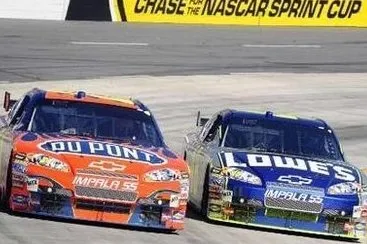
NASCAR Car of Yesterday: Emblematic of the Detroit Problem


America's stock car racing is to international racing as the Big 3 (Ford, GM, Chrysler) are to the international automaker industry -- both are the laughing stock (no pun intended).

NASCAR has become such a joke that something like Godwin's Law has developed: The longer a conversation continues among international racing enthusiasts, the more likely someone will make a joke about NASCAR or their misnamed Car of Tomorrow.

Foreign manufacturers see racing as a means to innovate. For automakers outside the U.S., fierce competition on the track leads to better products on the street. Companies like Honda and Toyota develop new technology for their race teams, then find ways to make it affordable for every day cars. American manufacturers, however, refuse to compete on the world stage -- both on the race track and on the street.

Almost all international touring car series require starting with a stock monocoque -- the entire car body (frame, shell, the whole shebang) -- straight off the factory floor. NASCAR starts by welding up a tubular frame (prefab from a single supplier). Then they add a thin shell of sheet metal. The trunk does not open. Headlights and taillights are stickers. NASCAR is less like a stock car racing league and more like a mock-up racing league.

Like the bloated American car companies and the fat cats that run them, NASCAR made their new Car of Tomorrow bigger and boxier, not sleeker and slimmer. International racing rewards those who build smaller, lighter, more efficient engines that squeeze more horsepower out of smaller and lighter engine blocks. The engine block and cylinder heads of NASCAR's Car of Tomorrow, on the other hand, is based on a V8 engine from the 1960s.

Instead of taking advantage of cutting edge technology, American automakers and NASCAR tap into obsolete technology that even car consumers aren't buying anymore. Even the American government has modernized more than NASCAR. It has been illegal to sell a new car that runs on a carburetor in America since the mid-1980s, but the Car of Tomorrow continued NASCAR's tradition of using carburetors.

The Car of Tomorrow also replaced the rear spoiler (on the body) with a rear wing (above the body) and replaced the front valance (aluminum curtain under the front bumper) with a front splitter. NASCAR borrowed these new design elements from international touring car racing series (e.g., DTM, BTCC) who have been using this type of rear wing and front splitter combination since the mid 1980s.

NASCAR's spoiler-splitter change came at a time when aftermarket rear wings had become very popular on street cars (think Fast and Furious). This was meant to reduce the benefits of "drafting" while providing the additional benefit of appealing (or so they hoped) to the young, hip import performance crowd (again, think Fast and Furious). Unfortunately, the NASCAR design has made the cars notoriously more difficult to maneuver, especially when passing. The cars are also more difficult to setup (prepare for each race tracks), and drivers most commonly describe the handling as "twitchy."

Like the Big 3 car companies, the Car of Tomorrow is a mirage, a diaphanous image that is easily seen through when held up to the light. The Big 3 tells taxpayers they are developing the cars of tomorrow -- NASCAR claims they are racing them. The sad reality is that America's automakers are recycling yesterday's technology and sponsoring the racecars of yesterday. NASCAR touts cost savings as a primary factor in its regulatory decisions, but team owner Robert Yates says that fuel injection would be cheaper. He summed it up,

If I had to close down my engine shop and lay off all of my guys, they wouldn't be able to get a job at a car dealership because they've been working on antique engines.

NASCAR engine builder Danny Lawrence (of Richard Childress Racing) says,

They still want it to be where the guys in the shop don't have to have a lot of engineers or computer guys.

Like NASCAR, the Big 3 automakers squandered billions of dollars in profits over fifty years rather than investing in research and development that would have ensured their future. If IBM had decided in its glory days not to try to make personal computers smaller and more efficient, we would not be debating an IBM bailout.

While NASCAR is touting a Car of Tomorrow that is less aerodynamic and less efficient, the rest of the world has moved on. Technical development is the crux of international racing. Although international racing leagues take on some aspects of spec racing, they largely establish regulations by spelling out desired outcomes. This encourages innovation because each team wants to develop a faster, more efficient, more powerful way to meet any outcome set by the sanctioning bodies.

Every year, Formula 1 enacts regulations to slow down the cars for safety reasons. But where there's a will, an engineer will find a way. At the end of every year, Formula 1 cars are faster and more efficient than the year before. NASCAR's Car of Tomorrow included some similar features. Crews have gotten better at setup, and drivers have learned to better handle the car, but there has been no innovation by the engineers.

The car bosses of yesterday have tried for decades to lay the blame of their failures at the feet of the United Auto Workers (UAW) union, but the unions don't design or market the cars. Unions do not allocate investment in research and development. The employees of automobile manufacturers do the same thing all American employees do. They negotiate the best compensation package they can, and then they sweat and toil every day to earn their wages. The buck stops in the corner office on the top floor -- not on the factory floor.

UAW workers have sacrificed much of their hard-earned salaries and benefits to help save these failing giants (and have already voiced willingness to make more sacrifices). After all, taking a pay cut is better than taking no pay at all. But while workers on the line have been cutting back on food, healthcare, and education for their families, the executives continued jetting around on fat bonuses and multi-million dollar salaries.

It never occurred to the Detroit 3 executives that they might sacrifice a little today for a better tomorrow until they shuffled into the capitol building two weeks ago, stepping off their corporate jets with hats in hand, asking for a handout and instead were treated to a dressing down. Their capitol cronies will surely give them their payola -- but they will join the bailout beneficiaries club only after suitable hazing. After all, what member of Congress would miss an opportunity to bolster their standing back home by publicly humiliating Detroit's finest tycoons.

When the Big 3 CEOs truckled into the beltway in ostensibly ultramodern hybrid vehicles, they paraded more of their cars of yesterday. Ford CEO Alan Mulally drove a Ford Escape Hybrid, and GM CEO Rick Wagoner drove a Chevrolet Malibu Hybrid. Both cars have a MPG (mile per gallon) rating roughly equal to the gas-drivenHonda Accord. The Ford Escape Hybrid cannot run on electric-only power above 25 mph. The Chevrolet Malibu Hybrid cannot run on electric-only power at all. Toyota and Honda have edged out the Big 3 automakers -- both in gas-driven and hybrid cars.

The $1 salaries the Big 3 CEOs are purporting are also part of the illusion. Ford CEO Alan Mulally made a public showing of accepting only a $1 salary in 2006, but he actually earned $7.9 million that year in other compensation. The CEOs of companies like Google and Apple have gotten rich on $1 salaries. This is not their first rodeo bailout.

The so-called "Detroit problem" is not going to change without changing the executive culture of Detroit. Just like NASCAR, the Big 3 are going to go round and round in 500 circles before finally realizing the answer is to turn in the other direction.

Follow Dawn Teo on Twitter: www.twitter.com/dawnteo

America's stock car racing is to international racing as the Big 3 (Ford, GM, Chrysler) are to the international automaker industry -- both are the laughing stock (no pun intended). NASCAR has becom...
 
 
  • Comments
  • 83
  • Pending Comments
  • 0
  • View FAQ
Comments are closed for this entry
View All
Favorites
Recency  | 
Popularity
Page: 1 2  Next ›  Last »  (2 total)
photo
HUFFPOST COMMUNITY MODERATOR
BearsLeft
They were just here a minute ago...
04:42 PM on 12/05/2008
I'm in my 4th year with my Ford Escape Hybrid. I drive up to 40 MPH in electric-only mode every day. That 25 MPH thing was an old article with bad info that has been perpetuated for years now.
05:29 PM on 12/05/2008
Your Escape Hybrid uses a Japanese transmission and Ford had to cross license technology to Toyota to avoid being sued. The Escape has a Japanese battery with a capacity of 1.8kWh for 3638 lbs. curb weight, compared to the Prius with 1.3kWh (2921lbs), which means that it's battery is weaker than that of the Prius when normalized to its weight. If you travel on electric only, you could as well walk.... the car can only do 1.5 miles on battery alone.

Just a few things that come to mind when I hear Ford Escape Hybrid...
05:51 PM on 12/05/2008
Ford wasn't almost sued. The engineers came up with a system (independently) that was so similar it was decided that it would just be cheaper to license Toyota's patents.

The use of the Sharp-made battery has caused friction, with Ford making claims that they were being neglected to the benefit of Toyota's program because Toyota has aminority interest in Aisin. This could be construed as Toyota deliberately interfering with Ford's hybrid production, and as a result Ford has signed agreements with Delphi (GM offshoot) to use domestically made systems.

"The two automakers struck an accord last year that included an exchange of patents: Toyota gave Ford license to use some of its hybrid technology, and Ford gave the Japanese automaker diesel and direct-injection engine technology.

That deal helped Ford accelerate its hybrid program, and it may have saved money by doing business with Aisin. The supplier, which discussed a similar project with Ford's Swedish carmaker Volvo, already had invested in the expensive factory equipment.

But the arrangement left Ford dependent on one of Toyota's keiretsu partners, and the links among keiretsu companies are very close. The chairman of Aisin, Kanshiro Toyoda, is a member of the automaker's founding family.

Ford says it developed the transmission with Aisin and stresses it is not buying Toyota parts -- although whether Ford uses Toyota technology remains a subject of simmering debate."

http://www.detnews.com/2005/autosinsider/0508/08/A01-272872.htm
photo
HUFFPOST COMMUNITY MODERATOR
BearsLeft
They were just here a minute ago...
09:13 PM on 12/07/2008
Ahh yes. The Toyota religion. Complete with dogma and deeply held beliefs. Are we even really worthy to buy cars from them, considering our simpering inferiority?
photo
HUFFPOST SUPER USER
biskitdaddy
Romnesia is covered under Obamacare!
04:14 PM on 12/05/2008
Something that hasn't been mentioned (at least I don't believe so) is that when Toyota began competing in the Craftsman Truck Series they actually had to go back to the drawing board and build a push rod engine. To this day, American auto makers are still using outdated, push rod cast iron engine block 'technology'.
05:01 PM on 12/05/2008
I disagree with the idea that pushrods are somehow "outdated." They are in fact a great way to build a lightweight, compact, and efficient motor. As long as you aren't looking for incredibly high specific output, pushrods make a lot more sense than DOHC. Look at Chevrolet's LS series of V*s, they're very light, and give reasonable economy and horsepower, together with an excellent torque curve. That's why people drop them into RX7s to replace troublesome, high-tech Wankel turbos.
05:25 PM on 12/05/2008
"It says a lot about the current nature of the sport that the most successful new engine in American racing today is a 90-degree pushrod V-8. But if you look past the pushrods, the cast-iron block, and the ancient Holley four-barrel carburetor, you can see that otherwise, Chevy's R07 is as advanced as any racing engine in the world. Guys who build winning engines for F1, Indy, and Le Mans will look inside Chevy's latest NASCAR powerplant and see the very same hardware and technology they use. The external packaging looks a little anachronistic, that's all."

p://www.hotrod.com/techarticles/hrdp_0803_chevy_nascar_engine/index.html
03:38 PM on 12/05/2008
Ok, don't buy into the hype. There's really one reason that NASCAR is a laughing stock overseas. It's because Europeans are snooty. I deal with them all day in racing forums, and if it didn't happen on the continent, it didn't happen. NASCAR fans are the same by the way. they can't stand F1, or European style endurance racing. It's just bigotry on both sides.

By the way, no automaker uses racing for production innovation, doesn't happen. The technologies are so removed from the environment of your workaday hack that there just isn't any relevance, none. They use racing for advertising, and for development of engineering talent. Racing is useful for teaching problem solving.

The V8s in NASCAR stockers bear no real resemblance to those in an old Camaro. They use two high-mounted cam-shafts, and they're of a set displacement. I'm not arguing that Touring Cars don't carry a higher quotient of technology, but they're also a lot more expensive. Incidentally no one laughs at Australia's V8 super-cars, which actually use a more primitive V8...

NASCAR's main flaw is the near exclusive use of high-speed ovals. Real race cars turn left.

Research, do some.
12:57 PM on 12/05/2008
This discussion is like apples & oranges....it's like saying all baseball players should play football. There are different "niche" races for different afficianados. I don't care if it's Nascars, Audi's, motorcycles, demo derbys, lawn mowers ...there are as many different kinds of racing as there are 'ball' sports. Just like the rest of America, you cannot make one size fit all - even when it comes to racing.
10:42 AM on 12/05/2008
Ms. Teo, NASCRAP is all about marketing, marketing itself and its corporate products that sponsor it. You fail to mention Toyota's involvement in this joke of a sport. They actually developed an cam-in-block motor just to compete in this series so they can shill their monster trucks to the rednecks. I actually used to be a fan, an engineer from these parts,Alan Kulwicki, won the 1991 Winston Cup with a team of 19 people including the secretary. Today, each team has more hair stylists that the whole Kulwicki team. The great era of NASCAR has long passed, remember North Wilkesboro, the Rock, Pearson, Yarborough, the Allisons, Earnhardt(sr), King Richard, Waltrip, ect. Kind of like the great era of the big three.
07:45 AM on 12/05/2008
Do you think its a coincidence that NASCAR is primarily only BIG in mainly Republican Southern white states? Both are really out of touch with where America is and needs to go!
11:15 PM on 12/04/2008
I would like to save the UAW, but I think the Big 3 have been selling moto-bling ----

I've had the usual long list of imports and then I sort of inherited a 5 speed manual 4-cylinder Ford Ranger truck, and now I know about Detroit.

As my techie uncle pointed out, the US auto companies hobble the lower lines to encourage you to buy a $40,000 barge.

It requires 89+ octane, mid-grade fuel, not regular. Its in the book. Some economy truck!
If you have the heater/AC turned on you are breathing outside smog-air. My Japanese truck had a recycle-cabin-air button.
The shift points on the transmission do not match the power curve of the truck. It shifts slow, like a 10-ton truck. My Japanese truck was like a sports car, or at least any Honda, in comparison.

These are negatives that you notice every time you use the truck. Do they really expect me to buy another?
12:59 PM on 12/05/2008
Trade your Ranger in on a GMC Sierra - I haven't had anything wrong (except a rear latch) with either of ours, they run on regular and they've both gone over 100,000 miles. The first was a 2000, this one is a 2004.
07:17 PM on 12/04/2008
Just to make sure my last comment was clear, you have no authority to speak about the automobile. If I read your profile correctly, you're in communications. What makes you think anyone cares what you have to say about the state of auto racing. This article reads like something one of my students would turn in - nice and paraphrased, nay, plagerized. I'm half tempted to submit the article to turnitin.com and see what pops up. Did you Wiki the whole subject or just pick up it all up in some racing history rag? Sources, sources, sources!

The "wing" comment is a perfect example. Unless you are a walking encyclopedia of NASCAR knowledge, how can you say half of the things in your article without citing a source? And just for the sake of accuracy, the wings and front valances were added for safety reasons, not for market appeal. They had "wings" back in the 80's - when was Fast and Furious made again?

And the "monocoque" chassis you mentioned being required in sports car racing, is also reinforced with a tubular frame just like the ones in NASCAR. Aside from carbon-fiber monocoques, like those used in exotic forms of racing, that is state of the art. Go talk about some other subject, and leave the racing discussion to those who know something about it.
07:56 PM on 12/04/2008
Well, Dawn didn't mention what industries she worked in. She could have been working for an automotive company as a communications manager or operations manager.

Googling up Dawn and I noticed that she has a lot of ties to the steel industry and has been doing jobs advocacy for quite a while.... perhaps she knows what she is talking about.

Besides, wings and aerodynamic devices were not added for safety. Wings etc allowed the car to go faster by generating more downforce and therefore more grip.

The difference between NASCAR cars is that they start wtih a tubular spaceframe and put a skin on it. Most other touring car/rally car leagues start with a standard monocoque and a roll cage is added for safety.

Anyway, if you're so sure it's plagarized, submit it to turnitin.com and tell us how it does.
08:00 PM on 12/04/2008
...and besides, your comment comes across as sounding rather sexist. Can't girls know about cars and racing too?
06:56 PM on 12/04/2008
You make a great point how the union workers are being blamed for this whole mess. What I find troubling is that it seems everyone wants to bust the auto unions, and they will use the bailout as the excuse. I have even heard talk about forcing the unions not to pay into the pensioners health care fund for two years.

Why don't all of those pandering auto executives give up their health care plans? cough! cough!
06:51 PM on 12/04/2008
There are so many problems with this article that I don't even know where to begin. NASCAR is a lame form of racing, but, I can assure you that the intention of automakers is not to develop new technology. NASCAR is the most watched form of racing in the world. The cars are nothing more than rapidly circling bilboards.

As for American brands competing on the world stage, you are wrong once again. I'll start with production racing since you brought it up. The Chevy Corvette and Dodge Viper dominate international sports car racing. Even the high-dollar makers have struggled to keep pace in production racing. And Chevy currently holds the two most covited track records of all: the factory production sports-car record at the Nurembergring (stock Corvette ZR-1) and the production sports salon (Caddilac CTS-V ) record at the same track.

Yes, the world's fastest sports car is a CHEVY. The world's fastest luxury car? A Caddilac. The world's fastest compact car? Also a chevy (Cobalt SS.) The bad news for you does not stop there. Before you regurgitate some crap you picked up on a car blog somewhere, maybe you should find some evidence to back your claims. And don't even get me started on which company has the highest average MPG, or the most offered hybrid models, or the number one innitial quality rating - our for that matter, which companies have already been bailed out by their home countries...!
09:24 PM on 12/04/2008
Thank you! I had to leave and I was worried no reasonable people would respond. Saying the US automakers are not innovative, and then backing up that statement by pointing to one of the most restrictive and rule-laden formula (not production-based) racing series - NASCAR - , is just flat out intellectual dishonesty.

The author says foreign automakers use racing as a test bed for R&D. I agree with that. But the author then ignores the R&D the US automakers do when they participate in the EXACT SAME racing series! Ford and GM both participate in WRC, WTCC, Grand Am, and endurance sports car and prototype racing events. Quite successfully too.

Great point about the Cobalt SS!
12:29 AM on 12/05/2008
Cobalt? See if you are so enthusiastic in 3 years. I mean come on, twist beam rear suspension?
Why the cheap and cheesy interior? Can't get both things right at the same time? Even the 'Vette interior is cheap and cheesy. As for innovation, that stopped in the mid 50's in the states. Most modern innovations came out of Europe. Air bags, Anti lock braking, stability systems, and NASCAR is not the most watched in the world, It only seems that way from that peculiar US perspective. LIke futbol, has an international audience that football cannot touch. It only seems that more people watch football. And I do not watch futbol.
11:53 AM on 12/05/2008
World's fasted sports car is a Koenigsegg CCX, 240+ MPH. A guy in Houston has a Toyota supra that does 229. The McLaren F1 does 240. Corvetter ZR-1 - maybe 200.

The Cobalt SS is a tube frame race car, and bears little resemblance to a roadworthy Cobalt.

I know of no cadillac that can smoke a MB SL65 AMG, or any of the 55 or 65 AMGs

The Nissan GT-R ($30K less than the ZR-1) will smoke the ZR-1 to tears. All wheel drive traction VS some 335's trying to get traction.
04:07 PM on 12/05/2008
You are incorrect about the Cobalt SS. It was tuned by GM engineers on the famed Nurburgring in Germany, where it completed a lap in 8:22.85 - beating the class record by 13 seconds.

http://www.autoblog.com/2007/10/28/officially-official-2008-chevy-cobalt-ss-bows-at-sema/

The ZR-1 and the Nissan GTR are arch-rivals on the Nurburgring. ZR1 time: 7:26.4 GTR time: 7:29. Both very impressive, both both beaten only by hyper-exotica, and the Chrysler Viper ACR: 7:22.1

http://en.wikipedia.org/wiki/Nordschleife_fastest_lap_times

Notice the Cadillac CTS-V down there at 7:59. The only Mercedes to beat it are the DTM and the SLR, which are pretty much exotics. The more "common" Mercedes CLK63 AMG Black Edition did the 'Ring in 8:02.
HUFFPOST SUPER USER
RedStateCenterLeft
05:23 PM on 12/04/2008
Spoken like someone who's been to a NASCAR race or two hundred. Consider how IndyCar gets so much negative publicity for using Honda engines. If the Detroit 3 made engines worth racing, we'd actually have a car series to call our own again.
photo
HUFFPOST SUPER USER
disgustedcitizen
04:35 PM on 12/04/2008
I am an old time, (I'm 62) NASCAR fan. I stared watching stock car races when they ran on small dirt and asphalt tracks in 1930 and 1940s era cars. That was to good old days. I still like NASCAR though the 60, 70s until in the late 80s they went from real stock showroom cars to the tube frame things they run today. From that point on, stock car racing stopped bringing innovation into auto manufacturing. For the last two decades, since NASCAR took off as a viewer sport, it has become a corporate logo platforms. From the look at the grandstands this last season, I, along with many others, do not spend as much time watching the races as we used too. IMHO, NASCAR would be a lot better off if they went back to racing real cars, (modified for racing and safety of course), much like the saloon racing in Europe. Then they might survive.
03:54 PM on 12/04/2008
Excellent summary of the state of Detroit. It would be a great mistake to give these three CEOs the keys again.
03:24 PM on 12/04/2008
Nice article. I'm a big NASCAR fan, but with this new "Car of Tomorrow" (which should be dubbed the "Car of Yesterday"), I've lost a lot of interest. I didn't even watch the last 5-6 races. There's absolutely no competition - unless you're wrecked or have a mechanical issue, once you're out front, you stay out front. Very few surprises this year. As for the Big 3 - they haven't a clue and haven't had a clue for many years.
03:24 PM on 12/04/2008
With all your focus on NASCAR (and it's obvious racing deficiencies), you do ill to ignore the international racing series in which domestic automakers do compete with extraordinary success.

GM:
The Corvette C6R has won the 24hrs of LeMans 5 times in six years. This is the pinnacle of sports car racing.
Pontiac has won four championships in the 2008 Grand-Am Rolex series.
In 2007, Pontiac sweeping the Daytona Prototype driver, team and manufacturer titles in the Grand-Am Rolex Series
In 2007, Rod Hall in his HUMMER H3 capturing his 19th victory of the Baja 1000 after competing in the event every year since its inception 40 years ago
In 2007, Corvette Racing sweeping GT1 drivers’, team and manufacturers’ titles in the American Le Mans Series with victories at significant events including Sebring and Petit Le Mans
In 2007, Cadillac netting the SPEED GT World Challenge manufacturers championship

This post could go on and on with Corvette, Pontiac, Cadillac, and other GM racing superlatives... so here's a link instead:
http://media.gm.com/division/gmracing/index.html

(I'll let the Ford fans defend their own, but it goes without saying Ford is very competitive in WRC, was in Formula One under the Jaguar marque, and Formula Ford is considered a feeder series to top-level racing)
03:41 PM on 12/04/2008
Except the article was about NASCAR, which pretty much dwarfs all the series you've mentioned. They would also back up the author's contention that improvement of the product is what keeps behinds in the seats. The Corvettes won class at Le Mans, not Le Mans. Audi has pretty much owned that series in recent history.

Pushrod engines may be ancient technology, but there is a case to be made for them as far as weight, complexity, and packaging which is why they will always be in racing. The big 3 could have pursued pushrod tech to even greater efficiencies for production use, but lagged there.
03:55 PM on 12/04/2008
You make valid points, but what I took from the article was the author's complaint that the US automakers refuse to compete on an international level - in racing or in regular products. I disagree with that thesis.

"American manufacturers, however, refuse to compete on the world stage -- both on the race track and on the street."
"Almost all international touring car series require starting with a stock monocoque -- the entire car body (frame, shell, the whole shebang) -- straight off the factory floor."
Check out how Opel and Chevy are doing in the WTCC - not too shabby.

"The sad reality is that America's automakers are recycling yesterday's technology and sponsoring the racecars of yesterday" Some would say that the old-fashioned pushrod engines are marvels compared to where they started, and they do compete with the world's best in applications like the Corvette.
03:45 PM on 12/04/2008
The point is the mass appeal of Nascar. The masses in the US don't watch much of other racing events that you've listed, much less know that they even exist.

Ford, however, has held its own. Ford's November losses (30.6%) is on-par with the foreign manufacturers (Honda ,Toyota, BMW -- 31.6% , 33.9%,k 28% respectively) while the losses of GM (41%) and Chrysler (47.1%) is in a league of their own. I attribute this to Ford's active participation in the global racing scene.
photo
HUFFPOST SUPER USER
onlinesavant
06:05 PM on 12/04/2008
That is irrelevant. America may watch NASCAR, but the rest of the WORLD watches Formula 1. Michael Shumacher was the most highpaid athlete in the WORLD, even being compensated more than Tiger Woods. Now, Lewis Hamilton (The Formula 1 champion.) is taking over that mantle. Which one matters more? A regional American racing circuit that gets more attention than it deserves because of all the corporate involvement, or a racing circuit that is known and viewed around the WORLD, and is watched with passion and pageantry?
09:28 PM on 12/04/2008
It's also irrelevant because whether or not Americans watch those other racing series, the technology is still being implemented in the American automaker's products. I don't have to watch the Chevy Cruze WTCC to benefit from the chassis and suspension tuning that the car will have from when it goes on sale here in the US in 2011.