iPhone app iPad app Android phone app Android tablet app More

Featuring fresh takes and real-time analysis from HuffPost's signature lineup of contributors
Dean Baker

GET UPDATES FROM Dean Baker
 

The Surefire Way to End Online Piracy: End Copyright

Posted: 01/23/2012 1:50 pm

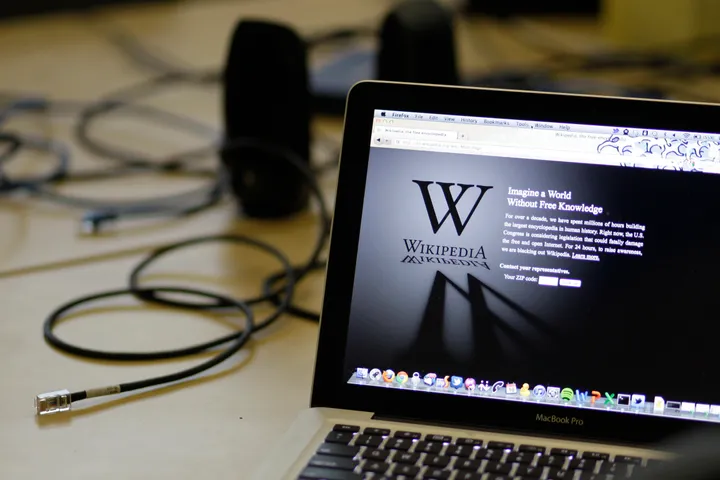
The popular rebellion against the Stop Online Piracy Act (SOPA) was an impressive display of democracy in action. The opponents of the bill were able to use the web and various social media venues to educate the public about the specifics of the bill. The resulting flood of e-mails, phone calls and letters caused the bill's congressional sponsors to cut and run.

While this revolt against the entertainment industry's effort to rein in the web was inspiring, there is a real issue at stake. It is getting ever harder for creative workers to get paid for their work.

This is seen most clearly in the music industry. Sales of recorded music in the United States dropped from $14.6 billion in 1999 to $7.7 billion last year. If sales had kept pace with inflation and the growth of the economy they would be over $23 billion today.

Furthermore, the overwhelming majority of this money stems from the work of small number of performers who are promoted by the major entertainment companies. The vast majority of singers and musicians get almost nothing from copyright protection.

However the answer to this problem can't be the SOPA route of closing off the web. The more obvious route is to develop alternatives to copyrights for funding creative and artistic work.

The idea of alternatives to copyright should not sound strange. There already is a vast amount of work supported through universities, private foundations and different levels of government. While the existing channels of funding are not sufficient to replace copyright-supported work, they can be expanded to fill the gap.

One route would be to allow individuals a modest refundable tax credit -- an artistic freedom voucher (AFV) -- that would allow them to give $75-$100 a year to support creative work. This money could either go directly to the worker or to an intermediary that supports specific types of creative work (e.g. an intermediary may finance action films, jazz music, or mystery novels).

To be eligible to receive money through this system a creative worker would have to register with the IRS in much the same way as a tax-exempt charity or non-profit registers. They would have to give basic information about what it is they do, just as charity for feeding the homeless or the Heritage Foundation think-tank must do to get and keep their non-profit status.

The IRS would not evaluate the quality of the work; it would simply have the ability to verify that a registered worker actually engages in the type of work claimed. It would also be desirable to require some minimal level of funds to be a recipient, like $1,000 a year per worker or organization, to prevent some of the most obvious ways to game the system.

The other condition for receiving the money is that the person would be ineligible for copyright protection for a substantial period of time (e.g. five years) after collecting money through the AFV system. This rule is to prevent the AFV system from turning into a farm system for the entertainment industry.

If someone makes a reputation with AFV funding, they would take a big risk by dropping out of sight for five years so that they could then produce work that was subject to copyright protection. This provision also has the benefit that it is completely self-enforcing. If a singer records a copyrighted record two months after his last check from the AFV system then the copyright is simply invalid. The singer will not be able to take any action against anyone who makes and sells unauthorized copies of their work.

From the standpoint of tax filers the contribution would be similar to a contribution to a charity. They would simply need some record of a payment having been made and could then deduct this amount from their income taxes or receive the sum as a negative income tax payment.

While there is a risk of fraud and abuse in this system, as with any system, there is far more opportunity with the current charitable contribution tax deduction. A wealthy person donating $10 million to a bogus charity would stand to gain $3.5 million from this fraud. The most an individual could pocket through cheating on the Artistic Freedom Voucher system would be the $75-$100 maximum contribution.

This funding mechanism would likely generate a vast amount of music, books, movies and other video material. None of this work would be protected by copyright. Rather than using SOPA-type bills to limit the Internet, creative workers would have incentive to spread their material as widely as possible. This would increase the probability that they would get more support through the AFV system in future years.

There may well be better ways than the AFV to support creative work, but the real lesson from the SOPA debacle is that we need to develop alternatives to copyright to support creative work. The institution of copyright dates back to the late middle ages. It may have served a useful function back then, but we will need something better for the Internet Age.


Follow Dean Baker on Twitter: www.twitter.com/DeanBaker13

The popular rebellion against the Stop Online Piracy Act (SOPA) was an impressive display of democracy in action. The opponents of the bill were able to use the web and various social media venues to ...
 
 
  • Comments
  • 471
  • Pending Comments
  • 0
  • View FAQ
Comments are closed for this entry
View All
Favorites
Highlights
Bloggers
Recency  | 
Popularity
Page: 1 2 3 4 5  Next ›  Last »  (10 total)
This user has chosen to opt out of the Badges program
photo
03:58 AM on 01/26/2012
I think you're underestimating how much money makes art bad. Look at what happened to Dubstep. It's the same story as Hip Hop and Rock. All paid jobs degrade the mind.
08:22 PM on 01/26/2012
Maybe they degrade the mind, but they also pay the rent.
photo
tazmodious
Left Hand of Darkness
11:37 AM on 01/25/2012
Putting your work out on the internet is like putting your wallet on the dashboard of a car parked in busy city street. Even if you lock your car, theives will figure out pretty quickly how to get in and take it. No matter what laws or anti-piracy technology is used to protect information on the internet, people will quickly figure out ways to get around it. People need to consider how they utilize the internet given this unchangeable reality.
07:16 PM on 01/24/2012
Let me see it I've got this straight:

You're proposing a sort of tax-free, government-run, version of Kick Starter, with a limit per contribution and a rule that recipients receive no copyright protection for 5 years.
08:48 AM on 01/25/2012
The main difference between this and Kickstarter (other than relinquishing the copyright) is that the donors would have no say over what gets created.

It's not really a very viable solution to piracy, IMHO.
06:34 PM on 01/24/2012
Dean, I don't understand how $75-$100 funds anything or is worthy of giving up protection over.
06:17 PM on 01/24/2012
Who would actually give up their copyrights for $75-$100 a YEAR. This is totally ridiculous! It's cool to hear about someone trying to find middle ground, but this is nowhere near the middle.

Intellectual property is the lifeblood of creative work, and copyright still provides some monetary compensation when a work is enjoyed by the public - and believe me I'm not just talking about major label or Hollywood.

I don't know anyone in the arts who would relinquish their copyrights for such a small amount of money. Good luck "funding an action film" with your voucher!

Unless I'm mistaken, it's back to the drawing board, Dean.
06:24 PM on 01/24/2012
ewhite,

please reread the column until you understand that i am not asking anyone to give up copyright for $75-$100 a year. Then you will be able to criticize my proposal rather than something that has nothing to do with anything I wrote.
05:26 PM on 01/24/2012
I don't agree with a lot of this article, but I'm glad that this is finally being discussed civilly and intelligently.
photo
HUFFPOST BLOGGER
Valerie Keefe
05:13 PM on 01/24/2012
I lean towards a Guaranteed Annual Income myself, but you have some good proposals.
photo
durant
Editor & publisher of Europeforvisitors.com
03:33 PM on 01/24/2012
Let's not forget that copyright doesn't exist in a vacuum, and the United States is a member of both the Universal Copyright Convention and the Berne Convention. Mr. Baker will need all the optimism he can muster if he hopes to sell his message not only to the U.S. Congress, but also to other governments around the world.
05:26 PM on 01/24/2012
Durant,

this violates no treaty -- we aren't getting rid of copyright, just creating an alternative. you'll need a lot of optimism and creativity to show how our trading partners would have anything to complain about.
photo
Artemesian
Spiritual Messenger of the Earth
02:00 PM on 01/24/2012
"Copyright does not exist to redress a wrong."

Oh yes, one aspect of it does, or the work wouldn't need protection in the first place. In our country, commercial interest always come first, but in other countries, the moral aspect of idea integrity is important. We were slow to accept that, but we have adopted it in 1988. (See Berne Convention.)

Don't think that the high tech companies don't have legal departments devoted to patent, trademark and copyright protection, because they do. It's the ultimate in hypocrisy to cry censorship when they do the same thing. If the system needs fixing, by all means, let's come up with solutions that everyone can live with.
photo
Scorpiaux
Ego is in the I of the beholder.
01:14 PM on 01/24/2012
Dean, if you had the power would you end copyright protection instantly or would you phase it out? If you phased it out, how would you go about doing it?

Copyright protection extends to books, so what do you think would happen to book writers if in the future everything they wrote would no longer produce an income as whatever they wrote was available for free just by another party electronically copying and distributing it at near light speed? Would the "joy of writing" be sufficient motivation?
05:28 PM on 01/24/2012
Scorpiaux,

please reread the piece as many times as it takes you to understand that I proposed a way in which writers would be paid. When you understand that nothing in my proposal involves an assumption that writers would work exclusively for the "joy of writing" then we can have a serious discussion.
photo
Scorpiaux
Ego is in the I of the beholder.
07:02 PM on 01/24/2012
I read your proposal the first time I replied. I just read it again. Your proposal is a non-starter. If I am going to produce intellectual property, I will let the market decide its value. If I were fortunate enough to produce a "Harry Potter" or a Mickey Mouse, I would not share any proceeds with anyone from that work other than with whom I had a contract to do so. That goes for traditional hardback and paperback books, and all electronic media on which it can be stored. If I produce something that is really bad or produce something that simply doesn't sell and I wind up with a big expense, I accept that possibility without reservation.

In the book world, 99% of all submissions get rejected. Of the remaining 1%, about half of those get published and create little to no profit. A few make a profit. A handful are best sellers that bring in huge revenues. Yet, hundreds of thousands of books get written each year from hopeful writers knowing what the odds are. Why swim in that pool if you are talented enough to produce something wonderful while many others are producing schlock? I see many posters on these boards whose real objective is to get something for nothing and they do this by proposing schemes that work against human nature. I can't see any way where your proposal will go anywhere but it would do a lot of harm if it got implemented.
photo
HUFFPOST SUPER USER
rosey7
10:23 AM on 01/24/2012
spikedawg71,

So, you steal because you were not signed to a major label and were not successful. Three of my sons were signed to a major label and they got screwed too. Even though they had 4 star reviews in Rolling Stone, major articles in nearly ever important music magazine as well as US mag etc. Sometimes, it doesn't work out great. However, they developed a following in Europe, especially in England, Wales, Scotland and Ireland where they filled halls of about 1500. Not exactly Coldplay but decent. Two still earn their living making music and their father does as well. His royalties have have been halved because of "file sharing."My third son in the group often appears in regional theater, which pays well. The two older sons
have small deals now and are releasing their music in England first. 9/11 happened the day before my boys were set to fly and begin a major tour opening for a huge act. The record company canceled their tour out of fear of what might happen. It didn't hurt the major act, they were well established. So, I do understand your disappointment. The only way to combat the limited music we have easy access to is to stop file sharing and beef up the artists and the labels with revenue so they take more risks. Please remember those who wrote the 'classics' which are downloaded daily are really being hurt by file sharing. Royalties take care of their families.
This user has chosen to opt out of the Badges program
photo
10:17 AM on 01/24/2012
I don't remember any one trying to sue the makers of blank cassette tapes or recorders throughout the 80's and 90's. I was exposed to (and owned for free) most of my library.
I'm betting the smaller (indie) market music industry is more alive than it's ever been with the ease of disseminating and marketing it's products which were normally kept down by the stranglehold of the major label oligarchs.
Far more careers have been launched by the internet than have been destroyed.
photo
HUFFPOST SUPER USER
UberdanSounds
I make music(al), funnies.
11:13 AM on 01/24/2012
Actually, that *did* happen. The RIAA also sued Mp3 manufacturer Rio as well. MPAA sued Video Cassette Manufacturers etc.

http://entirelysubjective.com/oh-the-irony/

http://www.pbs.org/wgbh/pages/frontline/shows/music/inside/cron.html
This user has chosen to opt out of the Badges program
photo
11:50 AM on 01/24/2012
Great links, thanks!
Without "free" cassette tape trading, I imagine my exposure to a variety of music might not have ever happened (or certainly been much delayed). There was certainly a stranglehold by major labels in those days that taping helped overcome, to the benefit of the emerging or alternative artist. Rarely will people buy a record or go to a show by an artist they have not heard, and the internet is unparalleled as an advertiser. The SOPA legislation seems for more draconian than theses earlier tariffs.
11:17 AM on 01/24/2012
Do you have any stats to back that up?
10:06 AM on 01/24/2012
I find the very concept of this insulting and beyond annoying. Mr. Baker, who has never created anything worth copyrighting that I’m aware of, makes a facetious argument based on socialist principles: your work product should feed me; I will in turn feed you. Trust me on this one.

The challenge with people not being protected by copyright comes from their own mistake in not copyrighting their work, a very simple process. And, when dealing with corporations, not protecting their work product by contract. Should they bow to a corporate contract, as I have done, that demands ownership of that work product produced while being paid by the corporation, then that is their choice. They are being compensated for that. If they want more, they need to join and support the unions that look out for screenwriters, songwriters and other creatives.

Creating is hard, time-consuming work. It takes dedication and persistence. It results, hopefully, in something that will continue to entertain, inform and inspire people for centuries. There is no expiration date on that, and as long as anyone is willing to retain their copyright through existing procedures, they should be allowed to do so.
11:19 AM on 01/24/2012
Actually, copyright no longer requires one to register the copyright.
03:15 PM on 01/24/2012
pgate,

You're pretty easily insulted. FWIW, people have copyrighted my work. You'd have to check with my publishers as to how much money they made, but presumably they expected to make money at the time of the contract.

You have a very odd idea of socialism. If artists freely contract to be paid through a non-copyright based systems, then this is socialism? I'll have to go reread my Marx. So the folks who write stuff for non-profits, which get big tax subsidies, must all be socialists? Very interesting worldview.
10:04 AM on 01/24/2012
Good ol' Bill Shakespeare was afraid to publish his work, because there was no copyright protection, at the time. If you wanted Shakespeare, you had to fork out a few pennies and go see it. You had no opportunity to read it, until his death, when those who knew him thought so much of his work that they assembled it and published it, post mortem. The ideas put forth in the article are unworkable. As for music, web sites could be created devoted to budding artists, where people could listen to new music for the cost of a commercial; the artist getting a cut of revenue from each commercial sat through.
03:16 PM on 01/24/2012
joepoppa,

care to give us some insight into why this plan is unworkable?
08:22 AM on 01/24/2012
There are already laws on the books making theft illegal so Corporations already have a way to prosecute those who are stealing.
What we are seeing is corporations demand, through their powerful lobbies, our government, using our tax dollars, bare the entire burden and expense of "finding the thieves" and then bare the entire expensive of prosecuting them.
Also, SOPA relies on the ability to shut down a website with NO TRIAL or evidence. Just gone.
They can't stop the signal so this entire thing is a ridiculous charade that will NEVER be effective and will just cost taxpayer money chasing ghosts.