
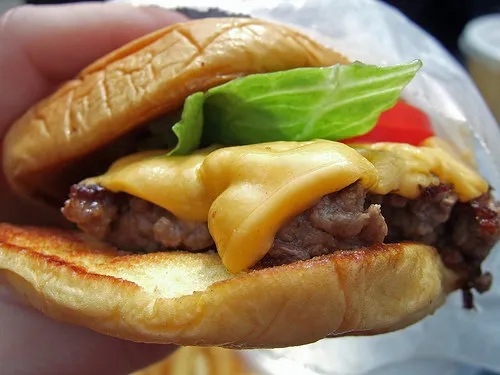
It's lunchtime at your child's school. Do you know what's on the menu?
You may have heard the expression, "there is no such thing as junk food...there is just junk." But are you aware just how much "junk" is being sold at school?
Over the past 20 years, at the same time physical education classes are being reduced or eliminated altogether leaving children with limited physical activities, our schools have been invaded by junk and soft drink vending machines. These machines, along with lunchroom snack lines offering pizza, french fries and fattening desert cakes, serve as intoxicating competition to healthier alternatives available in your child's cafeteria.
Because a nutritious diet is essential to maintaining good health, I often talk about how we need to make sure our children are provided the healthiest foods possible, but not as an option. It's a lifestyle I practice as well as teach.
For more than 10 years, only fresh, organic whole foods have been served at the Imus Ranch for Kids with Cancer. Even though the kids are accustomed to eating fast food meals at home, while at the ranch, I found children really enjoy harvesting the fresh fruits and vegetables from our greenhouse and learning just how good tasting healthy foods can be.
It's unacceptable for these children, especially since they are battling cancer and other illnesses, to have to go back to school and their communities and eat the very junk that may have made them sick in the first place.
When Michele Obama planted her White House garden she did more then provide curious reporters a photo opportunity of our new First Lady, she illustrated the mindset of many young mothers who are truly concerned about the junk dependency that has come to dominate the diets of America's children.
Concerns about the rise of childhood chronic illnesses have intensified in recent years. According to the Centers for Disease Control and Prevention (CDC), the increase of these childhood diseases is related, in part, to poor nutrition.
Studies have also shown "animal fat is implicated in many of the chronic degenerative diseases that afflict industrial and newly industrialized societies, particularly cardiovascular disease and some cancers."
With childhood obesity rates skyrocketing, doubling in young children and tripling among teenagers in just twenty years, the need to change the way we teach our children good eating habits is becoming an important aspect of preventing disease and an crucial factor in managing health care costs.
Clearly, parents need to take control over what their children eat. As experts continue to acknowledge the health benefits derived from plant-based diets, replacing sugary fat and carbohydrate saturated snack foods with organic fruits and vegetables and healthy meals is a parental responsibility more and more mothers are embracing.
Schools share this responsibility as well.
Like parents, our schools are in a unique position to introduce, model and emphasize the value of healthy eating habits. In the structured school environment, where children spend most of their day, impressionable students, at an early age, can be taught good nutritional habits that could have a profound influence on their over-all well being and benefit them throughout their lives.
Unfortunately, our school systems have not set the kind of example one would expect and have actually undermined parent's efforts to provide their children healthier meals. Instead of setting high standards and leading by example, our schools have become junk food "enablers" and have contributed in the creation of a "Junk Generation."
Talk about sending a mixed message.... teaching children about eating healthy foods in the classroom only to send them into a hallway lined with junk filled vending machines leading to a cafeteria line offering even more junk.
How can we expect our children to resist this kind of daily temptation of sugary sodas and snacks? And why should they, if schools are in essence saying "this junk is OK? "
The struggle to provide and interest students in healthier school meals has been fought by nutritionists and children's health groups for years but often overshadowed by other competing "priorities" and as always, special interests.
In a 2001 Washington Post article, US Schools Hooked on Junk Food Proceeds, David Nakamura investigated just how addicted school administrators have become on the junk revenues creating "a system that gives schools a financial interest in selling them [children] more snacks."
"The explosion of vending machines in public schools is a relatively new phenomenon. As recently as a decade ago, such machines were uncommon on campus. But as principals and PTAs began to recognize the potential payoff of vending revenue during a time of increasingly tight school budgets, the number grew quickly."
In a bit of irony, that same year, Surgeon General Dr. David Satcher identified schools as one target when he issued a Call To Action To Prevent and Decrease Overweight and Obesity.
Schools are identified as a key setting for public health strategies to prevent and decrease the prevalence of overweight and obesity. Most children spend a large portion of time in school. Schools provide many opportunities to engage children in healthy eating and physical activity and to reinforce healthy diet and physical activity messages. Public health approaches in schools should extend beyond health and physical education to include school policy, the school physical and social environment, and links between schools and families and communities. Schools and communities that are interested in reducing overweight among the young people they serve can consider options listed below. Decisions about which options to select should be made at the local level.
A few years later, in response to a request from Congress, the Government Accounting Office (GAO) issued a report that examined whether school lunch programs were "meeting nutritional standards, encouraging healthy eating" and "what barriers schools faced" in providing nutritious food. The GAO Report echoed many of the points raised in the Washington Post article.
Schools are moving toward meeting school lunch nutrition requirements, but more improvements are needed...Students may need more exposure to nutrition education to effect positive changes in their behavior, and most students have \access to foods of little nutritional value, such as soft drinks and candy, at school.
...barriers to providing nutritious meals and encouraging healthy eating included
budget pressures and competing time demands. Regarding providing nutritious food, officials said when they introduce healthier foods, they take the risk that students will buy fewer school lunches resulting in loss of needed revenue. Regarding encouraging healthy eating, officials said the focus on meeting state academic standards limited time to teach nutrition. Also, schools paid for special activities or other items not covered in the school's budget with profits from vending machines and snack bar sales.
The Report also noted how little time is actually invested in nutrition education.
The median amount of time spent on nutrition education as part of schools' health education classes was 5 hours during the elementary years, 5 hours during the high school years, and 4 hours during the middle school years.
In a follow up request from several members of Congress, the GAO was asked to further investigate "how prevalent is the sale of "competitive," otherwise known as junk foods, in schools across the country?"
Nearly 9 out of 10 schools sold competitive foods to students in school year 2003-2004, and the availability of competitive foods sold in middle schools and through a la carte lines has increased over the last 5 years.
The Report found 99% of high schools, 97% of middle schools and 83% of elementary schools offered junk as an option to their students and that "generating revenue" was a weighty factor in the schools decisions to offer junk to their students.
Many schools, particularly high schools and middle schools, generated substantial revenues through competitive food sales in 2003-2004. Specifically, the nearly 30 percent of high schools generating the most revenue from these sales raised more than $125,000 per school.
Ah yes...there's that financial incentive again.
"Parents should know that our schools are now one of the largest sources of unhealthy food for their kids"... "Why would we allow schools to sort of poison our kids with junk food?" said Senator Tom Harkin, who requested the GAO investigation.
Why indeed Senator?
Government officials and medical professionals repeatedly tell us, and Congress, that childhood obesity, and the diseases and health care costs that go with it, are linked with poor nutrition. And yet our taxpayer funded schools are permitted to serve up the very foods that kids should be avoiding. How insane is this?
The federal government needs to take responsibility for its own contribution to the educational system's junk food dilemma.
Instead of maintaining the highest standards, the U.S. Department of Agriculture (USDA) definition of "foods of minimal nutritional value" hasn't been reviewed since 1979 and only bars the sale of these foods during designated meal times. Included on the list of "foods of minimal nutritional value" is soda water.
Does it make sense to ban the sale of soda during lunch only to make it available to students any other time during the day?
According to national school nutrition standards, candy bars, cookies, donuts and french fries aren't even considered junk food and nutritionally acceptable. The USDA does provide guidelines on "healthier" meals, but this is provided as a resource to schools and is not a law.
The movement to pressure schools to restrict the sale of junk began picking up momentum again in March 2006 after Danica Kirka (AP) reported on a study published in the International Journal of Pediatric Obesity. The authors predicted that approximately half of the children living in North America will be overweight or obese by 2010, resulting in "profound impacts on everything from public health care to economies."
A few months later the Center for Science in the Public Interest (CSPI), a consumer advocacy group that has been urging Congress to set new nutritional standards, issued a School Foods Report Card giving most states school systems a "failing grade" when it came to controlling junk food sold to students.
"Although some local school districts have school foods policies that are far better than the state standards, far too many states allow way too much junk food in schools," said CSPI nutrition policy director Margo G. Wootan. "With junk food tempting kids at nearly every other public place in America, schools should be one place where parents don't have to worry about what their kids are eating. States should continue to enact stronger nutrition policies, but since the school lunch program is, after all, a federal program, Congress should take action to ensure that all school foods are healthy."
The CSPI report was followed by a 2007 Institute of Medicine report that once again recommended new dietary guidelines and encouraged schools to stop selling junk food.
It is difficult to understand why so many reports and recommendations did not produce any policy changes. For the past eight years, calls to reform nutritional standards and ban junk food from our schools continued to go unanswered. Perhaps President Bush's selection of Roderick Paige to be the first Secretary of Education might provide some insight. According to the previously mentioned Washington Post article, "Paige help land a $5 million contract with Coca-Cola" when he was in charge of Houston's school system.
And while some progress is being made as more schools are beginning to offer vegetarian meal options, the changes have been voluntary and are primarily found at the high school level. Two-thirds of states continue to have inadequate guidelines or no policies relating to school nutrition.
With a new administration, and a First Lady who is making healthy diets and child nutrition a priority, children's health advocates are hopeful that President Obama and the Congress will finally steer our schools in the right direction.
And while some people feel President Obama is taking on too many issues, he wasted no time in showing his support for improving child nutrition and the quality of school meals.
One month after taking office, President Obama "proposed a $1 billion a year increase in funding for US child nutrition programs."
Just last month, President Obama again called on Congress to pass the Child Nutrition Reauthorization Act. The following day, while working with students at a Washington D.C. elementary school, Mrs. Obama spoke about the importance of healthy school meals. In her remarks, the First Lady made several points worth repeating:
Obesity, diabetes, heart disease, high-blood pressure are all diet-related health issues that cost this country more than $120 billion each year. That's a lot of money. While the dollar figure is shocking in and of itself, the effect on our children's health is even more profound. Nearly a third of the children in this country are either overweight or obese, and a third will suffer from diabetes at some point in their lifetime. In Hispanic and African American communities, those numbers climb even higher so that nearly half of the children in those communities will suffer the same fate. Those numbers are unacceptable.
And for the first time in the history of our nation, a nation that is one of the wealthiest on the planet, medical experts have warned that our younger generation may be on track to have a shorter life span than their parents as a direct result of the obesity epidemic. Again, that is just unacceptable.
So how did we get here? How did we get in this position where we have become such an unhealthy nation, and our children are at risk? And the fact is there are a lot of factors, but some of the more simple ones are that too many kids are consuming high-calorie food with low nutritional value, and they're not getting enough exercise. It's plain and simple: They're not eating right and they're not moving their bodies at all.
But unfortunately, for too many families, limited access to healthy fruits and vegetables is often a barrier to a healthier diet. In so many of our communities, particularly in poorer and more isolated communities, fresh, healthy food is simply out of reach. With few grocery stores in their neighborhoods, residents are forced to rely on convenience stores, fast food restaurants, liquor stores, drug stores and even gas stations for their groceries.
But government also has a role to play in this, as well. For so many kids, subsidized breakfasts and lunches are their primary meals of the day. It's what they count on. It's where they get most of their nutrition.
And the USDA's National School Lunch Program serves approximately 30 million meals each year to low-income children. And because these meals are the main source of consistent nourishment for these kids, we need to make sure we offer them the healthiest meals possible.
So to make sure that we give all our kids a good start to their day and to their future we need to improve the quality and nutrition of the food served in schools. We're approaching the first big opportunity to move this to the top of the agenda with the upcoming reauthorization of the child nutrition programs. In doing so, we can go a long way towards creating a healthier generation for our kids.
Selling junk in schools sends a negative and conflicting message about how important good nutrition is for an over-all healthier life. Kids who want salty, transfatty filled snacks or a sugar packed drink or treat will find a way to get them. But our schools should not make it easy for them and certainly should not be encouraging bad eating habits in order to raise additional revenue.
Schools should be teaching the value of making healthy food choices and then lead by example in the lunchroom.
The choice to eat nutritious foods is difficult for young people who don't fully understand the unintended and often profound consequences of a junk diet.
In a school environment, healthy, nutritious foods should not be an option...they should be the only option.
Additional Resources:
USDA's Food and Nutrition Service - National School LunchProgram Fact Sheet
Center for Science in the Publics Interest
School Nutrition Association