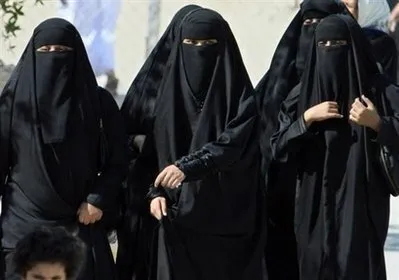
Just last month and for the first time in history, a Saudi king appointed a woman to his council of ministers. Noor Al-Fayez is the new deputy minister for women's education in Saudi Arabia, a country where women are still not allowed to drive a car. The astonishing appointment of Al-Fayez, a middle-class woman with no ties to the royal family, startled millions of people.
It also made me wonder what it is like to be such an accomplished woman in the ultimate man's world -- the Arabian Peninsula. For insight I spoke with Hoda Kanoo, founder of the world-class Abu Dhabi Music & Arts Festival that begins its sixth season this Saturday, and Anita Mehra, marketing and communications vice president for Dubai International Airport, one of the fastest growing air hubs on the planet.
Both women surprised me with their observations about working women in the United Arab Emirates, where a surprisingly high number (30 percent) of public-sector management positions are held by women.
The following is an interview with Hoda Kanoo and Anita Mehra:
When your neighbor, Saudi Arabia, put a woman on its council of ministers, what did you think?
Hoda Kanoo: I was delighted. From my point of view, it was inevitable. We have two sexes for a reason. Without both male and female sectors, you don't have a complete nation. Strength comes from educating both...from giving people equal opportunities. The future is men and women working together.
Yes, but the Arabian Peninsula today is still a man's world.
Anita Mehra: Honestly, the first time I felt that way was at my very first job in San Francisco, where I was a research assistant at an investment banking company. All of the top analysts and stockbrokers were men. The women were all support staff, and treated as such with lots of bossing around and expectations that we would get coffee and run errands -- things they would never ask a man to do.
I almost hate to ask...did you get coffee and run errands?
AM: I refused to do those chores. I let my American boss know in a nice, civilized way that in the Middle East women do not run errands or get coffee. I treated him with respect, and made it clear I expected the same from him. This early experience helped me deal with the challenges of working in a man's world.
But there must have been difficulties in the UAE as well.
AM: After working for three years at Dubai Duty Free as a senior marketing manager, I hired a man to be my deputy. Although he was junior to me, his pay package was larger because he was a man. When I spoke to the managing director of the company about this discrepancy, he told me that the only way I could earn the same benefits package was to accept a second set of job responsibilities on top of those I already had.
He suggested you work two jobs?
AM: And I did this for two years, until I was able to change the system. Now women at that company receive packages that are equivalent to men.
HK: If I may say this, I think women everywhere in the world find it difficult to achieve their goals and prove themselves. But in the UAE, what is special about this country is that the leadership supports us. This does not mean it is easy for women in art, in culture, in business life. We need to prove our competence. But in our country the support of leadership makes a lot of difference. I couldn't produce the festival without the support of the government leaders who help me find funding.
What is the biggest misconception women in the West have about Arab women?
AM: Arab women are no less assertive than their Western counterparts, but it is not in our culture to be confrontational. I believe this attitude engenders an atmosphere of openness that helps in any business situation. I have never encountered anything but the utmost professionalism in my interactions with male business colleagues in Dubai. Gender is not an issue here.
HK: I think stereotypes about women in the UAE are caused by a lack of knowing each other well. With the world becoming so close, it is important for women from both sides to learn more about each other, and to enjoy the process of discovery. Reach out, always reach out.
At the music festival, are people genuinely interested in performers from other corners of the world?
HK: They are passionate about them. There's a wonderful energy. Sometimes we have more than 100 nationalities in the same hall. This season's performers include Romanian soprano Angela Gheorghiu, Italian tenor Andrea Bocelli, the Bolshoi Ballet, Irish flutist Sir James Galway, French pianist Jean-Yves Thibaudet, Tunisian singer Latifa, and many more top international musicians and artists.
Does the program reach out to young people?
HK: Absolutely, and this is closest to my heart. The artists who come from abroad give lectures and master classes for the children of the UAE. Every time this happens I see a different person emerge -- a young person with more confidence, with a greater appreciation for other cultures. It's just amazing. This is something I believe in. I live it every day. I feel it every day.
* * * *
The sixth annual Abu Dhabi Music & Arts Festival features a varied program of ballet, opera, classical and Arabic music, a visual arts component, and an educational program. The two-week festival runs from March 21 through April 2. For event and ticket information click here.
Follow Diane Tucker on Twitter: www.twitter.com/dianetucker
Kamran Pasha: Lifting the Veil on the Debate over Veils
The debate over Muslim dress and women's rights will continue. But it needs to be seen in a broader issue of cultural values and history.
Pius Kamau: What Went Wrong With Feminists?
As armies of men all across this world aim their guns and sharp knives, having declared war on girls and women, the Western feminist movement seems to slip deeper into a strange torpor.
Magda Abu-Fadil: Euromed Women Must Master Media to Promote Economic Rights
Euromed women need legislative reforms and changes in mindsets to undo centuries of gender inequality and economic marginalization, but should push harder to publicize their cause.
Magda Abu-Fadil: Is Coverage of Arabs, Islam Good? Western Media Under Scrutiny
While media in the Muslim and Arab worlds have opposed the war in Iraq and in other Muslim countries, their reports and editorial lines can hardly be viewed as monolithic.
Want to reply to a comment? Hint: Click "Reply" at the bottom of the comment; after being approved your comment will appear directly underneath the comment you replied to
I would say for the most part UAE is where the US was a generation or so ago. A key issue is property rights and those right are guaranteed. I also read that the Constitution guarantees equal rights as well as access to education and access to where they want to work.
By the way, the music festival sounds fabulous!
Maha Al Ghunaim, Chairman of the Board of Global Investment House - Kuwait.
Gulf One Investment Bank, Dr. Nada Al Taher, CEO
Embassy of the Kingdom of Bahrain, HE Houda Ezra Ibrahim Noonoo (If you know your ME surnames, you know her religion!)
Also, Noor al-Fayez is not legally permitted to enter the building in which her department is housed or to be in the same room with any of her co-workers. Her husband could prohibit her from working, or from leaving the house, at his whim, and she would have no recourse to prevent him from doing so. She is extremely conservative and the chances that she will challenge the status quo are slim to none. Don't applaud too loudly; my money is on this token appointment going nowhere.
See Diane Tucker's Profile
I will try to interview Noor al-Fayez. It would be interesting to hear how she views her new appointment.
Ms. Mehra's highly sanitized account of life as a woman in the Middle East squares with her cosmopolitan background, but reflects an exception and certainly not the rule. Emirati women are not as completely brutalized by the state as their Saudi sisters, but they do not share equal rights with men under the law. An Emirati woman who marries a noncitizen must relinquish her UAE citizenship. There is no legal means for women to protest gender discrimination. Women were only allowed to vote for the politically powerless elected councils as of 2006. And, as independent advocacy organizations are prohibited in the UAE, there is no means for women to lobby for change in their second-class status other than waiting for the male-dominated government to bestow them additional rights as its sees fit (or doesn't).
While it is very convenient to judge the status of women in the Emirates by the experience of two women from wealthy families who were not born there, it hardly reflects reality. All these interviews prove is that being wealthy and well-connected helps one to overcome gender barriers in the xenophobic upper-class circles of a country where destitution, labor abuses and sex trafficking run rampant in the 99% of the country that is never made visible to the rest of the world.
It is very subtitle. What is a glass ceiling in the west works differently in the ME, especially in SA. I gave a talk at a conference in the ME for education in a specific industry in the ME. An industry that is mostly occupied by men in the west. It was filled with women, mostly women from Saudi. On the surface, women are still shut out in SA.
/convictio ns, women have a good chance.
I have visited institutions in Egypt. I was introduced to senior people by young male workers -- the ranks of middle management. Their superiors were women. The BIG bosses above them were men. My colleagues told me that the women, their immediate bosses, were the real bosses, the ones who really made things move.
Everyone knew this.
In Jordan and Lebanon, it is much easier for women.
For those in Israel who are not confined by religious traditions
About 30 years ago I worked for a scientific instrument company in England. One task I was alloted was to travel to Iraq to help Iraqis work with the instruments we made. I worked with Iraqi women scientists, so it seemed that Arab women had good jobs at that time.
Of course, that was in the days when a certain Mr. Hussein was in charge, and long before the United States hanged Mr. Hussein and allowed Iraq to drift towards becoming an Islamic Theocracy.
Right, and those were the women Mr. Hussein's sons did not decide to kidnap and rape without punishment. I bet those women were also not from an opposition party to Mr. Hussein therefore their families were not subjected to kidnapping, torture and death. Of course Iraq was not a theocracy before, Hussein was the almighty, and got rid of anyone who opposed him and persecuted religious groups that were not his own.
Actually, you are seriously incorrect about the status of women in pre-invasion Iraq, and obviously you are not from there (nor I) but religious persecution was not a major problem in society as compared to tribal loyalties and issues.
Why one feels the need to justify the invasion at this point is beyond me.
Anyway, the record is clear: women were definitely better off pre-invasion.
Dealing with the Hussein offspring is another serious problem in itself. Power corrupts.
Headlineis nice. Picture is worth 1,000 words. Nice try, though.
My thoughts exactly.
"Anita Mehra: Honestly, the first time I felt that way was at my very first job in San Francisco, where I was a research assistant at an investment banking company. All of the top analysts and stockbrokers were men. The women were all support staff, and treated as such with lots of bossing around and expectations that we would get coffee and run errands -- things they would never ask a man to do."
I'm sorry, when was she last here? 1957?
I'm not buying it, sister. Sorry.
See Diane Tucker's Profile
Ms. Mehra was referring to the late 70s, early 80s -- very different times, even here in the States. Or are they? If anyone out there still feels there's a discrepancy between how men and women are treated in an office setting, I'd love to hear from you.
Thanks for reading!
You must be very young, or out of touch. In the 70's and early 80's life was not nice for women in the working world. I have seen women fired for not sleeping with their boss, for not getting the coffee, for not taking the humiliation.
You must be logged in to comment. Log in or connect with