iPhone app iPad app Android phone app Android tablet app More

Diane Tucker

Diane Tucker

Posted: March 23, 2009 12:10 PM

Joshua Cooper Ramo: Surprise! Global Financial Crisis Could Turn China Into A Superpower

What's Your Reaction?

In the summer of 2007, the investor Bill Browder (of the $4 billion Hermitage Fund) spotted a small news item in his morning paper. For the first time an American auction of debt from leveraged buyout deals failed to draw enough bidders and had to be shut down. Browder recognized this seemingly insignificant event for what it was: the world had run out of its ability to absorb new debt. "This is it," he told Joshua Cooper Ramo via telephone. "This is the end. Now it will all start to unravel."

Joshua Cooper Ramo is a former foreign editor of Time magazine. Today as managing director of Kissinger Associates he splits his time between New York and Beijing, where he observed first hand how quickly the Chinese responded to early signs of the global banking crisis. Yesterday I spoke with Ramo about the possibility China might actually benefit from the world-wide financial meltdown.

You've said the global financial crisis could turn China into a superpower. How likely is that?

Joshua Cooper Ramo: If you had said a year ago that the Chinese banking system was more resilient than the American system, you would have been laughed out of the room. But the fact is, the Chinese banking system has been through so much stress during the last few decades, they are in a much better position than the U.S. to deal with the global financial crisis. The Chinese have been actively building systems that are capable of surviving all kinds of shocks, and they are more suspicious of markets than we are -- they see everything as having the potential for collapse. As a result, China has developed a more resilient command-and-control economy.

Some experts say there is a fundamental difference in the way people think depending on where they were raised, China or America. Do you think the Chinese are better able to see the big picture?

It's not so much that they see it better, just that they see it differently and take in a wider range of influence and possibility. At the University of Michigan, experimental psychologist Richard Nisbett recruited students to look at a series of pictures with complex backgrounds -- for example, a tiger in the woods. While the American students focused on the foreground object -- the tiger -- the Chinese students looked first at the background, probing the woods with their eyes. It would be too simplistic to say that the U.S. students stared at the tiger exclusively, but it is true that when Nisbett tested to see what they recalled, this was more or less the pattern that emerged. The Chinese students, on the other hand, found the environment much more powerful than any single object or individual. Context was everything.

Is the inability to understand context a growing problem for Americans?

Yes, I think it is. We often miss the fact that the problems or dangers we face are parts of a complete system and not just isolated blips of risk. For example, we thought we could contain the subprime crisis before we noticed our entire financial system was in trouble. We focused on removing Saddam before we understood all the forces swirling around him. Americans have a view of the world that is rooted in one of the most ancient concepts of Western thought: we believe that to understand something complex you must break it into smaller pieces. But this approach may no longer be suitable to today's world.

So China is better prepared for the unthinkable?

I think China is better prepared for the fact that things can go unthinkably bad or unthinkably good. Thirty years ago, who would have predicted the Chinese would lift 400 million people out of poverty? Twenty years ago, who would have predicted the Chinese would have two trillion dollars worth of foreign currency reserves on their balance sheet?

Aren't the Chinese facing urbanization problems that are unprecedented in scale and complexity?

There is no parallel in the West. The situation in China today is unique, so the Chinese will have to come up with a solution for themselves. So far the government is relatively happy with the pace of economic development, especially over the past decade. Their fiscal stimulus policies appear to be taking hold. Things are going better than anyone anticipated.

But aren't most of their manufactured products copied from the West?

The Chinese are moving rapidly to transcend copying. Many of the most interesting things being developed in China today you won't see anywhere else in the world -- the way their elevators operate, the kinds of advertising you see in their large cities, the unique internet communities they have.

China now has an underground base in the South China Sea that can launch nuclear submarines without being observed from the sky. Does the U.S. fail to appreciate just how quickly new technology is answered by newer technology?

It's less about tactical innovations like particular submarine bases and more about understanding the Chinese philosophy of war and conflict. The Chinese approach to warfare is very different from ours. Partly this is because they're a developing county and don't have the military strength that we do. But it is also a reflection of a different set of ideas about being indirect in confrontation. For example, rather than building 500 fighter planes to intercept every American fighter plane, they would try to take out our satellite navigation system. Frankly, I don't think the U.S. is prepared to deal with the way the Chinese are developing their military.

In your new book, The Age Of The Unthinkable, you said most U.S. discussions with China are shaped by the American desire for direct confrontation. I can't believe that tired old tactic works any more.

It doesn't. The lesson of the last ten years has been that when you confront China directly -- whether it's on human rights or issues surrounding Tibet or Taiwan -- you don't make much progress. Not only did we fail to move the Chinese in those areas, we made them nervous about cooperating with us in other areas. To have a productive relationship with China it's important to work across a large number of fronts all at once, as opposed to just picking areas where there is likely to be disagreement, which has been our habit in the past.

In your book -- which is a terrific read, by the way -- you argue that real power isn't always loaded into obvious implements like armies.

Today real power is the ability to adjust and come back strong when you're faced with an unexpected shock. That's because in the future we will be constantly surprised -- sometimes for the better, sometimes for the worse. All of the things that are changing our world, like jet travel and violence and financial markets, are what make us modern and we accept the risks that go along with them. But they also make our world more interconnected, so now a shock to one part of the system presents a greater risk to other parts of the system. I like to say we need a global security strategy that looks like the human immune system. There's no question there are a lot of dangerous germs floating round. Our ability to survive depends on our ability to absorb those bugs and not let them knock us out.

Younger people tend to be more resilient. What does that say about President Obama's cabinet?

You hate to generalize, but I do think young people are more accepting of change. It's no accident that Obama won the presidency on the motto of change. The younger generation has seen so much change in their lifetime, they have a very different perspective. But it's really not about age. You can be 30 years old and very conservative. What matters most now is an innovative spirit and a belief that it is possible to have radical, disruptive change for the better.

You've recommended -- not entirely in jest -- that the U.S. create a National Skepticism Council. If we did, who would be on it?

People from outside the government who have expertise in information technology or science or the ability to speak Chinese or Arabic -- any expertise that is really relevant to today's world. Also, they should be out-of-the-box thinkers. The goal would be to examine any policy that sounds like a good idea, and poke holes in it. For instance, after 9/11 our reaction was to lash out and attack. But what if we had spent an equal amount of money building schools and hospitals in the region? The U.S. would be in a very different position today.

We need fresh minds thinking about interesting ideas that could inform the policy-making process. In addition, the U.S. and China must begin to work together at a level of depth that would have been unthinkable three or four years ago. Of course, by definition that would dramatically raise China's position in the world.

Joshua Cooper Ramo is the author of the new book The Age of the Unthinkable.
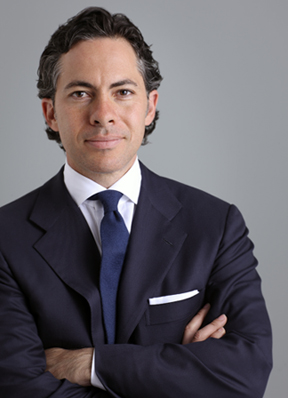
2009-03-23-Ramo.jpg

Follow Diane Tucker on Twitter: www.twitter.com/dianetucker

In the summer of 2007, the investor Bill Browder (of the $4 billion Hermitage Fund) spotted a small news item in his morning paper. For the first time an American auction of debt from leveraged buyout...
 
 
  • Comments
  • 77
  • Pending Comments
  • 0
  • View FAQ
Comments are closed for this entry
View All
Favorites
Bloggers
Recency  | 
Popularity
Page: 1 2  Next ›  Last »  (2 total)
03:37 PM on 04/01/2009
You have lots of good insights here. I must reas your book. I found, while living in China, that I had to change my thinking way in order to get along. At first it seemed that China was "behind" the western world, and the US, but the longer I lived there the more I realized that China is now facing challenges the rest of the wolrd has not yet faced. The massive population, and the limited land available for agriculture and housing is part of the story. Another part is creating a society, and laws that make sure all people have a fair chance at success. I have nothing but admiration for the advances the Chinese have made since 1949. We should take a deeper look at all the positives, and let go of our instant urge to bash China for every difference we percieve.
photo
HUFFPOST BLOGGER
Diane Tucker
01:02 PM on 03/25/2009
(This comment is for "bbbear" -- I'm writing here because our comments at the beginning of this thread have begun to look like a list of spelling words. LOL.)

I'm in complete agreement that health care should be a right, not a privilege. Why do Americans accept our system? This mystifies me. It's too expensive for too many people, and not highly ranked in quality compared to other nations. I feel the need to blame somebody, but who? The medical lobby?
03:55 PM on 04/01/2009
No, not the medical lobby, blame the medical industry. Next time you are in Boston, check out the cathedral like Mass general Hospital. Then realize that most folks who live in Boston cannot afford health insurance, nevermind health care.
05:07 PM on 03/24/2009
Before anyone pats Ramo on the back for his brilliant insight, I think it is worthwhile examining the man's background and interests. He works for Kissinger and Associates and that, as far as I am concerned, tells me all I need to know about Ramo. Mr. Kissinger probably belongs in prison with most Chinese government officials with whom Kissinger and Associates 'represent' in the US and the West. It wouldn't surprise me if Ramo was floating ideas around the US for the benefit the Chinese government. Ramo is an economic mercenary pure and simple and anything he says should be taken with this idea in mind. It should be clear to anyone that US leaders political and economic don't think long term and have a difficult time thinking out of the box. But thinking like criminals, which is how Chinese leaders think, is hardly a responsible alternative to our leadership.
photo
HUFFPOST BLOGGER
Diane Tucker
09:05 PM on 03/24/2009
Hi Indubio,

Fortunately Ramo isn't hiding his background or his business interests. They're clearly stated at the top of the post. I'm sure he would want everyone to take his affiliation with Kissinger into consideration, just as you have.

Have you read April's cover story in The Atlantic? You might find it interesting. The conclusion is basically the same as Ramo's, but the discussion -- which is much longer than a normal blog -- covers many of the hardships currently faced by the Chinese people. Here's the link:
http://www.theatlantic.com/doc/200904/chinese-innovation
12:34 AM on 03/24/2009
You have to give much of the blame to U.S. corporations, who in their greedfest, handed China all the technology to create an industrial base that now might be the death knell to our own. All that for nothing in return to average Americans.

Great job, Jack Welch and gang.
10:12 AM on 03/24/2009
Great point.
03:53 PM on 04/01/2009
The problem with the west is believing that they, and they alone are the inventors of everything. This is the west's greatest weakness. Obviously, you would be shocked by the truth.
photo
HUFFPOST BLOGGER
Diane Tucker
12:10 AM on 03/24/2009
HOT OFF THE PRESS: the April issue of The Atlantic features an in-depth look at what China is doing during the global financial crisis. Here's the link:
http://www.theatlantic.com/doc/200904/chinese-innovation
05:16 PM on 03/24/2009
You'll forgive my cynicism but Chinese 'innovation' was on display last year during their earthquake, in the run up to the the Olympic Games, and during the Games themselves. Chinese leaders are pigs in much the same way our leaders are pigs. In fact, most world leaders see their people as cattle to be exploited and used; this attitude of exploitation is on display in Peking, Moscow, and Washington. Personally, I have no interest or respect in Chinese innovation because the only innovation involved is exploitation people for the benefit of corporations supporting a government agenda. By the way, Ramo crows about Chinese government 'raising 400 million people out of poverty' but fails to note the 1.4 billion people who have been largely disconnected from the economy and their traditional lifeways by so called Chinese innovation. This is about what one can expect from someone associated with Kissinger, a man who practically invented the American concept of the ends justifies the means.
03:51 PM on 04/01/2009
WOW! I do not see the leaders of China as pigs. I see tham as dedicated to improving life for all those who live in China. There is corruption, but that is true in most any organizations ruled by men. For the most part the Chinese leadership today is well educated, especially in technical fields, or economics, and have a deep love for their country, their motherland, and the people. You may make fun of me for saying this, but it is what I have observed close up.
08:08 PM on 03/23/2009
The author says that China is a developing country but it is older than the US. Anciently, China was a powerful empire and like all empires it rose, plateaued and eventually collapsed. But China is rising once, again just like a volcano that has been dormant for several years but starts to erupt with lava, once more. The volcano is not developing but has been sleeping or re-grouping and it is ready once more to be active.
HUFFPOST SUPER USER
realpolitic
Proud member of the reality-based community!
04:11 PM on 03/23/2009
Yes, but the Iraqi policy was really set by a bunch of linear thinkers. They thought with one input we would get a single output. With the removal os Saddam, the neocons theorized we would get a stable democracy in the Middle East. They ignored any conflicting, more nuanced scenarios by claiming such scenarios were unAmerican or denied that Iarqis wanted freedom. Many of us can see that an input can have multiple, complex outputs and that everyone does not want to be an American. However, the Chinese probably see things in a very different manner than we. I agree that they will be the next superpower, probably within our lifetimes. Perhaps it is time America was one among many voices influencing world affairs.
04:43 PM on 03/23/2009
The neocons were ideologues blinded by their hubris. The Chinese haven't hardened their vision yet but they will, as all empires do. It's all part of a natural cycle. Empires rise, they fall, and a new one takes its place.

It will be interesting to see how China handles Muslim extremism as they engage Africa, the Middle East and some of the more remote regions of their own land. Their typical methods of violent oppression won't be well received.
04:34 PM on 03/24/2009
You can rest assure, the Chinese will do nothing to influence the countries of Africa and the Middle East. The Chinese has never try to influence or change the decisions of other countries, they believe it is not their place to tell what other countries should do, example, Darfur. The only thing they are concern is to buy resources and find partners to feed the hungry 1.3 billion people
HUFFPOST SUPER USER
realpolitic
Proud member of the reality-based community!
04:49 PM on 03/24/2009
Well, usually the Chinese unfortunately repress their own people. I think they see the rest of the world in entrepreneurial terms. They do not judge internal policies, but simply sell to the countries and perhaps lend expertise for the country to develop its infrastructure, while staying out of internal politics. I guess they feel they do not want to be judged by those abroad and they practice this in return. However, as the world gets closer it is difficult to completely say that's one internal policies are not open to debate.
03:56 PM on 03/23/2009
I love how ignorant and uninformed the people of this country are to the point that they honestly believed that China hasn't been a superpower pretty much all along. Everybody is so focused on thinking "We're no. 1! We're no. 1!" that they never stopped to realize that the Chinese would have always handed us our rear ends in a conflict.
04:12 PM on 03/23/2009
"...they never stopped to realize that the Chinese would have always handed us our rear ends in a conflict."

The Chinese did exactly that during the Korean war at the 38th parallel.
04:26 PM on 03/23/2009
What are you talking about?
03:41 PM on 03/23/2009
The military analysis is bonkers. The Chinese ARE building hundreds of modern fighter planes--because that's the way to counter potential enemy aerial threats. Knocking out navigation satellites? None of China's potential military enemies are dependent on those navigation satellites for operating military jets.

China's military development is pragmatic and tailored for their particular needs. There aren't any game-changing technologies or tactics. (Not that they need any game-changers.)
photo
HUFFPOST SUPER USER
glockman
03:57 PM on 03/23/2009
The Chinese have the world's largest air force (number of aircraft).
04:57 PM on 03/23/2009
The majority of those jets are older models of the short-range "defend the motherland" Soviet mold. Those are not really capable of attacking Taiwan, and would not contribute significantly to such an attack.

However, an increasingly large component of the Chinese air forces are more modern Chinese designs. It's not clear how technologically sophisticated these newer jets are, but we'd be very foolish to underestimate Chinese technological potential.
04:15 PM on 03/23/2009
You may be right. However, it seems to me China's largest potential enemies are in the West. At this moment the US with it's some 700 military bases scattered around the world, is still the world's only military superpower and consequently, China's largest potential enemy.... And, although I retired from the USAF in 1977 after 24 years, I still keep up. There's no doubt that killing those nav satellites will seriously cripple any US attack on China.... Couple that with a massive Chinese Air Force comprised of, perhaps, not so sophisticated aircraft, much as the Russian philosophy against the highly technical Germans, will also go a long way toward dulling the US spear....
04:52 PM on 03/23/2009
I'm curious--how would it cripple such an attack?

I'd expect the US military to avoid flying into Chinese airspace--far too many short range Chinese jets swarming all over the place, not to mention SAMs. Thus, any attacks on Chinese soil would be limited mainly to Tomohawk cruise missiles and the like, which don't depend on GPS.

(The only plausible scenario for a China-US military conflict would be military defense of Taiwan; attacks on Chinese soil would mainly be attacks on airfields.)
03:40 PM on 03/23/2009
"More resilient command and control economy" you mean.......wide open unregulated "free market" economies might not be able to compete with other models?! sputter! gasp! faint
03:40 PM on 03/23/2009
Sit down for an even bigger surprise!

They already are a world financial power and have been some time.

If you guessed that the three largest banks in the world by market cap are from Zhong Guo, hen hao!
photo
Kache
Citizens, Unite!
05:23 PM on 03/23/2009
And that's not due just because of our recent meltdown. Two of those Chinese banks IPOed 18 months ago right behind Citi and BofA. Ma & Pa Wong are pretty shrewd investors.
03:44 PM on 04/01/2009
No surprise here, didn't China invent money and banking? Not to mention burocracy!
02:12 PM on 03/23/2009
It is the west's turn to learn. Most younger people in the west have a better grip on holism/synthetic thinking than the older generation.
photo
HUFFPOST SUPER USER
JoeBlough
The Horror. . .The Horror. . .
02:08 PM on 03/23/2009
If China becomes the new Superpower, I hope they also take on the task of being the Worlds policemen.
03:55 PM on 03/23/2009
I think that type of thinking is antiquated- in the future there should be no single "policeman" but rather an integrated global community working together to address security and humanitarian problems. It's a myth that any single country can be that watchman, and nor should one single country take that position- it's unsustainable and unrealistic.
photo
HUFFPOST BLOGGER
Diane Tucker
05:40 PM on 03/23/2009
I think Ramo would agree with you.
03:57 PM on 03/23/2009
New? They've always been.
02:04 PM on 03/23/2009
Thank you for the brilliant article. I'm not religious, but it seems obvious that all things and all beings in the universe are somehow connected. That connection seems apparent in the entanglement of micro physics which Einstein sneeringly refered to as "spooky action at a distance." It also shows up in macro physics and the philosophical notion of a change on one end of the universe effects the entire universe. While it seems obvious that the scientific method of reduce to deduce, as first posited by Aristotle's syllogisms, i.e., if A if mortal and B is man, then A is always B, can be of great use, merely observing small, local occurrences, when applied to larger truths, very often leads us down a dead end street... So much so that I spent a good part of my book, "Becoming The Thinker," published in 1999 railing against teaching said method as the end all, be all in US Universities..

Hopefully we're about to finally learn a valuable lesson in our seeming obsession to only eat around the edges of larger truths and, hopefully, returning to a more satisfying embrace of the possible whole.
02:25 PM on 03/23/2009
well, you need both analysis and synthesis. Analysis is more powerful than synthesis but a combination is better than either alone.
03:46 PM on 03/23/2009
Well, it seems to me one must always first analyze a life time of various notions, from philosophy to physics, before one attempts to synthesize them into a possible whole. However, because it's an axiom that the observer always becomes a part of, and an influence on the experiment/treatise, it seems to me, all such exercise's can only be presented as a series of possibilities, that is, much the same as in quantum mechanics. Ah, but ain't it delicious to contemplate?
01:33 PM on 03/23/2009
Great article. It told me more about the current crisis - how we got here and why we're so at odds about what to do to get out - than anything else I have read so far. The west has a mechanistic view of the world which will not help it see its way out of this mess. Ramo and the Chinese are right: context iseverything.

It is Tao and the Art of Capitalism - and the communists are doing it better.
02:33 PM on 03/23/2009
All true. Yet I suspect Obama might be aware of those larger truths. I say that because I was often very critical of Obama's actions when he was running for POTUS, Hell, I still am very critical of what seems to me, crazy actions. That is, I'm afraid he'll fail and we'll return to the dark ages. Earlier, I was fearful that we'd end up with Hillary versus McCain, or later, with a McCain/Palin ticket, grin, and a return to the dark ages. But Obama merely laughed at our fears and turned the Republican party into a little circled wagon train with no where to go....
Hopefully by this time next year I'll be laughing at my fears and the few Republicans left will be spanking each other.
photo
HUFFPOST BLOGGER
Diane Tucker
05:39 PM on 03/23/2009
Thank you. If you like this post, I think you'll really like Ramo's new book, which is filled with interesting stories and analogies. It's a great read. (Do I sound like his publicist? I swear I don't make a dime off book sales.)