As I was writing this morning, a storm rolled in and we lost power. I love storms, and, occasionally, the romantic nostalgia evoked of times that did not require electricity. The weather was supposed to hit over the weekend and I was excited, prepared and expectant. It was three days late, and, of course, this morning I was using a desk-top and lost everything on which I was working and so forth: stupid computer. That was slightly annoying, together with how the lights and stove stopped working. In addition, I make such a mess out of kerosene that, fortunately, we got our power back (although I do need a new gas-lamp).
This kind of weather is rare in Los Angeles, and more or less usually welcome. After the initial shock passed together with the somewhat negative consequences of losing power, it was actually quite funny. It took me a few beats to process that I was vacantly typing away on an unresponsive keyboard. Registering that the computer was powerless, however, did not translate to an understanding that the power was out. I got up and started flipping a light switch, in disbelief, as an uncanny Twilight Zone feeling started creeping over me. When I finally processed that we had lost power, generally, I was relieved more than I felt stupid. Something clicked. The transition in my experience of trying to use the keyboard revealed something worth articulating: stupid computer.
There are different ways of experiencing things. I tend to focus more on what I conceive as the difference between things, instead of how the same things can be experienced in different ways. The consequence of this focus is that I tend to think I live in a world composed of things rather than understanding how the distinction between things is primarily informed by a more primordial difference in the way things are experienced. In other words, the recognition heuristic of my confirmation bias is set to distinguish the relationship between objects and this interferes with my recognition of the relationship between different modes of experience -- something a computer can only try to understand despite itself.
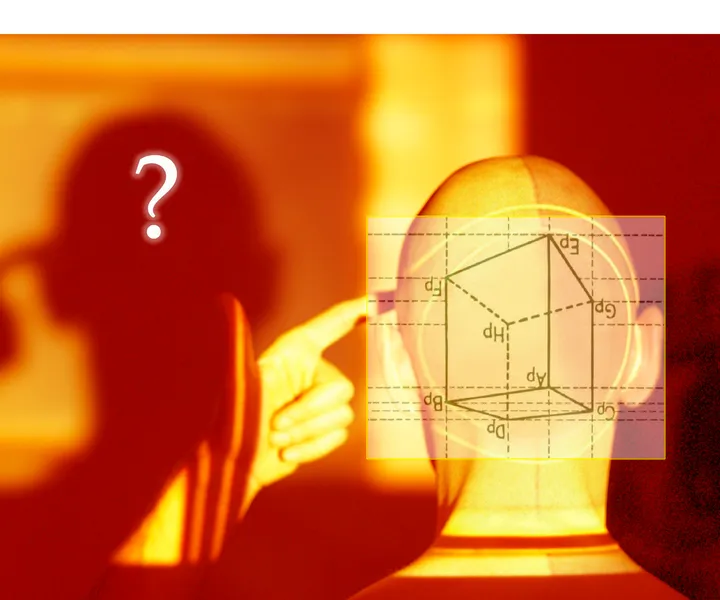
I think the most helpful way to articulate this is to call upon Heidegger. In the first part of "Being and Time," Heidegger investigates how there are different ways of dealing with the world. Dasein, human existence, comports itself to the world of available things as being either ready or present-to-hand. The ready-to-hand is the keyboard I am using right now. As I type, the keyboard is not something with which I struggle (appearances to the contrary notwithstanding). I do not always have to think of how the alphabet is configured and positioned before me. The keyboard is transparent and I just type. Conversely, if suddenly the keyboard broke, or if the power went out like this morning, it would get in the way of my typing. The keyboard would cease being transparent and ready-to-hand. It would become obtrusive and conspicuous. The readiness withdraws to reveal the keyboard as present-to-hand. The difference in the experience between things being either ready or present is similar to the ontological difference between Being beings.
The point of this is to remember that there are different ways of experiencing things. Things can develop existentially different meanings according to how they are experienced. To conclude that real meaning does not exist by indicating the breakdown of a particular value system is like claiming that computers are stupid because I do not know how to turn one on, with my car keys. This describes my confusion, not that I am lacking something (which is more than I can say about the second part of Being & Time). I do not want to humor pessimism about the real existence of things in general because solutions to incorrectly stated problems seem trivial at best. Being is (something) even the solipsist cannot deny. As Heidegger says of the burden required by the extreme skeptic:
"The 'scandal of philosophy' is not that this proof has yet to be given, but that such proofs are expected and attempted again and again [...] If Dasein is understood correctly, it defies such proofs, because, in it's Being, it already is what subsequent proofs deem necessary to demonstrate for it." (Being & Time 205, 249)
Just before the above, on the same page, Heidegger explains one of the wrong turns we took, historically, that led to our confusion. He specifically faults Kant, and implicitly condemns Descartes and Plato for promulgating an essentially incorrect interpretation of experience. This does not mean that they are not awesome thinkers, however, it does explain why the first post ended with Parmenides, to hint at pre-Socratic thought. Heidegger says it seems Kant had give-up on the notion of Cartesian dualism, only to presuppose it again. This dualism spawns the skeptic, for which no proof suffices. In light of this, Kant's Critique of Pure Reason is actually even more valiant throughout his transcendental deduction, displaying a practically unsurpassed intellectual rigor that I will return to again in following posts.
The main problem is that subject-object dualism folds into thought and language, engrained with other presupposed irreconcilable differences, like the conceived duality between mind and body. This gives rise to the "hard" problem of consciousness. Nihilism is part and parcel of this hard problem. Attempts to solve the problem usually end in poorly envisaged acrobatic displays, if nothing else serving the concession with increased sales of buttered popcorn. To cut my teeth on something before the next post, however, I find it interesting to consider that the hard problem is so difficult, people cannot even agree on how it should be formulated.
I think finding the problem hard to put into words is a good sign if looking for new solutions. Currently, my taste favors: "Why is there a subjective component to experience?" The question is nonsensical until I stop thinking of subjective experience as something that occurs inside me as opposed existing "out-there", like an object. To help me perform this transition, I might cheat a bit by substituting readiness-to-hand for indicating subjective experience, and things being present-to-hand for representing objective experience, as a breakdown of the former. This way I can articulate a distinction without falling back upon untenable points of view for the description of human experience. I'm just getting started: stupid computer.