iPhone app iPad app Android phone app Android tablet app More

Featuring fresh takes and real-time analysis from HuffPost's signature lineup of contributors

2010-11-05-51wLr9RFQdL._SL500_AA300_.jpg

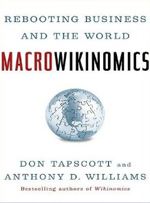
This article is the fourth installment in series to be written by Don Tapscott and Anthony D. Williams, authors of the newly released book Macrowikinomics: Rebooting Business and the World. Mark Parker, the CEO of Nike calls it "A masterpiece. An iconic and defining book for our times." The Economist says it's a Schumpeterian story of creative Destruction."

The book argues that many of the institutions of the industrial age have finally come to the end of their lifecycle, and are now being reinvented around a new set of principles and a networked model.

Today's blog, at the Beginning of American Education Week is about how to fix the schools.

****

The film Waiting for "Superman" has sparked heated discussion about the failures of the U.S. public school system, and more broadly with public education everywhere. The movie argues that teachers are at the center of the problem and that the solution is charter schools.

But it's wrong to blame teachers, who overall are a) underpaid, and b) striving to do the best with the limited resources they are given. Nor does the research show that charter schools achieve better outcomes.

The root of the malaise in our schools is the outmoded model of pedagogy. Teachers and text books are assumed to be the source of knowledge. Teachers "teach" -- they impart knowledge to their students, who through practice and assignments learn how to perform well on tests.

This is the very best model of pedagogy that 18th century technology can provide. It's teacher-centered model that is one way, one-size-fits-all and the student is isolated in the learning process. It's time for a rethinking of the entire model of learning. We need to move to a customized and collaborative model that embraces 21st century learning technology and techniques. This is not about technology per se -- it's about a change in the relationship between the student and teacher in the learning process.

By now, virtually every schoolchild in the U.S. and Canada knows how to use the Internet to have fun, talk to friends, play games and explore. But when they get into the typical classroom, most of them step back in time, to a world that would be familiar to teachers 200 years ago when blackboard and chalk were introduced as a brilliant new way to visualize information.

But what would happen if the classroom were brought into the 21st century? One doesn't have to guess: there are some extraordinary initiatives that come from some surprising places, outside the US. The province of New Brunswick in Canada did it five years ago when it handed out laptops to Grade 7 and 8 students and teachers in six schools, French and English.

The results from the first two years of the pilot project "have been dramatic and overwhelmingly positive for all involved with the project," according to two prominent academics who reviewed the two-year project. The report card, by Michael Fox, vice-president of Mount Allison University, and Jim Greenlaw, dean of education at University of Ontario Institute of Technology, was glowing: Students wrote more, and produced higher quality work. They demonstrated effective research, analytical and evaluative skills in the digital environment. They were more interested in learning. School was more fun. Their grades went up. The results were so positive that New Brunswick expanded the one-laptop-per-child program to cover 3900 school children, or 23 per cent of Grade 7 and 8 students, over five years, ending in June.

Yet still today, most public school classrooms remain stuck in the trapping of the 18th century, not in the 21st century in which we live. Many policy makers blame the perceived cost, which could be as much as $1,000 per year if you include teacher training, maintenance, and all the other costs of ownership. (The New Brunswick program cost $37.2 million over five years.) Yet the real issue, as Fox and Greenlaw suggest, is our vision: Are we, the adults, willing to accept that children who are growing up digital learn far more in an interactive, collaborative environment? And just as important, are we willing to allocate the resources needed to modernize an Industrial Age form of education that isn't much good for children who have to work in a digital age? Indeed, if we can find hundreds of billions to bailout Wall Street, why can't we find a fraction of that amount to put essential 21st century tools in the hands of every student?

To break from the past takes courage and vision, and yes it will take financial resources too. If policy makers are hunting for a new economic model for education, they might take a look at Portugal, a modest country across the Atlantic that's turning into the world leader in rethinking education for the 21st century. In early 2005 Portugal's economy was sagging, and it was running out of the usual economic fixes. It also scored some of the lowest educational achievement results in Western Europe.

So Prime Minister Jose Socrates took a courageous step. He decided to invest heavily in a "technological shock" to jolt his country into the 21st century. This meant, among other things, that he'd make sure everyone in the workforce could handle a computer and use the Internet effectively. This would transform Portuguese society by giving people immediate access to the online world. It would open up huge opportunities that could make Portugal a richer and more competitive country.

In 2005, only 31% of the Portuguese households had access to the Internet. To improve this penetration, the logical place to start was in school, where there was only one computer for five kids. The aim was to have one computer for every two students by 2010.

So Portugal launched the biggest program in the world to equip every child in the country with a laptop and access to the web and the world of collaborative learning. To pay for it, Portugal tapped into both government funds and money from mobile operators who were granted 3G licenses. That subsidized the sale of one million ultra-cheap laptops to teachers, school children, and adult learners.

Here's how it works: If you're a teacher or a student, you can buy a laptop for 150 euros (U.S. $207). You also get a discounted rate for broadband Internet access, wired or wireless. Low income students get an even bigger discount, and connected laptops are free or virtually free for the poorest kids. For the youngest students in Grades 1 to 4, the laptop/Internet access deal is even cheaper -- 50 euros for those who can pay; free for those who can't.

That's only the start: Portugal has invested 400 million euros to makes sure each classroom has access to the Internet. Just about every classroom in the public system now has an interactive smart board, instead of the old fashioned blackboard.

This means that nearly nine out of 10 students in Grades 1 to 4 have a laptop on their desk. The impact on the classroom is tremendous, as we saw this spring while touring a classroom of seven-year-olds in a public school in Lisbon. It was the most exciting, noisy, collaborative classroom we have seen in the world.

The teacher directed the kids to an astronomy blog with a beautiful color image of a rotating solar system on the screen. "Now," said the teacher, "Who knows what the equinox is?"

Nobody knew.

"Alright, why don't you find out?"

The chattering began, as the children clustered together to figure out what an equinox was. Then one group leapt up and waved their hands. They found it! They then proceeded to explain the idea to their classmates.

This was the exact opposite of everything that is wrong with the classroom system in North America.

The children in this Portuguese classroom loved learning about astronomy. They were collaborating. They were working at their own pace. They barely noticed the technology; it was like air to them. But it changed the relationship they had with their teacher. Instead of fidgeting in their chairs while the teacher lectures and scrawls some notes on the blackboard, they were the explorers, the discoverers, and the teacher was their helpful guide.

Yet too often in the American school system, teachers still rely on the traditional model of education. Teachers often feel that this is the only way to teach a large classroom of kids, and yet the classroom in Portugal shows that giving kids laptops can free the teacher to introduce a new way of learning that's more natural for kids who have grown up digital at home.

First, it allows teachers to step off the stage and start listening and conversing instead of just lecturing. Second, the teacher can encourage students to discover for themselves, and learn a process of discovery and critical thinking instead of just memorizing the teacher's information. Third, the teacher can encourage students to collaborate among themselves and with others outside the school. Finally, the teacher can tailor the style of education to their students' individual learning styles.

Portugal has been careful to invest in teacher training to capitalize on the possibilities of the laptops. It's also thinking of creating a new online platform to allow teachers to work together to create new lessons and course materials that take advantage of the interactive technology. Through this collaboration, the Portuguese school system will create exciting new online materials to educate children. Lots of ideas are already making their way into Portuguese classrooms, says Mario Franco, chair of the Foundation for Mobile Communication, which is managing the e-school program. There are 50 different educational programs and games inside the laptops the youngest children use. The laptops are even equipped with a control to encourage kids to finish their homework and score high marks. If they do, they get more time to play.

It's too early to assess the impact on learning in Portuguese schools. Studies of the impact of computers in schools elsewhere have been inconclusive, or mixed. One key problem is that simply providing computers in schools is not enough. Teachers facing a classroom of kids with laptops need to learn that they are no longer the expert in their domain; the Internet is.

It's heartening to know that a tiny province like New Brunswick is giving teachers plenty of opportunity to change their mode of teaching. Teachers can tap into government funds to create new and innovative programs. They can work with teachers around the globe to come up with new ways of teaching that make the most of the technological tools. Teens in New Brunswick are encouraged to meet teens around the globe in online forums and collaborate with them on projects. Technology, in other words, is only the tool. The real work is creating a new model of learning -- one that fits the 21st century.

Macrowikinomics available at: Macrowikinomics.com

Follow Anthony Williams on Twitter: www.twitter.com/adw_tweets


Follow Don Tapscott on Twitter: www.twitter.com/dtapscott


  • Comments
  • 47
  • Pending Comments
  • 0
  • View FAQ
Comments are closed for this entry
View All
Favorites
Recency  | 
Popularity
Page: 1 2  Next ›  Last »  (2 total)
09:28 PM on 11/19/2010
There are certainly some good points here. In addition though, when comparing US educational systems with other countries it is important to note the social fabrics are very different. In my experience, the social culture and fabrics in many other countries (especially Asian) make it much easier for kids to focus on education so the school system doesn't have to do all the heavy lifting alone.
02:06 AM on 11/18/2010
You would think all the teachers commenting below in favor of more technology in the class would be able to use spell-check.
This user has chosen to opt out of the Badges program
photo
GlennWatson
Two million fans
06:56 PM on 11/18/2010
Wow, what an insightful reply. You really went to the heart of the matter with that comment. I misspelled a word in this post just so you could find it and make yourself feel better. Enjoy.
05:08 PM on 11/17/2010
Great article, but the real issue is this country's sense of commitment and priority it places on our K-12 education system. Education is the very fabric of this country, how we remain competitive in the global marketplace, how are children grow and prosper and realize that knowledge equates to freedom and freedom of choice. Education is broken in this country. And it starts with teacher salaries. A K-12 school teacher should make at least 150K a year, much like a doctor or lawyer or any other more highly regarded profession. It should be an honor to be a school teacher. Right now the school teachers that are really good, the ones we love, the ones that inspire kids, certainly do not do it for the money, they do it because the love it. Unfortunately those types of teachers are few and far between, and most the teachers, because of abysmal salaries, reflect the level of the salaries and many are mediocre at best. Sure technology and joining the 21st century are important, but what's really important is that teachers are elevated and paid at a whole new level. And this will attract more teachers to the profession, and we will get the best and brightest helping our kids become the best and brightest. We can build interstate highway systems, we can build aircraft carriers and spend billions on the military, well now is the time to put those same dollars and priorities into our education system.
photo
HUFFPOST SUPER USER
Amy Rollins
04:13 PM on 11/17/2010
LOL! I dig the curmudgeons on here: technology?! 21ST century?? BAH! When I was in school, we walked 8 miles uphill in the snow and when we ran out of chalk we cut our fingers and wrote in blood. That's how it was, and we liked it! Hoo me.

From a teacher: I think the writers make some excellent, excellent points in this article. We really need to start re-thinking how teachers are trained, how the school day is set up, what motivates kids, how to incorporate more technology, etc. I work with primary kids, so I can't even imagine attempting to just lecture to instill knowlege--little kids need to touch, feel, experience. They need hands-on time to practice and do stuff. Project-based learning is fun for me, fun for them. We do 90% hands-on projects/technology + 10% teacher talk. I find the more I talk, the more they tune me out; when they're active, they're learning.

However, my hands are tied as to what I can teach; our curriculum is centered around what's on that end of year test and what's on that test has very (very) little to do with higher order thinking. It makes me feel like I'm mostly jumping through hoops rather than facilitating learning.
This user has chosen to opt out of the Badges program
photo
MikeElPaso
I have chosen to opt out of the Badges prog
10:23 AM on 11/23/2010
Amy,

I have a brother that is involved in innovation in education at a high level. Been sending him some of your posts. Think comments from teachers like yourself are great and important input.
12:18 PM on 11/17/2010
This is a fascinating discussion, and a number of good points have been raised. Let me add one of my own. Collaborative learning has its virtues, but what I remember most from my own education and what has most influenced my life were the wonderful teachers and professors who taught at the front of the classroom. These individuals told me things; they opened my eyes to all kinds of possibilities; they ignited a passion to learn more; they engaged me and my classmates on a personal level, face to face with another human being. No computer can do that. Let's not throw the baby out with the bath water.
This user has chosen to opt out of the Badges program
photo
GlennWatson
Two million fans
12:04 PM on 11/17/2010
Lets not demonnize lecture. When done right it is an effective method of teaching.
photo
HUFFPOST SUPER USER
sposton
right to tell what they don't want to hear
11:28 AM on 11/17/2010
Teachers are the least to blame. It is the overall system that is mostly wrong. The system also has either amorphous aims or simply wrong aims. The original public education was deliberately fashioned on the Prussian model which is still in today's system's DNA.

There seem to be some successful experiments going around the country, one of which seems to be High Tech High organization in San Diego:

http://www.hightechhigh.org/
10:46 AM on 11/17/2010
Sheesh, more "Digital Age" hooey. Is there still a market for 20th century internet fetishism ? Does anyone not know what kids actually do with computers ? Do we really want to discard everything written by mankind in the first 20 centuries because books are outdated and we have funny videos on Youtube ?
04:16 PM on 11/17/2010
I don't know how things are where you're from, but here in Portugal (that "small country nobody knows about, yet, we discovered half the world....) computers aren't used only for gaming/youtubing/*insert_non-educational_activity_here*. Using a close example, i can tell you that my stepson only asks me for help when he just can't find help with google/forums/wikipedia (must tell you he's only 10).
I can assure you that if parents care enough for their childs, there is/won't be any way for them to use the "laptop" (eeePC actually for kids above 12) to please themselves with youtube/farmville/alikes.

This doesn't mean that "everything written by manking in the past 20 years" will be discarded:
First, pairing with the laptop, my stepson has a vast library of encyclopedias at his disposal (including Portugal's History).

And second, a digital encyclopedia was bundled with the eeePC on this same program, but (in my opinion) just for the ease of use.

In the end of the day, one conclusion comes to my mind (about the "Digital Age hooey"): On my youth, if i didn't know something, mother would tell me: Search the Encyclopedia; Nowadays, i tell my stepson to search Google. It's almost the same thing, as long as he filters the information (he does, i teached him), but it takes 1/10 of the time.
photo
HUFFPOST SUPER USER
David Campbell
09:13 AM on 11/17/2010
All good ideas. Teacher education is still the main problem.They are prepared to teach lessons. Then test the memorized information. They use books and lecture, taking notes and multiple guess tests, all useless. The equinox question was on the right track.Information must used to achieve understanding. If that does not happen no education takes place. A teacher needs to be prepared to do that and most cannot. That is the problem.
08:10 AM on 11/17/2010
My personal experience has shown that the noisy collaborative classroom model is more interesting(entertaining) to the students but much less gets accomplished and much less gets learned. I've done this experiment many times over: give different classes the same goals and the same resources but change the approach. One student-driven and collaborative. One teacher driven with no student collaboration. Give the two groups the same test. The collaborative group usually gets less accomplished and invariably does not do as well on the test. School.is about a lot more than shoving information in these kids heads though. The collaborative model is important. It teaches other things that these students need to know - like how to work with others. It just isn't the best for learning information. Any teacher worth their salt has many different methods of teaching that they use depending on what they want to accomplish.
09:59 AM on 11/17/2010
Thanks for bringing us back to earth. I too favor collaborative methods as an element of school learning, both amongst students and teachers. Romanticizing one technique or another as a panacea tends to bring disrepute to all methods and teachers are seen as sentimental fools. Your pragmatism is the stuff of our best teachers, and I am sure most employ multiple techniques such as you mention.
07:55 AM on 11/17/2010
Trading an "industrial model" of education for an "IT model" of education leaves us with a zero sum game. Any child forced into a mold that doesn't fit will end up an "outcast" in one way or another.
This user has chosen to opt out of the Badges program
photo
GlennWatson
Two million fans
07:36 AM on 11/17/2010
I will teach in whatever way my bosses tell me to teach. But remember, there are only 24 hours in the day. If you want me to do new things in class then some of the old things I did have to go. Don't just add new responsibilities on top of old, like NCLB did. I'm not Superman.
08:00 AM on 11/17/2010
EXACTLY!!!
10:02 AM on 11/17/2010
What your ideas and experience don't count? Real reform includes an end of top-down management. That is the real move from the 19th Century to the 21st, not the phony reform of IT.
12:44 AM on 11/17/2010
I just finished reading Macrowikinomics, and while I really enjoyed it, I was disappointed to see how short the education section was. There is really only one chapter devoted to it, and even then it mostly just focuses on university education. It's nice to see this article, discussing K-12 education.

As someone who's in the midst of teaching, tutoring, and completing an education degree at a university, this post really strikes home with me. I've seen firsthand how enthusiastic adolescent students can become when they're allowed to collaborate in the computer lab. I've also seen how incredibly disengaged they can become when they are thrust into an 18th century lecture-style class.

It's tough to change old habits, and it's often easier on teachers to simply teach in the standard way. We have professors at university teaching us how to teach, telling us to try these new approaches and to engage our students in a collaborative, conversational style of teaching. Yet when we get to the classroom, we see the reality of low-technology, minimal textbooks and a standard one-way lecture approach. I've been lucky enough to work with a forward-thinking teacher who seems to embrace change, but from speaking with some colleagues, I don't think this is the norm.

Obviously, funding is one of the biggest obstacles, and it's sad to reflect on where we place our priorities as a society, investing billions into sports stadiums, celebrities' pay cheques, and excessively luxurious houses and cars.
photo
HUFFPOST SUPER USER
PTAOfficerforObama
It's arithmetic, stupid
09:59 PM on 11/16/2010
I love the idea that kids can construct their own knowledge. You do not need laptops for all to do that. I have 4 computers in my room and access to a lab. Constuctivism and Inquiry are alive and well in my room.
09:16 PM on 11/16/2010
My school district in Kansas has invested much money into computers. All high school students have them. However, until teachers learn how to use computers effectively, what I see (as a teacher myself) is a lot of wasted time. Kids spend time downloading music or watching non-educational videos. Teachers must get out of their chairs, walk around, supervise the use of the machines, or else computers are as useless as 16 mm projectors are these days. Recently, one sixth grade class spent over two class periods to produce 12 to 28 second animations "teaching" concepts such as simile, metaphor, and least common denominator. They could have practiced with and written dozens of examples in the time they did their animations, each with just one example. To me, that's a terrible waste of time and technology.
photo
HUFFPOST SUPER USER
PTAOfficerforObama
It's arithmetic, stupid
10:01 PM on 11/16/2010
And as those kids made those animations they REALLY knew the material they were imparting ot others. I do not see it as a waste of time. BTW I know few teachers who "sit in their chairs" I do not even have one.
This user has chosen to opt out of the Badges program
photo
GlennWatson
Two million fans
07:39 AM on 11/17/2010
I am a teacher and I doubt you don't know any teachers that "sit in in their chairs." A lot of them do, and far too much.

As for computers, they are great but they are also very hard to monitor. Kids tend to get off track and waiste time. Its a fact.