
iPhone app iPad app Android phone app Android tablet app More

Featuring fresh takes and real-time analysis from HuffPost's signature lineup of contributors
Don Tapscott

GET UPDATES FROM Don Tapscott
 

Three Principles for a New Wall Street

Posted: 10/20/11 02:07 PM ET

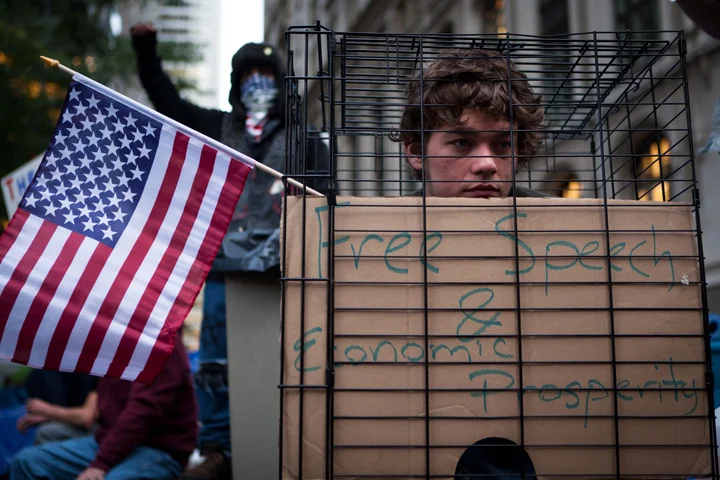
Protesters set up the "Occupy Wall Street" base camp in New York a month ago because the location epitomizes the economic forces that control the U.S. and global economies. As one sign read: "This is not a recession. It's a robbery." To many it feels like just that. The financial services industry is in desperate need of reform. Many bankers have behaved as secretive corporate titans serving only their own interests, and insist the devastating consequences are not their fault. They are failing to fulfill their obligations to society -- in some cases, even to shareholders -- and a growing number of critics view the day-to-day behavior of the financial services industry as unacceptable. If the industry doesn't initiate reform from within then it will eventually have more extreme reform imposed from outside.

In 2008, the routine gambles of Wall Street almost brought down global capitalism and yet, so far, nothing fundamentally has changed. Restoring long-term confidence in the financial services industry requires more than individual banks changing their behavior or even governments intervening with new rules. The industry needs a new modus operandi, where all of the key players (banks, insurers, investment brokers, rating agencies and regulators) adopt the three facets of collaboration: integrity, transparency, and embracing the commons.

Integrity. Trust is the expectation that the other party will act with integrity -- be honest, considerate, and abide by its commitments. To re-establish trust, the financial services industry needs to have integrity as part of its DNA. But the cavalier manner in which many banking executives violated integrity was stunning. For example they sold sub-prime mortgages to people who could never make the payments; bundled them into securities and convinced rating agencies to classify them as AAA, and insurance companies to insure them. They then sold these to unsuspecting investors. They violated all the values of Integrity. Everyone in the process suffered and the global economy was sent into a tailspin.

The 2008 meltdown and the Euro crises we face today illustrate how interconnected our world has become. Organizations must be much more aware of what is going on around them. It's important to know the behavior of others and the potential impacts of the actions of distant third parties. If there is anything Wall Street should have learned from the mess they created it was that business cannot succeed in a world that is failing.

In everything from motivating employees, negotiating with partners, disclosing financial information, or explaining the environmental impacts of a new factory, companies and other organizations must tell the truth, be considerate of the interests of others, and be willing to be held accountable for delivering against their commitments.

Companies need to act with integrity -- not just to secure a healthy business environment, but for their own sustainability and competitive advantage. Increasingly, firms that exhibit ethical values and candor have discovered that they can build trust with customers, employees, shareholders and business partners. This makes them more competitive and profitable.

Transparency. One of the reasons companies have to have integrity is that they operate in an unprecedented, hyper-transparent world. Customers use the Internet to help evaluate the true worth of products. Employees share formerly secret information about corporate strategy, management and challenges. To collaborate effectively, companies share intimate knowledge with one another. And in a world of instant communications, whistleblowers, inquisitive media, and Google, citizens and communities routinely put firms under the microscope. So if corporations are going to be naked -- and they really have no choice in the matter -- they had better be buff.

But the financial services industry has a history of being opaque and secretive. One Goldman Sachs executive told me off the record: "We're a very private company. The less people know about us and pay attention to us, the better." In commenting on the U.S. government fraud charges against Goldman, Roger Martin, dean of the Rotman School of Management at the University of Toronto said, "Sadly for Goldman, transparency is not an attractive option. The better Goldman does in explaining exactly what its business is, the more outraged regulators and the public will be."

If Wall Street had been fully transparent during the past decade, the sub-prime debacle would not have occurred. In the future, investors, rating agencies and insurance companies should be able to 'fly over' and 'drill down' into securities such as Collateralized Debt Obligations and analyse the underlying assets. With full data, they could readily assess the payment history, and correlate information such as employment histories, property values, location, neighborhood pricings, delinquency patterns, and so on. Potential investors will quickly realize the CDOs' junk status and refuse to buy. Since banks wouldn't be able to offload sub-prime mortgages, they wouldn't create them in the first place. The industry needs to resolve, immediately, that it understands that sunlight is the best disinfectant.

Embracing the Commons. Wall Street reform requires restructuring of the industry. Wall Street companies need to overcome their obsession with proprietary ownership of their intellectual property and learn to share certain information. For example, the banks currently have upwards of a trillion dollars of "toxic assets" on their balance sheets. Since no one knows the true value, the assets have created so-called "zombie banks" that won't lend money to entrepreneurs. Because 80 percent of new jobs come from companies 5-years-old or less, the inability of startups to borrow money is a huge impediment to job creation.

How can the banks value these assets, dispose of them and get back to normal? They should be sharing the information -- essentially placing risk management in a commons. Think risk management Linux style, which is completely feasible and affordable in a digitized world. For instance, the Open Models Valuation Company is using the web to create a global community of experts dedicated to establishing credible valuation and risk assessments for credit securities and contracts such as CDOs and other derivatives.

Craig Heimark, an industry veteran and one of the founders of Open Models, likens it to the scientific peer-review process: "In the scientific world when people publish something, they don't just publish their results, but also the steps in the process, their methods and assumptions so that they can be vetted by others."

Exposing complex financial instruments to the vetting of thousands of experts could help restore trust in banks, kick-start venture capital, unfreeze the paralysis of lending markets and lay the foundation for a new and stronger financial service industry.

The paramount role of banks is not to create shareholder value and enrich their executives. They exist to provide a safe place for people and organizations to store their money and get credit. They exist to execute myriad transactions, make capital markets and are central to our economy. We charter them with a license to operate so that they can perform these functions, but the recent repeated crises show they have violated their pact with society.

One of the most popular signs in the Occupy movement is "Nationalize the Banks." If Wall Street does not adopt these three principles and change its core modus operandi, it risks having its license revoked.

Reposted from Reuters.com


Follow Don Tapscott on Twitter: www.twitter.com/dtapscott


  • Comments
  • 37
  • Pending Comments
  • 0
  • View FAQ
Comments are closed for this entry
View All
Favorites
Bloggers
Recency  | 
Popularity
Page: 1 2  Next ›  Last »  (2 total)
HUFFPOST SUPER USER
windwolf
09:18 PM on 10/21/2011
Historically Wall Street has never embraced any of these admirable traits. Looking over the numerous booms and busts of the last two hundred years, all were created by a significant absence of, and willingness of Wall Street to embrace these. Only when regulated from by our government did the economy of our country stabilize. That's until the wealth of the "haves" were able to once again influence our ambitious, self-serving politicians to ease off on regulation. Then the "bubbles" began to blow once again, leading to another bust. It would be a step in the right direction for us to be able to amend our constitution irrevocably with regulations of our financial sectors in perpetuity. And finally be rid of the booms and busts created by the wealthy who have little to no integrity, desire for transparency, social conscience, or honesty for that matter. One has to be naive to even consider or recommend regulation from within, considering Wall Street's nefarious history of deception and fraud.
photo
HUFFPOST SUPER USER
lrobb
Gold Standard = four paws and a tail
06:24 AM on 10/21/2011
In addition to Tapscotts' recommendations I would add the following:

1. A borrower must qualify at the highest possible interest rate in an adjustable rate mortgage.

2. A borrower for an owner occupied home should provide a minimum down payment of 5% of their own cash, well seasoned and no gifts. Commercial down payments should never be less than 25% owner's cash.

3. All loan applications must be fully documented.

4. All loans must be closed by a attorney or escrow officer who represents only the borrower. These individuals must be licensed.

5. At time of application, borrower must be notified of all fees or costs other than interest which will be charged either by the lender or the mortgage broker, even if not paid by the borrower, and what effect these fees have on their interest rate. This figure should include the amount paid by the bank to an outside loan originator.

6. Applications for loans will no longer be negatively reported by credit reporting agencies thus allowing borrowers to comparison shop for the best interest rates based on their credit history without harming that credit history.

7. Banks must accept full liability for the actions of the independent mortgage brokers or agencies originating their loans.

Some banks are already implementing a few these changes.
02:38 AM on 10/21/2011
Tapscott is always thought provoking. Whenever I see his name I stop to read the piece or interview with him.
photo
beerbagger
12-pack of genius
01:30 AM on 10/21/2011
Power junkies, political junkies and money junkies. Self-regulation... of junkies. How's that ever worked out for us? Trouble is they're all strung out and can get a quick fix from bureaucrats with fraud and corruption.
This user has chosen to opt out of the Badges program
photo
Romeover
Civilization is for weaklings.
06:23 AM on 10/21/2011
"Self-regulation . . . of junkies. How's that ever worked out for us?" Excellent question.

Unfortunately, the junkies are driving the bus.
09:03 PM on 10/20/2011
Notice that Occupy Wall Street wasn't in Palo Alto, Cupertino or San Jose? I think I can explain why they are angry at Wall Street and not Sand Hill Road: crony capitalism. The revolving door between wall street, regulators and lobbyists, which has proven remarkably successful at insulating the Wall Street firms while the rest of us have experienced a 10 year recession. http://bit.ly/pNTx3T
photo
artleads
Let's have a national retreat.
08:10 PM on 10/20/2011
I'm quite OK with Wall Street following its predilections unimpeded...with one major caveat: It must take its foot off the necks of the 99%. Among other things, hat entails enabling free higher education, free health care, and the realistic wherewithall for everyone to find shelter.
11:38 PM on 10/20/2011
That's awsome dude. If I had free education, health care and shelter, I'd stay in school FOREVER!
photo
artleads
Let's have a national retreat.
01:16 PM on 10/21/2011
OK. This was one of my less thought-out comments (and the bar is quite low anyhow). While I don't know the solution to higher education, I'm sure that people drowning in debt is not a apart of it.
This user has chosen to opt out of the Badges program
photo
Saijanai
Micro bio? We don't need no stinkin' micro bio...
12:43 AM on 10/21/2011
Define "higher education." Currently, high school graduates in the USA are SOOOOO bad that community colleges have to create transitional categories to acknowledge that their incoming freshman don't meet minimal junior college standards. So... is a 2 year degree from a junior college
"higher education" or not? RIght now, a two year degree, gained by the current crop of high school graduates, isn't worth a high school diploma from 25 years ago. And for that matter, a high school diploma from 25 years ago is nothing compared to one gained 100 years ago.
photo
artleads
Let's have a national retreat.
01:29 PM on 10/21/2011
I dare not take you on this, since I'm fuzzy as to when compulsory public education was put into place (seems like a tad more than 100 years ago), and I don't know what preceded it. I think of the one-room schools, and private tutors, that produced excellent results.

So what went so badly wrong? Cultural diversity may have some role among other factors. I would put the issue of education differently: Every child bears a unique gift, and the light they bear must come forward by any means necessary. So I'd be less concerned about schools and the educational system than in the child being educated. You couldn't shake up the educational system enough to please me.
photo
HUFFPOST SUPER USER
jessjesskk
Benevolent Zombie Power
06:21 PM on 10/20/2011
Don, Don, Don you miss a few things... look at the subprime for example: you can access the underlying information but truth is, when you gave a loan in 2005 or in 1999,the delinquency right was low. Also with resale value up , regardless of delinquency you can make your money back. it comes back to prediction of value of an underlying real estate asset, which almost by deifnition is correlated with the tail of the economic growth...
There have been frauds, and those need to be punished severely (citi paid way too little if you hear me... S&P and Moody's need to be revised thouroughly, ..) but at the core it is not fraud that was the issue but mis-modelization and as you say, transparency does not help because you need a Ms in Math to understadn the beginning of the models.
03:02 AM on 10/21/2011
All MBS and mortgages registered on MERS represent a 17 trillion dollar fraud. You have no idea what you are talking about. The Arizona attorney general referred to the financial industry as 'mafia in coats and ties' and that's exactly what they are.
This user has chosen to opt out of the Badges program
photo
Romeover
Civilization is for weaklings.
06:27 AM on 10/21/2011
"it comes back to prediction of value of an underlying real estate asset, which almost by deifnition is correlated with the tail of the economic growth..."

The problem was that the tail was wagging the dog.
PaulArt
Under 50 and Screwed by the TParty65+
05:32 PM on 10/20/2011
Its really very simple, reinstate Glass-Steagall and break up the Banks and we will just walk back to boring but safe banking again. A lot of people holler and scream that we need BASEL and this and that - its all apple sauce. America needs to lead and we need to put our foot down and put the shackles back on Wall Street not to mention the CFTC. We need to completely ban ALL derivatives. At the end of his wonderful book 'The Big Short', Michael Lewis states how the Financial Crisis Inquiry Commission members called him a half-dozen times to ask him repeated dumb questions about the 2007 crash - he says he tried to keep telling them that it was all in his book and he had nothing else to add but they still feigned ignorance. He states about one last call (he does not mention the name) where the called after learning from Lewis about all the other people who called starts laughing loudly. Lewis's message is, these people never had any intention of fixing anything. In fact if Phil Angelides had not been the Chair we wouldn't even have got the meager information that we finally did. They put Bill Thomas in the FCIC, I mean, Bill Thomas! And remember we had all 3 legislative chambers in our hand and we put Bill Thomas in the FCIC. Tells you a lot about Obama.
photo
king soloman
I'Am the cats Pajamas! ! ! !
05:32 PM on 10/20/2011
who cares anymore. nothing will ever change they have to much power already!
04:27 PM on 10/20/2011
You say, "integrity, transparency, and embracing the commons" are needed to fix the banks. Fat chance! You might as while ask a dog to stay in a fence less back yard.

The only way the banking industry is going to do right by society is through strict regulation and strong powers to enforce them.
Zip Zinzel
If a Nation expects to be both Ignorant & Free . .
07:56 PM on 10/20/2011
Tommee
THAT WAS BRILLIANT !
photo
HUFFPOST SUPER USER
Carmen Madonna Campos
dude! it's me!!!
10:46 PM on 10/20/2011
and don't forget jail time.
04:08 PM on 10/20/2011
These greedy rich can't be trusted to do anything altruistic. You can see their show of force and their opprobriums as regards peaceful protest critical of their immorality. You can see that the police work for them. They are cruel and beyond the pale. They only understand the stick. What if we stopped buying what they're selling? Many people have already stopped buying their constant lies!
This user has chosen to opt out of the Badges program
07:04 PM on 10/20/2011
He's not at all asking them to do anything altruistic.

To the contrary, much of what he is asking should be standard practice according to the glossy investor relation pages of these firms.

Are you saying that it is altruism to not tell lies and be accountable?

If that were indeed the case, at least we would know that half of the textbooks (or more) in our libraries should be disposed of.
04:00 PM on 10/20/2011
Its time to bring the crooks and criminals that are rigging markets to book. We need a global revolution to take down the 1%. They are not as valuable as they think and they are extorting way too much from the rest of us to justify their existence by controlling networks that depend on the professional competence, honesty and expertise of ordinary folk. We need to bounce them out of that control and put a good portion of them in jail (after stripping them of their ill gotten assets). We then need to make sure that no one group ever again gets to determine how much they take from the rest of us without any personal risk being involved or proper oversight. In any case we need a serious debate about whether anyone individual in our networked and interdependent globalizing society is worth more than say 10X (max) more than anyone else or should get remuneration beyond that.
03:12 PM on 10/20/2011
Even if Wall Street voluntarily adopts every one of those things, it won't do anything to change the problems we have due to corporate greed. Because of corporate greed, we don't make anything anymore. Jobs are gone to countries with slave labour or minimum wages so low that they may as well be slave labour.

Customers have little to no say in what happens because most people no longer have any idea where our products come from. This is because corporations merge and buy up others or patent EVERYTHING so even if I buy a phone from one company, someone has to pay money to another company anyway. Is the TV show I watch, opr radio station I listen to somehow contributing to the profits of companies I don't support? If so, is there really any alternatives or has media consolidation made choices just an illusions.

Corporations would also still be obligated to make as much money as possible, every single quarter. I call this the myth of infinite profits. it is unsustainable from the start. And as long as this is the sole goal of corporations, then they will ALL eventually chose doing harm to society/people to make money. It means more of people making less money, their dollar seemingly buying less and less so corporations can keep marking up the profit margins of products. This hurts people, especially when those profits are being made off of necessities like food or energy.
photo
HUFFPOST BLOGGER
Ted Cadsby
03:05 PM on 10/20/2011
Very succinct and brilliantly argued. Transparency and Commons are two sides of the same coin I think, and there is no better example than Goldman of how lack of both translates into justifiable public skepticism. I like your point that financial institutions have broader mandates than simply serving shareholders; in fact, I'd argue they have a very broad set of stakeholders, many of whom have been traditionally neglected and should no longer be.
photo
HUFFPOST SUPER USER
TheGreatRenewal
We're living a Great Renewal
02:40 PM on 10/20/2011
This is why we need A Great Renewal. We can't keep working under the "un'. Please join us at http://www.facebook.com/TheGre... and post positive actions that are being taken to: regenerate, regrow, reenvision, reinvent, redesign, restore ... all our systems.

In order to have a new paradigm (A Great Renewal) we must create parallel systems using these 6 components: language, behaviors, policies, laws, institutions and organizations. If you have a passion for Wall street reform (whether from within or without) the develop that reform based on these 6 components.

The reason we need government to 'regulate' is that Big Business does not regulate so it serves the communities. Instead Big Business tries to 'control' and to aggregate wealth into itself. We need a great renewal of our financial sector. In fact we need to renew all of global business because through mergers/acquisitions every Industry Sector has been taken over by a few.

We didn't get here by accident. It didn't 'just happen'. Those 6 components recreated the postWW2 and The Great Global Restructuring from the mid1980s. Now is the time for a new paradigm ... a Great Renewal.