More

Featuring fresh takes and real-time analysis from HuffPost's signature lineup of contributors
Douglas LaBier

GET UPDATES FROM Douglas LaBier
 

The Spiritual Similarities Between Steve Jobs and George Harrison

Posted: 10/22/11 01:23 PM ET

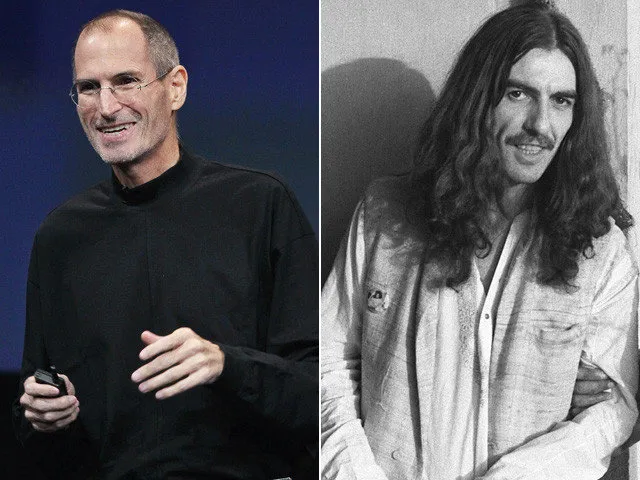
The day Steve Jobs died -- Oct. 5 -- coincided with HBO's broadcast of the first part of Martin Scorsese's documentary on the life of George Harrison, "Living In The Material World." That conjunction of events brought to mind some interesting parallels between the lives of Jobs and Harrison. I think we can learn something of value about their life journeys -- their ups and downs, their losses and transitions during their middle years and... how they handled the prospect of death.

Both moved through and beyond their young adult years along different yet similar paths. Their examples highlight the importance of deciding what you choose to live and work for; and how your choices impact the world, as you grow towards becoming a full adult.

Knowing what it means to become an adult is especially crucial once you've entered your 30s and the decades beyond. That's when the core challenge of life looms large: Discovering and acting upon what has lasting value, as opposed to embracing impermanent, superficial or illusory goals. That is, awakening to what really matters to you, and then pursuing it with passion, conviction and focus.

Both Jobs and Harrison appear to have discovered what was of true value and importance to them. I want to emphasize that both were human. Neither was free of flaws or imperfections; none of us are. But their individual life paths share some themes that are visible among the most mature and productive adults today. A major one is that both men evolved away from materialism and self-interest as their primary goals; and towards a purpose larger than themselves. Each began to strip away and let go of false and distracting goals. That, in turn, opened the way for each to pursue his vision with creative energy and sense of purpose.

That theme is important to life in the interconnected world of today and tomorrow (a world that Jobs' Apple products contributed to, as did Harrison and the Beatles through their music). Today, more are recoiling and suffering from the excess of self-serving, isolated self-interest, themes that have long-defined life "success." We recoil because our global civilization is so interdependent and interconnected, now. That reality calls for individual and societal actions that support the public good. Those are actions that serve and sustain well-being, security and health for all people; actions that shepherd the resources of the planet that we and future generations need to sustain life.

Both Jobs and Harrison seemed to "get" that, in responding to turning points in their lives. For Jobs it was getting fired from Apple. He called it:

... the best thing that could have ever happened to me. The heaviness of being successful was replaced by the lightness of being a beginner again, less sure about everything. It freed me to enter one of the most creative periods of my life.

From that experience he realized that a life devoted to material success wasn't going to bring fulfillment. He said:

The only way to be truly satisfied is to do what you believe is great work... love what you do., Being the richest man in the cemetery doesn't matter to me... Going to bed at night saying we've done something wonderful... that's what matters to me.

The turning point for George Harrison, who died in 2001 after a struggle with cancer and a brain tumor, was the impact of his early fame and material success. "I wanted to be successful, not famous," he said. "I remember thinking I just want more. This isn't it. Fame is not the goal. Money is not the goal."

Both Jobs and Harrison emerged from their experiences with new clarity and conviction about what they subsequently committed their lives to. As Harrison put it, "To be able to know how to get peace of mind, how to be happy, is something you don't just stumble across. You've got to search for it." That triggered a spiritual awakening and transformation that brought about a deep awareness of the ephemeral nature of life, of the unity of all beings. He recoiled from the limited value of an external life alone, of simply "living in the material world," and went deeper into Indian spiritual practices.

After Jobs was fired by Apple, what he then learned during his 30s he put into play what with remarkable foresight and determination after he returned to head Apple, at 40. He concluded, "You have to trust in something -- your gut, destiny, life, karma, whatever. This approach has never let me down, and it has made all the difference in my life." Jobs conceived a creative vision that joined aesthetic design and elegance with technology -- a vision of beauty on earth, via material products that enhance lives

When Harrison turned away from absorption into the fame and fortune of his young adulthood, his now-spiritually focused life melded with musical creativity, which he communicated through expressing the beauty in nature, seeing God in all things, and the power of love. He said, "It's all love, whichever way you look at it, it's all love. How much you can get from each other and that's determined by how much you're giving to each other."

Passion for creating something of value and beauty in life emerged in both men. That is, giving something to the world; having impact and contributing to making it better for all people -- not just for oneself. "I want to put a ding in the universe... a chance to change the world," Jobs said.

Interestingly, Jobs' and Harrison's exposure to Eastern perspectives was a stimulus to their evolution. Jobs traveled to India when young, and studied Buddhism. The impact of Harrison's exposure Hinduism, Buddhism and Yoga is well-known. And both have described their experience with LSD as profound. Jobs reportedly described it as "one of the two or three most important things he has done in his life." And Harrison said, of his experience with LSD, "I felt in love, not with anything or anybody in particular but with everything."

With the perspectives that Jobs and Harrison developed, it's not surprising that both appeared to face death with acceptance, but not resignation; instead, with a heightened sense of appreciation for life.

Learning From Their Examples

I think these themes in their lives that I've described highlight what each of us face during adulthood. It's discovering and awakening to what we really want to live and work for, and seeing how that contributes something of value to the world we're interwoven with. And then, pursuing it with conviction and passion. As Jobs said in his 2006 commencement address at Stanford, "Don't let the noise of others' opinions drown out your own inner voice. And most important, have the courage to follow your heart and intuition."

In my view, the pull towards that need becomes stronger after you're about 35. But you can lay the foundation for it anytime along the way. For example, by opening yourself to learning from your life experiences, especially when loss or unpredictable events occur -- whether good or bad; early success or disaster. You can learn to change your karma, in the sense of redirecting and shifting the impact of your past upon your present life. That includes dealing with the consequences of your own actions, or, what was done to you. It's interesting, in that respect, that Jobs reconnected with the daughter he had from a previous relationship, whose paternity he had once denied, and then rebuilt a relationship with her.

Finding direction and purpose is especially crucial now, following the crash of 2008. The upside is that declining economic and financial success opens the door to turning away from the destructive over-emphasis on materialism that's been eroding our society and personal lives. The conventional view of a successful life is that it's defined largely by financial and self-interested criteria -- getting, extracting, consuming and possessing for yourself. On the micro-level, research shows that a highly materialistic orientation erodes a couple's relationships. Moreover, a materialistic, self-absorbed, self-interest orientation to "success" is unrealistic and out of kilter with our 21st century world, where everything and everyone is highly interwoven and interconnected.

In today's world, individual and societal well-being rests upon shared collaboration towards sustainable lives upon a sustainable, healthy planet. It's interesting in that respect that Jobs often cited the Beatles' collaboration as a model for his vision of Apple, saying:

They were four guys that kept each other's negative tendencies in check; they balanced each other. And the total was greater than the sum of the parts. Great things in business are never done by one person, they are done by a team of people.

We're not isolated entities on the planet, where we can takes for our personal benefit, alone. Self-sufficiency in that form doesn't exist. We need and depend on each other for everything in life. Self-interest alone, is a non-sustainable way of life. Increasingly, people from all walks of life recognize this. For example, it's visible in the increasing numbers of people who, polls indicate, support the Occupy Wall Street movement. They recognize that a healthy, just society requires strengthening communal values and behavior; working towards common goals, the common good. It's also visible among celebrities who use their fame to promote finding solutions to human needs larger than one's own, such the rapper Curtis "50 Cent" Jackson's recent blog and video about fighting hunger in Africa.

I think both Steve Jobs and George Harrison embody different yet similar ways in which all of us can grow and develop towards becoming more fully human. You know when you're on that path -- your inner self recognizes it. But it helps to heed something Jobs said, "... have the courage to follow your heart and intuition. They somehow already know what you truly want to become."

Douglas LaBier, Ph.D., a business psychologist and psychotherapist, is director of the Center for Progressive Development in Washington, D.C. You may contact him at dlabier@CenterProgressive.org. To learn more about him, click here.


Follow Douglas LaBier on Twitter: www.twitter.com/douglaslabier

The day Steve Jobs died -- Oct. 5 -- coincided with HBO's broadcast of the first part of Martin Scorsese's documentary on the life of George Harrison, "Living In The Material World." That conjunction...
 
 
  • Comments
  • 33
  • Pending Comments
  • 0
  • View FAQ
Comments are closed for this entry
View All
Favorites
Bloggers
Recency  | 
Popularity
Page: 1 2  Next ›  Last »  (2 total)
This user has chosen to opt out of the Badges program
photo
05:55 PM on 10/30/2011
A moving account of his life and death from someone who knew Steve Jobs in a way none of us could, his sister Mona Simpson:

http://www.nytimes.com/2011/10/30/opinion/mona-simpsons-eulogy-for-steve-jobs.html?pagewanted=1&_r=1
This user has chosen to opt out of the Badges program
photo
04:18 AM on 10/30/2011
PART 1

While by most, if not all, accounts, George was a lovely person, he did hurt people over the years--as do we all. George struggled more openly in his relationship to the material world. He did not deny himself the things money could buy: Friar's Park, multiple mansions around the world, sports cars and motor racing, travel, and things we'll never know. He was no ascetic. He developed an approach to enjoy his life and the things it had to offer, but not to be attached to them. Only he can say how that worked for him.

In keeping with his Hindu beliefs, it was of utmost importance how he left his body at death. He was outraged at how John (Lennon) was forced to leave his body. A couple accounts, one by his wife Olivia in the recent cable special, report that George departed as he worked hard to do. One article reported ISKCON folks chanting beautifully as he died.
This user has chosen to opt out of the Badges program
photo
04:17 AM on 10/30/2011
PART 2

I know less about Steve Jobs' material expenditures, but he presented as more modest and personally self-denying. Perhaps this was consistent with his emotional life, toward himself and, thus, toward people to whom he might have been more emotionally generous. George expressed himself through brilliant artistry, which is readily accessible. Steve expressed himself through brilliant technology, which is less immediate, even remote.

At this time, we can't possibly know what reckonings Steve made until his last breath. We can't know his finished and unfinished personal business, or what his death process was or what it meant to him.

I think Dr. LeBier's point is about similar-yet-individual, profound spiritual processes that were transcendent in the lives of two relatively contemporary, socio-culturally important people. Whether one was more likeable or "more important" isn't the point.

I do think that Jobs' decision to leave behind an unflinching and often unflattering biography was abundant in its honesty and clarity. Such unsparing honesty is hard to find. If that's where he was in his life, I think it was a courageous and generous personal gift to bequeath.
photo
HUFFPOST BLOGGER
Douglas LaBier
06:18 PM on 10/30/2011
Thanks for all of your comments, MrsPeel! I found Mona Simpson's op-ed especially revealing about Jobs' inner life and vision. I agree that Harrison "indulged" in the trappings of success more than Jobs, but as you mention, he practiced as much as anyone could, within that context of wealth, a deeply spiritual focus and "nonattachment." The Sufis have an expression, "Be in the world, but not of it." I think both personified that in their own ways.
This user has chosen to opt out of the Badges program
photo
03:12 AM on 10/30/2011
If you'll allow me: The Beatles, of which George Harrison was one, started Apple Records. Steve Jobs, along with Steve Woz, founded Apple Computer. Inc.

/droll comment
photo
Readbetweentheelevens
"You can't turn the wind, so turn the sail."
02:56 AM on 10/30/2011
What a reach.
photo
HUFFPOST SUPER USER
H P
Vote ABC- Anybody But Cantor
10:07 AM on 10/29/2011
This sentence "That is, awakening to what really matters to you, and then pursuing it with passion, conviction and focus. "
OK I will go with that, BUT Jobs is the ultimate material man, Harrison who made a lot of money too, was more a spiritual person. Jobs was into making money, Harrison was into inspiring people- just read the lyrics to My Sweet Lord.
photo
HUFFPOST BLOGGER
Douglas LaBier
10:34 AM on 10/29/2011
Thanks for your comments, H P -- I agree that Harrison certainly led a more spiritually-focused life, and that both had acquired wealth. But I don't think the contrast is so black-and-white. Jobs appeared to live a fairly modest life, in a modest house, and had stated many times that his aim was primarily to build and create something, more than become wealthy (I have a couple of such quotes in my piece). That doesn't preclude material wealth, but it's a matter of relative importance and emphasis in one's life...and we're seeing the consequences of primarily material goals in our society today.
photo
HUFFPOST SUPER USER
H P
Vote ABC- Anybody But Cantor
11:47 AM on 10/29/2011
to make money just to make money...

When all the trees have been cut down,
when all the animals have been hunted,
when all the waters are polluted,
when all the air is unsafe to breathe,
only then will you discover you cannot eat money.
~ Cree Prophecy ~
photo
HUFFPOST SUPER USER
elblanc0
Whatever good things we build end up building us.
11:45 PM on 10/25/2011
Wow. That comparison is quite a stretch. Jobs last words include petty attacks on his rivals and rationalizations for terrible choices he made like denying his relationship with his daughter for many years.

Harrison was a genuinely kind and spiritual person. No one was ever afraid to get into an elevator with George, unlike Jobs, who had the reputation of being a tyrant.

Can we stop with the lionizing of Steve Jobs? He made a cool looking thing to listen to awesome music on. George Harrison made the awesome music.
photo
HUFFPOST BLOGGER
Douglas LaBier
10:48 AM on 10/26/2011
Thanks for your comments, but in my article I pointed out that both had flaws; were human, not saints! But we can always learn from others in many ways, while acknowledging the issues people struggle with - ourselves included! My point was to show some parallels in their different life paths, regarding how they awakened during their adult and midlife years. We tend to characterize people with a couple of adjectives -- good or bad -- and then ignore other aspects of their character that contrast with the ones we admire!
This user has chosen to opt out of the Badges program
mose joseph workman
I don't need no stinkin' badges
10:37 PM on 10/25/2011
...among the titles at steve's bedside during his last days were "Here Comes the Sun: The Spiritual Journey of George Harrison" and "When Elvis Meets the Dalai Lama"...
03:03 PM on 10/25/2011
This is a loving tribute to two geniuses who changed our lives on a grand scale. They used their imperfections to become greater men than they would have been without them. That is a valuable lesson for us all.
photo
HUFFPOST SUPER USER
elblanc0
Whatever good things we build end up building us.
11:47 PM on 10/25/2011
I'm sorry, but how did Steve Jobs change our lives? I have an iPod. It didn't change my life. If the iPod never existed, I would have bought a Zune. No Beatles...that's a different story.
06:17 PM on 10/24/2011
Great article!

As written, they were both human and not free of flaws or imperfections, as all of us others. So it's not the time, and for no purpose to point with criticism. That is just eagerness to "throw the first stone." For me, the bottom line of the article is about how these two men were facing the end of their life, with the ability to detach from the earthly success and to get ready for the next and final step. If we take a closer look at the last months of Steve Job' life, we can still see a man fulfilling his passion and dream with enthusiasm as long as he was able to stand on his two feet. With dignity, good moral and no signs of self-pity or fear. Finally, he leaves the arena discreetly and closing the door quietly.
No one can do that without a great deal of spiritual strength and values that holds water!
I'm deeply touched and full of admiration!
08:44 PM on 10/24/2011
Wow! you would make a great friend with your ability to completely ignore this guy's "flaws" to put it mildly.
08:45 AM on 10/26/2011
Thank you! -:)
photo
countryrds
peace is the solution
03:16 PM on 10/24/2011
It is interesting that both of these individuals were impacted by the LSD experience. The question in my mind is just how significant was that? Was it a passing phase or was it an experience that had a profound long term impact on both of them?

If its significance was profound, then that has to be an important reason for more and closer research into what that and other similar substances do offer humanity.
03:06 PM on 10/24/2011
Jobs had his products built overseas to take advantage of a low living standard to pay low wages in order to increase profits. He was very hard on his executives to build his "creations"....George on the other hand applied his spirituality in his life.
01:50 AM on 10/24/2011
I knew more about George Harrison than I did Steve Jobs. I was one of the original Beatle's fans. When they started meditating, I did too! George was one of my favorites because of his deeply spiritual nature. However, he died of lung cancer, from smoking cigarettes. Surely, he was aware of the dangers of cigarettes but he didn't stop. He left behind a wife and people who adored him. Forgive me for being critical but I don't think that his continued indulgence in smoking was a very loving or a very spiritual thing to do.

All I know about Steve Jobs is from reviews of the biography which is due to come out soon. He was another man, who was highly successful in one area of his life, and not-so-great in others. He refused to have a relationship with his natural father, stating that he was afraid that the man was after his money. And he admitted not being much of a father to his own sons. Again, not very loving, not very spiritual.

We all love to idolize people, but please, let's have some common sense. I agree with the person who said this article is "fluff." I hope that I have given you enough reasons for my disagreement.
photo
HUFFPOST BLOGGER
Douglas LaBier
12:33 PM on 10/24/2011
What you emphasize is that both were human beings, not perfect people. Please note that in my article I stated that, directly. But being less than perfect (as all of us are) doesn't preclude strengths and capacities that one can act upon, continue to grow and develop; as well as struggle with issues we've also developed through our formative experiences. You seem to negate the positive, non-material values and behavior of both men because of their personal "imperfections." LIfe is an ongoing work in progress!
04:00 PM on 10/24/2011
The following article provides a solid list of things that are much more than what you cavalierly call "imperfections" of Jobs....

http://www.thefirstpost.co.uk/85690,people,news,steve-jobs-backlash-five-anti-jobs-stories

This is not a man to use as a spiritual guide while comparing to someone who was truly spiritual.
01:00 PM on 10/24/2011
Both Steve Jobs and George Harrison were and continue to be immensely inspirational people. In today's day and age where the credibility of our oldest institutions are rotting away - it is difficult for many people to make sense of the material reality around them. To that effect, bot Steve Jobs and George Harrison understood the "fluff" around them and chose to pioneer a different path by trying out spirituality to redefine the environment which they loved so much and yet caused them both to indulge in it negatively. I think this article is great. The author does a great job by glorifying these men's journeys even though each of them had their own flaws. Yes one of them smoked and the other denied the existence of a child - would that be grounds to dismiss their contributions to the world ? I think not! My 12 year old cousin adores The Beatles and I think its a wonderful tool for her to mature through her life. Both these great men's stories are pivotal for making sense of our crazy world today.

Varun A.
photo
HUFFPOST SUPER USER
Brandt931
02:31 PM on 10/23/2011
Visionaries like Steve Jobs reveal the true secret to the Universe in that nothing is impossible with time, perseverance, and positive visualization. Such a passion for furthering human communication inspires. His legacy will survive generations with names like Edison, Tesla as the greatest inventors and visionaries of all time. As an artist, I draw from these inspirations and advancements in my work and you may enjoy my recent portrait of Mr. Jobs, now In Memoriam at http://dregstudiosart.blogspot.com/2011/08/end-of-era-steve-jobs.html
photo
HUFFPOST BLOGGER
Douglas LaBier
12:35 PM on 10/24/2011
Cool-looking portrait! Thanks for sharing with readers!
photo
HUFFPOST SUPER USER
Durt Bagg
I know dirt.
01:43 PM on 10/23/2011
It's all love, whichever way you look at it, it's all love. How much you can get from each other and that's determined by how much you're giving to each other."

"Love is a force. Love is actually a tangible force."
-- E.J. Gold