More

Featuring fresh takes and real-time analysis from HuffPost's signature lineup of contributors
Douglas LaBier

GET UPDATES FROM Douglas LaBier
 

The Changing Face of Psychological Health

Posted: 01/12/11 09:34 AM ET

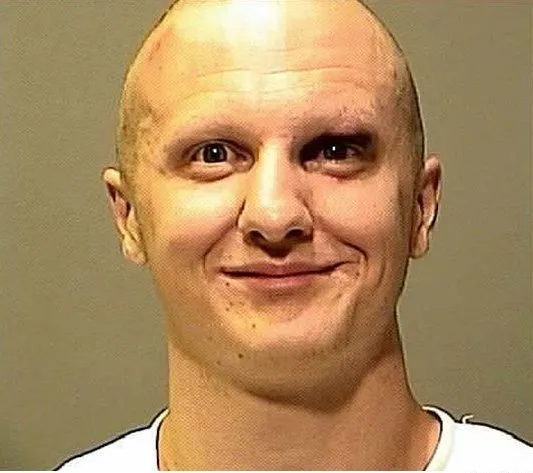
The aftermath of the Tucson shootings is likely to spawn new discussion about serious mental illness and its legal implications. Coincidentally, the mental health establishment has been debating what to include or exclude as a mental and emotional disorder, for the forthcoming revision of the Diagnostic and Statistical Manual of Mental Disorders. For example, one controversy is whether to remove narcissism as a bonafide disorder.

In contrast to discussion about mental disorders, I think we've neglected its flip side: What constitutes psychological health in today's world? What does it look like? And how can you promote it in your own life, your children and in society?

These questions loom large because the most psychologically healthy people and societies will be best equipped to create and sustain well-being, security and success in the tumultuous road we're now traveling on.

Take a look: At the start of this second decade of the 21st Century our lives and institutions are reeling, trying to cope with an interconnected, unpredictable world turned upside down by the events of the first decade: terrorism that's come home to roost; economic meltdown at home and abroad; rapid rise of previously "underdeveloped" nations; and in our social and political spheres, the rise of hatred, bigotry and intolerance, as Pima County Sheriff Clarence Dupik commented on following the Tucson shootings. This upheaval has fueled what I described in recent posts a "social psychosis" that's locked in conflict with a societal need to serve the common good.

The problem is that we know what severe mental illness as well as "garden variety" neurotic conflicts look like in daily life. Those have become more prevalent in the current climate. But what we think of as psychological health is pretty vague. Moreover, it's a 20th Century view that doesn't fit in the new world environment.

That is, psychological health has been pretty much defined as successful resolution and management of childhood traumas and conflicts; coping with stress and adapting to the world around you, as an adult. The problem is, that view has assumed a relatively stable and static world. One in which you can anticipate the kinds of changes or events that might occur. And when they do, a healthy, resilient person could bounce back to the previous equilibrium that existed. But today, there's no longer any equilibrium to return to. Psychological health requires living with disequilibrium.

Moreover, the 20th Century view equated psychologically healthy with adapting to the values and behavior that were culturally rewarded. For example, adversarial competition; power-seeking for oneself; consuming material goods; living with trade-offs between your personal values and outward behavior; depleting resources in disregard for future generations. And that didn't even work so well in the 20th Century: Some years ago I documented the emotional downside of with this kind of "successful" adaptation, in "Modern Madness."

More recently, the Huffington Post blogger Tijana Milosevic described, from her European perspective, the negative side of American's workaholism and hyper-focus on careerism. Economists and business writers such as Umair Haque in his Harvard Business Review blog and new book, "The New Capitalist Manifesto," are also criticizing the 20th Century model of success and well-being as undermining positive development of our institutions in today's current world.

In short, the prevailing old model creates, rather than diminishes psychological dysfunction and disturbance. It provides no useful guidance towards healthy living today, when people's careers are uncertain, businesses struggle to stay afloat, relationships shatter with changing life goals and personal values, affairs and divorce; and when the public is confused and adversarial about the role of government in people's lives. Moreover, old "truths" in several areas are found either to don't work or to reflect established beliefs rather than actual evidence, as a recent New Yorker article revealed. Given all this, here's some suggestions for beginning to redefine and rethink the essentials for a psychologically healthy life in the world we now live in. They reflect the likelihood that people who thrive in this new era will share some common features.

Overall, think of psychological health as an overall mentality of using emotional, cognitive, creative and relationship capacities in ways that help sustain and enhance the well-being of all, based on the recognition that all lives are interconnected and interdependent.

Put differently, this view of health reflects embracing a set of values -- what a person believes in as important or vital in life; what he or she wants to use their powers for. For example, someone's values might include, self-aggradizement, subjugation of others, power-lust and so forth. Such values fuel unhealthy behavior because they undermine rather than enhance well-being for all people. Ultimately, they lead to some form of dysfunction in relationships and career.

In contrast, values that are the underpinnings of psychological health include, for example, positive, supportive engagement with and respect toward diverse people; actions that contribute to the well-being of all, not just oneself; collaboration and compromise to achieve shared goals; self-regulation of stress through honest self-examination and reflection.

Values are a foundation for health. Then, several capacities support psychologically healthy living. Here are two important ones that research has confirmed.

Positive Emotions
We now know that you can train the brain to build new capacities, through meditation and "practice." Among the most important for psychological health are empathy and compassion. These capacities enable to you develop greater wisdom and effectiveness in dealing with problems.

This reflects what researchers call the neuroplasticity of the brain. Recently, the eminent neurologist Oliver Sachs described the remarkable capacity of the brain to learn and regenerate. Research also shows that positive emotions increase your capacity for resilience by strengthening your ability to handle stress and adversity.

Broadened Perspectives
This is the capacity to step "outside" of yourself and view problems from an enlarged viewpoint, including that of people you disagree with. In a previous post I've used the term "constructive disengagement" to describe this as a positive way to handle relationship conflicts. Research shows that you can move forward, emotionally, when you detach yourself; that is, disengage from the emotions that have been stirred up. In fact, we now know that even the infant is able to recognize another's point of view.

Another aspect of a broadened perspective that research confirms is that you can enhance your cognitive powers for problem-solving when you engage in positive rather than adversarial relations with others. Moreover, other research shows the positive benefit of simply behaving contrary to your usual personality traits -- another form of stepping "outside" of yourself.

Of course, building positive emotions and enlarging your perspectives are intertwined. Actions that strengthen one also strengthen the other. These are just two capacities that I think are part of a psychological health, today. They support the behavior that will be increasingly recognized as essential for creating and building lives and institutions that sustain, grow and develop in our interconnected world. For example, being able to let go of purely self-interest as the driver of one's relationships and work. Being flexible, transparent and nimble. Shifting and redeploying emotional, creative and other capacities towards positive engagement and collaboration, in order to achieve common goals. That is what supports both outward success and internal well being. And that's psychologically healthy.

Douglas LaBier, Ph.D., a business psychologist and psychotherapist, is Director of the Center for Progressive Development in Washington, D.C. You may contact him at dlabier@CenterProgressive.org


Follow Douglas LaBier on Twitter: www.twitter.com/douglaslabier

The aftermath of the Tucson shootings is likely to spawn new discussion about serious mental illness and its legal implications. Coincidentally, the mental health establishment has been debating what...
 
 
  • Comments
  • 47
  • Pending Comments
  • 0
  • View FAQ
Comments are closed for this entry
View All
Favorites
Bloggers
Recency  | 
Popularity
Page: 1 2  Next ›  Last »  (2 total)
06:33 PM on 01/17/2011
Physical fitness is a big part of psychological health, I can tell you that.
This user has chosen to opt out of the Badges program
photo
trainer3
"Port side, high, I'm comin' down hard."/ "Roger."
09:42 AM on 01/16/2011
I don't know how a person can be taught to care about others. You indicate in some of your replies that you want the discussion to relate to your post. Well how does the face of that guy relate to your post? Because you used the word 'face' in your title? That man's face speaks about a different subject, so I can't see why you complain when the conversation steers to the dangerously mentally ill.

Aside from that, I agree with most of what you say, but I am distracted.
Man, that is one scary picture.
photo
HUFFPOST BLOGGER
Douglas LaBier
02:38 PM on 01/16/2011
Readers may not know that the selection of images to accompany posts is a HuffPo editorial decision. I understand the apparent contrast between the subject and the image that appeared. I used the word "face" in the title when drafting the post; unfortunately, it was connected with the Laughner photo.
photo
HUFFPOST SUPER USER
katiek2o
02:00 AM on 01/16/2011
college is illness in itself.. institutions drive people mad.. competition/isolation
This user has chosen to opt out of the Badges program
photo
trainer3
"Port side, high, I'm comin' down hard."/ "Roger."
09:52 AM on 01/16/2011
Ah, it wasn't so bad. I was a 22 year old high school drop out with a new GED when I went to community college. I was rebellious, but I graduated. Looking back, what the heck I was doing arguing at teachers is a great mystery to me. Years later, after actually growing up, I went and got the BS and had perfect grades. I told them in essays and tests exactly what they wanted to hear.
They never would approve that I watch "Ancient Aliens", Thursdays at 9 on The History Channel.

"Making History More Than Gossip."
photo
HUFFPOST SUPER USER
katiek2o
12:40 PM on 01/16/2011
yea.. i guess after you're grown and know what is right to invest in it works.. its been terrible for me.. when you're older and more secure it sounds better..learning in the real world helps
07:20 PM on 01/15/2011
I have taught at a local community college for 22 years, during that time I have had students who suffered from untreated mental illness. As a teacher I don't know much about mental illness, and have little power to make sure that my troubled students receive help.

I am grateful to Congress and the President for passing a Health Care bill that strengthens services for the mentally ill. I was particularly encouraged by the comments of Pamela Hyde's of SAMHSA who spoke about early screening and treatment of behavioral illness.

When I taught at the K-12 level, we were mandated by law to report any case of "suspected" child abuse. Once that report was made, then a trained professional from Child Protective Services would investigate and intervene if necessary.

I would like to see a similar system in place for mental illness.

I have created a blog post about this issue which includes the interview with Hyde.

http://www.whatisworking.com/2011/01/health-care-reform-and-mental-illness.html
03:59 PM on 01/15/2011
I'm concerned that our government funded style of mental health system seems more and more to only approve treatment for those presenting with SMI (Serious Mental Illness) diagnosis. Why do we insist on withholding services from the population until it is too late? Until the lighter cases DO become SMI cases, at which point they might act out in manners like what we have recently witnessed. Why are our professionals writing criteria and level of care management structures which deny care to those who might benefit from it in earlier stages of mental disorder?
photo
HUFFPOST BLOGGER
Douglas LaBier
09:03 PM on 01/15/2011
Unfortunately, that's part of a long-standing public policy of assuming that milder forms of emotional conflict are not in need of support in our health care system. Yet for physical illnesses, we promote healthy diet, exercise, and treat when needed precursors to diabetes, hypertension, and so on. It's the ongoing disparity between emotional and physical disorders, but the gap is being narrowed now in the new health care law. Keep in mind, though, that my article was addressing the issue of practices that build health, rather than treating illness (see my comment below).
03:28 PM on 01/15/2011
I think this attempt to switch the discussion from the seriousness of mental illness in our society to the positive side of psychological health is part of a cultural consciousness that ignores and denies the depths of the problems of mental illness. Half of the homeless folks are probably mentally ill; I don't think the positive side of psychological health is particularly relevant to them.

I would strongly recommend spending time in psychiatric hospital or working with some severely mentally ill folks before concluding that it is the study of psychological health that is being neglected in this society.
08:54 PM on 01/15/2011
Very well put. A good example would be schizophrenia. No amount "feel good" psychology can stop the ravages of this disease of the brain. And it is a disease, not merely a chemical imbalance or neurosis. 1 million people suffer from this disease, and yes, a great many are homeless.

When I read the rantings of Loughner, I couldn't help but see the delusional illogical thinking of a paranoid schizophrenic.
photo
HUFFPOST BLOGGER
Douglas LaBier
08:57 PM on 01/15/2011
I understand your concern, but would prefer to see comments/criticisms about what I wrote about, rather than comments about what I did not write about! Please keep in mind that the reality of serious mental illness (which I did work with at the beginning of my career) doesn't negate the need to re-think the criteria for psychological health in today's changing society. That's not attempting to "switch the discussion." It's a different discussion!
02:32 PM on 01/21/2011
How about letting the discussion lead you? - I'm just saying that you have a unique opportunity to see what your initial thoughts evoke among people reading in this particular moment. I also think that this is a really, really huge assumption:

"The problem is that we know what severe mental illness as well as "garden variety" neurotic conflicts look like in daily life."

I think you know what it looks like because you are a professional, but clearly the general population does not, at all. I am behind you that we need to learn more about what psychological health looks like, but our society is pretty ignorant about mental illness.
HUFFPOST SUPER USER
morristhewise
12:21 PM on 01/15/2011
The red G-STRING of Jared will one day wind up in a museum encased in bullet proof glass. It might be turned into an erotic shrine and attract more viewers than the Mona Lisa.
09:43 AM on 01/15/2011
I am a 50 year old with clinical depression and severe anxiety courtesy of an abusive childhood. As an adult I've always been on my own in all senses with very few resources who has had a pretty tumultuous life. Because of an admission of suicidal thoughts years ago, I was dragged into the mental health system and have been held captive ever since. They got me on the meds years ago, but the GP won't prescribe them so I have to have a psychiatrist who has hurt and not helped in any way. One time I went to her office, answered her question of what's happening in my life, which turned into a 10 minute diatribe of work problems, neighbor problems, financial problems, isolation, etc. and she told me I was making it up. Enraged, I told her to give me a script next time and I'll be happy to tell her whatever she wanted to hear. She ran out of the office into the crowded waiting room screaming at me to leave while I was still in her office and threatening to call security on me. So I play her game to get the meds because if I don't she could have me hospitalized. Because of my intelligence and using your problem solving strategy and Dr. Phil, I've managed to survive.
photo
HUFFPOST BLOGGER
Tijana Milosevic
06:59 PM on 01/14/2011
Douglas, thanks so much for the excellent piece and for the reference to my article.

I just wished to observe the following regarding your observation that: "For example, someone's values might include, self-aggradizement, subjugation of others, power-lust and so forth,"

I think that these traits are often not recognized as "values" as respondents often associate the word "value" with something positive. It is also hard to admit to oneself that such values drive one's behavior, especially amidst of the rationalizing and other defense mechanisms. When there's a lack of self-reflection and critical analysis of one's behavior among friends, acquaintances and social circle one moves in- it is easy to assume that everyone else operates on the same competitive principles, and therefore dismiss calls for cooperation- which leads to perpetuation of negative behavior.

It is my impression that unfortunately, despite all the public discussion focused on "the self," "self-help" "improvement" etc. (just look how many articles on HP at any given time deal with these issues), there's still a limited number of people who have the time and willingness for true, honest introspection. So, I would think that the first step towards building social institutions, behavior and culture that foster cooperation and reflect the new approach to psychological health that you describe is just that: sharp self-reflection.

Thanks again!
photo
HUFFPOST BLOGGER
Douglas LaBier
08:30 PM on 01/14/2011
Thank you for your thoughtful and insightful comments. I quite agree, there's a lack of self-reflection and self-examination throughout Western societies, and a tendency to define what are, in reality, values, in the sense of what we hold important, as norms of behavior, without critical examination of them. Self-examination is the foundation for human development, in my view. Much of the emphasis on "self" development reflects self-absorption and narcissism.
09:24 PM on 01/15/2011
I recently had several "aha" moments of the negative kind. I had to admit that I was self-absorbed, self-centered, and not the compassionate being I imagined myself to be. It broke my own heart to realize this about myself. It is never too late, and I am forcing myself to remind myself daily to be more aware, to remember the lessons, to consciously make choices that reflect conscientiousness. I was jolted into reality and humbleness by my own dear sister's slow descent into insanity. I could have and should have done more to help her over many years. There were times I forsook her for others whom I thought were important, only to find out recently that I mean nothing to them. My time and energy would have been far better spent helping my sister, to whom I meant the world, instead of seeking the approval of other self-absorbed narcissists. I have also learned that instant gratification is not gratifying at all in the long. I wish I would have shown more compassion to my sister. I should have put my money where my mouth was -- instead of on a vain and shallow social life. Now I will always have regrets. I remember a wonderful saying I once heard -- morals and values are not here to keep us from having fun. They are here to keep us from having a lifetime of regret.

How's that for self-reflection? :)
08:44 PM on 01/13/2011
Society has to learn that people are entitled to act weird (unlike most people) and still be respected. We should learn there is a definite difference between those who act unlike us but are law abiding citizens and those who act unlike us and break laws. Too often we want to treat others who have been diagnosed with a mental health problem as criminals when the fact of the matter is that there are MORE criminals who do not have a mental health diagnosis behind bar or do not have qualify as having a mental health diagnosis than there are those who have been diagnosed as having a mental health problem.

The media should be responsible and seek to educate the public about mental health problems and what can be done about those who we suspect of being dangerous (referral to community programs) instead of creating hype and hysteria where those with a mental health diagnosis is further ostracized due to plain ignorance.
photo
HUFFPOST BLOGGER
Douglas LaBier
08:32 PM on 01/14/2011
Good point. The public stereotype of serious mental illness = dangerous, violent lunatic is often perpetuated by media portrayals. Most criminals are rational, not psychotic.
This user has chosen to opt out of the Badges program
photo
02:51 PM on 01/13/2011
Yes ! Natural selection driven by cooperation rather than competition. We CAN choose.
12:05 PM on 01/13/2011
Mental health care in the new health care reform bill? Why would Sarah Palin want to repeal this bill?
She might want to take advantage of this service someday soon!
photo
HUFFPOST SUPER USER
Vajara
vajara
09:06 AM on 01/13/2011
Personally, I am working with my meditation and psychological health to balance my whole being that will allow my mind to be open, accepting, allowing and appreciating--without judgment. Seems that our mind is a setting that responds to our ability to slow down and become one with all that is.
photo
HUFFPOST BLOGGER
Douglas LaBier
08:33 PM on 01/14/2011
Good path to follow - thanks for sharing that with readers!
12:22 AM on 01/13/2011
He looks like a guy who has been taking PCP.
Gene Evangelist
06:28 PM on 01/12/2011
A 2009 survey by the National Associaiton for the Mentally Ill reported that, statewide, mental health services had actually improved over the previous three years, to the point where the organization bumped Arizona's grade from a “D+” to a “C.” But, NAMI noted, there are still enormous problems, from shortages of providers to long waits for services. “Having case managers with nearly 100 clients does not allow them to do anything but respond to emergencies,” one survey respondent told NAMI. “Until my family member has an emergency, there is no case management.”

It should go without saying that most mentally ill people are not violent—and that those who are violent might not be if they received appropriate treatment. But, too often, they don't get it. And that's when tragedies occur.

Was this such an instance? Was the Arizona gunman among those the mental health system left out? If so, might a stable, coordinated care environment have offered effective treatment—the kind that might have changed his behavior and, in so doing, spared the victims of yesterday’s violence? If so, were there missed opportunities—and who or what missed them?

http://www.tnr.com/blog/jonathan-cohn/81156/arizona-shooting-mental-health
12:24 PM on 01/13/2011
I believe that NAMI would love to rid our world of the stigma of mental illness. Educating our legislature, and journalists that promote the stigma of the "face of mental illness" should be first. There is no "face" there is no "crazy person", only irrational moments, days, seasons that some of our citizens struggle with.
I'm feel sadness for the loss of Senator Wellstone now.