More

Featuring fresh takes and real-time analysis from HuffPost's signature lineup of contributors
David Perlmutter, M.D.

GET UPDATES FROM David Perlmutter, M.D.
 

Human Memory: Why Bad Memories Stick

Posted: 01/17/11 09:12 AM ET

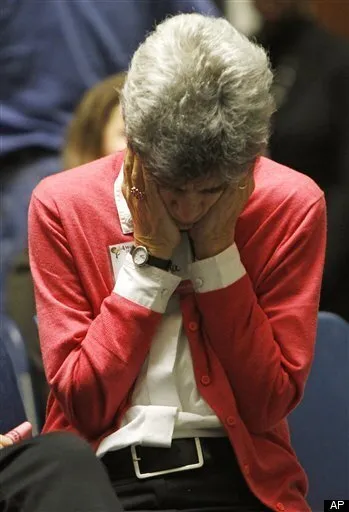
"I'm incredibly stressed out, and this Arizona thing has really put me over the top," complained my patient, just this week, a woman in her mid fifties. "I just can't seem to let it go. It's like I'm always on edge," she lamented. Looking at her intake paperwork, I noted that her stated reason for the appointment with me was "trouble with memory." Right at that moment, I wondered if she had any idea how deeply connected were her verbal and written complaints.

Bad things happen. And the human brain is especially adept at making sure that we keep track of these events. This is an adaptive mechanism important for survival. When we are exposed to a real or perceived threatening situation, powerful things happen in the brain to memorialize aspects of the event, including all manner of associated circumstances like where, when and how it occurred. This package is stored in the brain under the direction of a structure located deep in the temporal lobe called the hippocampus. While the hippocampus itself doesn't store memories, it serves to triage our experiences based upon their survival significance.

Dangerous events are stress producers, and as such, they are associated with activation of the "fight or flight" response in which the adrenal glands increase their production of the hormone cortisol. And it is cortisol that alerts the brain as to the importance of an experience, priming the hippocampus to store the event in a "high priority file." This is the mechanism by which the traumas of our lives or the traumatic events in the lives of others are more securely stored in our brains and explains why events like the recent violence in Arizona don't readily fade from memory. These memories, while stressful, permit us to consciously modify our behavior to avoid dangerous circumstances.

Cortisol can have other more sinister effects upon the hippocampus however. When this stress hormone is persistently elevated it actually proves toxic to the very brain cells it would normally nurture -- the neurons of the hippocampus. This is why persistent stress is associated with damage and shrinkage of the hippocampus and a resultant decline in memory function.

We shouldn't forget about events like the tragic shootings in Arizona, but we should endeavor to remember the event with association to more positive feelings. Holding the victims and their families in our thoughts and prayers is an important part of healing as it begins to associate the event with our senses of compassion and empathy. But constantly revisiting the tragedy itself creates persistent stress leading to persistent cortisol activation, ultimately damaging the hippocampus, one of our most fundamentally important brain structures.

Professor Santiago Ramon Y. Cajal, Spanish neuroscientist and winner of the 1906 Nobel Prize in medicine stated, "Every man can, if he so desires, become the sculptor of his own brain." What we choose to focus on changes our brains in a very real physical and functional sense, and this has profound implications for how our lives will play out. As Gandhi counseled, "Keep your thoughts positive because your thoughts become your words. Keep your words positive because your words become your behaviors. Keep your behaviors positive because your behaviors become your habits. Keep your habits positive because your habits become your values. Keep your values positive because your values become your destiny."

Mental fitness is served by consciously redirecting our attention away from the constant bombardment from the media whose reason to be seems to be focused on keeping us in a state of constant alert. Living our lives locked in the situation room creates brain pathways that nurture a persistent sense of fear and foreboding, ultimately fostering the likelihood that our actions will reflect this perception, culminating in choices reduced to "flight or fight."

President Obama called upon the nation to observe a moment of silence following the Arizona tragedy. Hundreds of people gathered in prayer outside the hospital where Representative Giffords was fighting for her life. We are drawn to the calmness offered by prayer and mediation in times of anguish, and during those brief moments in which we embrace the stillness, we are redirected away from the imposition of fear and mistrust, and instead behold the goodness. In the end, this is powerfully therapeutic for us as individuals, and as a species.


Follow David Perlmutter, M.D. on Twitter: www.twitter.com/DavidPerlmutter


  • Comments
  • 27
  • Pending Comments
  • 0
  • View FAQ
Comments are closed for this entry
View All
Favorites
Bloggers
Recency  | 
Popularity
Page: 1 2  Next ›  Last »  (2 total)
This user has chosen to opt out of the Badges program
photo
04:26 AM on 01/21/2011
Very interesting (and well written) David. I'm going to read your book.
photo
yinkadlb8
Having a glimpse of a sunny day.
09:04 AM on 01/20/2011
Well, this is a writeup more people should take cognizance of for the simple fact that socio/economic issues including family problems easily sends wrong messages to the brain worsening the psychological situations of the person(s) involved. When we learn to let go of memories that easily upset us, our cognitive abilities can be improved for us to live a mentally balanced life.
This user has chosen to opt out of the Badges program
photo
Shirley Fisk
Homeless Old Crank
09:00 AM on 01/20/2011
1/20/11
9am
Arlington, VA

But most of us were not present when the Arizona shooter opened fire so we shouldn't be feeling afraid. Afraid of what?
Maybe if you are a Congressman about to give a speech in public you could relate to the victims. Otherwise, what do you have to fear?
HUFFPOST SUPER USER
crom14
10:28 AM on 01/18/2011
Great article. So important right now for our world. Working with the public and listening to how stressed people feel I will pass this article on to them. My advice to them is enjoy something every day. Humor is such a great release and I tell each client to rent a good comedy that will take them away for a few hours. The effects last a very long time. Living in a winter climate can take such a toll on people. I find the snow bright and beautiful, yet some "hate" it so much...... they get more negative. It takes a lot of work to get past the negativity.
photo
HUFFPOST SUPER USER
Vajara
vajara
08:47 AM on 01/18/2011
Excellent article. Thank you for describing some healing approaches for maintaining balance and the value of focus using meditation and prayer. The mind works with us or for us when we follow your advice.
photo
HUFFPOST SUPER USER
oxygen
love is like oxygen
07:55 AM on 01/18/2011
let's listen briefly to what a wise PHD biochemist has to say http://www.youtube.com/watch?v=AmHiYtt2kEg
photo
HUFFPOST SUPER USER
bryan broome
All your money won't another minute buy.
09:23 AM on 01/18/2011
So the stoners measure of success is having 3 families. Far out.
photo
HUFFPOST SUPER USER
oxygen
love is like oxygen
10:38 AM on 01/18/2011
it's "far out" that that is all you are able to understand and take from the video - do you know what a blp is? http://www.youtube.com/watch?v=sg4QejFDGwM
11:32 PM on 01/17/2011
A couple of points. Our response to danger also includes freezing, besides fight or flight. And we're finding that kids who have experienced considerable trauma have this part of their brain more heightened. So they may constantly scan for danger. Which impedes the executive part of the brain dealing with attention. And they may easily misinterpret another child's responses as threatening.
HUFFPOST SUPER USER
barneylee
06:35 PM on 01/17/2011
I want to forget all that crap, but can't.
photo
sus2222
My micro-biology is FULL
02:27 AM on 01/19/2011
I selectively forget to remember it.
Train your brain to focus on other events and interests as a relaxation exercise.
photo
HUFFPOST SUPER USER
Kevin Atlanta
Active Citizen 54
05:46 PM on 01/17/2011
It's amazing to me that more research hasn't been done on this very real physiological response in the brain considering all the Post Traumatic Stress disorders in the returning troops.
The work of identifying CONservatives as having Fear-Based response mechanisms rather than higher neurological functions as in liberals also points to this region of the brain as being at the root of dysfunction.
This user has chosen to opt out of the Badges program
ltague
OBAMA 2012 OBAMA 2012 OBAMA 2012
06:00 PM on 01/17/2011
I agree . Since the fear-mongering right-wing media insists on keeping those who watch them in a constant state of fear & foreboding, their audience is truly being seriously harmed psychologically. And all just for ratings & money!
photo
HUFFPOST SUPER USER
oxygen
love is like oxygen
05:28 PM on 01/17/2011
http://www.newscientist.com/special/infectious-moods

this is sort of relevent

seems like some events or peopel are effecting us like germs
HUFFPOST SUPER USER
Brett Tonaille
Author and translator
04:17 PM on 01/17/2011
"Every man can, if he so desires, become the sculptor of his own brain." There's a quote to keep.

After the shootings in Arizona, one commentator said we should be thinking about those who rushed in to help, even risking their lives, more than the shooter. His point was more to glorify those who do good than those who do evil - who unfortunately so often are the ones most discussed after these events - because those who seek glory will see whatever model is held up. But it's also true that these models can help us "sculpt our brain" with positive rather than negative models.
HUFFPOST SUPER USER
Tamira Beth Stephens
07:45 AM on 01/18/2011
I completely agree. The media attention on those responsible for tragedies like these has always bothered me. It helps no one to splash his mug shot around the front page of every newspaper. What we should be focusing on are the heroic deeds done by ordinary people, not the ramblings of mad men.
03:49 PM on 01/17/2011
I'm always fascinated by the science behind intuitively good advice for living well. Thanks for breaking down the process and sharing it!
photo
HUFFPOST BLOGGER
David Perlmutter, M.D.
Vanguard Neurologist
02:33 PM on 01/17/2011
Thanks to all of you. How heartening it is to read these affirming comments.
This user has chosen to opt out of the Badges program
01:59 PM on 01/17/2011
As Gandhi counseled, "Keep your thoughts positive because your thoughts become your words. Keep your words positive because your words become your behaviors. Keep your behaviors positive because your behaviors become your habits. Keep your habits positive because your habits become your values. Keep your values positive because your values become your destiny."


-------------
Thanks for your article and for including the above.
07:24 AM on 01/18/2011
Fantastic quote, words to live by.
photo
HUFFPOST SUPER USER
bryan broome
All your money won't another minute buy.
09:46 AM on 01/18/2011
Saved it in notepad the minute I read it.
11:29 AM on 01/17/2011
This is so helpful! Whenever people say, "Remember 9/11!", I think to myself, if you'd lived through it as a New Yorker you'd realize how much you try to forget the horror of that day and the days following when we were all waking up with our hearts pounding with fear. I think we just don't know what it is we're supposed to remember without retraumatizing ourselves. As I think about what you're saying here, maybe what we're supposed to remember is the lessons and the goodness of people--the victims and the people who helped out in whatever way they could, and we're supposed to remember that good people are always around us. It just seems that we're pressured to remember the drama and horror and we have to really think hard on a way to "remember" without re-experiencing fear, which comes up whenever you flash back to traumatic images and memories.