
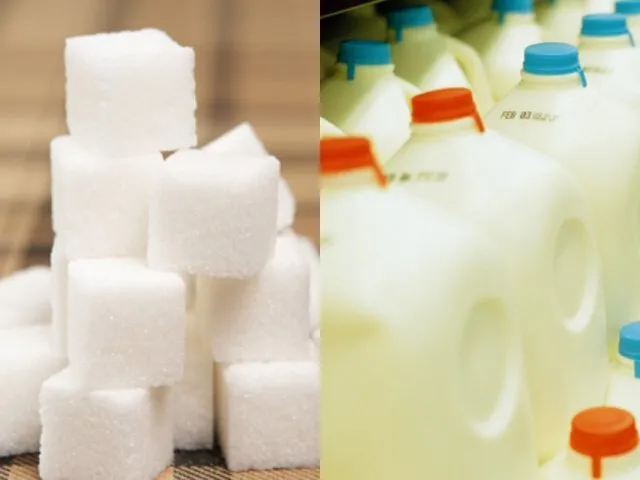
It's confirmed. Dairy products and sugar cause acne.
As our sugar and dairy consumption has increased over the last 100 years so has the number of people with acne. We now have over 17 million acne sufferers, costing our health care system $1 billion a year, and 80-90 percent of teenagers suffer acne to varying degrees. The pimply millions rely on infomercial products hawked by celebrities or over-the-counter lotions, cleansers, and topical remedies. Recent research suggests that it's not what we slather on our skin that matters most but what we put in our mouth.
Many have suggested a diet-acne link, but until recently it has not been proven in large clinical studies. Instead dermatologists prescribe long-term antibiotics and Accutane, both of which may cause long-term harmful effects. In 2009, a systematic review of 21 observational studies and six clinical trials found clear links. Two large controlled trials found that cow's milk increased both the number of people who got acne and its severity. Other large randomized prospective controlled trials (the gold standard of medical research) found that people who had higher sugar intake and a high glycemic load diet (more bread, rice, cereal, pasta, sugar, and flour products of all kinds) had significantly more acne. The good news is that chocolate (dark chocolate that is) didn't seem to cause acne.
The dietary pimple producing culprits--diary and sugar (in all its blood sugar raising forms)--both cause spikes in certain pimple producing hormones. Dairy boosts male sex hormones (various forms of testosterone or androgens) and increases insulin levels just as foods that quickly raise blood sugar (sugar and starchy carbs) spike insulin.
Androgens and insulin both stimulate your skin to make those nasty, embarrassing pimples. One patient recently told me he would give a million dollars for a pill to cure acne. He doesn't need to. It seems that for many the cure to acne is at the end of their fork, not in a prescription pad.
While pimples are not as simple as too much milk or sugar in your diet, both have a significant impact. Nutritional deficiencies as well as excesses can worsen acne. Correcting common deficiencies including low levels of healthy omega-3 anti-inflammatory fats, low levels of antioxidants such as vitamin E, zinc, and vitamin A, and including an important anti-inflammatory omega-6 fat called evening primrose oil all may be helpful in preventing and treating unwanted pimples. I will explain how you can correct and incorporate all of these nutritional elements of your diet and outlines some supplements that will help you fight acne in a moment.
But first it is worth taking a deeper look at milk and sugar.
Stay Away from Dairy and Avoid Acne
One scientist referred to milk as a "complex aqueous, suspended fat, liposomal, suspended protein emulsion". What we do know is that milk is designed to grow things--namely, babies--and in the case of cow's milk, calves. It is naturally full of what we call anabolic hormones (the same ones that body builders and A Rod use to grow big muscles, and which cause bad acne). These are mostly androgens (like testosterone) and growth hormones including insulin like growth factor 1 (IGF-1). There is no such thing as hormone-free milk.
Here's a short list of the 60-some hormones in your average glass of milk--even the organic, raw, and bovine growth hormone free milk:
- 20α-dihydropregnenolone
- progesterone (from pregnenolone)
- 5α-pregnanedione
- 5α-pregnan-3β-ol-20-one, 20α- and 20β-dihydroprogesterone (from progesterone)
- 5α-androstene-3β17β-diol
- 5α-androstanedione
- 5α-androstan-3β-ol-17-one
- androstenedione
- testosterone
- dehydroepiandrosterone sulphate acyl ester
- insulin like growth factors 1 and 2 (IGF-1 and IGF-2)
- insulin
This is what our government suggests we drink in high doses--at least 3 glasses a day for me, a healthy adult male, according to the mypyramid.gov website. Those guidelines have been strongly criticized by many including leading nutrition scientists from Harvard such as Walter Willett and David Ludwig.
The famous Nurse's Health Study examining health habits of 47,000 nurses found that those who drank more milk as teenagers had much higher rates of severe acne than those who had little or no milk as teenagers. If you think it is the fat in milk, think again. It was actually the skim milk that had the strongest risk for acne. In other studies of over 10,000 boys and girls from 9 to 15 years old, there was a direct link between the amount of milk consumed and the severity of acne.
It appears that it is not just the anabolic or sex hormones in milk that causes problem but milk's ability to stimulate insulin production. It actually may be the lactose or milk sugar in milk that acts more like a soft drink than an egg. Drinking a glass of milk can spike insulin levels 300 percent. Not only does that cause pimples, but it also may contribute to prediabetes. This is true despite studies funded by the dairy council showing that milk helps with weight loss. The question is compared to WHAT diet--a diet of bagels and Coke, or a healthy phytonutrient, antioxidant-rich, plant-based diet with lean animal protein?
Stay Away from Sugar, Refined Carbs, and Pimples
If a glass of milk causes pimples, that may drive you back to your Pepsi. But not so fast. Recent studies also show that sugar and refined carbs (a high-glycemic diet) cause acne. More importantly, taking kids off sugar and putting them on a healthy, whole foods, low-glycemic load diet resulted in significant improvements in acne compared to a control group eating a regular, high-sugar American diet. In addition to less pimples, the participants lost weight, became more sensitive to the effects of insulin (resulting in less pimple-producing insulin circulating around the blood). They also had less of the sex hormones floating around their blood that drive pimples. We know that women who have too much sugar and insulin resistance get acne, hair growth on their face, hair loss on the head, and infertility. This is caused by high levels of circulating male hormones and is called polycystic ovarian syndrome but is a nutritional, not gynecologic disease.
But the dietary influences don't stop there. It is not just sugar, but the bad fats we eat that may also contribute to acne.
Get an Oil Change
Our typical Western diet is full of inflammatory fats--saturated fats, trans fats, too many omega-6, inflammatory, processed vegetable oils like soy and corn oils. These increase IGF-1 and stimulate pimple follicles. Inflammation has been linked to acne, and anti-inflammatory omega-3 fats (from fish oil) may help improve acne and help with many skin disorders.
Balance the Hormones that Cause Skin Problems
The link is clear--hormonal imbalances caused by our diet trigger acne. Our diet influences sex hormones like testosterone, IGF-1, and insulin, which promote acne. The biggest factors affecting your hormones is the glycemic load of your diet (which is determined by how quickly the food you eat increases your blood sugar and insulin levels), and the amount of dairy products you eat. The good news is that eating a healthy diet and taking a few supplements can balance those hormones. Exercise also helps improve insulin function.
How To Prevent and Treat Acne
Eight simple steps will help most overcome their acne problems.
1. Stay away from milk. It is nature's perfect food--but only if you are a calf.
2. Eat a low glycemic load, low sugar diet. Sugar, liquid calories, and flour products all drive up insulin and cause pimples.
3. Eat more fruits and vegetables. People who eat more veggies (containing more antioxidants and anti-inflammatory compounds) have less acne. Make sure you get your 5-9 servings of colorful fruits and vegetables every day.
4. Get more healthy anti-inflammatory fats. Make sure to get omega-3 fats (fish oil) and anti-inflammatory omega-6 fats (evening primrose oil). You will need supplements to get adequate amounts (more on that in a moment).
5. Include foods that correct acne problems. Certain foods have been linked to improvements in many of the underlying causes of acne and can help correct it. These include fish oil, turmeric, ginger, green tea, nuts, dark purple and red foods such as berries, green foods like dark green leafy vegetables, and omega 3-eggs.
6. Take acne-fighting supplements. Some supplements are critical for skin health. Antioxidant levels have been shown to be low in acne sufferers. And healthy fats can make a big difference. Here are the supplements I recommend:
- Evening primrose oil: Take 1000 to 1500mg twice a day.
- Zinc citrate: Take 30 mg a day.
- Vitamin A: Take 25000 IU a day. Only do this for three months. Do not do this if you are pregnant.
- Vitamin E (mixed tocopherols, not alpha tocopherol): Take 400 IU a day.
7. Try probiotics. Probiotics also help reduce inflammation in the gut that may be linked to acne. Taking probiotics (lactobacillus, etc.) can improve acne.
8. Avoid foods you are sensitive to. Delayed food allergies are among the most common causes of acne--foods like gluten, dairy, yeast, and eggs are common culprits and can be a problem if you have a leaky gut.
Following these simple tips will help you eliminate acne and have that glowing skin you have always dreamed of. And it's much cheaper (and safer) than expensive medications and dermatologist visits. Improve your diet and take acne-fighting supplements and you will watch your pimples disappear.
For more information on how to optimize your nutrition and improve your skin, see www.drhyman.com.
Now I'd like to hear from you.
Have you struggled with an acne or skin problem? Have you noticed any link between your skin? What seems to be a problem for you?
Why do you think we are encouraged to consume so much dairy when the risks to our health (and our skin) are so high?
What other steps have you taken to fight acne? What has worked? What hasn't?
Please share your thoughts by leaving a comment below.
To your good health,
Mark Hyman, MD
References
1. F. William Danby, MD, Nutrition and acne, Clinics in Dermatology (2010) 28, 598-604
2. White GM. Recent findings in the epidemiologic evidence, classification, and subtypes of acne vulgaris. J Am Acad Dermatol 39(2 Pt 3):S34-7 (1998 Aug).
3. Lello J, Pearl A, Arroll B, et al. Prevalence of acne vulgaris in Auckland senior high school students. N Z Med J 108(1004):287-9 (1995 Jul 28).
4. Venereol 21(6):806-10 (2007 Jul).
5. Wolf R, Matz H, Orion E. Acne and diet. Clin Dermatol 22(5):387-93 (2004 Sep-Oct).
6. Magin P, Pond D, Smith W, et al. A systematic review of the evidence for myths and misconceptions' in acne management: diet, face-washing and sunlight. Fam Pract 22(1):62-70 (2005 Feb).
7. Spencer EH, Ferdowsian HR, Barnard ND. Diet and acne: a review of the evidence. Int J Dermatol 48(4):339-47 (2009 Apr).
8. Bendiner E. Disastrous trade-off: Eskimo health for white civilization, Hosp Pract 9:156-89 (1974).
9. Adebamowo CA, Spiegelman D, Danby FW, et al. High school dietary dairy intake and teenage acne. J Am Acad Dermatol 52(2):207-14 (2005 Feb).
10. Adebamowo CA, Spiegelman D, Berkey CS, et al. Milk consumption and acne in adolescent girls. Dermatol Online J 12(4):1 (2006).
11. Adebamowo CA, Spiegelman D, Berkey CS, et al. Milk consumption and acne in teenaged boys. J Am Acad Dermatol 58(5):787-93 (2008 May).
12. Hoyt G, Hickey MS, Cordain L. Dissociation of the glycaemic and insulinaemic responses to whole and skimmed milk. Br J Nutr 93(2):175-7 (2005 Feb).
13. Kaymak Y, Adisen E, Ilter N, et al. Dietary glycemic index and glucose, insulin, insulin-like growth factor-I, insulin-like growth factor binding protein 3, and leptin levels in patients with acne. J Am Acad atol 57(5):819-23 (2007 Nov). Cordain L, Lindeberg S, Hurtado M, et al. Acne vulgaris: a disease of Western civilization. Arch Dermatol 138(12):1584-90 (2002 Dec).
14. Smith RN, Mann NJ, Braue A, et al. A low-glycemic-load diet improves symptoms in acne vulgaris patients: a randomized controlled trial. Am J Clin Nutr 86(1):107-15 (2007 Jul).
15. Smith RN, Mann NJ, Braue A, et al. The effect of a high- protein, low glycemic-load diet versus a conventional, high glycemic-load diet on biochemical parameters associated with acne vulgaris: a randomized, investigator-masked, controlled trial. J Am Acad Dermatol 57(2):247-56 (2007 Aug).
16. Smith RN, Braue A, Varigos GA, et al. The effect of a low glycemic load diet on acne vulgaris and the fatty acid composition of skin surface triglycerides. J Dermatol Sci 50(1):41-52 (2008 Apr).
17. Zouboulis CC. Is acne vulgaris a genuine inflammatory disease? Dermatology 203(4):277-9 (2001).
18. James MJ, Gibson RA, Cleland LG. Dietary polyunsaturated fatty acids and inflammatory mediator production. Am J Clin Nutr 71(1 Suppl):343S-8S (2000 Jan).
19. Simopoulos AP. Essential fatty acids in health and chronic disease. Am J Clin Nutr 70(3 Suppl):560S-9S (1999 Sep). 26. Kaaks R, Bellati C, Venturelli E, et al. Effects of dietary intervention on IGF-I and IGF-binding proteins, and related alterations in sex steroid metabolism: the Diet and Androgens (DIANA) Randomised Trial. Eur J Clin Nutr 57(9):1079-88 (2003 Sep).
20. Fulton JE, Jr., Plewig G, Kligman AM. Effect of chocolate on acne vulgaris. Jama 210(11):2071-4 (1969 Dec 15).
21.Anderson PC. Foods as the cause of acne. Am Fam Physician 3(3):102-3 (1971 Mar).
Mark Hyman, M.D. is a practicing physician, founder of The UltraWellness Center, a four-time New York Times bestselling author, and an international leader in the field of Functional Medicine. You can follow him on Twitter, connect with him on LinkedIn, watch his videos on YouTube, become a fan on Facebook, and subscribe to his newsletter.