
iPhone app iPad app Android phone app Android tablet app More

Featuring fresh takes and real-time analysis from HuffPost's signature lineup of contributors
Dr. Reese Halter

Dr. Reese Halter

Posted: October 11, 2010 09:18 PM

Global Warming: Bees and Flowers

What's Your Reaction:

This past weekend, people in 188 countries at 7,000 events united as one voice in the fight against oil, gas and coal, rising greenhouse gases and a warming world.

"Kick coal and oil out" was heard around the globe. Change is the only thing constant in life and when it comes to our insatiable addiction to petroleum products, the time has come to move beyond an antiquated, toxic and now life-threatening source of energy.

Last week, two major solar farms received approval from the feds creating 1,000 jobs and power in Southern California for over 213,000 homes. Remember that innovation is our best friend and America's Recovery Act is pouring $90B into clean energy, smart grids, energy efficiency, electric cars, renewable power from the sun, wind, ocean waves, geothermal and manufacturing plants in the U.S.

One of the joys of being a biologist is the privilege of studying nature. All life on this planet whether deep under the sea or on the top of Mt. McKinley, and everything in between, is interconnected and temperature dependent. The emphasis on Nature's interconnections is, I believe, why the biology students at Cal Lutheran University enjoy my classes.

Global warming is having a deleterious affect on the 20,000 known species of bees around the globe. And destruction of natural habitat has been rampant in recent decades. There are over 5,000 native species of bees in North America that are responsible for pollinating the lion's share of plants between the Arctic and the trees of the Sonoran desert.

Bumblebee populations have been hit particularly hard. Since 1999, the rusty-patched bumblebee, whose habitat spanned from Quebec to Vermont, has disappeared along with four other bumblebee species. Franklin's bumblebee of northern California and southern Oregon is also now believed to be extinct. Large populations of western bumblebees that inhabited the entire west coast of North America have severely declined in the past decade.

Last week an article in The New York Times reported a discovery that the newspaper claimed to be the culprit in the death of a couple hundred billion honeybees worldwide. There's no question that this DNA-based virus is linked to the Nosema ceranae fungus. This virus/fungus combination proliferates in cool, damp weather, thrives in the gut of overwintering bees and disrupting their nutrition.

When complex biological systems begin to unravel as in the case of the dying honeybees there is rarely one cause or smoking gun. Rather, it's usually a combination of factors acting in concert. In the bees' world, there are many problems. Anyone who thinks that there's no affect on releasing five billion pounds of pesticides including known toxic neonictinoids into the biosphere, each and every year is daft and they're eating poisons daily.

Moreover, these poisons are getting to the bees first and they are dying. The honeybees are acting, as modern-day canaries in coalmines and government regulatory agencies are not paying attention. The bees are dying from the very foods that we are eating. Organic foods protect the bees and they protect us -- you are what you eat!

Honeybees do so much more than just pollinate almost everything from apples to zucchinis. Did you know they also pollinate the ingredients that go into 50 percent of all ice cream flavors? Or that bee venom from a bee's stinger is a potent anti-inflammatory and pain medicine used to treat multiple sclerosis, rheumatoid arthritis, fibromyalgia, tendonitis and other debilitating autoimmune diseases?

This past summer, we saw the effects of global warming sky-rocket the price of wheat and barley by as much as 75 percent on the world market when Russia was enveloped by drought and fires, western Canada deluged by rain and Australia plagued with epic locust infestations.

But global warming is far more pervasive than the obvious symptoms of bad weather and food shortages. For the first time since the Civil War (1861-1865), the price of cotton has surged above $1. Flooding in Pakistan (fourth largest producer) and China (the largest producer and importer) has created a cotton demand that's outstripping the supply. This spike in price is exacerbated by the fact that honeybees pollinate cotton and billions of dead honeybees have created a demand for bees that can't be met.

Eighteen thousand six hundred farms in the U.S. grow cotton producing clothing, and food like cottonseed oil, shortening, salad dressing, crackers, cookies and chips worth over $27B annually. The cotton industry uses 75 million pounds of pesticides each year and according to the EPA, a dozen of these pesticides are carcinogenic.

Global warming has altered the weather patterns reducing the snowfall on the Southern Rockies, which in turn supplies melt waters to the Colorado River and 25 million people in the southwest. Snowpacks are melting three weeks earlier causing glacier lilies to emerge at least a couple weeks sooner. A climate-driven mismatch is now occurring as the bumblebees that pollinate the lilies are wakening-up two weeks too late. The fate of the lilies is in jeopardy.

It's happening around our nation. In Maryland, honeybees which rely heavily on the first bloom to generate copious amounts of honey to sustain the hive for the year are having to quickly change their diets because plants are flowering by as much as four weeks earlier.

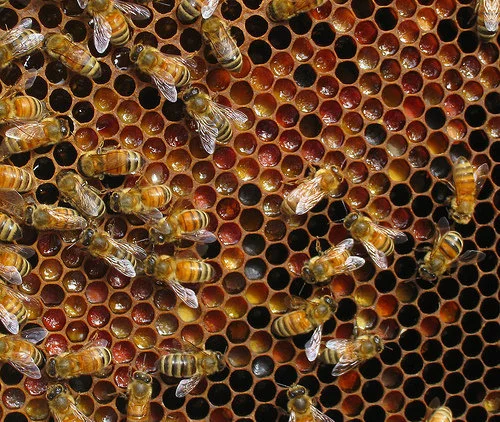
In Maryland, it's evident from their honey, which traditionally was a rich, red, earthy flavor from the American tulip trees. Now the bees are producing a lighter more fruity honey as they are relying upon later-blooming black locusts trees to make a living.

The changes in the Rockies and Maryland have happened fast, both within two decades. The trees, bees and other critters are telling scientists that the Earth is unequivocally warming up.

Global warming is a citizen's issue. That means each of us is required to lend a helping hand.

Join the HoneyBeeNet online and help scientists across North America track our bees and flowers as we are all inexorably linked in the dance of survival.

Dr Reese Halter is a science communicator: voice for ecology, conservation biologist at Cal Lutheran University and public speaker. His latest book is The Incomparable Honeybee. Contact him through www.DrReese.com


Follow Dr. Reese Halter on Twitter: www.twitter.com/DrReeseHalter

This past weekend, people in 188 countries at 7,000 events united as one voice in the fight against oil, gas and coal, rising greenhouse gases and a warming world. "Kick coal and oil out" was heard a...
 
 
  • Comments
  • 14
  • Pending Comments
  • 0
  • View FAQ
Comments are closed for this entry
View All
Recency  | 
Popularity
photo
fran
painter
11:07 AM on 10/13/2010
One thing we can do Dr. Halter is stop meter readers (Water) from killing
honey bees that have made a home in the lawn meter.Especially in Florida
01:53 PM on 10/12/2010
In the spirit of trying to talk about solutions, as well as problems, I would like to describe my yard. I garden. My neighbor keeps bees. Many of my neighbors garden a little, but not enough to provide food year round for bugs and birds (and snakes and bats...). A few of us try to be the local snack bar. when I'm in the yard I pay attention to who is eating what, and I add things during the year to try to make sure there aren't huge gaps. Right now, even at the end of the growing season, the last of the wild bees and my neighbor's honeybees are feasting in the sun on asters and goldenrod (no, it's ragweed that makes you sneeze). Butterflies are having final meals and warming moments on the mexican sunflowers and buddleia. None of this is hard stuff to grow without chemicals, and when you start to see how many creatures become dependent upon your patch of flowers it makes you look around and see how few options they have in town or suburbia.

No, I can't cure the sick bees. But these little marginal habitats have a vital role in preserving isolated populations of vulnerable creatures.
12:08 PM on 10/12/2010
http://www.sciencedaily.com/releases/2010/10/101007183018.htm

Virus and fungal infections is the latest according to news reports. Above article at sciencedaily.com is the most complete account I've seen..
This user has chosen to opt out of the Badges program
photo
12:04 PM on 10/12/2010
Monsanto and the rest of the toxic chemical producers just keep pumping out the poison. People just keep buying the poison and eating it.

People think they can do better than Nature. Man's arrogance is killing us.
This user has chosen to opt out of the Badges program
photo
11:49 AM on 10/12/2010
"This past summer, we saw the effects of global warming sky-rocket the price of wheat and barley by as much as 75 percent on the world market when Russia was enveloped by drought and fires, western Canada deluged by rain and Australia plagued with epic locust infestations."

These effects might have been caused by global warming, and they might not have. Unusual weather has always occurred and will always occur somewhere in the world, global,warming or no global warming. It is impossible to point to a particular event -- or even a few events -- and be confident that it was due to global warming.

And Halter likely knows this full well, which makes her article highly unprofessional. The mantra "weather is not climate" cuts both ways.
photo
HUFFPOST SUPER USER
PotomacOracle
The Solution:debt free credit clearing systems
06:20 AM on 10/12/2010
You need to go further and view these viruses as opportunistic infections that have the bee's reduced immunity to thank for the opportunity.

In the case of the bats, the bees, and the frogs, look to increased levels of formaldehyde, which occurs in our atmosphere intermittently along with methane, as manifested by their seasonal migration patterns.

Methane oxidizes to formaldehyde as its third progression through to its final oxidant, carbon dioxide.
Unoxidized formaldehyde goes into the water at night and goes back into the atmosphere at daylight. Frogs swin and live in water at night, bats drink water at night and bees go out at dawn just as formaldehyde is rising from the water to our atmosphere; it hangs out where we breath.

In small quantities it lowers the immune system. Fungi and viruses have an easier time invading. The bats are being killed by a fungus that has always been there, and ditto with the frogs. In high enough quantities it eviscerates by producing acidosis. Bees are especially susceptible to acidosis, cows too. That is the reason sometimes cow carcasses are discovered with missing body parts.

Either scientist do not know that methane from emissions from well bores has increased 155% or they are being prvented from looking in this direction. Someone needs to get night goggles on and test periodically for formaldehyde in our rivers, streams and oceans at nighttime, correlate it to methane emissions and do something about it if it checks out.
photo
HUFFPOST SUPER USER
PotomacOracle
The Solution:debt free credit clearing systems
06:09 AM on 10/12/2010
From Andrea Silverthorne: Thanks or sending me that report. Here's what I sent the author----I have just read your report on bee research. It does not go to the root of the problem. You need to go further and view these viruses as opportunistic infections that have the bee's reduced immunity to thank for the opportunity.

I believe in the case of the bats, the bees, and the frogs, you must look to increased levels of atmospheric formaldehyde, which occurs intermittently along with the methane, as manifested by their seasonal migration patterns.

Methane oxidizes to formaldehyde as its third progression through to its final oxidant, carbon dioxide. Unoxidized formaldehyde goes into the water at night and goes back into the atmosphere at daylight. Frogs swim and live in water at night, bats drink water at night and bees go out at dawn just as formaldehyde is rising from the water to our atmosphere; it hangs out where we breath.

In small quantities it lowers the immune system. Fungi and viruses have an easier time invading. In high enough quantities it eviscerates by producing acidosis. Bees are especially susceptible to acidosis.. cows too. That is the reason sometimes carcasses are discovered with missing body parts.

Either scientist do not know that methane from emissions from well bores has increased 155% or they are being prevented from looking in this direction.
03:11 AM on 10/12/2010
I saw a National Geographic Channel special on this....bee deaths were caused by contaminated royal bee jelly purchased and used by Australian bee keepers from China. Bee keepers, from around the world, bought royal jelly from the resultant contaiminated Australian bees. One can trace bee die-offs in time and they all point back to China. The Chinese bees died off long ago, they even have people hand polinating their stone fruit orchards. Devestating, but not related to climate change.
This user has chosen to opt out of the Badges program
photo
01:49 AM on 10/12/2010
Isn't it called "climate change"? Or was that just for last month.
01:27 AM on 10/12/2010
"The theory is that radiation from mobile phones interferes with bees' navigation systems, preventing the famously homeloving species from finding their way back to their hives. Improbable as it may seem, there is now evidence to back this up."
http://www.independent.co.uk/environment/nature/are-mobile-phones-wiping-out-our-bees-444768.html
02:54 AM on 10/12/2010
tangolas - that theory is defunct as the bees.
01:23 AM on 10/12/2010
Honey bees are disappearing at alarming rates across the globe ......

http://www.youtube.com/watch?v=hHRgdzwEPGA
http://www.youtube.com/watch?v=c42pFTHpyN4
01:19 AM on 10/12/2010
This shipment of honey bee packages from California arrived in Michigan April 2010 with thousands of dead bees in 10 of the packages.
http://www.youtube.com/watch?v=AX_cnLOAKDo
This user has chosen to opt out of the Badges program
photo
12:24 AM on 10/12/2010
If not for bee's that what am I ???