

iPhone app iPad app Android phone app Android tablet app More

Featuring fresh takes and real-time analysis from HuffPost's signature lineup of contributors
Dr. Terri Kennedy

GET UPDATES FROM Dr. Terri Kennedy
 

Conversation With Sharon Gannon on 'Yoga, Life and Being Vegan'

Posted: 09/14/2012 12:50 am

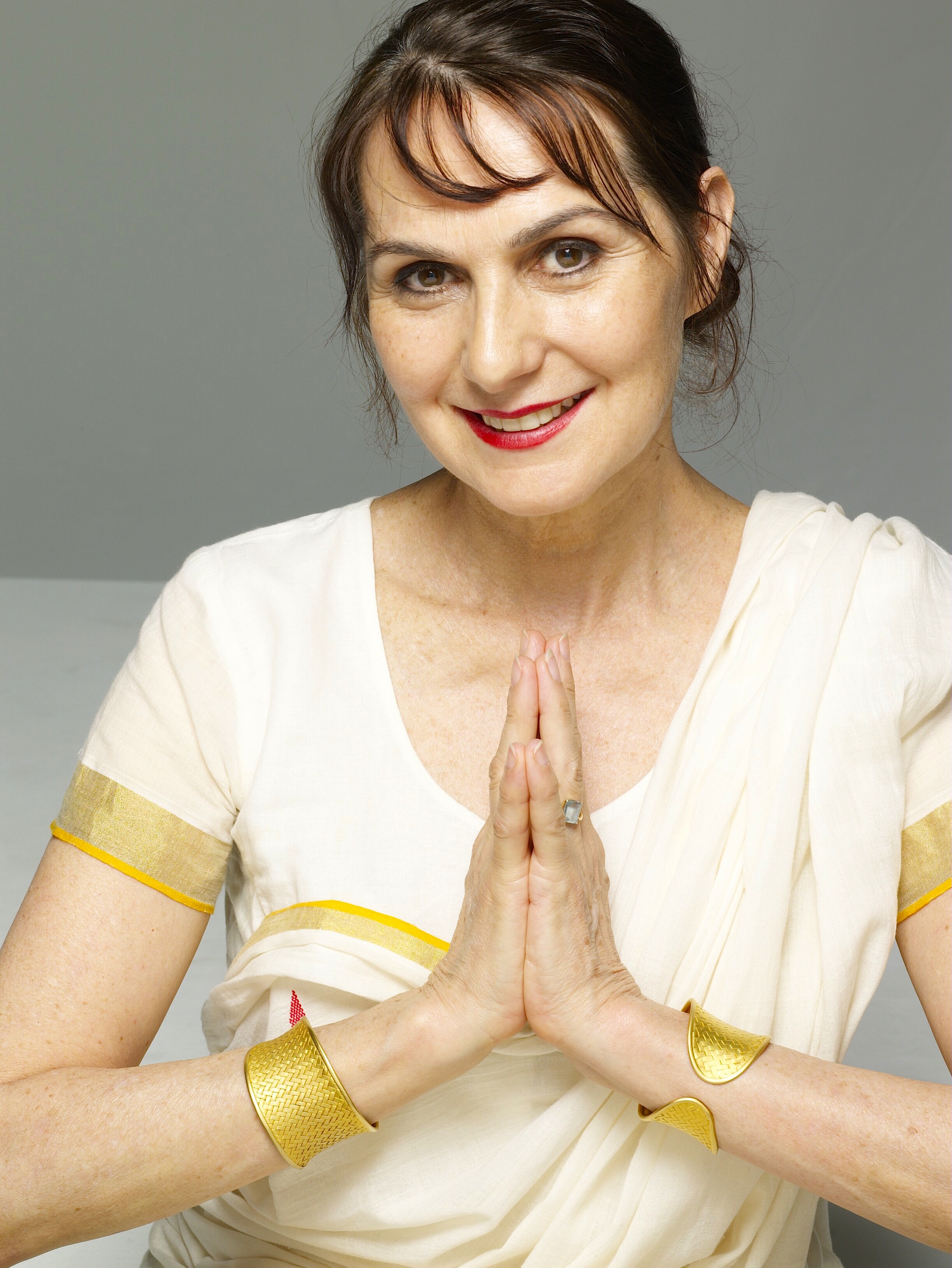
2012-09-04-images-SharonnamasteGuzman_280R.jpgWhat is the relationship between yoga and transformation? How can what you eat affect how you live? I caught up with the co-founder of the Jivamukti Yoga Method, Sharon Gannon. With over 25 years of teaching and activism, she is credited for making yoga "cool and hip." Here's what she had to say about yoga, life and being vegan.

TERRI: From your perspective, what is yoga?

SHARON: Yoga means "union": the union of the individual soul with the absolute eternal reality... both the practice and the attainment of self-realization. Our true nature is ecstatic happiness, so when we connect to it we become it. The practices of yoga help us to realize who we really are by revealing to us where and how we are resisting happiness. Through the practices of yoga, one has the opportunity to look deeper into the potential causes of their own mental, emotional and or physical discomfort, and decide whether or not to let go. This type of self-examination can then lead to greater clarity about who we really are, and that in turn leads to lasting happiness -- yoga.

TERRI: What does "being yoga" mean?

SHARON: Being happy. Or at least engaged in practices of kindness and compassion toward others, which would eventually lead to happiness for oneself.

TERRI: How can yoga help the everyday person transform his/her life?

SHARON: Our thoughts are crucial -- they actually determine our reality... our inner reality and the health of our bodies. Our thoughts also create the atmosphere around us. Whatever yoga practices you engage in should help you resolve your obstacles to enlightenment -- in other words, should help you resolve your relationships with others and thus bring you to the state of yoga. How we treat others will determine how others treat us; how others treat us will determine how we see ourselves; and how we see ourselves will determine who we are. Enlightenment may be too big a goal for some people; they may just want to practice yoga to see if it will make them feel better. Okay, but then they should practice with the intention of transforming their present condition into a better one. To do that, they have to set that intention before they practice and continuously remind themselves of that intention as they are practicing, and they will reach their goal. Perhaps through continuous regular practice the concept of what a "better" life may mean can begin to expand, and we can learn something about our options.

TERRI: What is a "yoga wild child," as you call it?

SHARON: Our present world culture is a culture of slavery with a mission statement that could read: "The Earth Belongs to Us." We go into our relationships with others with a self-centered intention, considering only what we will get out of the endeavor for ourselves. With this cultural attitude we clear-cut forests, dam rivers, throw garbage and even nuclear waste into the ocean as well as enslave, torture and murder billions of other animals, and our excuse is that it is economically viable. Our culture has conditioned us not to question the ethics of our actions or the sustainability of life on planet Earth for all beings that may result from that kind of one-sided relationship. Yoga recognizes the interdependency of all of life -- no one exists alone, every action that anyone takes affects the whole. Yoga promotes other-centeredness rather than self-centeredness as a means to attain happiness. When we contribute to the happiness of others, our own happiness will be assured. When we live our lives so as to enhance the lives of others, we enhance our own lives. To live wild is to live in harmony with the natural world.

TERRI: How can what you eat affect how you live?

SHARON: Choosing food that promotes health and happiness for ourselves and the planet will lead to a better quality of life for ourselves and the planet. If our food choices cause suffering and disease to others and contribute to the destruction of the environment and ultimately to our own demise, then perhaps it is time to question what we are eating. Through my practice, I have discovered some profound ways that the yamas (yogic ethical code) relate to our treatment of other animals:

  1. Ahimsa (non-harming). The confinement, exploitation, slaughter and eating of animals is harmful to them -- even if one does not do the harming himself or herself.
  2. Satya (truthfulness). The animal user industries employ deception in advertising. They show us pictures of happy cows grazing with their families and smiling chickens pecking in a country barnyard, yet these beings are never happy on farms.
  3. Asteya (non-stealing). The animal user industries are founded upon stealing -- stealing milk from mother cows, stealing wool from sheep, stealing skin from many species of animal to use for coats, car seats and more, and of course stealing lives from all animals used for food, clothing, cosmetics, drugs, "scientific" research, etc.
  4. Brahmacharya (not misusing sexuality). All animal foods and products are derived through sexual abuse: most female animals raised for food and/or as milk cows are tethered in a small stall and raped by human farm hands for artificial insemination, only to have their babies taken away from them shortly after birth. Forcible and repeated masturbation of males is also common practice in the farming industries.
  5. Aparigraha (greedlessness). Patanjali recommends living a life of moderation rather than excessive consumption -- taking only what one needs, rather than what one wants, and leaving no other beings impoverished. While the human population of the Earth is approximately 7 billion, the United Nations estimates that [67 billion] land animals are killed each year for food, not including the countless sea creatures whom we kill to eat. Further, the animal user industries create more carbon emissions than all transportation combined worldwide. By any measure, using animals the way we do cannot be considered moderate.

Bottom line: if you want to live a happy life, be vegan!

Photo credit: Guzman

This post is part of "Being Yoga," a series on using yoga to transform your life. Dr. Terri Kennedy interviews some of the most respected yoga teachers in the country. It starts with "7 Ways to Transform your Life... from 7 Expert Yogis."

Check out the entire series in video over the coming weeks:

Peter Sterios on "Going Within"
Rodney Yee and Colleen Saidman Yee on "Being Yoga"
Beryl Bender Birch on "Being Present"
Cyndi Lee on "Integrating your Self"
Reverend Jaganath Carrera on "Yoga and Spirituality"
Elena Brower on "The Art of Attention"
Masood Ali Khan and Sheela Bringi on "Music and the Spirit"

For more, read part two of the conversation with Sharon Gannon on "Yoga, Life and Being Vegan."

Learn more about Sharon Gannon and Jivamukti Yoga.

Dr. Kennedy is the founder of Ta Yoga, which operated one of the first yoga studios in Harlem. She also served six years on the Board of Yoga Alliance -- which sets the standards for yoga teaching in the U.S. Now, she applies the principles and techniques from yoga to the Power Living coaching process in order to help people have the clarity and energy to reach their highest potential. Check out her coaching services, private yoga training, inspirational products and/or speaking services.

For relaxation right now, try Dr. Kennedy's latest 1-Minute Mini-Escape. For inspiration for your transformation, listen to Watch the Gap. Also, read about Mindfulness as a Path to Sustainability and about The Power of Meditation.

For more by Dr. Terri Kennedy, click here.

For more on yoga, click here.


Follow Dr. Terri Kennedy on Twitter: www.twitter.com/drterrikennedy

FOLLOW HEALTHY LIVING
What is the relationship between yoga and transformation? How can what you eat affect how you live? I caught up with the co-founder of the Jivamukti Yoga Method, Sharon Gannon. With over 25 years of t...
 
 
  • Comments
  • 45
  • Pending Comments
  • 0
  • View FAQ
Comments are closed for this entry
View All
Favorites
Recency  | 
Popularity
Page: 1 2  Next ›  Last »  (2 total)
06:26 PM on 09/19/2012
Sharon Gannon is an excellent teacher - she makes it clear and practical. Its important to understand that veganism can have such a positive effect on my life because it has such a profoundly positive effect on the world around me which I am a part of. It would be easy to tell us that "ahimsa" is simply about taking care of ourself, but she explains how not-harming others is the best way for us to reach our goal of transformation and wholeness. This article and the power of veganism is relevant for those who practice yoga asana as well as those who do not. It is the kind of article I am looking for more.
03:18 PM on 09/18/2012
Thanks Sharon.

Becoming Vegan 17 years ago was , by far, the #1 single most important thing I've done with this gift of my life. If people could experience a sliver of the joy that it brings me on a daily basis, the feeling of connectedness with the animal kingdom, and all beings.... they would switch in a heartbeat.

But that's a fringe benefit, a side effect. Being Vegan is not about the Vegan, it's about the beings that will not be harmed for, or by the Vegan. It is a very nice way to live.

check out http://www.vegweb.com for a vast searchable index of your favorite foods and recipes 'Veganized' (not my site, no affiliation, but I point many there cause it's a great resource.

peace to you all,

-john
09:32 PM on 09/17/2012
Thank you for the article on Veganism. Sharon Gannon thoughtfully and clearly outlines how we can live our yoga values off the mat every day with what we choose to eat, as well as the importance of veganism to the environment and the wellbeing of us all. I appreciate Sharon emphasizing and re-focussing Ahimsa as classical yoga texts presented it: as a Yama - how we treat others, not how we focus (all too frequently) on ourselves first.
photo
HUFFPOST SUPER USER
Nerdiac
01:00 PM on 09/17/2012
As a happy vegan, I can attest to this! ^_^
10:24 AM on 09/17/2012
Thank you Sharon Gannon for writing this thoughtful and truth bearing essay about the harm to animals from human beings' illusions and consumption. Thank you to the Huffington Post for publishing this and for helping to educate on this planet in finding a better way to live.
09:39 AM on 09/16/2012
I love this article! So many people- yoga practitioners included- have become so disconnected to the idea that peace (or lack thereof) is connected through our daily consumer choices. It's great if you feel a natural high after stretching, bending forward, balancing and doing many challenging poses on the mat. But it shouldn't end there. The more important part of the yoga practice is how we bring about this sense of peace to others- including animals, and maybe especially animals. As long as we use them, it is slavery. To deny this is to tell ourselves lies, and is not a practice of satya. Hoping to read more articles like this one!
photo
HUFFPOST BLOGGER
Dr. Terri Kennedy
04:08 PM on 09/16/2012
Peace is certainly connected to our daily consumer choices and you are so right that we often don't make that connection. Thank you for underscoring that. It's such an important point.
08:50 AM on 09/16/2012
I am so happy that Huffpo dares to address the greatest issue of our times and offers to its readers the opportunity to learn from Sharon Gannon. The clarity and the profound wisdom in her book "Yoga and Vegetarianism" deeply touched my heart and transformed my life in the most unexpected and happy ways. I did not eat meat and dairy when I read it, I would from time to time eat a "bite of fish", practice yoga asanas and meditation but deep inside, there was this un-ease...I believe that deep inside our hearts, we know that thriving at the expense of others is wrong. We know that killing cannot never ever be good. We know it but yet often we fail to align our actions to that soft voice of our conscience. The world need more bold (and beautiful) voices like Sharon Gannon.With David Life they are living examples of what "being Yoga" is. We are very fortunate to have them.Very very so. Thank you Dr Terri Kennedy to spread the word...
photo
HUFFPOST BLOGGER
Dr. Terri Kennedy
04:05 PM on 09/16/2012
Thank you for being a spiritual warrior yourself! Your words are beautiful: "we fail to align our actions to that soft voice of our conscience." I hope you continue to share your voice! Also, as you said, both Sharon and David are living examples of what "being Yoga" is. Sharon was very generous with her time and spirit to share her thoughts and wisdom with us. Personally, this is one reason why I love the role of moderator/interviewer because it allows me to ask the questions that need to be asked of people who are indeed thought leaders.
04:10 PM on 09/15/2012
I think that the way the Yamas are looked and explained at by Sharon is very practical, and revolutionary for two reasons.
Firstly, it gives you a direct powerful tool to engage in daily practice - sadhana - and developing a habit that will change your world (because as thought determines action, action determines a habit, habit changes your lifestyle and so the world around you starts to change).
You become invincible by practicing ahimsa - this is in the Yoga Sutras :)

Secondly, it is a voice to a problem that in 100 years, I am sure, the world will look upon as we look upon the "question" on whether or not slavery of other humans should be legal (accepted and promoted) in the society or not... No life is less important than any other, and everyone has a capacity to appreciate it if we only allow our hearts to be open to this, and feel the pain we are causing.
photo
HUFFPOST BLOGGER
Dr. Terri Kennedy
03:58 PM on 09/16/2012
Thank you for your comment. I love the statement "developing a habit that will change the world." That is really at the heart of Gandhi's insistence that personal change and the ability to bring about social change are linked. As Sissela Bok talks about in the foreword to Gandhi's autobiography, Gandhi warns that it is no use striving to implement principles such as nonviolence or justice in public affairs so long as one neglects them in one's personal life. He also emphasizes that it is wise to begin in small and piecemeal ways. Perhaps this dialogue will inspire more people to explore both vegetarianism and veganism.
02:32 PM on 09/15/2012
bold words for a bold time...made relevant in alignment with ancient guidelines by the most courageous woman I know - thank you Sharon! Your compassionate actions inspire me always...all ways.
photo
HUFFPOST BLOGGER
Dr. Terri Kennedy
04:14 PM on 09/16/2012
Thank you for sharing your voice! :)
01:44 PM on 09/15/2012
The relationship between Vegan diet and environmentalism needs more attention. Please post more articles regarding this topic. Thank you.
photo
HUFFPOST BLOGGER
Dr. Terri Kennedy
03:37 PM on 09/16/2012
Thank you. Sharon's comments have really sparked a wonderful dialogue. I may have to take your advice and do more on this topic!
01:32 PM on 09/15/2012
Sharon Gannon presents an authentic view of yoga and she is living it. I love that she is encouraging us to see the interdependency and interconnectedness of all life and how we can practice yoga to honor that. I respect how Sharon is living her yoga and asking us to see how we can do the same.
photo
HUFFPOST BLOGGER
Dr. Terri Kennedy
04:12 PM on 09/16/2012
I love the way you put that last statement... "I respect how Sharon is living her yoga and asking us to see how we can do the same." That statement has a lot of compassion in it. Many people may not get to where Sharon is in terms of how they live, but if they are honestly seeking to do better then that is a step in the right direction.
05:55 PM on 09/16/2012
Thank you for your kind comments here, Dr. Kennedy. People in the "yoga world" have a great deal of respect for Sharon and what she and David Life have done to share the teachings of yoga with integrity with many people. Thank you, too, for providing a forum for people to learn more about "living their yoga."
01:30 PM on 09/15/2012
Choosing a Vegan diet is clearly the simplest way to connect political and spiritual goals to the daily routines of life. I am so glad to see Sharon Gannon on HuffPo. Her abilities in public discourse and essay writing are astute and poignant.
For anyone interested in a deeper outline of the 5 Yamas of the Yoga Sutras and vegetarian diet, please check out:
http://www.amazon.com/Yoga-Vegetarianism-Greater-Happiness-ebook/dp/B004P1JESE/ref=kinw_tu_recs_2
12:39 PM on 09/15/2012
We are the only animals that can choose to say No, based on inner values. Now more than ever we need to go back to tune again with our compassionate nature and say NO to exploitation of other spices. This type of articles are so much needed in world today when we need to rescue our moral and ethics.
"Freedom is not a philosophy, nor is it even an idea. It is a movement of consciousness that leads us, at certain moments, to utter one of two monosyllables: Yes or No. In their brevity, lasting but an instant, like a flash of lightning, the contradictory character of human nature stands revealed."
Octavio Paz
photo
HUFFPOST BLOGGER
Dr. Terri Kennedy
03:35 PM on 09/16/2012
Wow! What a poignant quote and beautiful post! This is the type of dialogue I think is consciousness-lifting for all. Thank you.
photo
HUFFPOST SUPER USER
PhatP
12:34 PM on 09/15/2012
Thanks for this great interview. Going and living vegan is easy. If you are against violence and oppression it's the right thing to do.
05:52 AM on 09/15/2012
"Ahimsa and asteya"

Sharon's vegan take goes against the core teachings of traditional Yoga. It's a distortion of the meaning of ahimsa and asteya. One only needs to read the classic texts, like the Hatha Yoga Pradipika and others, to learn how real gurus feel about caring for our animal brethren and sharing their extra produce. (They produce unfertilized eggs that waste in the hen house if not collected and eaten and extra milk - just like a human wet nurse.) We can love and protect our animals in an organic environment. Vegetarianism is Yoga. Veganism is not.
photo
HUFFPOST SUPER USER
PhatP
12:39 PM on 09/15/2012
@theyogaDr,
Sharon's message is a message about evolving to make the world a better place. Traditional yoga also excluded women. The truth is...there is more suffering in milk and egg production than in meat production. Living vegan is easy and part of how we are evolving to move past traditions that are lacking in compassion and health. You don't need to eat or use any animals to be healthy or happy.
01:03 AM on 09/16/2012
@PhatP,
You certainly don't need to eat or to use any animal products to be healthy and happy. We agree on that for sure. I am also thrilled that Sharon is working to make the world a better place. I applaud her for that. But while it's true that modern industry and animal husbandry is awful, I can say from experience growing up on a farm that living with and loving cows and chickens and sharing their produce can be compassionate and also healthy. My issue is that Sharon distorts the teachings of Yoga for her own agenda. The gurus were clear about their diet and their view on ahimsa in relation to it.
photo
HUFFPOST BLOGGER
Dr. Terri Kennedy
05:06 PM on 09/15/2012
Thank you for sharing. All voices are valid. I am certainly interested in learning more about your perspective that veganism is not yoga. I haven't heard it put that way before. Nevertheless, you remind me of a wonderful discussion during satsang with my guru Swami Satchidananda some years ago at Yogaville... Someone asked: "If I have to eat meat/animal products for health reasons (e.g. some medicines are apparently made with animal byproducts) or I will get very ill and possibly die, what should I do?" I remember Guruji saying something like... "eat it and be sure to bless the animal for its sacrifice." In that moment I was surprised by his response since vegetarianism is a part of a traditional yogic lifestyle. Then, I realized that it underscored the point that sometimes, at the very least, we have to make choices with the spirit of ahimsa - and that's a start. As Guruji has said, "Your food should come with love, not violence."
01:19 AM on 09/16/2012
@Dr. Terri Kennedy,
I absolutely agree "Your food should come with love, not violence." Modern industrial farming is despicable, we can agree on that, too. But organically raised and nurtured cattle and chickens produce food with cooperation and love in a symbiotic relationship that has developed over thousands of years. I'm not talking about killing them, I'm addressing gathering their extra eggs and milk. The gurus of traditional Yoga clearly stated in the classic texts that eating meat and fish is prohibited, but that drinking milk and eating ghee are encouraged. The latter were deemed "not necessary" because they were often hard to come by. Hundreds of years ago, you couldn't go to the store and buy all the gallons of milk you wanted. You had to care for your cow, feed her, wait for her to have a calf every year, and then partake of her extra milk while it lasted. Any extra that could not be drunk fresh was made into yogurt or butter to be preserved awhile longer. There were limited quantities, and beyond abhorrent modern industrialized animal husbandry practices, the biggest difference between then and now has to do with the quantity of dairy products consumed. Three servings of dairy per day is way too much, but a little now and then is not bad for your health - and THAT is what is in line with Yoga's teachings - not veganism.
photo
Yogamum
Nature girl
11:30 AM on 09/17/2012
"Non harming" also extends to ourselves. There may be times in our lives when we need to harm in order to protect our own lives.