
It is important to recognize inaccurate stereotypes about the simple life because they make it seem impractical and ill suited for responding to increasingly critical breakdowns in world systems. Four misconceptions about the simple life are so common they deserve special attention. These are equating simplicity with: poverty, moving back to the land, living without beauty and economic stagnation.
- Simplicity Means PovertyAlthough some spiritual traditions have advocated a life of extreme renunciation, it is very misleading to equate simplicity with poverty. Poverty is involuntary and debilitating, whereas simplicity is voluntary and enabling. A life of conscious simplicity can have both a beauty and a functional integrity that elevates the human spirit.
Poverty fosters a sense of helplessness, passivity and despair, whereas purposeful simplicity fosters a sense of personal empowerment, creative engagement and opportunity. Historically, those choosing a simpler life have sought the golden mean -- a creative and aesthetic balance between poverty and excess. Instead of placing primary emphasis on material riches, they have sought to develop, with balance, the invisible wealth of experiential riches.
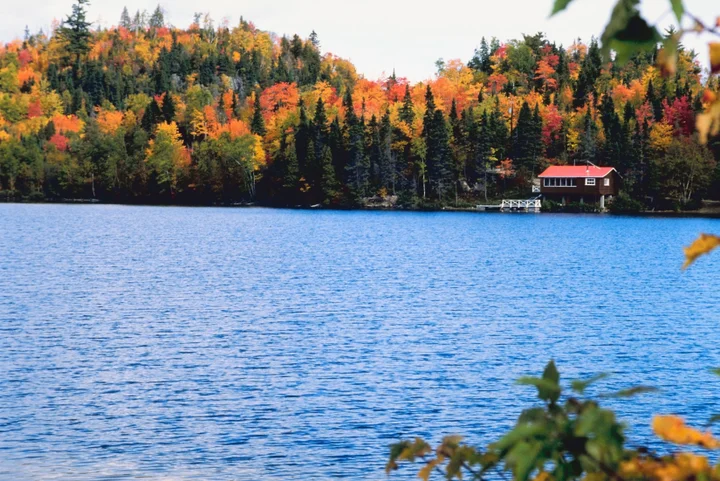
In the popular imagination there is a tendency to equate the simple life with Thoreau's cabin in the woods by Walden Pond and to assume that people must live an isolated and rural existence. Interestingly, Thoreau was not a hermit during his stay at Walden Pond. His famous cabin was roughly a mile from the town of Concord, and every day or two he would walk into town. His cabin was so close to a nearby highway that he could smell the pipe smoke of passing travelers.
Thoreau wrote that he had "more visitors while I lived in the woods than any other period of my life." The romanticized image of rural living does not fit the modern reality, as a majority of persons choosing a life of conscious simplicity do not live in the backwoods or rural settings; they live in cities and suburbs. While green living brings with it a reverence for nature, it does not require moving to a rural setting. Instead of a "back to the land" movement, it is much more accurate to describe this as a "make the most of wherever you are" movement. Increasingly that means adapting ourselves creatively to a rapidly changing world in the context of big cities and suburbs.
The simple life is sometimes viewed as an approach to living that advocates a barren plainness and denies the value of beauty and aesthetics. While the Puritans, for example, were suspicious of the arts, most advocates of simplicity have seen it as essential for revealing the natural beauty of things.
Many who adopt a simpler life would surely agree with Pablo Picasso, who said, "Art is the elimination of the unnecessary." Leonardo da Vinci wrote that, "Simplicity is the ultimate sophistication." Frederic Chopin wrote that, "Simplicity is the final achievement ... the crowning reward of art."
The influential architect Frank Lloyd Wright was an advocate of an "organic simplicity" that integrates function with beauty and eliminates the superfluous. In his architecture a building's interior and exterior blend into an organic whole, and the building, in turn, blends harmoniously with the natural environment. Rather than involving a denial of beauty, simplicity liberates the aesthetic sense by freeing things from artificial encumbrances. From a spiritual perspective, simplicity removes the obscuring clutter and discloses the life-energy that infuses all things.
Some worry that if a significant number of people simplify their lives it will reduce demand for consumer goods and, in turn, produce unemployment and economic stagnation. While it is true that the level and patterns of personal consumption would shift in a society that values green living, a robust economy can flourish that embraces sustainability.
A central and exciting task for our times is consciously designing ourselves into a sustainable and meaningful future, from the personal level outwards. In envisioning what this future could look like, it is important to not be bound by old stereotypes and to instead see the realism and the beauty of simpler ways of living.