More

Featuring fresh takes and real-time analysis from HuffPost's signature lineup of contributors
Duane Elgin

GET UPDATES FROM Duane Elgin
 

The Power of a ' Community Voice' Movement

Posted: 11/18/11 09:42 AM ET

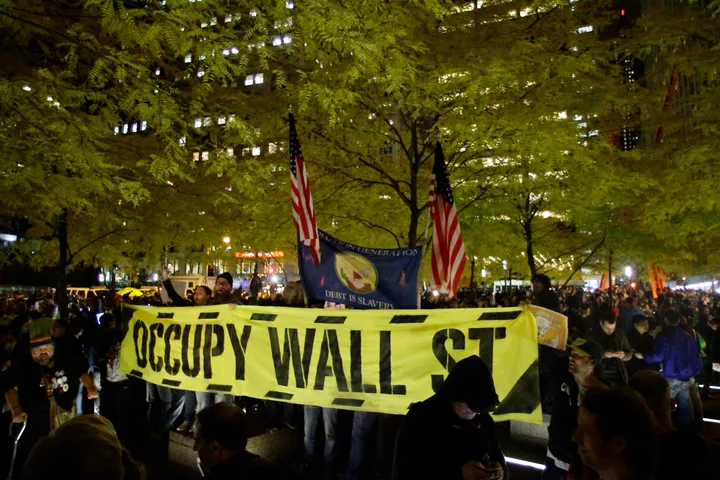
We have a crisis of conversation in our democracy. People want to be heard and to have a voice in our future. It's time for citizens -- you and me, all of us -- to come in from the cold. Whether conservative, liberal, or independent, we are all citizens united with the same rights. Coming together for protest and mutual learning is important but, in addition to face-to-face gatherings in the parks and streets, it is essential to bring our conversations into the mainstream of society. Only a relatively few voices can be heard from the streets but tens of millions can be heard through the airwaves that we, the public, legally own. Many people, whatever their point of view, do not feel their voices are being heard. It's time to give citizens an authentic voice through a "Community Voice" movement that directly fulfills our Constitutional rights to be heard.

Power in a democracy is the power to freely communicate. A "Community Voice" movement could use our amazing array of powerful communication tools:

  1. to enable a community to discover the views of its members regarding critical problems and solutions and,
  2. to convey those views to elected leaders and the public at large through publicly televised forums.

Our country and our future are in trouble: Our financial future. Our energy future. Our jobs future. Our climate future. Our kids' future. We are in the midst of a full-scale systems crisis. Whatever our differences may be in this country -- and there are plenty -- we all want a voice in our future. Importantly, we require a scale of civic conversation that is equal to the scale of challenges and solutions -- and often these are of regional, national, and global scale.

While there is no debating the power of the Internet, it is important to recognize that, at this critical time, the large-scale conversation of our democracy continues to be dominated by television. As American citizens, we legally own the airwaves in our local communities. In turn, we have a unique opportunity to coalesce the anxiety and frustration that permeates our society into a positive movement that can truly strengthen our participatory democracy. We can bring the conversations in the streets into our public life with one technology that connects with nearly every home in America -- television.

Here is the opportunity I see: Within the space of three months, the citizens of a major metropolitan area can take three, difficult but realistically doable steps (I've done them before), to awaken an entirely new level of civic conversation:

1. Community Voice Organization -- The first step is to create a simple, independent, non-profit organization -- a "Community Voice" organization to represent the communication rights and needs of a major metropolitan area served by television broadcasters that use our public airwaves. (In the 1980s, we called our San Francisco Bay Area organization "Bay Voice.") This organization must authentically represent the diverse constituencies of its community and it must be strictly trans-partisan -- able to stand above and embrace the full range of community views and concerns. A Community Voice organization has only two roles: to listen to the concerns of the community, and to present those concerns for dialogue before the community in the form of "Electronic Town Meetings," and then to "let the chips fall where they may." The organization itself is neutral and does no advocacy; rather, it serves as a vehicle for giving the community a voice in its own affairs and future.

2. Prime Time Access -- The second step is for the Community Voice organization to make a legal request for prime-time from local television broadcasters (ABC, CBS, NBC, and FOX) for a series of ongoing Electronic Town Meetings that enable the community to air its views on issues of critical concern. Conversations about the most critical issues of our time cannot be relegated to the wastelands of viewership. Because the laws are unequivocal that broadcasters must serve the "public interest, convenience, and necessity" before their own profits, the community has every right to expect this trans-partisan request will be honored if the first step has been done well.

3. Electronic Town Meetings -- The third step is for the Community Voice organization to work in cooperation with one of the local TV broadcasters to produce an Electronic Town Meeting (or ETM) with feedback from a "scientific" or random sample of citizens from the community. This can be supplemented with feedback from specific groups (younger, older, ethnic, gender, etc.) that want to participate in non-random surveys via the Internet. The modern ETM process builds upon more than two centuries of experience with the New England Town Meetings, and is NOT controlled by the television stations or advertisers; rather, it is controlled by the community through its independent Community Voice organization.

From Portland, Oregon to Portland, Maine, it is the major metropolitan areas that are the natural scale of organizing for legally effective work to take back the airwaves for a new level of citizen dialogue. If individual communities around the country were to form independent, trans-partisan Community Voice organizations to launch Electronic Town Meetings, it would revolutionize the conversation of democracy within a matter of months. The leadership of one community could inspire and catalyze other communities to create their own "Community Voice" organization and we could quickly have an entirely new layer of sustained and meaningful dialogue sweeping the country. Citizens could voice their concerns, propose and debate solutions, and help break through the gridlock at the state and national levels.

Many people recognize that we are immersed in a world of extraordinary communication technologies and that we now have the potential to raise the level of dialogue in our democracy dramatically. We are needlessly diminishing the richness and power of our democracy by not using these powerful tools to serve our needs as citizens. This is not an idealistic dream. A metropolitan-scale Electronic Town Meeting is the direct expression of our Constitutional rights -- and its workability was demonstrated nearly a quarter of a century ago! (See the following video clip.) By combining the broad reach of television with the penetrating depth of the Internet, we have the technologies for a revolution in civic communication. Television still offers the largest megaphone for local conversations; however, once underway, many could migrate to various Internet sites better suited to providing depth and perspective.

To meet the challenges of our times, we must transcend our partisan differences long enough to recognize our common need for a system of civic conversation that serves us all. In turn, each major community could create an independent, trans-partisan and non-profit organization that represents the legitimate communication needs of the community in relationship to broadcasters that use their airwaves.

We are all together in this time of great transition, and if we want a promising future it will be vital to pull together in cooperation. The human community has entered uncharted territory. We have never before had to come together like this as a nation and as a world. A perfect storm of global crises is growing in intensity and challenging us to make dramatic changes in our manner of living in the world. We can prepare by building a new level of civic dialogue that will be of invaluable service to us in our time of local-to-global transition. The foundation of a healthy democracy is a rich and vigorous conversation among its citizens, particularly during times of great transition such as we face today. A "Community Voice" movement that brings citizens and communities back into the conversation of democracy has the power to transform our pathway into the future.


Duane Elgin is an internationally recognized author, speaker, and trans-partisan media activist. Previous blogs on media themes include, "Occupy the Airwaves," "Take Back the Airwaves," "The Last Taboo on Television," and "Can Television Help Awaken a Healthy World?" His website is: http://www.DuaneElgin.com/


Follow Duane Elgin on Twitter: www.twitter.com/DuaneElgin

We have a crisis of conversation in our democracy. People want to be heard and to have a voice in our future. It's time for citizens -- you and me, all of us -- to come in from the cold. Whether conse...
 
 
  • Comments
  • 15
  • Pending Comments
  • 0
  • View FAQ
Comments are closed for this entry
View All
Favorites
Bloggers
Recency  | 
Popularity
photo
HUFFPOST BLOGGER
Linda Buzzell
02:01 PM on 11/29/2011
"Community Voice" - what a wonderful idea! And Electronic Town Halls are just what we need now.
07:49 PM on 11/20/2011
Daune, how would it be if you created a prototype of the type of virtual town hall meeting you're describing. You could enlist others to assist. It could be aired on Web TV and be used as an example for others to use when creating town halls in their respective cities. (By the way, my previous post was a bit over the top, for which I apologize. You've mentioned that you want a town hall which embraces different points of view. I think I just got carried away.)
02:23 AM on 11/20/2011
Not only can the internet and airwaves be useful to discuss/debate issues to restore democracy, but we must use them to engage people and organizations to function in new ways by pooling both grass roots and formal system's human, tangible and experiential resources using www.goodneighbors.net. Time has run out...budgets have been slashed, services are non-existent and millions are out of work. We need to be connected to each other and helping each other survive these tough times. Community Weaving www.communityweaving.org is an innovative approach to create caring and compassionate communities and restore democracy. The model creates a reciprocal feed back loop between formal systems (including government) and the people. Community Weaving uses Community Forums for the reciprocal feedback loop www.communityforums.org. Community Weaving integrates both the people helping one another as good neighbors and being citizen counselors to voice opinions on public issues to restore democracy. This is an effective way to give the people a voice and create a more caring, just and civil society. The more resourceful we are among ourselves, the more valuable a resource we become to our families, our communities and our world.
photo
HUFFPOST BLOGGER
Duane Elgin
Speaker, author, trans-partisan media activist
10:56 AM on 11/23/2011
Thanks for posting these links Cheryl. They look very helpful and I will explore them.
08:20 PM on 11/19/2011
Hi Duane, I think that in order for a Community Voice to succeed it will have to be more than just a forum for debate. What I mean is that, all too often, such debate becomes very polarized, as those discussing the issues have highly charged emotions and fixed mindsets. I think that the Community Voice also needs to be a place that teaches people and models how to have a constructive conversation, whereby participants actively listen to and validate the concerns of the other side and work together toward solutions. I call this a conversational shift. I have a website http://www.conversationalshift.com which discusses how we can engage in constructive dialogue and come up with what I call Symphonic Solutions.
05:54 PM on 11/19/2011
Hi Duane, I'm glad I saw your post. I saw it through a friend's facebook page. I would like to explore your ideas more. I feel I've been led this past two years to promote the idea of constructive dialogue and problem solving between the major political sides. My website is called Conversational Shift http://www.conversationalshift.com. I've written several articles and have reached the point where I want to look into virtual town hall meetings. It's very timely that I found your article on the subject. I'll keep reading your articles.
05:38 PM on 11/19/2011
Great article, Duane. I specially like the fact that you're suggesting a movement that is inclusive of everyone, from all walks of political life. While there are many differences between parties' ideologies, the need to democratize the airwaves is surely embraced by most Americans. The Community Voice movement is a powerful yet reachable goal. Thanks so much for bringing this important issue to light!
Best, Sylvie
photo
HUFFPOST BLOGGER
Duane Elgin
Speaker, author, trans-partisan media activist
07:48 PM on 11/19/2011
Thanks Sylvie. Yes, an inclusive, trans-partisan approach is vital if a "Community Voice" movement is to gain the essential trust and support of citizens.
nothingchanges
too soon old, too late smart
02:07 PM on 11/19/2011
As a small business owner I learned (the hard way) that when confronted with a problem, any problem, the first thing to look for is it's cause.........

WHY has politics in general gotten so contentious, so dirty, so downright ugly?

"We are trying to change the tones in the state capitals -- and turn them toward bitter nastiness and partisanship."

The words of one, Grover Norquist, the man that over 95% of Republicans in Congress have signed a pledge to.

quoted in John Aloysius Farrell, "Rancor becomes top D.C. export: GOP leads charge in ideological war," Denver Post, May 26, 2003

Seems to me, if you want meaningful productive dialogue, you need to expose those working against it.
photo
HUFFPOST BLOGGER
Duane Elgin
Speaker, author, trans-partisan media activist
07:42 PM on 11/19/2011
I agree with you that "when confronted with a problem, the first thing to do is look for it's cause." In my view, nearly every problem we face is, fundamentally, a communications problem. Responding to material problems such as climate disruption, resource depletion, and species extinction challenges us to step back and, together, make fresh choices for a future of sustainable prosperity. So, underlying most material problems is the need for a new level of citizen dialogue about where we want to go from here. We face such great urgency that I'm focusing my energies on creating new vehicles for civic conversation that seek to stand above "bitter nastiness and partisanship."
10:12 AM on 11/19/2011
Duane! This article is so inspiring! Thanks so much for writing it!

I live in Boulder Colorado. I have not watched TV since I moved here, so I am not aware of any community-voice-related shows currently airing; I'm trying to find out if one exist in Boulder/CO. If it does not, I want to start one. I agree with your article WhOleheaRteDly, and will be watching videos of you to learn more over the next few days.

Thanks so much for spreading the inspiring information on how to create real change from within a community. I.e. sustainable change!
03:51 PM on 11/18/2011
Very well articulated, Duane! I posted a comment under "Occupy Your Neighborhood" that was actually more suited to your article. I would bet thousands, if not millions, of others (including myself) would love to be a member of the "Community Voice" organization you propose - and we are all "chomping at the bit"! I would like to add that unfortunately, most people do not understand how "local government" operates and works. So, let's change that! Duane, "How about writing an article about how local governments work?" The reason I'm suggesting this - is because I believe your writing style is straightforward, clear, articulate, and convincing. And, I believe it would really have an impact for those that would love to get more involved in their communities, but don't no where to start. I can hardly wait to read the article!
photo
HUFFPOST BLOGGER
Duane Elgin
Speaker, author, trans-partisan media activist
04:11 PM on 11/18/2011
Thanks for your suggestion to write about 'how local government works.' As citizens, we are that government. I'm simply proposing a way for us to come together in trans-partisan alliances at the local level to create a 'Community Voice' organization that serves the conversation of our democracy. When the public is clear about where it wants to go, then leaders can lead. Right now, the world is so much in transition at every level that it is not clear where we want to go; therefore, the great value of a new level of sustained, public conversation about the future we want.
10:47 AM on 11/18/2011
Thank you, Mr. Elgin. In many U.S. communities, "community voice" organizations are already in place - they're known as public access TV stations. This is in fact one of the main purposes for the existence of public access TV. Over 2,000 PEG TV stations are listed in this Google Doc spreadsheet, "US Community Access Television Providers by State & Service Area," - http://bit.ly/boopXY - and can be further searched at "Community Media Database" http://communitymediadatabase.org .

Many of these stations are currently being closed or strangled due to a combination of industry and legislative attacks. (See Benton Foundation, "PEG Access Centers Closing at Alarming Rate" - http://benton.org/node/55372 .)

Some of the organizations that are working nationally to protect PEG access TV include the Alliance for Community Media - http://allcommunitymedia.org, the National Association of Telecommunications Officers and Advisors - http://natoa.org , Free Press - http://freepress.net, and the Media & Democracy Coalition - http://www.media-democracy.net .

I hope with your urging, your readers will find and use the public access TV stations in their area, and join in the urgent effort to protect them.

Thanks again.
~ Rob McCausland
photo
HUFFPOST BLOGGER
Duane Elgin
Speaker, author, trans-partisan media activist
01:52 PM on 11/18/2011
Thanks Rob. I'm a big fan of public access TV stations and have produced a series of half-hour programs using public access TV. See: http://www.PeteAndDuane.com So I agree they need to be protected. Yet, the reality is that the viewership of public access programs is tiny compared to TV broadcasters. So, at this pivotal time in human history, I think we require public access TV and much more: prime-time Electronic Town Meetings that engage a region and perhaps the nation that support us in communicating through this time of great transition. The most direct vehicle for realizing this is broadcast television that uses the airwaves we legally own as citizens.