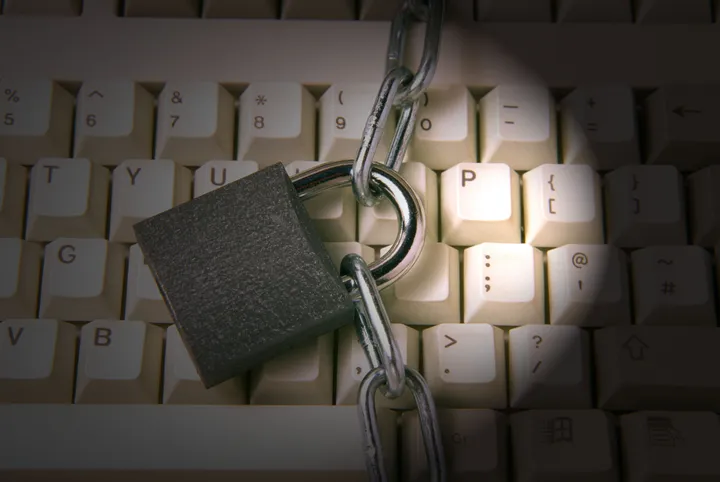
The trajectory of a bill up for a vote in the House Judiciary Committee this week could be a good movie plot where the apocalyptic genre intersects with political commentary. A few prominent members of Congress are pressing forward with a bill that would regulate and censor the Internet.
H.R. 3261, the Stop Online Piracy Act, has elements of preemptively stopping crime reminiscent of the plot of Minority Report, in which the government arrested people it suspected would commit crimes. This legislation would "disappear" domains suspected of containing infringing copyright content. Leading law professors and first amendment experts think it violates the prior restraint doctrine that protects free speech. They along with Internet engineers, cybersecurity experts, legal experts, human rights advocates and thousands of Internet users have called and written to Congress warning of the dangers of this approach, but the legislation's sponsors are undaunted.
Every year, some version of a bill to shift more of the burden of copyright enforcement from the entertainment industry to government and the tech industry gets resurrected by entertainment lobbyists. But this time the proposal is radical and prospects for passage are real. Despite Sec. Clinton's speech this month at an Internet freedom conference in the Hague, the vote scheduled for Thursday would be a dangerous blow against the Internet and all those who depend on it for legitimate business, communications and commentary.
SOPA claims to aim at domains that deliberately offer primarily copyright infringing content. Many could support the purported goal, but the bill deploys the power of a nuclear weapon with little of the target-accuracy.
The collateral damage would undermine the security and functionality of the Internet. By ordering tech and telecom companies to "disappear" domains suspected of infringing content, many legitimate domains and virtually all domains that allow user-generated content like Facebook, Twitter, and YouTube, would be snared in the dragnet. Growing numbers of Internet users are trying to sound the alarm online.
Those providing Internet services would have a couple of choices if this law makes them liable for content -- stop allowing users to post content, employ hundreds of thousands of screeners to preview all content before it is allowed to publish online, and/or deploy extremely intrusive censorship technology. This would dramatically change the speed, utility, and freedom of the Internet as we've come to know it.
Ironically, it would do little to stop actual pirate websites, which could simply reappear hours later under a different name, if their numeric web addresses aren't public even sooner. Anyone who knows or has that web address would still be able to reach the offending website.
Several members of the House Judiciary complained about there being only a single hearing on SOPA. The flaws in that hearing included the lack of any cybersecurity expert or Internet engineer to address the substantial technical aspects of the bill.
Of the six witnesses, five were known proponents lobbying for the bill.
Members of Congress pushing for it asked the lone tech company, Google, why it couldn't stop copyright violations online. In fact, under current law, thousands of sites like Google promptly take down any infringing material within hours of a complaint being filed. Members asked why companies could screen and remove links for child pornography, but couldn't do that for copyright.
Google's representative explained that it was much easier for computers to screen content for likely signals for child pornography, such as skin tone, but that deciding what was unlicensed copyrighted material versus legally authorized identical content being used for a promotion or fair use was a judgment call.
This process of notice and takedown was agreed to by rightsholders and tech companies as part of the Digital Millennium Copyright Act (DMCA) and our trading partners are starting to support and adopt elements of it. In contrast SOPA is being condemned by over a million Internet users around the world and even the European Parliament has issued a resolution opposing it.
Fortunately last week members of Congress who have studied how the Internet operates and also want to protect the U.S. copyright holders have offered alternative legislation known as the OPEN Act. The bill by Rep. Darrell Issa, R-Calif., and Sen. Ron Wyden, D-Ore., along with their co-sponsors, clears up the due process and prior restraint problems of SOPA by having a specialized agency determine if a site really is dedicated to infringement and then directs those with business relationships like advertisers and credit card companies to stop doing business with them.
It's not a new technique, as governments used it to shut down Wikileaks. This "follow the money" approach is a narrower weapon to combat online piracy, limits collateral damage and has worked.
Unless there are hidden agendas OPEN would seem like a ready-made happy ending for all as a bipartisan group spanning both Houses of Congress targets digital online piracy while saving the Internet from a Great American Firewall future.
But momentum for the SOPA mark-up continues. The threat is greater than ever, and the vote is still tentatively scheduled for Thursday.