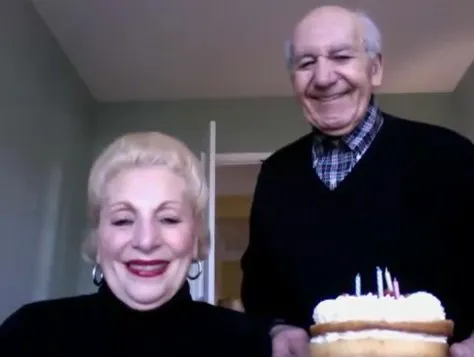
On Thursday, March 29, the bodies of Adrienne and Charles Snelling were found. Police believe Charles killed Adrienne -- her exact cause of death is still pending -- and then shot himself. Only last December, Charles Snelling published in the New York Times a poignant and widely-circulated piece about loving and caring for his wife with Alzheimer's disease. (Columnist David Brooks, whose query for life stories initiated Snelling's piece, wrote in his column yesterday about this case.)
Unfortunately, the Snellings' murder-suicide case is not an isolated one. Earlier last week, police in Monroe, NC, found an elderly couple, Charles and Martha Frech, fatally shot in their home, apparently by his hand. On March 20, officers in Lawrenceville, Ga., found a woman in her mid-to-late 60s murdered in her home alongside her husband, who had attempted suicide. On March 15, a 54-year-old Bothell, Wash., man shot his terminally ill wife, telling police she wanted him to do it. The month before, Honolulu resident Leighton Yasuhara, 81, shot his wife, Julia, 79, who was suffering from an unspecified long-term illness, and then himself. In December, Benjamin Den Bleyker shot his wife Alice and then himself in their assisted living facility in Edison, NJ. Last September, Pennsylvanian Charles Hoez, 92, killed his wife Jeanne, 90, who had advanced Alzheimer's, by pumping carbon monoxide into their bedroom via a hose connected to their minivan running outside.
Once you open your eyes, these heartbreaking episodes seem almost constant in the news. But there is very little data-gathering. In 2002, the Violence Policy Center released "American Roulette: The Untold Story of Murder-Suicide in the United States," one of the largest such studies to date. They estimated that between 1,000 and 1,500 deaths per year are the result of murder-suicide. In a 2006 follow-up report, they found in the first half of 2005 that there were 591 murder-suicide deaths reported.
A bizarre aspect of these episodes is that reporters, commentators or the killers themselves frequently speak of them as "loving" acts. When a husband (and make no mistake: this is a gendered activity; husbands almost always kill their wives and not the reverse) kills his sick wife and then himself, he is said to act out of compassion or understandable desperation. After their parents' bodies were found, the shocked Snelling family, looking for meaning in this tragic act, released a statement saying their father acted "out of deep devotion and profound love." North Carolinian Charles Frech left a note saying he had shot "the love of his life." A neighbor of the Edison, NJ, couple said "they were more in love than any other couple I've ever seen." Their obituary said they were "partners in love and life." When Frank Cowan, 87, killed his wife Dorothy, 86 and suffering from Alzheimer's disease, and then himself, their daughter told news media she feels like this is a "tragic love story." An August 2010 ABC News story by reporter Susan Donaldson James says many call these "suicide pacts" the "ultimate act of love."
But others, such as researcher Donna Cohen of the University of South Florida, who has done extensive work in this area, have pointed out that what is often lost in these stories is the voice of the murdered woman. Men do the killing. If a note is left, it is typically left by the man. We have no idea if a sick, aging woman wanted to end her days with a violent death at the hand of her husband. We can only assume that she is like the rest of us and was terrified by her plight.
In a tragic irony, the bodies of Adrienne and Charles Snelling were found just one day before a nationwide memorial day led by Not Dead Yet, the disability rights group, on behalf of disabled persons who have been murdered by their caregivers. The group seeks to counter what they view as the "broader trend of sympathetic press coverage for people who murder their disabled family members."
Why do men kill their sick wives and then themselves? Sometimes this might be an act of desperation by a caregiver overwhelmed by a public and private health insurance system that offers precious little support for long term caregivers or palliative care for the suffering. But as researcher Donna Cohen has documented, all too often this is the final act of a depressed and controlling or abusive husband.
Whatever the reasons, even if we have compassion for the killer, surely we should have as much, if not a great deal more, for his victim. At the very least, let's make a pledge to stop praising these killers as loving heroes. A hero is a man who asks for help, who admits feeling overwhelmed, who cries out for respite, or who simply cries. A man who murders his sick, innocent, helpless wife is no hero.