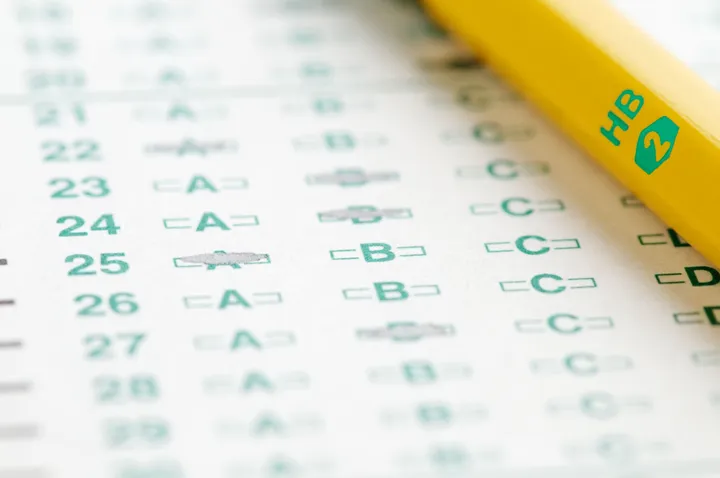
Leaders in higher education throughout the nation are quick to lament that too many high school graduates are not college-ready. On the surface, this appears to be true, especially if you use English and math placement test results for newly enrolled community college students as your primary gauge. In Long Beach, Calif., however, what appears to be likely on the surface may not be reality for many students.
At Long Beach City College (LBCC) nearly 90 percent of students who take placement exams for math and English score below college level and are directed to remedial level courses. For the entire state of California, roughly 70 percent of students who take placement exams receive scores that indicate a need for remedial education. These numbers alarm me.
Success rates of students who begin in remedial courses are very low. Less than half of students placed one level below ever pass college level English. Completion rates in math are even lower. Worse still, the chances for completing college-level courses in both subjects decline for students required to take multiple levels of remedial courses. Even students who have done well in high school are less likely to obtain a college certificate or degree when they are asked to repeat similar courses in community college. Remediation has become one of the greatest barriers to student success and disproportionately impacts students of color.
This overwhelming demand for remediation caught my serious attention. Having worked closely with Long Beach Unified School District (LBUSD) Superintendent Chris Steinhauser, I have seen improvements in the way teachers are preparing students for college. I found our remediation rate surprisingly high and inconsistent with my knowledge of what was taking place in our local schools.
In search of a solution, a research team from LBCC studied five years of data about incoming freshmen from LBUSD high schools. This in-depth study determined that my college was placing a disproportionate emphasis on placement test scores and not enough emphasis on student's academic records. A closer look at individual transcripts revealed that many students who did very well in their high school math and English courses, including a surprising number of high-achieving Advanced Placement and Honors students, scored poorly on our standardized placement tests. These data demonstrated that high school grades were far better predictors of success in college level courses than were standardized test scores in isolation.
Our research team projects that if LBUSD students who enter LBCC right out of high school are placed in math and English based on their high school grades instead of relying solely on their college placement test scores, the demand for remediation would significantly be reduced. Furthermore, enrollments in college level courses would increase by nearly 350 percent in math, and by more than 400 percent in English.
More importantly, students who enter college level courses are much more likely to earn degrees and transfer. These college-level courses are considered the gateway to a certificate or degree and completing either one of them in a student's first year is a powerful predictor of completing a certificate or degree.
Our findings are not occurring in a vacuum. Judith Scott-Clayton of the Community College Research Center (CCRC), at Teachers College, Columbia University recently published a working paper on the use of college placement exams. Scott-Clayton concluded using multiple measures of college readiness would be a more effective way for placing students. Similarly, Clive R. Belfield and Peter M. Crosta of the same center completed a separate report specifically looking at the use of high school transcripts for college level placements. Belfield and Crosta determined high school transcripts are better predictors of a student's college preparedness than standardized placement tests.
When students return to LBCC this fall, we will have launched a pilot placement program using high school transcripts as an alternative to relying solely on standardized test scores. The pilot is part of the Long Beach College Promise and was recently featured in the Los Angeles Times. Developed with the close cooperation of our educational partners, this pilot placement program will consist of a cohort of more than 900 incoming freshmen from LBUSD high schools who will be placed in English and math courses based on their high school transcripts in addition to their placement test results. Under this pilot, researchers will track student progress to confirm our findings and may offer insights on whether the need for remediation of California high school students is in fact as high as people perceive it to be.
Critics may attempt to argue this pilot program constitutes a dumbing down of LBCC's standards by placing underprepared students in college-level classes. I disagree. I am optimistic that this pilot will improve student success at LBCC and help close the achievement gap. In addition, as a result of this pilot the average student will save more than a semester and a half of remedial coursework. At a time when our college is facing major budget cuts that have severely limited course capacity, placing students at the highest level in which they are prepared to achieve and helping more students reach their educational goals in less time is more vital than it has ever been.