iPhone app iPad app Android phone app Android tablet app More

Featuring fresh takes and real-time analysis from HuffPost's signature lineup of contributors
Fahad Faruqui

GET UPDATES FROM Fahad Faruqui
 

Mansur Hallaj: The Sufi's Willful Erosion Of Self

Posted: 03/26/2012 4:20 pm

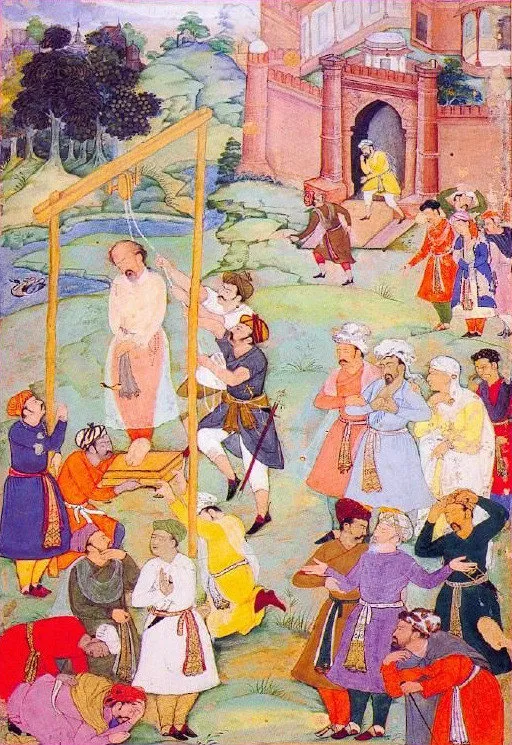
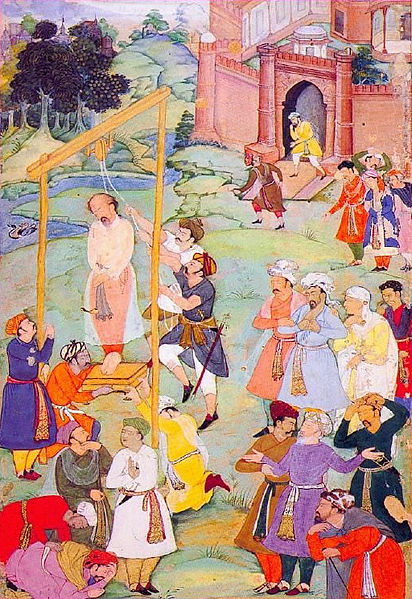
2012-03-23-412pxHallaj.jpg

For some, Mansur al-Hallaj was a magician, a heretic and a lunatic, who publicly claimed to be one with the One and deserved to be executed for heresy. But to his sympathizers he was a Sufi saint, who was martyred almost 1,100 years ago, on March 26, 922, allegedly for his ecstatic utterance.

The legends surrounding Hallaj are many. Despite the 2,000 pages written by Louis Massignon, we still don't know much about him and there's no way to validate the claim that he ever uttered the words "ana'l-haqq" (I am the Truth), which many believe was the cause of his arrest, followed by nine-year long trial, leading to his public execution.

The are many fictional stories about him that ensued after his execution, including one told by Farid al-Din `Attar, who claims that Hallaj's one-time teacher, Junayd Baghdadi, changed his Sufi robes and put on a turban of a judge to condemn his disciple to death for heresy. But according to Carl Earnst, author of "Words of Ecstasy in Sufism," this is one of the many unfounded legends about Hallaj.

"The only problem with this story is that Junayd died in 910, and the execution took place in 922," he said. "We see another hostile account when Amr al-Makki was reciting the Qu'ran and the story goes that Hallaj said: 'I can write something like that.' And at that point Amr leaves him in disgust. And there are other stories that he looked at a woman, therefore, it was an illegal glance and he was condemned to die. So, people have come up with various romantic, imaginative explanations of his early life."

Since Hallaj's writings were burned to ashes, we can only conjure an image of the Sufi from his only surviving work, Tawasin, which is a collection of short pieces, of which the dialogue between Hallaj, Iblis (Satan) and the Prophet Moses, may God be pleased with him, is most famous.

A short poem that is said to be about Iblis describes the dilemma of Hallaj:

God threw a man into the sea, with his arms tied behind his back,

And said to him: careful! Careful! Or you'll get wet in the water!

(translated by Eric Schroeder)

For Hallaj, Iblis was a "true monotheist," so how could he worship God and still bow down before Adam in prostration?

The Quran tells us that God ordered Iblis to do so, but he refused (Quran 2:34). He then went on to blame God for misleading him and vowed to stray man from the straight path (Quran 7:16, 15:39). "The explanation Hallaj gives," said Professor Ernst, "was that God had given secret hint (ishara) to Iblis that he should not bow down and so he disobeyed, but internally he was the most loyal servant and willing to suffer punishment of being estranged from God and being punished by God in order to demonstrate his loyalty."

Though unorthodox, Hallaj makes Iblis's encounter with God sound like a tragedy.

As far as Hallaj crying out "ana'l-haqq" in public is concerned, notable Sufi masters held it was a result of his spiritual state that is incomprehensible to a layman. A Shadhili-Darqawi shaykh, Muhammad Harun Riedinger, rightly pointed to a metaphor Ghazali employs to explain the limitations of rational mind at comprehending mystical experiences:

"It is like an impotent man asking his friend how his wedding night was and getting the reply: 'Oh, I was in the 7th heaven.' How can the impotent asker 'understand' the bliss of his friend?"

Sufis generally do not consider that Hallaj was claiming to be God, but that his ego had been annihilated. "As `Attar pointed out, when the burning bush said to Moses, 'I am God,' it was not the bush speaking, but God manifesting through it. In the same way, it was God speaking through the voice of the annihilated Hallaj," said Professor Ernst.

Hallaj's spiritual intoxication yielded "theopathic locutions," where God speaks in the first person through a saint. And according to Timothy Winter, lecturer of Islamic Studies at Cambridge University, this "phenomenon is not confined only to mainstream Sufism, but where it is, it is regarded as the consequence of 'fana,' the maqam or station of Annihilation. When the personhood of the saint is stripped away by mujahada (spiritual discipline), the reality of the Divine ground of being is manifest."
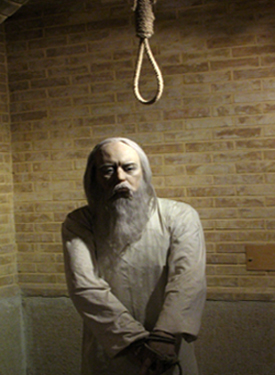
2012-03-23-hallajed.jpg

Al-Ghazali does not discredit the truth content of Hallaj's state but maintains that since only God is the Truth, and it is only He, who has the right to proclaim it and thus the "I" was not Hallaj's self speaking.

Ghazali however held that Hallaj's execution was justified since he had revealed the Divine secret in public.

Hallaj was not sentenced to death for uttering "ana'l-haqq." After his arrest, he was accused of various things, but, according to Professor Ernst, he was pinned down after his prosecutors discovered a document in the handwriting of Hallaj that recommended that those who were unable to afford Hajj pilgrimage could construct a model of Kaaba at home and perform circumambulation (tawaf) and give alms to poor and feed some orphans and they would have completed the Hajj.

[Mansur al-Hallaj's wax statue in Shiraz. Photo credit: Carl Ernst.]

"At that point one of the judges turned to Hallaj and said in Arabic 'damuka halal,' that is, your blood may legally be shed. In other words, now we have you," said Professor Ernst, a specialist in Islamic Studies. "But then Hallaj said that I found this in the writings of Hasan al-Basri, so that was a kind of technicality, but he was given no opportunity to explain or repent."

Hallaj was prosecuted at a time when the Abbasid caliph was extremely weak and did not have the ability to make a unilateral decision. In fact, the Abbasids were so weak that they completely removed from power a little over two decades later, in 945, by the Shiite Buyid dynasty coming in from the Caspian.

This raises suspicion on why a Sunni caliph allowed the trial to go on for nine years when the Hanbalis and other conservatives revered Hallaj as a pious man, who prayed 2,000 (yes, 2,000) units of voluntary prayers at a time. "Only the Shiites were critical of him, mainly because he proposed an alternative authority," said Professor Ernst. "When asked, what is your madhab (religious sect)?, Hallaj would say: I pick the most difficult rulings from all schools of law and follow that."

The question of why certain Sufis were executed can only be understood by the politics. While speaking of Sufism, we don't naturally think of politics, we simply assume that a lover of God was martyred by a hardliner, but Mr. Ernst says there is more to it: "You have to look at the political contest and it is only when the political authorities find it useful to persecute an unusual figure that's when the incident takes place."

It seems that diverting attention from crippling internal problems, like corruption within the government, to something ridiculously trivial is an ancient tactic.

But from a Sufi perspective, it is futile to analyze the outward series of events that led to Hallaj's execution. "Martyrdom does not belong in this realm," Shaykh Riedinger notes. "If God is pleased with His bondman and wants to bestow the crown of martyrdom on him, He puts him into such an outward scenario -- political or other wise -- that will eventually lead up to the situation, where the Divine intent is realized."

Other political killings of Sufis:

  1. `Ayn al-Qudat Hamadani, a Persian mystic, who was executed in 1131 by the Suljuks.

  2. Shahab al-Din Suhrawardi, aka Shaikh al-Maqtul (the Murdered Shaykh), was executed in Aleppo in 1191 by Salah ad-Din Ayyub's son al-Malik al-Zahir.

  3. Mas`ud Bakk was put to death in Delhi, India, by Firuz Shah Tughluq in the 1390s.

  4. Imadaddin Nasimi, a Azerbaijani sufi-poet, was skinned alive in 1417.

  5. Shah Inayat was executed by Yar Muhammad Kalhoro in 1718. This was part of a popular uprising similar to a peasant revolt, so it could equally be considered political.

  6. Sarmad Kashani was beheaded on Emperor Aurangzeb's orders in 1661 for writing a poetry that was considered heretical.


Follow Fahad Faruqui on Twitter: www.twitter.com/fahadfaruqui

FOLLOW RELIGION
For some, Mansur al-Hallaj was a magician, a heretic and a lunatic, who publicly claimed to be one with the One and deserved to be executed for heresy. But to his sympathizers he was a Sufi saint, w...
 
 
  • Comments
  • 65
  • Pending Comments
  • 0
  • View FAQ
Comments are closed for this entry
View All
Favorites
Recency  | 
Popularity
Page: 1 2  Next ›  Last »  (2 total)
11:20 PM on 05/23/2012
On page 36 of Mason's 'The Passion of Al-Hallaj: Mystic and Martyr of Islam', he writes that al-Hallaj maintained the 400 rak'a of prayer a day that he had learnt from Sahl al-Tustari.

Clearly, his worship increased over time. Where can one read more about the prayers that he offered?
01:49 PM on 04/08/2012
... it's very difficult to understand such "historical" events without knowing their contexts and especially what they were about at that time and even their inner meanings..

Pretty good pice Fahad ;) thanks!
11:56 AM on 03/29/2012
I really enjoyed your article. Thanks.
12:22 PM on 03/29/2012
Very pleased. Thank you for finding time to read it.
11:17 AM on 03/28/2012
writing the missed portion in last post:
Other than shia main (up to ) twelve Imams, shia had faced executions extensively. When studying this school of Islam, one needs to rise above present day politics so not to be confused about shia school. Even today a hard line salafi/wahabbi group declares whoever kills one shia will be rewarded paradise, And K S a spends fortunes toward to cause misconceptions about shia.
11:09 AM on 03/28/2012
"Only the Shiites were critical of him, mainly because he proposed an alternative authority," said Professor Ernst.

Food for thought! Hope the above is just out of sheer ignorance.

Shia school was so hated by caliph's since it had/has a tremendous emphasis on social justice and equality. Also no other two are closer than shia and sufi, when it comes to matters of soul. In fact Except Ali (which was killed by ignorance) and Mahdi, All shia Imam's were murdered by caliphs one way or the other.

Other than shia main (up to ) twelve Imams, shia
09:29 AM on 03/29/2012
If you're assuming that the Shiites didn't have enough say in the government to have Hallaj prosecuted then you must keep in mind that the Abbasid Caliphate, at the time of Hallaj's arrest, was quite weak.
06:35 PM on 03/29/2012
While can't disagree more for the reasons that follow, even if it were so, you had unjustly portraid a dark picture of shia. If you knew shia, you would have known how open it is to any new finding and how your article is so insulting to shia. Regardless of their apparent school of thought, Ibn Arabi, Rumi, and so many other blessed ones are read by shia thinkers regularly. And if you ask most of high scholars of shia, or shia intellectuals, you would have been surprised by how almost universally we regard Rumi, and some other masters of light, and how deep and rich commentaries are written about them. Hallaj has a very particular place within at least Iranian shia.

I can't help but to see you contradicting Hallaj's essence. I hope you would be more thoughtful of what you write in your future articles.
09:04 PM on 03/27/2012
"Another 'deviant' whom the Twelvers destroyed ..was the highly-famed or notorious (depending on one's viewpoint) Husayn Ibn Mansur al-Hallaj, whom the Sufis extolled in a later age. .. By all accounts he was a devoted Sh'iah. .. we come up against imponderables and it is almost impossible to separate fact from fiction. Hallaj took a stand which put him beyond the pale. It is also certain that his deviation consisted of choosing 'the mystic way'. For the rest, one has to resort to conjecture because contradictions abound.

These words of Hallaj: 'I am the Truth' (i.e. God) -- have come ringing down the ages, to be intoned ecstatically by some, or quoted with horror by others. Hafiz, the greatest lyric poet of Iran...exonerated Hallaj: The giants among the Sufi poets, including Jalali'd-Din-i-Rumi,have unfailingly sung his praise. But there can be no doubt that Hallaj, who by some accounts was a man bereft of learning and much too boastful, posed a menace to the security and the integrity of the Twelvers...
After languishing .. in a Baghdad prison, he was subjected to a prolonged and protracted trial. The death sentence was eventually confirmed; and Mansur al-Hallaj became one of the most celebrated martyrs of all time. Was he an illiterate impostor, a mere adventurer? Was he a clear-sighted mystic? Was he a victim of circumstances beyond anyone's control? Who knows?”

( Balyuzi, Muhammad and the Course of Islam, 260)
12:07 AM on 03/28/2012
"Once in power, the Abbasids embraced Sunni Islam and disavowed any support for Shi'a [twelve-rs] beliefs" http://en.wikipedia.org/wiki/Abbasid_Caliphate#Rise

Of course this was on surface as in reality caliphs and his payroll jurists didn't care about any school of Islam.
03:42 AM on 03/28/2012
Well how can anyone know how much I love my beloved? No one can.
Similarly, no one can possibly fathom Hallaj's sentiments for God.
05:58 PM on 03/27/2012
Roaming yet a bit more online, interesting to note Hallaj's 'interview' featured by The Chisti website:

Q: You have uttered the expression ana'l-Haqq, i.e. ‘I am the Truth'. Could you please give some explanation of this seemingly outrageous sentence?

A: My brother Jalaluddin Rumi has given an explanation several centuries later. He commented that to say ana'l-Haqq is much humbler than to say I am ‘Abd Allah, which means ‘slave of God', for in the former case there is no retaining of the self, while in the latter case you affirm yourself in a pretentious way as someone separate from God.
09:50 AM on 03/27/2012
As chicken birds should not try flying out of the nest before their wings are developed, assumption of understanding what Hallaj meant could be fatal if one has not passed all the stages of the journey (thank you Kodimirpal).
This user has chosen to opt out of the Badges program
photo
KrautMan
Carpe jugulum
06:19 AM on 03/27/2012
It's bizarre how people of all faiths killed and died for totally arbitrary nonsense.
03:35 AM on 03/28/2012
Often times, people blame religion for that, but what should be blamed is the ego!
This user has chosen to opt out of the Badges program
photo
KrautMan
Carpe jugulum
04:34 AM on 03/28/2012
It's amazing how religion never is to blame for anything, according to some, given its powerful impact on society.
06:34 PM on 03/28/2012
The more I learn about conflict "related to religion", the more I realize it has nothing to do with religion.
This user has chosen to opt out of the Badges program
photo
KrautMan
Carpe jugulum
02:59 AM on 03/29/2012
Of course it doesn't, religion is blameless, as usual.
HUFFPOST SUPER USER
kodimirpal
teacher
04:42 AM on 03/27/2012
When a servant of God were to stand for worship and pray to Almighty, he should be so much engrossed as to feel that he is seeing God ( which is impossible) or at least feel that God is seeing him. In his extraordinary engrossment , instead of saying I grasped Reality, Hallaj said I am the Reality- a minor slip..

In the name of Sufism some of the pseudo-mystics attributed many a funny and strange things to themselves and have demoralized the masses due to their ignorance.

Like some of the fake Hindu godmen, some fake Sufis sold religion for worldly gains. Some of them even turned atheists and free thinkers.

The Sufis who do not possess good knowledge of the Quran and Traditions are robbers of religion. But good Sufis have a great role to play in Islam even today. But where are they hiding?

The books and treatises of Sufis are good alchemy, but for the common folks they are not very useful
In the case of religious doctrines, common people should never give preference to the path of philosophers over the path of the mighty prophets

The ancient Sufis cared for the purification of the body, mind and will (Nafs, Qalb and Aql) and gave priority to the discipline of them and served God sincerely

All the injunctions of the law ( from Shariah to Tariqa to Haqiqa and to Ma’rifa) have the connections with Tasawwuf, they are not independent.
09:37 AM on 03/27/2012
Very important clarification, thank you. Some misled sufis (not the true ones) had argued they don't see any need for five daily prayers, Shams-e Tbrizi the known Rumi's friend (can't find a word for his relationship to Rumi), a rare grandmaster of Islamic experience, argued back, "then why the master of all, Mohammad, performed them?" The true knowledge is based on practicing "din" as it is, otherwise illusions may easily mislead.
photo
HUFFPOST SUPER USER
just a voice here
Just because...
06:14 PM on 03/29/2012
kodimirpal..."The Sufis who do not possess good knowledge of the Quran and Traditions are robbers of religion".

The same can be said of Islam by Christians.

The muslims who do not possess good knowledge of the Holy Bible are robbers of religion.
HUFFPOST SUPER USER
kodimirpal
teacher
12:13 PM on 03/30/2012
I am sorry I get confused, my statement is meant for Muslim Sufis, I have no right to touch on Christian sufis or saints.
03:18 AM on 03/27/2012
The true Sufi masters didn't erode the self, rather they eroded the illusion and thus saw only God. Self is the illusion as Rumi teaches us. There is One an none but the One is the fruit of Sufi (and Aaref!) journey for those blessed masters:
8:17 ... And thou (Muhammad) threwest not when thou didst throw, but Allah threw, that He might test the believers by a fair test from Him. Lo! Allah is Hearer, Knower.
The most important point the masters emphasized in pursuing this grand knowledge (level of Hallaj) is it needs a guiding master, otherwise one may be lost in deep confusion and blunder.
The most simple tool to attain this high knowledge is doing good deeds
12:22 And when he (Moses) reached his prime We gave him wisdom and knowledge. Thus We reward the good.
Sufism ( or Erfan) = true "din" itself is a means to an end and not a goal itself.
HUFFPOST SUPER USER
kodimirpal
teacher
05:06 AM on 03/27/2012
Shukran for Very informative post. There is absolutely no denying the fact that all sufis are men of great learning, vision and tastes

Those who ask questions about the meaning of life or feel the call of love for God should seek guidance either from from jurists or theologians. or they can turn to sufi teachers experienced in matters of the spirit.

People have every right to hold on to either views either the concept of Unity of Being or the Idea of Apparenticism.

Some may say that the difference is only in form but not in substance. God knew best,.

Some religious philosophers think there is unity between God and His creations( probably as Hallaj felt), but in Islam most philosophers like Shah Waliyullah assert that, THAT Unity is not real( as Hallaj expressed).

They say that human intellect ( even Hallaj’s) can reach what they call the universal soul but it can not move a step further and so the Quran says God is incomparable and unfathomable. God is not the Universe, the Ultimate reality is still very, very far away .Even great souls like Hallaj’s got confounded when the Quran says, God is closer to you than your jugular vein.

When a great Emanation takes place ( Example Birth of Jesus or Krishna Hindus may say) people came under the over weaning presumption that Jesus is the Incarnation of God Himself incomprehension according to Islam.)

Sufis like Hallaj took the shadow of Reality as Reality itself.
09:34 AM on 03/27/2012
Thank you for the very important analysis, 112:4 "And there is none comparable unto Him". The way Hallaj saw everything was so delicate, and only few can reach that height. That is why in the tradition of Sufi or Aref masters, not all practicing members of their circles where capable of comprehending this, only those tested over the years were introduced to the depths of the these meanings according to their capacity. As Ali saya the relationship of Almighty to a (true) mo'men(=ultimate knowledgeable believer) is like sun and its light rays. They are not the same while they are not separated. Ali says God is within everything but not in unity and outside everything but not in separation. Again these are to be studied with guidance of masters and practicing "din"; as the ultimate grandmaster "Mohammad" taught us. As you know these wisdom don't come with just reading something but after so many years of experience and require understanding the verse 1:2 "All praise is due to God alone, the Sustainer of all the worlds". This is when the illusion of self is lifted and mo'men attributes "all of all good to him. What is left of ego when "All praise is due to God". All good is his manifest. I think the state that Hallaj said what he said is a state where words fall short of explaining meanings.
03:17 AM on 03/28/2012
Most welcome. Thanks for your insightful comment.

Yes, it is hard for anyone who hasn't reached the state of Annihilation to understand Hallaj's sentiment.
02:12 AM on 03/27/2012
Fahad, drink the water from the spring itself not through cups of those who have taken the water through their cups which emits BPA! It is doubtful that one could find writings and articles about Hallaj in Persian than any other language. Also it seems you need to read shia as shia read it themselves not as others read them! if you had the ability to read Persian literature you would have been surprised on shia's position on Hallaj (which by the way was Persian/Iranian). Hallaj has a high position within both shia and Iranian non-religious intellects. And also suffism and shia's high understandings are much more compatible than any other two groups. Shia's "erfan" is so so so close to true sufism if not almost the same!.
Majority of sufi masters and scholars of old were Iranian/Persian And you probably knew Hallaj himself was Persian/Iranian. You probably also know that Ghazali himself was Persian too.
Historically, shia could have been considered 99%ers, hence the shia's deep emphasize on social justice, as opposed to caliphs and its various scholars on his payroll, which were 1%ers.
researcher
researcher
12:08 AM on 03/27/2012
anyone that starts to wake up is in deep trouble with the gov and with religion.

if jesus came back today in america and gave the same sermons and performed the same miracles and had a huge following he would be in deep trouble with the gov and with christians especially the evangels.

anthony de mello was no mystic but he started to awaken before he passed so the catholic church took his videos and books out of their libraries.
02:17 AM on 03/27/2012
I doubt many would recognize Jesus, when he returns. He is so into social justice.
07:46 PM on 03/26/2012
A great article on a fascinating topic, but were really "only the Shiites" critical of al-Hallaj as Prof. Ernst states? Could you ellaborate on the "alternative authority" in question? Plus, how is al-Hallaj regarded by Iranians today in popular culture terms?
03:20 AM on 03/27/2012
I doubt if they shia were critical of Hallaj, as they themselves would have been prosecuted on the account of being shia! by the Caliph!
05:09 PM on 03/27/2012
Precisely! Gotta try to check Ernst's point in his literature on the matter..;
10:57 AM on 03/27/2012
He is well respected in Iran's popular cultural. Attar's story of Hallaj is in high school books and everybody has to read it.
05:41 PM on 03/27/2012
I've felt like it, but Ernst's historical allegation that Faruqui quoted left me wondering about the present state-of-affairs in Shiite terms, namely in Iran. Thanks for your feedback, ya Reza!
This user has chosen to opt out of the Badges program
photo
06:52 PM on 03/26/2012
When they are prostrate...
on knees..
bended forward..
head towards the ground...
anything above them
can
be
carried away by the wind.

I cannot see how a man who had God speak
through him
could be blamed for
speaking in first person...
we as humans
could not control God...
and if we were of the group
who liked to control things
we
would not be
permitted to speak the
voice of God.