SPOILER ALERT:
I could never get into the whole Twilight thing, and not because I'm impervious to the charms of youth-oriented fantasy and sci-fi. Harry Potter? Magical. Hunger Games? I'm ravenous for more. Twilight? A glorified dime store novel with low stakes (pun intended), murky morals, and unfortunate implications when it comes to gender politics. This may not be a particularly original take on the material but an accurate one; Bella and Edward's relationship is framed as epic romance but is at worst offensive and condescending to women, and at best ickily co-dependent. It is a 12-year-old girl's uncomplicated idea of romance, and while wish fulfillment literature is not a crime, the author of the books and the screenwriter and directors of the films haven't done the work of unpacking the more incendiary aspects of the story.
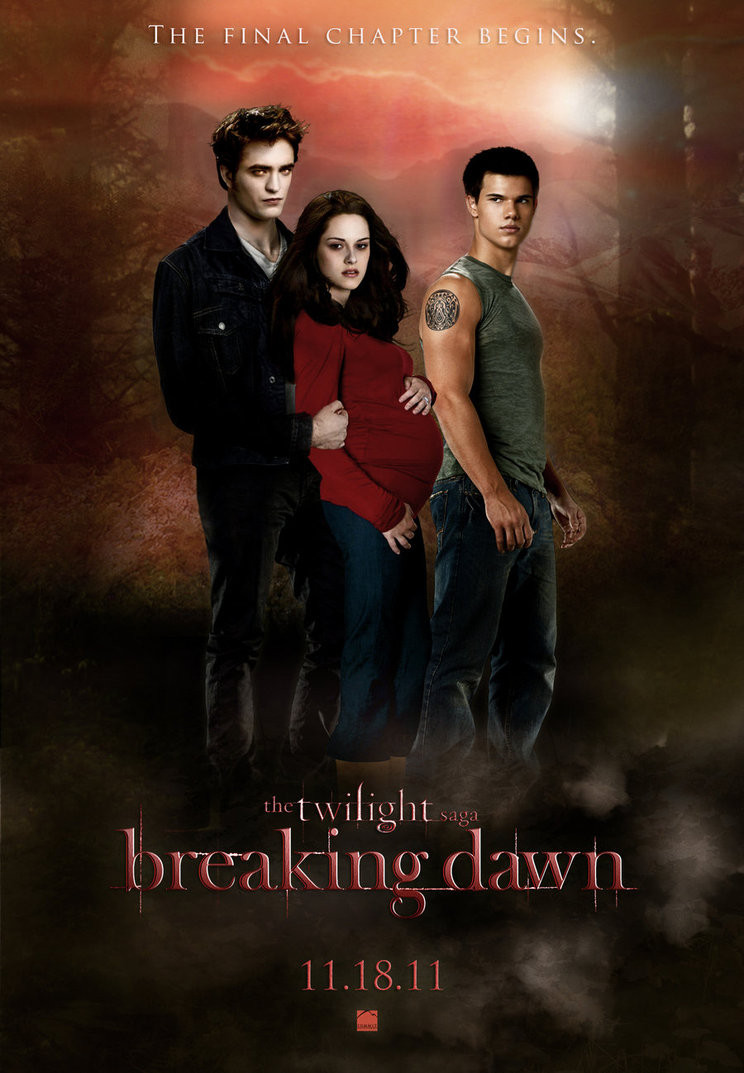
In the latest installment, the hundred-something year-old Edward (Robert Pattinson) marries his teenage girlfriend (Kristen Stewart) and whisks her away to a private island in Brazil, where he finally agrees to boink her in a highly anticipated and thoroughly disappointing sex scene. I mean sure, he breaks the bed with his "passion," but both players seem oddly sedate, with expressions more perplexed than enraptured and nary a hair out of place. After only one session of love-making and afraid of further hurting the bruised, still-human Bella, Edward withholds, prompting a ridiculous and, for Bella, humiliating montage in which she exudes sexual frustration while playing chess on the beach and awkwardly trying to entice him with lingerie. He finally gives in, but his fears are validated when Bella finds she is pregnant with a fast-growing, blood-sucking fetus, the birth of which could have terrible, unforeseen consequences, if she even survives long enough to deliver, that is.
Stephanie Meyers claims that the Twilight series is not a pretext for some Mormon parable, but Breaking Dawn continues her terrifying march against female sexuality. In the first three books if Stella, a bashful tomboy-ish virgin, has sex with Edward, she risks being killed by his blood-lust; depicted in the films with much panting and the occasional kiss, followed by Edward ruefully flinging the girl away for her own good. In the fourth book, married Bella is finally able to have sex (a curious coincidence), but the poor milquetoast has to deal with the consequences in the form of their hybrid spawn, which slowly eats her alive from within. A severe punishment indeed.
Twilight: Breaking Dawn is about the horrors of marriage and childbirth more than those of being a mewling vegetarian vampire, and throughout the series, Meyers makes a woman's life seem like a torturous trial at nearly every stage, from the pain of mediocrity and pulsing hormones in the earlier books to the persistent specter of death hanging over perfectly common life choices in the later ones. No wonder a girl needs the protection of an agonized vampire and a rage-filled werewolf (not to mention a singular blandness) in order to make it out alive. As a 20-something woman who recently married and struggles with the idea of having children, I found watching the latest chapter to be honestly frightening and engaging in a womb-aching, worst-fears-come-true sort of way, one that references pregnancy as a classic body-horror mainstay. However, despite stumbling onto such a universal gem of a phobia, the story is kept from being meaningful by emotional politics that are confounding and puerile, divorced from the implications of the narrative, a fact the film was unable to mitigate.
I'd hoped that Bill Condon (Dream Girls and Gods and Monsters) might be able to inject some life into this morally questionable but enjoyably salacious material. Thankfully, he does manage to bring some horror back to the toothless vampire series; Bella's birth scene commences with an exaggerated breaking of bones reminiscent of the best of the hallucinations in Black Swan and continues with much bloody snipping and contorted-faced screaming. When Edward injects her with his vamp-juice in order to save her life, we see her writhing in agony in her mind only, before realizing she is physically paralyzed in by morphine.
However, Condon inexplicably offsets the welcome infusion of blood with jarring pop touches; if this is the installment in which Bella is forced to grow up and face the adult consequences of marriage and sex, why is this film drowning in indie pop and weepy emo? Why is sucked-dry pregnant Bella surrounded by vibrant movie color, why does she get magical makeup when she turns into a vampire? Aesthetically, the best Twilight offering is still the first, when Catherine Hardwicke kept the more unassuming, less bloated but, yes, ultimately less ambitious film to a chilly Washington-state palette of grays and harsh whites. There are other missteps, like the hilarious CGI werewolf-conference that made me feel like I was on peyote, or the handling of Jacob falling in love with an infant child, still creepy despite Condon's focus on Renesmee all grown up and trying to distract us with the word "protector."
As far as I can tell this moral of this film is that getting pregnant is like being inhabited by a bottomless pit of a parasite that will eat you alive, and if you happen to survive the birth of this hungry little fucker, you must die just a little bit in order to be reborn into Mother, prepared for the sacrifices ahead. Maybe the director who brought this conceit so vividly to life should start going by Bill Condom.