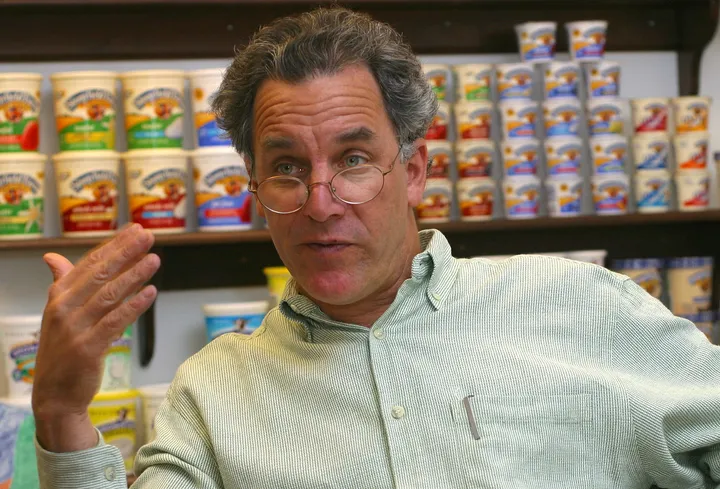
As Stonyfield Farm President and CE-Yo, I believe that a new study dismissing the health benefits of organics does in fact mislead an increasingly savvy public by ignoring documented health and environmental benefits of organic.
The supreme irony is that this study is getting an enormous amount of media attention in part because of heightened consumer awareness of where our food comes from, thanks to the popularity of the documentary "Food, Inc." and the discussion it's triggering across the country. "Food, Inc." lays bare just how bankrupt and dangerous our current food system really is, and what we are allowed to know about it. The result is that consumers are looking more critically than ever at studies like this.
I agree with the Organic Center (TOC), a non-profit industry think tank, that the authors of the United Kingdom's Food Standards Agency (FSA) study used old data and flawed logic in reaching the conclusion that organic food is no healthier than conventional. TOC alleges that the UK study actually downplayed the positive findings which favored organic food and did not measure important nutrients such as antioxidants.
There are compelling studies that have shown organic foods higher in beneficial antioxidants, substances or nutrients in our foods known to slow or prevent heart disease, diabetes and some forms of cancer. A 2007 Newcastle University (UK) study concluded organic fruit and vegetables contained up to 40% more antioxidants than non-organic varieties; organic milk contained more than 60% more antioxidants and healthy fatty acids than conventional. A 2007 study by the University of California found organic tomatoes had elevated levels of up to 97% of two types of antioxidants.
Of greater concern to me is the fact the FSA ignores the environmental and related health benefits of an organic farming system that avoids the use of millions of pounds of toxic persistent pesticides, herbicides, fertilizer and other chemicals that leach into soil, water and air.
The man leading the FSA review actually stated the differences in nutrient content found between organic and conventionally produced food were "unlikely to be of any public health relevance." Tell that to the people who suffer a variety of health issues shown to be linked to pesticide use. Public health is exactly what's at stake here.
I believe studies like the FSA report need to look beyond the dinner plate and recognize that organic farming's avoidance of chemicals offers health benefits beyond nutrition.
People choose organic foods not only for their well-documented nutritional superiority, but also because those foods come from a system of sustainable agriculture that avoids the use of toxic, persistent pesticides, herbicides and fertilizers that pollute our soil, water and air, as well as our food.
According to USDA organic standards, no artificial hormones or antibiotics are allowed for use on organic dairy farms. Organic regulations also prohibit the use of toxic and persistent chemicals for growing and maintaining pasture and in the production of grain and forage-based feeds. Energy intensive synthetic chemical nitrogen fertilizer is also prohibited in organic farming.
There are about 120,000 milking cows on organic dairy farms in the US, and these farms avoid the use of an estimated 40 million pounds of fertilizer and 758,000 pounds of pesticides on the 761,000 acres of farmland now used to grow organic feed or organic pasture.
That means millions of pounds of chemicals NOT leaching into our soil, air and water. Chemicals that have been linked in study after study to health concerns ranging from premature births to the onset of Parkinson's Disease.
I believe that consumers are savvy enough now to be taking in all of this information as they are making informed, educated decisions about their own health, their family's health, and the health of the planet.
These UK findings will be challenged by consumers who more than ever are educating themselves on how food is grown and processed.
Isabel Cowles: Nitrogen at a Glance
Your carbon footprint has a shadow: nitrogen. Unlike carbon dioxide, which scientists have long understood as a damaging green house gas, nitrogen is still revealing...
lff
http://www
Yes, we have been eating toxic foods for the last 100 years. How do we explain gains in longevity? I explain it with reports that say for the first time in a century, people of my age or my children will have a shorter lifespan than our parents and grandparents did. Beyond that, we have pharmaceuticals to thank for some degree of longevity.
Look, it's uncomfortable to think that our foods are killing us. We don't want to believe that b/c it it makes us feel desperate. I get that. But we know that foods grown on sustainable, organic methods produce their own insect and disease defenses that chemically grown foods do not. We call those defenses nutrients.
Well, well, no big surprise here. Just like I figured
Besides Sainsbury's profit margin on organic produce is likely much higher than their normal products. Why would they want to kill the golden goose?
lff
Haven't you heard about mercury being present in between 30% and 50% of High Fructose Corn Syrup, which is found in almost ALL foods these days? Where were your government watchdogs while that was happening? Or how about food dyes that turned out to be toxic? Why not just play it safe and go with the organic option?
"Of greater concern to me is the fact the FSA ignores the environmental and related health benefits of an organic farming system that avoids the use of millions of pounds of toxic persistent pesticides, herbicides, fertilizer and other chemicals that leach into soil, water and air."
__________
Good point.
__________
Our overall health is optimized by lower pollutants in the environment we live in.
Even if greater health benefits of organic/su
The only people who try to publicly refute the health/env
lff
Below in several posts I offered sound scientific objections related to the data set. Which are legitimate. Read them.
http://www
Google this: "eutrophication"
http://ext
From the Executive Summary:
(The study is a) "systematic review of the available published literature was designed to seek to determine the size and relevance to health of any differences in content of nutrients and other substances in organically and conventionally produced crops and livestock products..
From Section 4 Methods
"Multi-database searching was used to ensure comprehensive article retrieval. Searches
were conducted in PubMed, ISI Web of Science and CAB Abstracts1
The articles used came from all over the world - no British bias in the data would be expected.
lff
The set was derived from on-line abstracts which is fine, but there is no explanation of the criteria by which articles were selected. And we don't know if there was or was not " a British bias." Nor do we know which were plants and which were animals.
We do know that of over 52,000 only 162 were picked and only 55 of those used. Less than 30 in a sample is not statistically viable. Plus, statistical analyses, to be considered robust (meaning scientifically valid) must be both representative and random. There is no evidence of either.
What the study looked at was "the most commonly reported nutrients.
The study was done by the Nutrition and Public Health Intervention Research Unit of the London School of Hygiene & Tropical Medicine. The two parts are available here:
http://www
and here:
http://www
Personally, I would think this would be a much more reliably neutral source for information than an "industry think tank" like The Organic Center (TOC) cited in the article above.
lff
However, that's not very useful information. Given the skyrocketing incidence of developmental issues in children and cancer, I'd like to see government's looking a little deeper.
http://www
That the study's conclusions do not address AT ALL these impacts make it difficult to accept their conclusions, no matter how scholarly the study looks or the way it is written.
The days when science was the search for knowledge for its own sake are over. Corporate sponsorship, while not always an overt determinant, is a tacit factor since studies contrary to the interests of the sponsors won't get funding. An example: of over 37,000 industrial chemicals commonly used in the US, only around 5800 have been studied and none in combination.
"Data collection" consisted of going through previous studies of "satisfactory quality," which is not defined in the abstract. Nor are the criteria by which a study was accepted or rejected. Of a base of some 52,000, 162 were picked and only 55 of those used. This is not statistically robust since it's doubtful this actually is a random and representative sample.
The data were only of "commonly reported nutrients.
Because a food contains a nutrient does not mean can be absorbed. Vitamin E has D and L forms (right and left spirals) and capsules may contain both, but we only use one. Iron in cereal may be nothing more than filings.
I do agree organic food costs more, but in the long run you will spend what you save on medical bills.
lff
If corrolation were valid, then how about the consolidation of agribusinesses in the last 20 years and the rise in obesity?
That same study also showed that the most likely reason for the increased levels was that the organic tomatoes were grown under greater stress than the conventional tomatoes. Antioxidants is how the plants protect themselves from stress, be it insect damage, lack of soil nutrients, or what have you.
The authors of the study were quite explicit that they didn't look at those items because that was NOT how the study was designed. If you want to conduct a metastudy on pesticides, herbicides, fertilizers, then support some agency without an agenda. The present study was specifically designed to only look at nutrition. To complain that they didn't look at everything is like complaining that a study of childhood disease didn't look at adult obesity.
As for complaining that some of the studies were "old," please. It is the validity, not the date of the study, that matters. So far no one has been able to show that the 55 studies used were invalid.
The rest of this screed reads like something that Monsanto would put out in support of conventional agriculture. No real statements of fact are offered, only emotional appeals using vague, undefined words that have a "nasty" connotation in the public mind. If the organic food industry wants to actually show that it provides superior nutritional value than conventional farming, it needs to find another spokesman. This guy borrows his PR methods from the birfers.
FACT: A 2007 Newcastle University (UK) study concluded organic fruit and vegetables contained up to 40% more antioxidants than non-organic varieties; organic milk contained more than 60% more antioxidants and healthy fatty acids than conventional.
FACT:A 2007 study by the University of California found organic tomatoes had elevated levels of up to 97% of two types of antioxidants.
FACT: The man leading the FSA review actually stated the differences in nutrient content found between organic and conventionally produced food were "unlikely to be of any public health relevance.
FACT: There are about 120,000 milking cows on organic dairy farms in the US, and these farms avoid the use of an estimated 40 million pounds of fertilizer and 758,000 pounds of pesticides on the 761,000 acres of farmland now used to grow organic feed or organic pasture.
lff
I do know one thing that is certain - the masses of people who are in underdeveloped regions of this planet and are starving to death are organic farmers. Not by choice.
Here are some things for you to think about: what farm would you have as a neighbor? A fully organic family owned farm or a large industrial farm using chemicals? Think that's a silly question? Actually, it actually will direct you to the main point of this whole debate and what's most essential, and the best part is, you still get to keep you scientist hat on, BUT, you also have to think with a bit more than a few math equations, keep thinking ....