iPhone app iPad app Android phone app Android tablet app More

Featuring fresh takes and real-time analysis from HuffPost's signature lineup of contributors
Gaston Caperton

GET UPDATES FROM Gaston Caperton

Are High Schoolers Prepared for College? New Data Says Only 43% of Class of 2011 is Ready

Posted: 09/20/11 01:04 PM ET

There are many valid questions to be asked about the future of education in the United States, but there's one simple proposition with which I think most Americans would agree: college and career readiness are essential to America's future. We must ensure that by the time our students graduate high school, they are prepared to succeed and to compete -- to be the best in the world.

The most reliable road to success leads through college, and for over 100 years the College Board has provided students with a map for their journey.

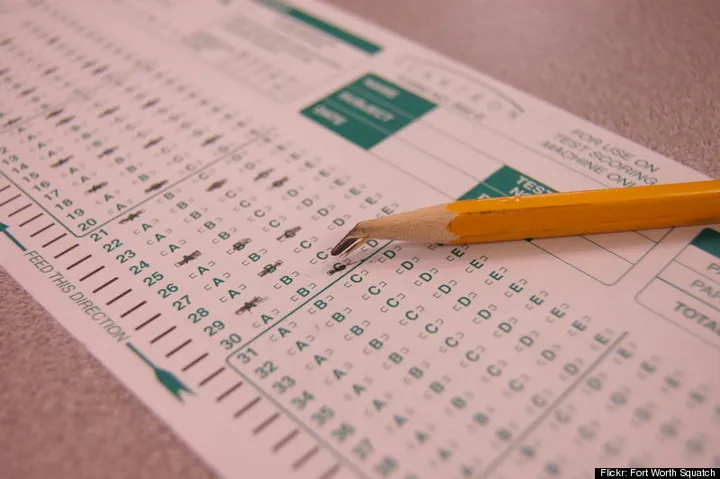
As part of our ongoing effort to ensure that 55 percent of Americans have a postsecondary credential by 2025, this year we developed the first ever national SAT College and Career Readiness Benchmark. It is particularly fitting that we established the benchmark in a year when the SAT reached a record 1.65 million students -- many of whom are traditionally underserved -- and only 43 percent of them met the benchmark.

After analyzing the results of a diverse group of students from more than 100 institutions all over the country, we set the national SAT benchmark at a composite score of 1550. That means, if a student's critical reading, math and writing scores add up to at least 1550, they have a 65 percent chance of earning a B-minus average their first year in college. Not to mention that students who meet the new SAT benchmark are more likely to enroll in, succeed at, and graduate from college.

Why is the benchmark such a strong indicator?

Primarily, it's because the SAT has consistently proven to be a valid predictor of first year GPA. Using overall first-year GPA as a college performance metric -- rather than a selection of courses most students don't take their first year -- makes this benchmark applicable to all students regardless of major or coursework. And by using a combined score of critical reading, math, and writing, the benchmark offers a fair and holistic measure that allows for some variation across subject areas.

Furthermore, a multiyear validity research program led by the independent, bipartisan National Assessment Governing Board (NAGB) has found strong alignment between the SAT and the National Assessment of Educational Progress (NAEP) - commonly known as the Nation's Report Card. The SAT is the only college admission test to which NAEP was statistically linked, and for which such close empirical connections have been demonstrated.

In terms of usage, the SAT benchmark is an excellent measure of the college readiness of a group of students. It can be a tool for developing policy and targeting assistance to large pools of students, such as in a school district or a state.

We want to be very clear that the SAT benchmark should not be used to evaluate an individual student's college readiness. It was developed to provide education leaders with a tool to evaluate and track the effectiveness of academic programs in preparing students for college. It is not meant to be used in admissions or other high stakes decision-making.

In the final analysis, ensuring that students are ready to attend and complete college provides them with the competitive advantage they need to succeed in the global economy. The College Board remains committed to working with students, parents, educators and policymakers to expand access to higher education and to push open the doors of higher learning for everyone.

The SAT is a program of the College Board.


Follow Gaston Caperton on Twitter: www.twitter.com/@CollegeBoard

There are many valid questions to be asked about the future of education in the United States, but there's one simple proposition with which I think most Americans would agree: college and career read...
 
 
  • Comments
  • 11
  • Pending Comments
  • 0
  • View FAQ
Comments are closed for this entry
View All
Favorites
Recency  | 
Popularity
HUFFPOST SUPER USER
methodman
06:53 PM on 09/21/2011
I have been reading "Why Boys Fail" and it discusses quite a lot of the various tactical educational theories. I find it very well Written. I subscribe to Safari Books.
photo
Thordeer
Greed has won over principle.
02:02 AM on 09/22/2011
I serve on the Board of Directors of a boys' middle school and am very glad more people are reading these books and discussing these ideas. Thank you.
01:02 PM on 09/21/2011
Our local high school supports the full IB program. One of my daughters friends is doing an IB diploma and is planning on going to college in Switzerland. It helps that she is very fluent in German and is studying French.

I doubt that you need more than 40% of the population with full 4 year college degrees. But you probably need a significant fraction of the rest with 2 year degrees - typically targeted at specific skills. I have a friend whose son is finishing up his technical training in NC Machining and Welding.

I would extend optional public education through community / technical college.
HUFFPOST SUPER USER
gr8bsn
An equal opportunity offender since 1978
06:02 AM on 09/21/2011
Why should more than 43% of seniors be going to college anyway? So many people have gone to college that a Bachelor's degree in 2011 is 1991's GED. There's nothing wrong with learning a trade and earning a good living without getting $80,000 into student loan debt.
photo
Thordeer
Greed has won over principle.
01:49 AM on 09/22/2011
Absolutely agreed. And vocational ed can be just as high level as purely academic work, can fit with the skills and interests of more people, and can be more focused. Our country, noticing that college grads make more $$, has pigeonholed everyone into the college track. Those ill-matched with college are in college for 4-7 years, not even graduating, and in debt instead of learning to build houses, fix cars, or fix computers.
photo
Thordeer
Greed has won over principle.
01:54 AM on 09/22/2011
In the US, we are so stuck up about higher ed. But there's no doubt: In our neighborhood in Oakland, our auto mechanic's shop, our building contractor, and our computer repair guy are very highly esteemed, people appreciate their work, and they have long lists of satisfied customers.

They are reliable, knowledgeable, trustworthy, and fair, and are making a good living.

I sometimes think that our rush to higher ed and white collar work is a weird excuse for making a living without knowing how to actually *do* anything.
10:17 PM on 09/20/2011
Why is everyone supposed to go to college and what is so great about it?

Harvard graduates can't explain summer and winter.

http://www.youtube.com/watch?v=p0wk4qG2mIg

That makes you wonder what education is supposed to be. Just a way to create jobs for people claiming to be teachers. Curious we don't have a National Recommended Reading List. You don't suppose people might learn a lot without spending a lot of time and money?
photo
Thordeer
Greed has won over principle.
01:59 AM on 09/22/2011
That's awesome! I teach this to 3rd-5th graders with globes and flashlights. And we learn what lunar and solar eclipses are the same way, and why the day is 6 months long at the poles, and what a full moon is, a lunar month, etc.

We also measure distances on maps, and learn how to read maps of different scales, the structure of the US interstate system, etc.

Ha ha Harvard. Then they all become hedge fund managers and blow up the world.
10:28 AM on 09/22/2011
Ever notice that Harvard economists don't talk about how many billions Americans lose on the depreciation of automobiles every year?

http://www.youtube.com/watch?v=I5DCwN28y8o
HUFFPOST SUPER USER
Live4literacy
06:34 PM on 09/20/2011
Why are students less prepared? Because we have had ten years of NCLB, AYP, and a teach to the test mentality that have left students unable to think beyond lower level thinking skills. And I am sorry but univerisities have been complicit in not fighting against this garbage idea by not doing study after study refuting it's effectiveness and by training new teachers to teach in this climate versus teaching children to read, process, problem solve, synthesize, question, and explore.
photo
Thordeer
Greed has won over principle.
02:04 AM on 09/22/2011
I agree these are ridiculous, but I blame the breakup of community and family first, TV second, and broad US anti-intellectualism way before blaming technicalities of school legal requirements such as AYP.