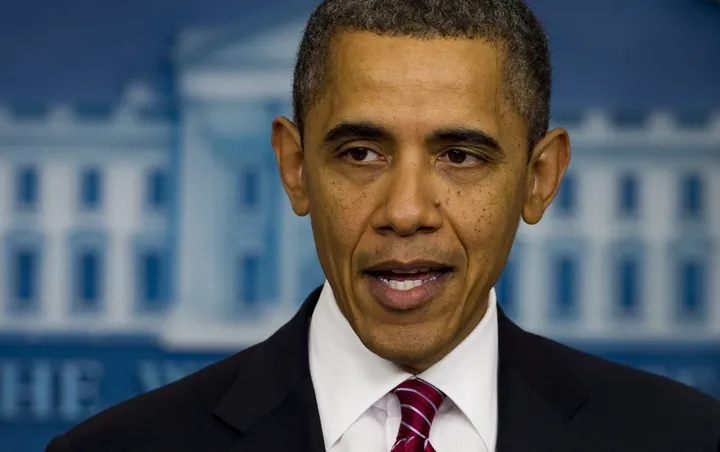
This was an interesting week for religion in America. First, the Council of Catholic Bishops demanded that the president of the United States exempt Catholic hospitals and universities from a general requirement that all employers receiving federal funds must provide health insurance for their employees that includes coverage for contraceptives. On reflection, the president acceded to their demand, explaining that such institutions should not be required to do something that is fundamentally incompatible with their religious beliefs.
While all this was going on, a federal court of appeals ruled that California's Proposition 8, which attempted to strip gays and lesbians of the previously recognized state law right to marry, violated the federal Constitution. The court explained that Proposition 8, which had been aggressively promoted by the Catholic Church, the Mormon Church and evangelicals, was unconstitutional because it served "no purpose... other than to lessen the status and human dignity of gays and lesbians in California."
The juxtaposition of these two events sheds important light on the relationship between religion and government in the United States today.
Our nation's founders sought to shape the basic nature of that relationship in the First Amendment, which contains two distinct but intertwined clauses concerning religion. The Free Exercise Clause forbids government to make any law prohibiting "the free exercise of religion." The Establishment Clause forbids government to make any law "respecting an establishment of religion."
In non-legal terms, the goal of men like James Madison, George Washington and John Adams was to keep government out of religion and religion out of government. It was, in the words of Thomas Jefferson, to erect a "wall of separation" between church and state.
The founders were well aware that religion had proved bitterly divisive throughout human history. Whenever government and religion had become enmeshed, the consequence had almost invariably been intolerance and persecution. To protect both religion and government, and to establish a unified, cohesive nation committed to promoting "the general welfare" rather than religious supremacy, the founders aspired to keep the worlds of government and religion apart.
Aspiration, of course, does not always translate into reality, and throughout American history we have seen instances of both religious intolerance and undue religious interference with government. On the Free Exercise side, it is now well settled that the government cannot constitutionally discriminate against people because of their religious beliefs. For example, unlike the days of yore, the government cannot constitutionally prohibit Jews from holding public office.
The most common type of Free Exercise issue today involves not express government discrimination against the adherents of a particular religion, but questions similar to the one posed by the Catholic bishops: When should government exempt the members of a particular religious faith from a law of general application? For example, if certain Native American religions use peyote as an essential part of their religious practice, should they be exempt from laws generally prohibiting the possession of peyote? Or, if contraception is fundamentally at odds with Catholic doctrine, should Catholic hospitals and universities be exempt from laws requiring all employers to provide health insurance for their employees, including coverage for contraception? These can be vexing issues because they raise the specter of special privileges for religion.
On the Establishment Clause side of the ledger, it is now well settled that the government cannot prosecute blasphemy or promote prayer in the public schools or enact laws for the express purpose of incorporating religious precepts into law. For example, a predominately Muslim community cannot constitutionally prohibit residents to consume pork because Islam forbids such behavior, and a predominantly Catholic community cannot constitutionally forbid residents to use contraceptives because Catholic doctrine regards contraception as a sin.
This brings me back to the court of appeals' decision holding Proposition 8 unconstitutional. In invalidating Proposition 8, the court ruled that there was no constitutionally legitimate justification for California to strip same-sex couples of the previously-recognized right "to have their lifelong relationships dignified by the official status of 'marriage.'"
This conclusion makes sense because the real reason why religious groups spent millions of dollars to enact Proposition 8 and why those who attend church weekly supported Proposition 8 by a vote of 84% to 16% is religion. Proposition 8 was a straightforward (pardon the pun) effort to conscript the authority of government to impose a particular religious belief about homosexuality and marriage on American citizens who do not share that belief. As the court concluded, this is not a constitutionally legitimate basis for government action. Indeed, that is why even the proponents of Proposition 8 never dared speak the truth about it -- that its real purpose was to effectuate a particular religious doctrine.
My own view about these issues, which I think reflects the spirit of what the founders of our nation hoped to achieve, is that in the realm of religion we should generally follow the rule of live and let live. We as citizens should be respectful of the sincerely-held religious beliefs of our fellow citizens and we should therefore bend over backwards not to compel them to act in ways that are fundamentally incompatible with their religious faith. Catholic hospitals should not be required to provide contraceptives, Evangelical churches should not be expected to perform same-sex marriages, and Jews should not be compelled to work on their Sabbath.
But the flip side of the wall of separation is equally important. As American citizens, we must be respectful of the right of individuals not to be compelled by government to lead their lives according to the dictates of someone else's religion. However passionately we may believe in the rightness of our religious beliefs, we must respect not only of the right of others to disagree, but also their right to lead their lives according to a different set of beliefs.
Both President Obama's decision to exempt Catholic institutions from the general policy on contraceptives and the court of appeals' decision to invalidate Proposition 8 reflect our most fundamental aspirations as a nation. What they illustrate is what the founders understood -- religion is a two-way street. Just as we must have the freedom to follow our own religious beliefs, we must also have the freedom not to be controlled by the religious beliefs of others.
Dan Rather: Washington Needs to Call a Doctor
IMO this isn't as much a debate over religious freedom as an effort to reduce sex itself to little more than a government-approved breeding program, with any other motive for sexual activity or relationships involving sex discouraged by civil law. It reflects an effort to reverse the increasing irrelevancy of religions that are anchored in the distant past.
If the Jehovah’s Witnesses were running most of the religious hospitals and refusing to provide blood transfusions, no one would even be having this discussion. We would be funding hospitals that don’t have an agenda.
I would have like Prof. Stone to have addressed the role of taxpayer funds. For example, the religiously affiliated schools and hospitals almost certainly take federal funds to use in their work. And one thing little talked of -- though large employers generally pay most of the cost of the employee's insurance premium, they get a tax deduction for doing so. If any employer gets special treatment because of religion alone, all taxpayers are subsidizing the religious discrimination.
"As a practical matter, any right of action based on belief cannot be absolute. Therefore, the right to practice a religion cannot mean that any individual or organization should be allowed to do whatever they want and justify it as their "sincere religious belief". There is nothing automatically sacrosanct about action based on religious beliefs, no matter how sincere."
People keep excluding this (as you did here):
Or, if contraception is fundamentally at odds with Catholic doctrine, should Catholic hospitals and universities [THAT RECEIVE FEDERAL FUNDS] be exempt ....?
The answer here legally is very clear. It would be absolutely unconstitutional for the government to fund a "Religious Establishment". These establishments are SECULAR - it doesn't matter a whit if Catholic is used as an adjective in front of Hospital or University.
They must be considered Secular if they are receiving my tax dollars because my tax dollars can not be used to fund a Religion - not to promote it, not to teach its doctrines - none of that.
It was generous of Obama to find a means of making this easier on the Bishops (and mind you - I can understand their position). They should be grateful that he did so. We should be grateful that their religion compels them to provide Health Care.
The problem is with the people who call this an 'assault' on religion. It never was - it was a requirement that SECULAR organizations do what everybody else does. And what those organizations are being required to do is based in sound Medical recommendations and a cost analysis - AS IT
If I as an employer don't believe abortion should be legal I should not be forced by the government to provide insurance for it as part of my benefits package.
I might very well select an insurer that allows my employees to add and pay such coverage, but for the government to force me to provide it is wrong.
Same with "free, no charge no hassle" contraceptives (in President Obama's words); Religious or Secular, its forcing an employer in a direction and removing the "Choice", therefore, that's far from Pro-Choice
Problem solved.
And Obama is not forcing any church or any hospital or employer that is run by any religion to accept government funding.
Second, Corruptions is just as prevalent (maybe more) in the secular world as it is in religious institutions. Its just attracts bigger headlines in the latter, as it should.
Third, Christianity has no intention of being non-violent, the Crusades were hundreds of years ago, hardly an example of today's intentions.
Finally and this is totally hilarious! You say their days should be numbered....that was probably first stated and oft-repeated 2000 years ago. Do you know something
And this is the game set and match statement about this argument.
Murder for example is both illegal and immoral by most religious doctrines. But it available as a means for solving disputes. Always has been, always will be, until we get a “minority report” type law enforcement system. The fact that it is available does not incriminate either religion or law under the circumstances.
In terms of contraception, there is no law or no specific Christian doctrine the expressly forbids “contraception”. And for argument sake lest say we are talking about married couples.
All taxpayers are expected to participate (via taxes, the draft, etc.) in activities they may personally object to.
Stop telling me that I have to believe as you do.
Stop telling me that this is only about women’s rights, when it is also about the separation of Church and State.
Stop telling me that I have to change my conscience to suit what you liberals and Obama deem to be morally acceptable.
If you want to change the constitution, then submit an amendment which makes the government all powerful, and the churches and its people slaves to the will of the government.
Stop pretending that this is not an attack on religion , when you know it is an attack on religion.
Stop degrading the Catholic church because men run it, when you know very well that the churches laws are laws that come from God, and not men and women.
Stop being so anti religion, and admit that the Church , which supported Obamacare, was deceived by liberals on the matter of the conscience clause.
Stop pretending that this is not an attempt to eventually mandate that everyone must share in the cost of abortions, because we all know the slippery slope this is designed for .
It is sad but it is true. Obama will do down in history as the great one, the great deceiver and the great divider.
stop thinking that birth control is just about sex. It's about sex AND heatlh.
stop thinking that the Roman Catholic Church is anything more than a worldwide gang. Even if the rules were made by god, the clergy interprets is and there are no women that have that say.
stop believing what the GOP tells you. Shoot, i don't believe either political party.
I've heard Viagra is covered (Crazy) by many policies, but fortunately have never had to inquire about it, and if I ever do I promise not to ask for it to be available "free of charge, free of hassles".
But if I'm helping pay for your B/C pills and you somehow become with child, please don't expect me to happily help pay for you to abort her.
Conservatives keep forgetting the "freedom not to be controlled by the religious beliefs of others" part.
A business is a business. A business is bound by secular law. A business owned by a church is registered with the state, licensed by the state, and is bound by the laws of the land. To argue otherwise is disingenuous . . . suppose a church opens a restaurant, but refuses to serve blacks because their doctrine is, well, archaic. Are they subject to the provisions of the CRA? Yes. Can they claim a religious basis for discrimination in the conduct of their business? No.
But OTOH, they CAN refuse to allow blacks into their congregation. That's allowed under the 1st Amendment. But as soon as they open any kind of business, well that's a different story. A hospital is a business, end of story, and is bound by the laws of the land.
How in God's name did you possibly come to such an asinine and blindly ignorant conclusion?