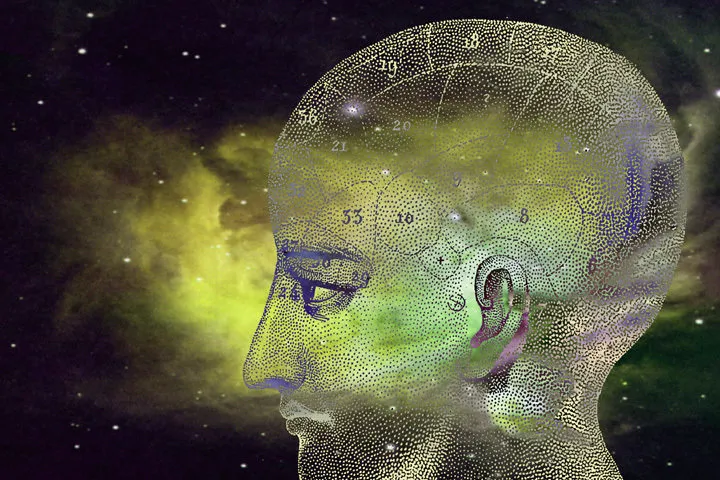
Mental illness and I are no strangers.
From Alex Forrest in Fatal Attraction to Blanche Dubois in A Streetcar Named Desire to Norma Desmond in Andrew Lloyd Weber's Sunset Boulevard, I've had the challenge -- and the privilege -- of playing characters who have deep psychological wounds. Some people think that Alex is a borderline personality. I think Blanche suffers from post-traumatic stress disorder and everyone knows that Norma is delusional.
I also have the challenge of confronting the far less entertaining reality of mental illness in my own family. As I've written and spoken about before, my sister suffers from a bipolar disorder and my nephew from schizoaffective disorder. There has, in fact, been a lot of depression and alcoholism in my family and, traditionally, no one ever spoke about it. It just wasn't done. The stigma is toxic. And, like millions of others who live with mental illness in their families, I've seen what they endure: the struggle of just getting through the day, and the hurt caused every time someone casually describes someone as "crazy," "nuts," or "psycho".
Even as the medicine and therapy for mental health disorders have made remarkable progress, the ancient social stigma of psychological illness remains largely intact. Families are loath to talk about it and, in movies and the media, stereotypes about the mentally ill still reign.
Whether it is Norman Bates in Psycho, Jack Torrance in The Shining, or Kathy Bates' portrayal of Annie Wilkes in Misery, scriptwriters invariably tell us that the mentally ill are dangerous threats who must be contained, if not destroyed. It makes for thrilling entertainment.
There are some notable exceptions, of course -- Dustin Hoffman in Rainman, or Russell Crowe's portrayal of John Nash in A Beautiful Mind. But more often than not, the movie or TV version of someone suffering from a mental disorder is a sociopath who must be stopped.
Alex Forrest is considered by most people to be evil incarnate. People still come up to me saying how much she terrified them. Yet in my research into her behavior, I only ended up empathizing with her. She was a human being in great psychological pain who definitely needed meds. I consulted with several psychiatrists to better understand the "whys" of what she did and learned that she was far more dangerous to herself than to others.
The original ending of Fatal Attraction actually had Alex commit suicide. But that didn't "test" well. Alex had terrified the audiences and they wanted her punished for it. A tortured and self-destructive Alex was too upsetting. She had to be blown away.
So, we went back and shot the now famous bathroom scene. A knife was put into Alex's hand, making her a dangerous psychopath. When the wife shot her in self-defense, the audience was given catharsis through bloodshed -- Alex's blood. And everyone felt safe again.
The ending worked. It was thrilling and the movie was a big hit. But it sent a misleading message about the reality of mental illness.
It is an odd paradox that a society, which can now speak openly and unabashedly about topics that were once unspeakable, still remains largely silent when it comes to mental illness. This month, for example, NFL players are rumbling onto the field in pink cleats and sweatbands to raise awareness about breast cancer. On December 1st, World AIDS Day will engage political and health care leaders from every part of the globe. Illnesses that were once discussed only in hushed tones are now part of healthy conversation and activism.
Yet when it comes to bipolar disorder, post-traumatic stress, schizophrenia or depression, an uncharacteristic coyness takes over. We often say nothing. The mentally ill frighten and embarrass us. And so we marginalize the people who most need our acceptance.
What mental health needs is more sunlight, more candor, more unashamed conversation about illnesses that affect not only individuals, but their families as well. Our society ought to understand that many people with mental illness, given the right treatment, can be full participants in our society. Anyone who doubts it ought to listen to Kay Redfield Jamison, a psychiatry professor at Johns Hopkins, vividly describe her own battles with bipolar disorder.
Over the last year, I have worked with some visionary groups to start BringChange2Mind.org, an organization that strives to inspire people to start talking openly about mental illness, to break through the silence and fear. We have the support of every major, American mental health organization and numerous others.
I have no illusions that BringChange2Mind.org is a cure for mental illness. Yet I am sure it will help us along the road to understanding and constructive dialogue. It will help deconstruct and eliminate stigma.
The World Health Organization (WHO) estimates that by the year 2020 mental illness will be the second leading cause of death and disability. Every society will have to confront the issue. The question is, will we face it with open honesty or silence?
Anis Shivani: The Mass Production of Mental Illness and What To Do About It
It is also important to point out that many public and historical figures suffered from mental illness including Florence Nightingale, Abraham Lincoln, Theodore Roosevelt, Sir Winston Churchill, and Drew Carey. Whether a person suffers from PTSD, depression, manic depression, panic and anxiety disorder, schizophrenia or any other mental illness, remember the most effective medicine is hope. And with true hope, anything is possible.
-healthy_blogging
Published daily, "Living Fit, Healthy and Happy" is a family-friendly health and wellness resource website with articles on fitness, anti-aging, obesity, diabetes, eating disorders, cardiovascular and respiratory health, mental illness and many other health related issues. There's always something for you at "Living Fit, Healthy and Happy".
http://www.livingfithealthyandhappy.com
Thank you for your willingness to talk about your sister's illness. BringChange2mind holds a powerful message. I hope that someday, the brain will have equal rights compared to other organs in the body and the toxic societal stigma will be eradicated.
Sue Ryan,
Clinical Psychologist
I think we also have to face the fact that mental health treatment is discriminated against at an institutional level. Medicare copays for outpatient mental health treatment are 50% in contrast to 20% for most other problems. At New York levels, that amounts to $38.50, which is beyond the means of many seniors living on fixed incomes. Payments from private insurers are generally 25% less than even Medicare. It's really difficult to function as a full time therapist, pay the bills, and have enough left over for a middle-class life. In major cities, where costs are high, most providers with skill and experience stop taking insurance. Many leave the profession.
Quality mental health treatment is effective. The question is whether we have the political will to fund quality care, leaving stigma and prejudice behind.
Your comments are well taken and valid as is the reality we must continue to increase our dialogs about serious mood disorders so that it becomes common place so as to dispel the centuries old myths and stigmas.
I applaud Ms. Close and other such celebrities that have access to the public platform to share their experiences and relationships of those who are challenged and seeking a better and more reasonable quality of life.
Warmly,
Herb
VNSdepression.com
I thank you for helping to bring this debilitating illness of mental illness to the mainstream. My son has severe schizophrenia. Our entire family suffers immensely.
People like you can help others to understand, to a small extent, the suffering that the ill and family endure.
Bipolar disorder, schizophrenia, for examples, appear to be distinct ailments. However just about every human mood and state of mind has been given a diagnostic code and has reached such a state of absurdity that the pyschiatrists who helped formalize the manual of mental diseases are second guessing themselves and calling foul on the mental disease model.
The language of mental illness alienates ordinary people from normal human states. For instance, the word depression is clinical. The old-fashioned word despair is descriptive, contains meaning and preserves human dignity.
For those with conditions that cause constant suffering such great difficulty as to suggest an organic disease of the brain's hardwiring, your entreaty may be well taken. I urge the rest of us who are suffering from life in general in its many forms to stick to the meaning of that suffering, and struggle to find meaning in it. The greatest meaning does not lie in clinical terminology and professional mental health interpretations for me personally.
I think the disease model falls far short.
My Undergraduate and Graduate degrees as well as my teaching has made me learn how true this is. Sometimes, people call me Crazy _____ (insert my name in there) and it is like a self-fulfilling prophecy if I want it to be knowing iduced by others. I, however, know that perhaps that's a word people would like to use for many of the poeple who have written here, but I also know that I am not letting this darn illness (or I should say illnesses) define me. Takes thought, but I try not to use certain words because of this and if I hear another say a word or negative thoughts about mental illness then I have in the past and will continue to use language in a positive way to explain why their words are damaging more than they will know (i.e. they will not know my situation).
I have been working in Suicide Group Support for the families'(the survivors) of this devastating event and yet there's a very real and almost insensitive stigma that still surrounds suicide death, depression and treatment. We have to change the language and choose carefully our words. Words Matter, the framework for the discussion matters. Thank You for your courage and insight.
So are drugs(recreational or pharmaceutical) a factor?
What about alcohol?
How about environmental factors?
Is our food safe to eat? What with all of the genetically modified everything?
The answer is all of the above folks.
GodYesOrNo.com
No one "gets mentally ill" because God doesn't like him or her and no one "gets mentally ill" because they are a sinner. If Church goers would be more candid their church would be more aware of the number of members that have such a disorder. And if you are not a sinner, "step to the front of the class."
I respect you so incredibly much for taking the time to make your post as well as treating your loved ones who suffer with the respect they deserve. I also believe that means that you would treat anyone who suffers mentally with respect. You are an amazing support and I will think of you and what you have said when I go through those tough and dark times that are coming for me.
Thank you.... you are just too amazing a real person, and that means more to me than the fact that you are a brilliant actress as well. You are double whammy :o)
Well, mental illness is real and really needs to be confronted in a more positive way so that those who are self medicating can get help, stop self-medicating (I believe that is what most people do because they don't want to be "labeled" because of the stigma), and businesses treat their employees with respect especially when their track record shows impeccable performance.
I am sad to no end when I think of those who are not at the level of functioning that I am these days because they don't have the strength to stand up for themselves and that's what this school thought about me but they messed with the wrong person, and I feel anyone who questions whether they are okay (in the mental aspect) shows that they are intelligent enough and strong enough to do the job I was doing when all of what happened to me.
I hope with time people will realize what a battle we all face (all of us with mental disorders) and stop tippy-toing around us and just make sure we get the health care we need.