iPhone app iPad app Android phone app Android tablet app More

Featuring fresh takes and real-time analysis from HuffPost's signature lineup of contributors
Glenn D. Braunstein, M.D.

Glenn D. Braunstein, M.D.

Posted: January 19, 2011 12:43 PM

Prescription Tap Water: What Drugs Are We Taking With Our Drugs?


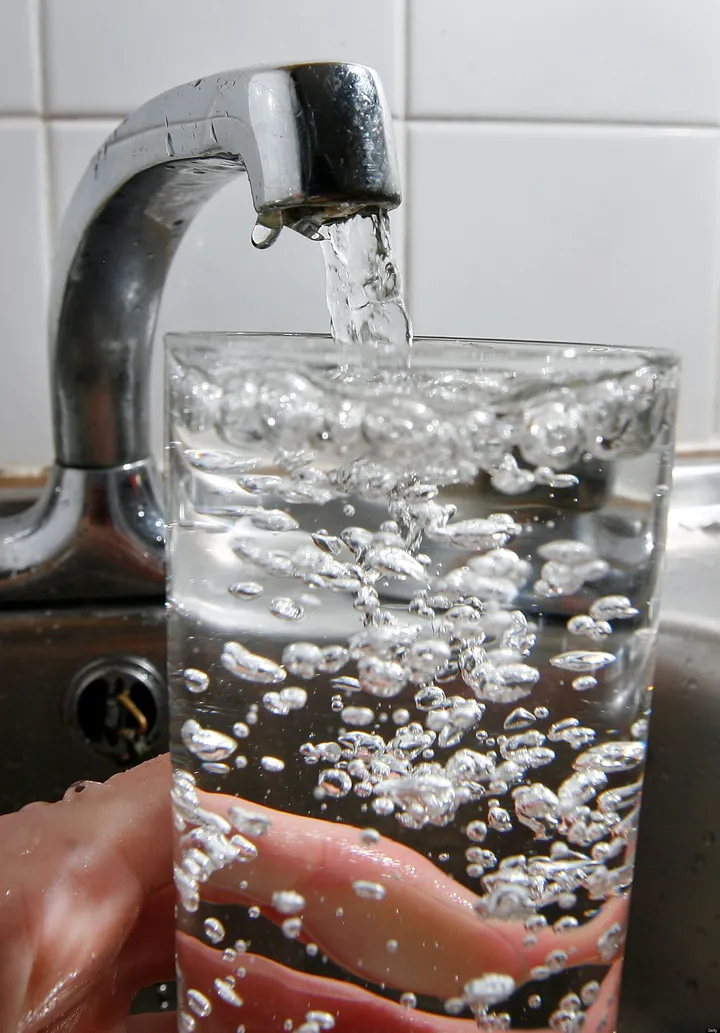
If you take medication with a glass of tap water, you may be getting more medicine than your doctor prescribed. A study by the Associated Press on the presence of pharmaceuticals in the nation's water supply has identified an alarming array of prescription substances that are reaching more than 40 million Americans in cities across the country.

It's happening as much from the drugs we take and then excrete through normal bodily waste into our sewer and septic systems, as from human, agricultural and even veterinary practices. But people also flush unused pharmaceuticals down the toilet and pour them down drains, and they get leached from landfills. While so far the concentrations have been acknowledged to be small -- holding steady at a parts-per-billion or trillion metric -- the spectrum of medications is significant, including antibiotics (both human and veterinary), analgesics, antidepressants, cholesterol-lowering and anti-hypertension drugs, anti-convulsants, acetaminophen, ibuprofen, reproductive hormones, and chemicals common in plastics, as well as insecticides, fire retardants and solvents. (An article last week in Environmental Health Perspectives highlighted the issues concerning environmental pollutants.)

In another study by the United States Geological Survey that tested for 95 contaminants in water supplies nationwide, 80 percent of the samples from 139 streams in 30 states had at least one of the substances being tested for, with an average of seven contaminants in each sample. These findings included traces of anti-anxiety medications in the drinking water delivered to approximately 18.5 million Southern Californians. In western Montana, the study found aquifers had been penetrated by waste water from a high school, and contained trace elements of acetaminophen, caffeine, codeine, antibiotics and warfarin, in addition to a mood-stabilizing drug for bipolar disorder and nicotine.

The problem continues to grow from the sheer volume of prescription and over-the-counter medications being consumed nationally, as well as from the interconnectedness of surface water and ground water sources that feed most of the water supplies nationwide, the federal government has yet to establish safety limits for pharmaceuticals in water, or to set federal standards for testing. The Safe Drinking Water Act of 1974, which was amended only once in 1994, hasn't been updated since the year 2000.

Clearly, as with air pollution or any other environmental issues we face in a region as populated as Southern California, we can't wait for federal rules and regulations to catch up. Although we do not know if these small quantities of unwanted drugs cause any problems, it would be prudent on our part to keep the exposure as low as possible. We can each contribute toward mitigating the problem through a few basic changes in behavior. Since most of us have or will take some kind of medication, whether on a short or long-term basis, learning how to use and dispose of pharmaceuticals safely can become as second nature as recycling or conserving energy. Here are some guidelines:

o Rather than throw loose pills or liquids down a drain, keep the medication well sealed in its original container. Remember to cross out the patient's name or remove the label. If you have chemotherapy drugs, ask your physician the best way to dispose of them.

o Return unwanted or unused drugs to a pharmacy or an approved collection program.

o Don't dispose of medicines with food waste to prevent animals from eating them.

o Don't throw empty medicine containers into a recycling bin.

Is Bottled Water the Solution?

Not necessarily. Tap water suppliers are required to perform regular water quality tests and publish the findings; makers of bottled water aren't. In fact, in a survey by the Environmental Working Group (EWG), 38 contaminants were found in 10 big-selling brands.

Note to self: Don't refill those plastic bottles. Over time they break down and release plastics chemicals into the water. Use stainless steel water bottles instead.

What About Filtered Tap Water?

Yes, especially for a baby's formula. But just any water filtration choice won't necessarily do the trick. To get the right filter for the water you're drinking, you have to know what contaminants are in it. Water is a local business. The EWG has a National Tap Water Atlas. Read it before you go shopping for a water filter.

The main filtration systems are carbon filters, which are fairly cost effective, and reverse osmosis systems that remove the most number of contaminants, but are expensive. You can also choose from systems as simple as a filtration pitcher to faucet mounted, faucet integrated, on counter, under-sink, and whole house filters.

Whichever kind you choose, get a water filter that's certified, meaning one that's been vetted by a reputable independent agency like the California Department of Public Health or the National Sanitation Foundation, so that when you turn on the tap, all you'll be getting is water.


Follow Glenn D. Braunstein, M.D. on Twitter: www.twitter.com/CedarsSinai


  • Comments
  • 10
  • Pending Comments
  • 0
  • View FAQ
Comments are closed for this entry
View All
Favorites
Recency  | 
Popularity
05:02 PM on 02/09/2011
Thank you. It is important to keep reminding people about this issue - unfortunately, there is no "untainted" water left on the planet. I certainly hope this information about pharmaceuticals doesn't drive more people to bottled water since bottled water isn't any "cleaner" than tap water, and in some cases, can be worse. Everybody should lobby for public water systems/regulators to keep improving water quality. And as a fallback, we can filter our tap water for less than it costs to purchase bottled water. For more information on the tap water vs. bottled water issue and economics, check out the resources on the Back2Tap website.

As far as stainless steel water bottles go, they are still the healthiest and most practical alternative for taking beverages on the go.
photo
HUFFPOST SUPER USER
Bill J4321
04:47 PM on 01/24/2011
This is precisely why I have replaced my drinking water with distilled vodka.
10:12 AM on 01/23/2011
"traces of anti-anxiety medications in the drinking water delivered to approximately 18.5 million Southern Californians"

No wonder southern California has such a reputation for being laid back! (LOL)
photo
HUFFPOST SUPER USER
ray christl
HEMP can save us from ourselves.
08:05 PM on 01/21/2011
Important article and can we have more serious attention from govt on cleaning up our environment. The cancer is coming from these areas,but it seems govt wants sickness and war to create profiteering for wealthy campaign contributors.
06:28 PM on 01/19/2011
Learning about pharmaceuticals in our water, toxins in our pregnant women, and how certain toxins as well as poor diets are linked to cognitive decline of the fetus, shouldn't we be looking at how all of these assaults may synergistically work together? I love the story of the blind men and the elephant. Each is correct in their assumption of what the elephant is in part, but all are wrong as a whole. In looking at the rise of disease, while some research has been done not enough has been done to find out if and how these drugs and toxins are part culprit. We also know that if something is in our water, it can be in our soil, part of our food chain. Has anyone tested various vegetation and wild birds for pharmaceuticals? I wrote a blog on this 'Pregnant Women Cry Over New Studies “Toxins and Drugs and Poor Diets….Oh My!” http://pursuitofresearch.org/2011/01/19/pregnant-women-cry-over-new-studies-toxins-and-drugs-and-poor-diets-oh-my/ which has various references to the studies that are available, but so many more still need to be done. To me I believe our best defense currently until more is known is supporting the body, the metabolic system etc through essential nutrition. The average person doesn't eat or drink well and either doesn't appreciate the importance of that in direct correlation to health, or doesn't have the knowledge to know what essential nutrients are.
photo
HUFFPOST SUPER USER
RMankovitz
Researcher, inventor, entrepreneur, author
01:37 PM on 01/19/2011
I consider this a very informative article, and I would like to take exception to the author’s suggestion to use stainless steel water bottles.

A recent study by the Environmental Working Group uncovered the fact that hexavalent chromium (chromium-6), a potent carcinogen, is widespread in US tap water. See:

http://static.ewg.org/reports/2010/chrome6/html/home.html

Food grade stainless steel is used throughout the food industry for the preparation and storage of virtually every type of prepared food, and is touted as a safe water bottle material. Stainless steel is the name given to iron based alloys containing at least 10% chromium. It is well known that iron alloys exposed to water and oxygen will corrode. Could hexavalent chromium leach from stainless steel into our food?

The chromium industry was concerned enough to do a study on it. Their conclusion: yes, hexavalent chromium does leach from stainless containers into the food, coupled with the self-serving statement that it is not likely much of it will be absorbed by the user! Of course, we do not know what constitutes a safe level for this potent carcinogen. Not my cup of tea. See:

http://www.icdachromium.com/pdf/publications/crfile1sep96.htm .

I do not cook or store food using metal. For me, glass or uncolored ceramic containers are the way to go. A more complete discussion and references can be found in “The Wellness Project.”

Roy Mankovitz, Director
http://www.MontecitoWellness.com
A research organization
photo
HUFFPOST SUPER USER
No death panels
There's no man with a trumpet. Only me.
08:15 PM on 01/19/2011
The ICDA link is not to a study, per se, but a 1996 review article on chromium. A portion of the article does review studies that looked at chromium leaching in stainless steel cookware. None of the studies determined the valency of the chromium, but it is extremely unlikely any hexavalent chromium would leach. Why would you state, "Their conclusion: yes, hexavalent chromium does leach from stainless steel containers into food..."?
10:17 AM on 01/23/2011
Yes, but what materials are in your ceramics? Even glass can have mineral contaminants. Heating either of these materials MAY allow their contaminants to leach as well. So will you eat only raw food? Minimizing risk and exposure is one thing, going overboard something quite different. Stainless steel materials are used in medical implants. The human body is a much more corrosive environment than your stove top. Unless I've missed something, I have yet to hear of a single case of cancer from Grandma's hip replacement.
photo
HUFFPOST SUPER USER
RMankovitz
Researcher, inventor, entrepreneur, author
11:54 AM on 01/23/2011
I use the precautionary principal when it comes to matters of health. Personally, I use clear glass for heating and storing food, and uncolored ceramic for eating. When it comes to toxins, it is all about dose, so it makes common sense to minimize it where practical. In my opinion, the only reason to use SS in conjunction with food is out of laziness.

Which brings up stainless steel implants. They do indeed corrode, which can lead to the release of the biologically active hexavalent chromium into the body. Presumably, this chromium is “rapidly” reduced to trivalent chromium in cells. Or not – who knows. See:

http://www.ncbi.nlm.nih.gov/pubmed/7622548

Regarding a link between SS implants and cancer, the absence of evidence is not evidence of its absence. My personal opinion regarding cancer is that it is a time-dependent result of a genetic predisposition coupled with a defective immune system resulting from environmental factors, including toxins.

I wish you the best of health.