More

Featuring fresh takes and real-time analysis from HuffPost's signature lineup of contributors
GET UPDATES FROM GOOD Magazine
 

Freelancers Need Universal Health Care, Too

Posted: 11/26/07 08:00 AM ET

Words By Daniel Brook
Illustrations By Ted McGrath
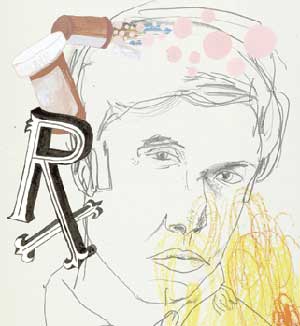
2007-11-26-brook2.jpg


As heartening as it is to see universal health care back on the national agenda, it's puzzling that when the presidential candidates talk about their health-care proposals, they only talk about poor kids and Wal-Mart workers. This doesn't square with my experience of the health-care crisis. I know plenty of people who are sweating health-care coverage. None of them are poor kids. And they don't work at Wal-Mart.

The people I know who are worried sick about coverage work for themselves, many in creative fields. Most of these freelancers and entrepreneurs are in the cross hairs of our health-care crisis--and you wouldn't know it from watching the presidential campaign.

But you would know it if you bothered to look at the statistics. While the French just held an election in which one of the central issues was their anemic rate of self-employment, America acts as if all is well when in fact we're one of the only developed countries with a rate of self-employment even lower than France's. While surveys show that Americans are nearly twice as entrepreneurial as Europeans, we're only half as likely to actually become self-employed.

What is holding Americans back? In two words: health care. If you're lucky enough to be healthy, you can purchase insurance on the private market. But even then, the costs are rising out of control. As a freelance writer, I buy my own insurance. My premium went up 25 percent this year and I didn't even get the pleasure of taking up smoking or skydiving.

There are groups for the self-employed that offer coverage, but often those who need it most can't get it. A self-employed friend of mine gets his insurance through the local chamber of commerce. Its website explains that its insurance plan is explicitly "designed for young healthy individuals." Even laudable attempts to get mass coverage for the self-employed are often prohibitively expensive. The least expensive coverage offered by the New York-based Freelancers Union costs more than $1,000 a year for individuals and $4,000 for families--and it comes with a $10,000 deductible. There's only so much even well-meaning organizations can do when our government is out to lunch.

In other developed countries, where self-employment rates tend to be higher, taking the leap to working for yourself doesn't affect your health care coverage or your family's. In publicly funded health care systems, entrepreneurs pay less into the system during the few lean years that often accompany starting a business. Once you get off the ground, you pay more. That benefits the country's health and its economy. But here, if you can even get coverage, you pay a flat fee regardless of whether your business had a good year or a bad one. And if you get seriously ill, your business makes less and you owe more. No surprise that half of American bankruptcies are the result of health-care bills.

The problem with our health-care debate isn't just that it glosses over a huge portion of people who are affected by the crisis, but that by not taking them into account, we may end up achieving universal coverage without unleashing the talented and entrepreneurial. Just requiring everyone to have health insurance won't solve the problem. That's what Massachusetts recently did statewide and what some candidates are suggesting on a national level. But under such a system, unless you're very poor, you still pay more if you have a family; you still have to pay a flat fee unrelated to your business income; and you still have the catch-22 of paying more when you get sick and are earning less. Without a solution funded through progressive taxation, simply requiring everyone to get insurance will still hold back our millions of would-be entre-preneurs. Health-insurance payments will continue to act as an "ambition tax."

Lately, Americans have come to think of the governmental safety net as being not for the ambitious but for people who can't take care of themselves--like poor kids. But the metaphor "safety net" comes from the piece of circus equipment that lets the trapeze artist attempt his or her most daring feats.

It's time the proverbial trapeze artists among us spoke up. And time the candidates listened.

***
Read more and watch original video at GOODMagazine.com.

Brook's writing has appeared in Harper's, Dissent, and Metropolis. He is also the author of The Trap: Selling Out to Stay Afloat in Winner-Take-All America.


  • Comments
  • 9
  • Pending Comments
  • 0
  • View FAQ
Comments are closed for this entry
View All
Recency  | 
Popularity
07:24 PM on 11/30/2007
As a tax consultant to indies for 25 years I've seen the evolution of tax regs on health insurance deductions for the self-employed --always getting a wee bit better but not really good.

Until we get some kind of coverage as well as equal footing with the corporate world it is important that every indie understand how medical insurance deductions currently work.

Here's an overview:

If a taxpayer is not self-employed then medical insurance premium costs and all other medical costs are deducted as a personal expense in what I call "the guts" of the tax return. If these medical expenses do not come over a certain minimum or if the taxpayer's income is so high that the medical expenses don't meet another threshold, then the deduction for medical expenses is lost.

If a taxpayer is self-employed, here's the difference: Medical insurance costs are deducted on "the front" of the return and immediately reduce taxable income. Other medical costs are still deducted as a personal expense in "the guts" of the return.

No medical expense is a direct deduction from business income. However, it can be. If one spouse hires the other spouse and provides a medical plan for the spouse+family then all medical expenses may be a deduction directly against business income.

June Walker
Tax and Financial Consultant to Independent Professionals
junewalkeronline.com
09:32 PM on 11/26/2007
Thanks for speaking for us. As a lone painter in my studio I feel that the government has forgotten those of us who just work for ourselves, supporting our families by the product of our minds and hands. Thirty five years in the studio painting and I have never heard anyone discuss the effects of political or economic decisions on us lone wolves of the economy. The priority is always on those who make money with money but not those of us who create wealth with our creativity and industry.

Thank you again and keep being our voice.
HUFFPOST SUPER USER
rucognizant
05:22 PM on 11/26/2007
AMEN BROTHER!
The country is a lot poorer for the lack of entrepreneurs/creative people! For the most part working for a company breeds sheeple. We now have several generations of them!
After a 17 year run as a free lance artist/single Mother, no support payments, no welfare........
the 1990 recession disrupted my life and I worked for OTHERS, for a decade, experiencing ageism, and mobility in search of $6.00 per hour jobs. Even keeping my mouth shut and trying to blend in, I was still a "boss" ( a threat, with excellent, organizational, work skills not an airhead clerk with fingernails a foot long!
As a single propriator business person, had Blue Cross Blue Shield for $20.00 per month, which paid ALL HOSPITAL COSTS for the thyroid surgery I needed in 1982, except for the phone in my room...the surgeons bill was $600. as I recall my responsibility. I lost my insurance 2 years later due to a personal problem, upheaval in my life, couldn't afford the re-up.................26 years later that prexisting problem has cost $000. medical treatment, just regular Dr.s visits and an occasional TSH test ( which have now been proven wrong anyhow!)
When I did a VISTA stint I had Congressional insurance ( sweet) and had bone density, colesterol,blood sugar, etc. tests.
Then I was old enough for MEdicare..& Mainecare ( pretty good)
I just received my Medicare 2008 book, 117, full color glossy pages that weighs 1, ONE pound!
But they wouldn't pay my $149.00 pap/gyn last year!
STOOOOPID!
04:25 PM on 11/26/2007
I have been freelancing for a decade and health care only gets more expensive as benefits decline.

Each year brings a new plan that the insurance companies funnel people into by making other options too pricey. The HSA plans with large, upfront deductibles are all the rage at the moment. The monthly premiums associated with the plan is almost as costly as my HMO plan two years ago.

Nothing ventured, nothing saved.

And god forbid, if you have some sort of chronic afflication: I don't think anyone would even insure me if I had to switch companies. I'm too afraid to even look into another plan based on what my healthcare broker tells me. I pay more for a self-insured business group of one just so I can't be dropped.

But it's just a matter of time.

I'd just like to say for all of his elfin ways, I believe Dennis Kucinich seriously has a great health plan that mandates health care as a moral obligation.
HUFFPOST SUPER USER
Jennifer
Author, Futurist, Educator.
01:10 PM on 11/26/2007
Agree completely. We need Universal coverage as a right, not 'mandatory insurance' as a privilege. Health 'Insurance' is bleeding this country's population dry, and stifling innovation and entrepreneurialism. We need something that promotes health and financial security for our country, and not gross corporate profits.
10:33 AM on 11/26/2007
Thanks for speaking out on this important issue.Being self employed can be a really lonely place sometimes. As a freelancer living in massachusetts I had been without any health insurance coverage for over ten years.Until the commonwealth choice health plan was initiated this july there were no affordable options me. The Massachusetts plan is far from perfect but I think it is a good start. It at least gives freelancers like me a small amount of peace of mind that we won't be completely wiped out by an injury or hospital stay. You also cannot be turned down for a preexisting condition which is something that keeps alot of people permantly uninsured. The downside of the plans are that all of the most affordable plans still have a $2000 - $5000 deductable and having RX coverage is extra $$ I am heartened as well that health insurance seems to be back on the national agenda however I am worried that it will fade like every other important issue after the elections ,or some token gesture will be made but nothing will really change. Remember the Bush health care savings accounts , what a joke , they are more or less tax shelters for people who could already afford coverage.Billions are being spent on "The war on Terror" however there is a certain terror when you don't have health insurance that is not being addressed in this country, the only thing that will change that is to keep this issue on the front burner of the american consciousness.thanks again for doing your part with this article.
09:45 AM on 11/26/2007
Not to mention "universal housing" and "universal transportation" and "universal food".