Graham Hill

Graham Hill

Posted: August 7, 2008 11:40 AM

Eating Local or Not: It Depends

digg Share this on Facebook Huffpost - stumble reddit del.ico.us RSS

The burning question: local vs. imported. When we want to make the best food decision what should we choose? Recently, an oft-cited study from New Zealand that looks at the local food argument was updated (PDF) to include the full range of greenhouse gases. Lincoln University compared the energy used in the production and transport of four agricultural products: lamb, apples, onions, and milk.
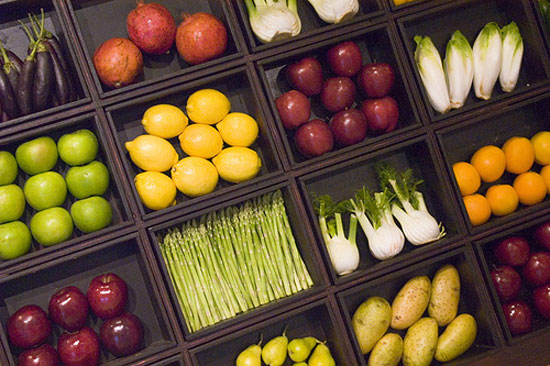
vegetable market photo
Photo: Karimian via Flickr

Sometimes Imported Food is Better than Local
The original report concludes that it's better to buy lamb, apples and milk from New Zealand than from the U.K. -- even if you live in the U.K.

When storage wasn't considered, however, onions came out on top for U.K. buyers. When storage was thrown in, local U.K. onions did worse than New Zealand onions. This caused a big stir in the local food movement and the example is often touted by skeptics as proof that buying local is not the answer to our environmental woes.

When in the U.K., Buy Meat and Dairy Products From New Zealand
The report (although the original and the update do not follow internationally recognized ISO life cycle assessment methodology) concludes that meat and dairy products from New Zealand have less than a quarter of the impacts of meat and dairy from the U.K.

Why you may ask? The 75% lower impact is mainly due to the pastures in New Zealand which require less fertilization (fertilizers are energy-intensive to produce) than those in the U.K. (and the U.S.). Additionally, New Zealand taps much more renewable energy than the U.K., making energy emissions cleaner and thus reducing the impacts from dairy production.

The U.K. emits 3,472 kilograms of CO2 per tonne of milk solids produced compared to only 1,371 in New Zealand. The study shows that U.K. dairy farms produce 34% more greenhouse gas emissions than farms in New Zealand per kilogram of milk solid and 30% more per hectare.

It does seem however, that the report only includes shipping to the U.K. port. Shipping within the U.K. could cause a significant difference in the results, as truck transport has much higher emissions than sea transport. Sea freight is touted as the cleanest form of transport with only 1/60th of the emissions of air freight.

Consider Both the Season and a Product's Life Cycle
The point is buying local is not always a cut and dry issue: The terminology "food miles" over-simplifies the issue. Yes -- in the majority of instances you are much better off buying from local farmers and local products. But you also need to buy in season and consider the entire life cycle of the product.

This bigger life cycle picture considers cultivation and harvesting methods, fertilizers (buy organic!), water use, production processes, transportation (distance and mode of), distribution, refrigeration, packaging and, of course, the season. The U.K.'s Department for Environment, Food and Rural Affairs also agree that a single indicator based on food kilometers is an inadequate indicator of sustainability.

One of the problems with life cycle assessment is that people tend to make sweeping statements based on one study. This study does not mean that all products from New Zealand are more efficient when compared to the U.K. or that buying local isn't important. Nor does it mean that we can apply these conclusions to the U.S. or other countries. Each life cycle assessment looks at a specific scenario in a specific moment in time, so results aren't always transferable.

Think Before You Buy
There is no easy answer to this food dilemma except to think before you choose. Look at where your products come from, consider if it is in season, and think about how it was produced and how it got to that shelf. All of those things -- not just the distance -- are what we need to keep in mind to be responsible consumers.

It's a lot to think about when you do your grocery shopping, so when in doubt? Stick with local products that are in season.

Do you shop local? Comment below!

More From Treehugger on Food Miles and Eating Local
:: Misunderstanding Food Miles
:: Defra Study About Impact of 'Food Miles'
:: The Eco Diet Isn't Just About Food Miles
:: Eating Local Food: The Movement, Locavores and More
::Is Fresh and Local Always Greener?
::How Can We Eat Local All Year Long?
:: Treehugger's How to Green Your Meals Guide

More from Graham Hill on Huffington Post
::Tap Has 1/100 Impact of Bottled Water
::Do Big Homes Mean Bigger Happiness?
::Why I Don't Flush
::Would You Kill What You Eat?
::Europeans Happier than Americans yet Half the Footprint
::Phones as Fashion: Can You Resist the New Apple iPhone?

Follow Graham Hill on Twitter: www.twitter.com/ghill

The burning question: local vs. imported. When we want to make the best food decision what should we choose? Recently, an oft-cited study from New Zealand that looks at the local food argument was upd...
 
Comments
5
Pending Comments
0
iPhone App Promo

Want to reply to a comment? Hint: Click "Reply" at the bottom of the comment; after being approved your comment will appear directly underneath the comment you replied to

View Comments:
- patianneb I'm a Fan of patianneb 16 fans permalink
photo

I have begun to eat locally - seasonally. I stay within 150 miles. I do not have a farm and I am NOT obsessive about it. I also avoid eating meat, tho' I am not a purist. Something less than 2% of my caloric intake is through consuming flesh.

I do not spend more on my groceries. In fact, they average somewhat less. Cooking time? Almost always under 30 minutes... The biggest bonus: THE FOOD TASTES BETTER. Eggs, milk, greens, ALL HAVE LOVELY FLAVOR. I have tasted local pastured chicken. THE FLAVOR and TEXTURE of the meat is SUPERB, like I remember it back before Tyson et al.

My concerns extended beyond the carbon footprint to the overal environmental and health issues connected to the factory approach to foods, animal or vegetable -- we are not only what WE eat, we are what THEY eat, or in the case of veggies, grown in fertilized with etc.

LAST, while not a farmer myself (except for 16 15" planters on my deck) I'd much rather support local business/families as much as possible rather than ConAgra or Tyson or whomever.

Enough said. CHECK OUT eatwellguide.org fabulous source of info for local and sustainably grown/raised food.

    Favorite    Flag as abusive Posted 10:52 AM on 08/10/2008

Buying local food saves energy--usually. However, buying locally grown food often leads to nutritional deficiencies--like the goiter suffered by many in the mid-west where the soil lacks iodine--like the East Coast where the soil lacks the selenium present in the soils of California. Balance is required.

    Favorite    Flag as abusive Posted 08:57 AM on 08/08/2008

Buying local is always better. Your arguments for caution can be dismissed three ways.
1) Buying local, you don't need a profession­ally-funde­d study to find out where your food came from and how it was raised or produced. The info on fertilizers and farming techniques can be found out from gov't websites, commercial websites and from the farmers themselves.
2) Generally, buying Local encourages buying seasonal by default. If you choose hydroponically grown and other out of season foods, you pay a premium and take home a lower quality product. These factors will make people trend toward the in-season produce anyway.
3) If you buy locally, you can petition the gov't to ban unwanted chemicals, encourage the use of greener farming techniques, and reduce the kilometres/miles travelled, and have more incentive to do so (it's your city/state/country and government and your food and you have a say). You can never influence What they do in other countries as much as at home.

    Favorite    Flag as abusive Posted 08:31 AM on 08/08/2008
photo

Hydroponic does not mean a lower quality product...­necessaril­y. Just like in soil culture, what goes in is what what comes out. Micronutrients, biological activity, and even trace elements are not only possible to supply in hydroponic growing, but not even difficult to supply. And hydro can be organic if the grower so chooses. Most commercial, soil culture vegetables are missing a lot of things too.

If you want to eat local and out of season, controlled environment agriculture (most often hydroponic) is the best option. It is also less space intensive. Moreover, the development of good, organic soil takes at least four years (if the soil you're starting with hasn't been stripped completely from modern cultivation techniques).

It is also much easier to control pathogens and insects biologically in a controlled environment than in a field setting.

Of course, you could always invest in quality horticultural lamp and spend the $25-30/month to run it and produce your own high quality food year round. It doesn't get any more local than your basement or spare room.

Keep in mind that imported produce is all fumigated with at least fungicides when it enters the country...by law, no matter what the hippy at Trader Joes or Whole Foods tells you.

    Favorite    Flag as abusive Posted 09:42 AM on 08/08/2008
- JScott I'm a Fan of JScott 20 fans permalink

I agree not only that you support local agriculture and family farms. And you are really really lucky if your 'foodshed' produces an abundance of variaties of local food like in Calif.
Often tho a shopper has no idea where ANY of their food comes from and after all the news stories of tainted products from China and elsewhere, consumers should educate themselves, cause corporate agriculture certainly won't and if the gov't is in their pocket they won't either.
Perfect example is strawberries, only the best are sold at farmers markets and roadside stands just about everyplace else (sorry Whole Foods and Trader Joe's included) only sells the 'Camarosa' variety which was bred to go on space shuttle missions, big but hollow, mushy texture and pretty much flavorless.

    Favorite    Flag as abusive Posted 02:55 PM on 08/08/2008
Comments are closed for this entry

 You must be logged in to comment. Log in  or connect with 

Connect