More

Featuring fresh takes and real-time analysis from HuffPost's signature lineup of contributors
Jakada Imani

GET UPDATES FROM Jakada Imani
 

I was a Poor Black Kid

Posted: 12/19/11 04:05 PM ET

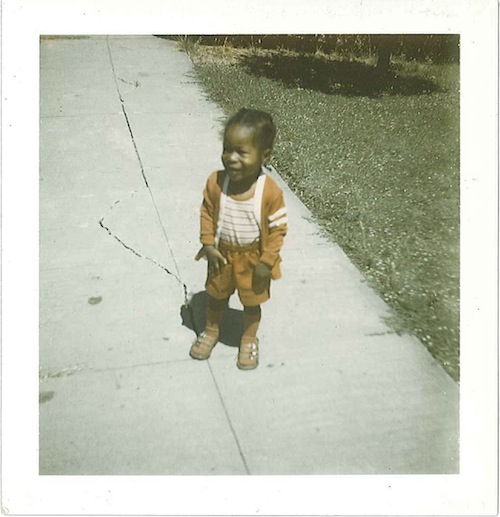
Jakada Imani as a poor black kid

When I was in the third grade, I had trouble reading. I mixed up letters and couldn't spell to save my life. I soon found myself in special education courses. Most of the other students who were tracked in these classes were also poor boys of color. None of us were there because we simply failed to "try."

Gene Marks, author of the recent "If I were a Poor Black Kid" article in Forbes, seems to think that all poor Black kids need to do differently to succeed is "be smart enough to go for it."

I'll be sure to tell that to students the next time I'm in an classroom that has too many students and too few books. I know firsthand what is like to be tracked for failure. I graduated school never having read a book cover to cover. When your family, like mine was, is simply trying to survive from day to day, technology and even prioritizing good grades can't compete with concerns about hunger ,safety and keeping a roof over your head.

One thing Gene Marks and I do agree on, however, is that the problem is ignorance. Only I define the problem as ignorance of systemic inequality and its impacts.

Having started life a poor Black kid, I realized a few things pretty early in life -- including the fact that I was poor and Black. Growing up in poverty meant options were limited and being Black meant that decades of policies and funding decisions had been designed almost to ensure my failure.

What bothered me the most about Marks' piece was his over-simplification of solutions for the "the poor black kid." In short, he tells poor kids they need to be the exception and strive to be exceptional. If the only answer for poor youth is to be the exception to the rule, why aren't we then looking at the rules themselves?

The national challenges posed by tax policy, the off shoring of jobs, failures in education policy and global economic reform can't be solved simply by a studious child who beats the odds. The fact the my home state, California, spends $7,500 to educate a student and over a $200,000 to imprison a child, can not be fixed by Google Scholar. The reality that the unemployment rate was in double digits in the Black community before the recession can not be overcome by cheap computers, nor websites, no matter how incredible their search functions are. Lack of jobs that have a career ladder for advancement can't by fixed with a Skype account. These are problems that poor kids of every race face all over this country.

Marks recipe is simply be exceptional, and ten of thousands black children are, but how exceptional do our children have be in order to achieve average middle class success? If you happen to be Black, Latino, Native American or even white and poor, you live in a county that increasing leaves you to the wolves.

This is not the American Dream.

The American Dream, the one that Dr. King spoke of, measured us by the content of our character, offered us an honest day's pay for an honest day's work, education if we were willing to apply ourselves and the assurance that where we started out in life, did not have to dictate where we ended up.

What Mr. Marks' Forbes piece asked us to do it to let that dream die. By not complaining when powerful corporations interests put Wall Street profits ahead of the well-being of communities. By giving into a system that dictates that some kids, by virtue of their race or zip code, should only have a right to a fair shot if they are smart enough to be exceptional. By not seeing that poverty is not a crime; it is part of a outcome of social policies that benefit the rich and disenfranchises the poor and increasingly the middle class.

Gene also fails to see that this is not just about poor Black kids. While it is true that the recession has disproportionately impacted Black Americans, there are also thousands of middle class white families who are now being pushed into the ranks of the working poor.

While corporate profits are up and executive salaries amount to large fortunes, working people's wages have lost ground. Thousands of well prepared collage students are graduating off a cliff of joblessness. Millions of hard working Americans lost their jobs, through no fault of their own.

At the same time, we seem to have forgotten that education is not a privilege and schools should be one of our country's biggest investments. Instead, over the last two decades we have thrown money into prisons at the expense of our schools. For example, California's prison spending has risen 25 times faster than spending on higher education over the last 30 years.

This is not the America I am willing to settle for. This is not why so many people risked their lives to come here, nor why freed Black people chose to stay here.

Our families came or stayed to help this nation live into its promise. But to do so, we have to take on income inequality and address the structural inequalities that set up people of color and poor folks to fail.

A just and fair future for Americans will not be won by telling an 8 year old to pick themselves up and tough it out. We need effective tax policy, properly funded schools, and jobs with living wages and the promise of advancement that allow us to save for our future and children's and their children's. Kids who are born into poor communities should not have to be the exception in order to make it. We should all be rethinking our national values and recommitting ourselves to building a country where everyone has the opportunity to live to their full potential.

Earlier this week, the Congressional Progressive Caucus introduced the RESTORE the American Dream Act for the 99%. This federal bill creates 5 million new jobs in two years, responsibly ends wars and cuts military waste, adds a public option to the Affordable Care Act, and raises new taxes from millionaires and Wall Street. This bill would be an important step to re-funding our schools and re-investing in the futures of all of our nation's kids- rich and poor.
In California, a proposed Millionaire's Tax would take important steps in our state to generate much-needed revenues for our schools while creating the jobs our communities so desperately need.

Unlike Gene Marks who puts the problem onto the poor Black youth of our country, I believe it will take all of us to fight economic disparity. As long as too many of us are incarcerated, too many lack access to educational and professional opportunities, and too many of our communities are viewed as the problem rather than as part of the solution, our nation will be hard pressed to fulfill its dream of allowing everyone to reach our potential.


  • Comments
  • 10
  • Pending Comments
  • 0
  • View FAQ
Comments are closed for this entry
View All
Favorites
Recency  | 
Popularity
11:48 AM on 12/22/2011
You are advocating the same failed policies with respect to education. The US spent $2,800 per student in 1960 and that amount has risen to $10,441 by 2009. The results inversely proportional. Newark spends approx $22,000 per student per year yet has one of the most dismal graduation rates in the country.

No one denies that racism still exists but that can no longer be an excuse. African Americans and Latinos need to stop blaming slavery, racism, etc. and start looking at their own dysfunctional family structures and values.

There are Asians that arrive in this country without knowing a word of English and within a generation elevate themselves into the middle class. Do you think they don't face any prejudice in the marketplace? Many South Asians and SE Asians are darker than many African Americans.

Of course it's harder for a person of color but that doesn't excuse the condition of inner city ghettos that are crime and drug infested war zones. It doesn't excuse the proliferation of single parent households where each kid has a different father that contributes zero to his child's upbringing. It doesn't excuse the adoration of thugs and gangster rappers.

It's time for introspection because frankly the US is out of money.
05:56 PM on 12/21/2011
For the most part, I agree with this article. But one very important aspect was left out. It is the importance of the parents in a childs life. I have taught for over 10 years, and I can say that the parents who raised their children to be respectful, polite and hardworking had the children most likely to succeed. The other aspect a parent must have is interest in the child...not just football or basketball, but education, arts, jobs and good morals/behavior. I taught many poor children, and the ones from supportive homes did very well. And yes, I stayed ater many, many nights and came in early every morning to be available for any child who needed extra help or just to talk. I have the greatest respect for the single mothers who did all these things, and also managed to work two to three jobs, maintain a home, and gave their families plenty of joy and love.
I admit that it is difficult fot the child with special needs who does not get the attention required and deserved. It is not only children of color who go through this. I have seen many "white" children go through this as well.
If you want to have a successful child, no matter your financial status, take a positive, loving interest in all aspects of your childs life. Take all these things to heart and to action, and your child will do very well.
05:52 PM on 12/19/2011
Your commentary is well said, however, the plethora of typos were a huge distraction to your point. Please edit (e.g. "I know firsthand what [it] is like..."; "compete with concerns about hunger[, ]safety" (the comma should be moved)...; "The fact [that] my home state, California, spends $7,500 to educate a student and over [ ] (remove the "a" here) $200,000 to imprison a child..."; etc;

Nonetheless, thanks for writing. :-)
05:02 PM on 12/19/2011
I personally would like to see boarding schools for the disadvantaged children. Keep them fed, let them sleep, take all adult drama out of their world. Their parents, if they choose this route, may certainly read to them at night and visit. Until our nation effectively deals with childhood hunger, lack of parenting in some- not all families, these adorable children can not learn. Survival tops education. Why can't we do something about the survival? Sometimes it just takes a new environment. For all the kids flagged by child protective services, for all the kids that don't eat, who don't bathe, who feel bad about themselves because they smell , let them have a different environment. I am guessing they will thrive and learn and excel. Families should stay together, but if the child is not being taken care of then we need to find a proper solution besides foster care. Something where the parents know they are safe and taken care of, and they can visit, go home in summers. How about taking all that jail money and fixing a problem no one even wants to really talk about?
10:37 AM on 12/20/2011
That'd work. Since it addresses the root problem, the outside-of-school environment, it'd work a lot better than all the current initiatives, which focus on the school environment. Blaming the schools for student failure is like blaming hospitals for disease. It doesn't work.

But boarding schools would be expensive. Not only would they be expensive, but the expense would be put toward the children of poor parents, and minorities. Not the children of the wealthy elites who are elected to public office, or who spend money on lobbying. It'd be a lot more expensive than the current system, and most states aren't even willing to fund the current system. They're slashing funding.

It'd work. But it's unlikely to happen.
08:47 AM on 12/21/2011
if we took all the welfare money which is supposed to feed them and guard them, it may change the history of schools. How about closing down 1 public school, this is the school, some kids live there. Teachers can't teach neglected kids, principals won't report the neglect, their answer- cheat. Just wrong on so many levels.
04:19 PM on 12/19/2011
"I'll be sure to tell that to students the next time I'm in an classroom that has too many students and too few books. I know firsthand what is like to be tracked for failure. I graduated school never having read a book cover to cover."

Never read a book from cover to cover? You're joking!

What does the ella baker center for human rights do?
photo
papapj
..light as a feather..
04:43 PM on 12/19/2011
"Never read a book from cover to cover? You're joking!"

That surprises you?

Why?
07:05 PM on 12/19/2011
Did you read the quote I posted? Judging from that it should be no surprise he never read a book.
photo
HUFFPOST BLOGGER
Robert Schwartz
ED Level Playing Field, parent, educator
12:57 PM on 12/20/2011
If you were a teenager and all of your teachers and administrators never expected you to read a book cover to cover, you wouldn't either. You'd do what you needed to do to get by. I think the distance the author has traveled is much more important than the actual destination and it seems like you have very little understanding of what it's like to grow up poor in America in schools and communities that have exceedingly low expectations and you should be thankful for that. But don't blame the kids for the sins of the adults in their lives.