PARIS- It's been almost three weeks since French President Nicolas Sarkozy said that burqas imprison women and would not be tolerated in France. In a speech at the Palace of Versailles, Mr. Sarkozy said that the head-to-toe Islamic garment for women, the burqa, "is not a sign of religion", but rather "a sign of subservience."
The burqa is the most concealing of all Islamic veils as it covers the entire face and body, leaving only a mesh screen to see through. It should not be confused with the niqab which is a face veil that sometimes leaves the eyes clear and is sometimes worn with a separate eye veil.
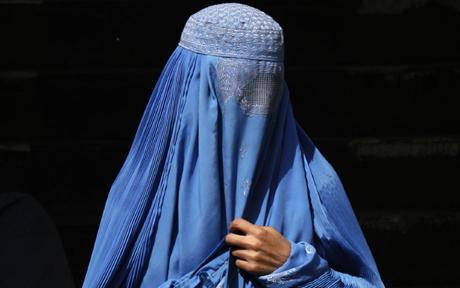
French legislators in Paris had recently begun to look into the spread of Muslim women wearing these full-body robes and veils, such as burqas and niqabs, with a debate ensuing ranging from an immediate ban to a gradual one. Sarkozy's statement served to escalate the debate into a burqa polemic with politicians and analysts all over Europe weighing in for and against it, effectively eclipsing a multitude of other issues of more immediate concern in France, such as the economic crisis, rampant unemployment and a bloated system of social services. Human Rights Watch, and several Muslim groups and clerics have criticized the ban and asked Sarkozy to reconsider his statements citing that the proposal "stigmatized" Islam.
France is home to Western Europe's largest Muslim population of about 6 million.
In 2004 the country passed a controversial law purportedly introduced to support the Republic's principles of Laïcité, with which France insures separation of church and state. This argument was considered a disingenuous one whose real purpose was to forbid female Muslim students from wearing headscarves, designated to be a "conspicuous" display of religious affiliation, while other symbols, such as the wearing of crosses and stars of David were seen as "discrete" and therefore exempted from the ruling's enforcement. As a result, Muslim students were overwhelmingly impacted.
By framing the wearing of burqas and other body veils under the guise of showing concern for women's rights, Sarkozy has also found a roundabout way of targeting Muslims and putting them in the human rights' defendant's seat, engendering another religious debate. The number of French Muslim women who wear the burqa or the niqab is minuscule, and one would have to go out of his way to visit les banlieues (Paris's poor suburbs) to spot one or two. So why is Sarkozy proposing the ban and stirring all these emotions?
Many critics to Sarkozy's proposal claim that he deliberately initiated a burqa polemic to distract from his low approval rating of 32 percent down from 60 percent for the six months following his election. The burqa is Sarkozy's nationalistic prop, and its emotional appeal temporally outweighs his unfulfilled promises on such issues as guaranteeing workers five weeks of paid leave annually and the 35-hour workweek which Sarkozy had to get rid of once the economy started to sink. All the while maintaining a flashy lifestyle, which have earned him the title, "le Président Bling-Bling."
"It is my choice alone," said Aamina (her name was changed per her request), "when did I ask Sarkozy to liberate me?" she added.
Aamina, a soft spoken Afghan widow, immigrated to France in 2005 to join her brother who works as a janitor in the Métro after her husband was killed in an attack by the Taliban. She said that she had not expected that her burqa would become the subject of controversy in France.
"Ou est la Liberté, Égalité, et Fraternité?"
"Sarkozy has turned me into a freak of nature...that I'm not" she sobbed.
Many Muslim women have been complaining that these new laws have been driven by anti-immigrant and anti-Muslim sentiments. In June 2008, the Council of State -- the country's highest administrative court -- refused to grant French citizenship to a Moroccan woman wearing a burqa, because it went against "the values of a democratic society and the principle of equality of the sexes."
Meanwhile, Huda Benkaran, a French Algerian social worker who has been involved in helping Muslim women to integrate in France thinks that outlawing the burqa is a "stupid proposal" made by a "an imbecile."
"What does Sarkozy think? Outlawing burqas is going to make these women walk outside in a sundress? They just won't leave home as often. He is sentencing them to prison!" Benkaran says in anger.
Follow Jamal Dajani on Twitter: www.twitter.com/jamaldajani
Outlawing a headscarf or burka is plainly anti-Muslim. I'm not Muslim, but used to wear scarves on bad hair days, and nobody was "offended". Give me a break. I have also had employees I supervised who wore headscarves and dressed modestly and it did not in any way negatively affect the quality of their work or anybody else's. (Yes, they were Muslim.)
If I wanted to wear a veil, I should be able to. It certainly can't any more potentially disturbing than the the rolls of flesh I get to see each summer here in the southern US. How I respond to that display is MY problem just as how people who respond to an absence of flesh is THEIR problem.
Sarkozy is a politician and is behaving like one in the worst sense.
BTW-Thanks to Mr. Dajani for his reports and anlaysis.
As for being 2 or 3 women wearing Burkas in the suburbs, there is a study group that is formed to evaluate what conditions and pressure there are, but it's certain that if the phenomenum was that marginal there wouldn't have been a law proposal in the third place.
And finally the issue from a french point of view is the dignity and position of women in society and the fact that people are shocked to have to deal with women whose faces and expressions are concealed. Why should religious practices and values trump the accepted local value and practice when the two are in contradictions? It seems that for some people if there is a conflict between social values and religious ones the religious reasons should trump the social ones by the value of their sheer irrationality
For those of you who are trying to say this is a cultural issue...do you really believe that values like human rights and women's equality are cultural quirks, like preferring ketchup to mayonnaise on your fries? If you do, then you do those ideals a great disservice. If you do not, then stop helping those that would use these notions to tie the hands of anyone who would interfere in their atrocities.
Misogyny and the systematic oppression of women doesn't somehow become moral because it is old or because the person acting on it was indoctrinated into it rather than coming up with it themselves. I applaud Sarkozy and wish every civilized nation in the world would confront the religions and traditions that institute, aid, and abet the abuse and oppression of people.
If you seek refuge in a house, you have to follow the rules of the owner not try to impose yours. If you are not agree, you can still go back to your barbaric country, nobody forces you to stay in France.
That said, I have a message for all the bunch of "American God Fearers": you dont like the French manage religion in their own country ? Neither do the French like the fact that you legally murder your convicts in the US.
Does that keep you from sleeping ?
Neither from they !.
I vote for Sarkozy's critics. If only a very few Afghan women in France actually do wear burqas, why make it an issue unless there is a hidden agenda about how to distract the French voters from his unfulfilled promises? If so, he won't be the first politician to use scapegoats to bolster himself, considering his popularity has plummeted from 60% all the way down to 32%.
"Aamina, a soft spoken Afghan widow, immigrated to France in 2005 to join her brother who works as a janitor in the Métro after her husband was killed in an attack by the Taliban. She said that she had not expected that her burqa would become the subject of controversy in France."
Sorry, but that's not gonna work either, for history has long since demonstrated the mentality of those who supposedy relish their own oppression, merely on account of having been excessively brainwashed or simply having never known a lifestyle that differs.
Many of us remember historical examples, such as slaves who became reluctant to leave the plantation following the end of the American Civil War. Yet, that in and of itself symbolized not "freedom of choice", but merely the result of being driven into believing in the lack of one's worth while fearing a lifestyle that differed so radically from one which they had known since childbirth.
And as much as I hate to quote television shows in relation to current events, I respond to the insistence on one's "right" to don the Burqa with a relevant quotation from Magnum PI, in that:
"It rather defeats the purpose of freedom if one "freely" chooses to be enslaved.
I recently attended a Speech class, I will be honest, I still had stage fright just like anyone else. I do not look at myself as hiding from society. I feel like I am protecting myself and my dignity. Anyone who talks to me once or twice can recognize me on the street. This includes my non-Muslim friends as well.
Let me make my point clear... I am a productive, law abiding, natural born citizen of this country, a Daughter of the Revolution, and believe it is my right to wear my religious attire and feel the same for other religions. I love my country because I have these freedoms and others do as well. My niqab doesn't hinder me from being a free citizen of this country. Unfortunately, many people feel it alright to impose their ignorant beliefs upon others. Honestly, I do not believe Europe learned from their past religious intolerances and all the violence and bloodshed that it brought about. The only thing different this time around is it is in the name of Secularism and not some form of Christianity. Consider this, if Paris stopped accepting other cultures and traditions then Paris would not be as it is today. By the way, marginalizing a minority shows the true leadership skills of the powerful and says a lot about Democracy perhaps.
I personally do not care what people wear but I am exceedingly uncomfortable when I can't see someone's face because they are wearing a mask. I don't want such a fashion taking hold as it is a breech of my cultural norms. It also discriminates against people who rely on lip reading.