iPhone app iPad app Android phone app Android tablet app More

Featuring fresh takes and real-time analysis from HuffPost's signature lineup of contributors
Jamie Schler

Jamie Schler

GET UPDATES FROM Jamie Schler

To Trend or Not To Trend: A Continental Divide

Posted: 05/ 9/11 09:05 PM ET

And a Recipe for Traditional Far Breton

2011-05-05-IMGP5678.JPG


Each month as I sift, measure, fold and pipe out perfect little domes of batter and whip up deep, dark chocolate ganache for my French macarons, my husband, French himself, storms through the kitchen, ranting about the inexplicable popularity of what he refers to as a "snooty snack for snobs" (or some such phrase). He simply cannot wrap his head around the whole concept of food trends. The recent renovation of a nearby chocolate and pastry shop of a now-renowned local chef to allow for a special macaron room where the display of his creations takes pride of place, front and center, amid the chic new ultra-modern design of the boutique, had my husband seething! How, he wondered, can a fantastic pastry chef succumb to the passing fancies of a snobbish public and turn his back on the simple goodness and traditions of French patisseries, relying on his talent and creativity instead of falling pray to a fleeting fad?

As a food blogger, I am on the front lines of observing what fads and foods ripple through the blogosphere, the crazes that sweep through kitchens everywhere, whether professional or home, and I myself have mixed feelings on the subject. All the food world is abuzz with this food or that, trends, fads, favorites that have everyone chiming in with their own, non-stop flow of interpretations and recipes. Cupcakes, bacon, pork butt, red velvet cake or whoopee pies, once a particular ingredient or culinary creation hits the scene, we have nothing to do except stand back and watch it take over. Days, weeks, months roll by with this never-ending display of passion for one particular food item until interest wanes and the next, new, more exciting fad takes hold. A flood of not only recipes, but contests, events and challenges, magazine articles and even series of cookbooks as well as concept restaurants or specialty bakeries focused on this one particular food pop up in an interminable succession, each whirling around the latest trend, taking this one food or ingredient and turning it upside down and inside out and using it endlessly.

As part of the expat community, an American living in Europe, I quickly came to the conclusion that food trends are almost completely an American phenomenon (or should I say anglo-American?). There does seem to be a continental divide when it comes to food. I watch from afar as Americans discover the joy of home gardens, raising their own chickens, shopping at farmer's markets or going organic as if each is a stunning adventure, a newfound secret or innovation. Potatoes or turnips, pomegranates, heirloom tomatoes or rhubarb overflow from my computer screen in a frenzy of recipes as one or the other is held aloft like some dazzling prize. I must admit that I tire easily and quickly get bored with all of this creativity and attention paid to one single item; I mean, how many recipes for pumpkin do I need in just a matter of weeks? Will I really buy a cake pop or macaron at Starbucks? I fight against each trend, refusing to concede, adamantly declining to use bacon as a dessert ingredient or make one single whoopee pie, cupcake or red velvet anything.

Is there really a cultural divide in how we look at food and at the whole food trend thing? The longer I live in Europe, the more I am aware that whereas Americans view food and cooking as a lifestyle choice, food and cooking in Europe is just a way of life. Traditions, whether recipes or how we share a meal and gather our ingredients, are handed down from generation to generation, simply day to day habits. Popping over to the neighborhood market to purchase a basketful of local asparagus, tomatoes, lamb's lettuce and strawberries, oysters and scallops gathered not much further and throw in a bottle of wine, produced practically on the outskirts of the city, is a custom well-ingrained into the European mindset. Gathering friends and family together around the table for a shared meal is natural and normal. As soon as my in-laws retired and could finally move out of the crowded city and their apartment and return to the countryside, their potager, kitchen garden, found its place in the village's communal garden plot alongside all the others that had been there for decades. Our neighbors in the Parisian suburb where we lived, a truly bourgeois, professional city couple, kept chickens.

One can argue that Europe gave birth to the earliest and biggest food trends: France is, after all, the birthplace of La Nouvelle Cuisine while British chef Heston Blumenthal and Spain's Ferran Adrià are forever linked with Molecular Gastronomy. Olivier Roellinger brought exotic spices into the kitchen and Alain Passard of Paris' l'Arpège brought vegetarian cuisine to the heights and popularity of the Michelin-starred. And let's not forget Pierre Hermé and the macaron! But are not each of these simply extensions of traditional cooking, movements towards the modernization of their long-established cultural dishes rather than fads that quickly fade into another? I have watched while French chefs have attempted to lighten the old standby French dishes, replacing butter and heavy cream with vegetable broth or olive oil. I have experienced the blending of exotic spices into soups, stews and even desserts yet without an attempt at either changing the basic properties of the food itself or trying to create a fad. What I have seen in Europe is a natural and timely evolution of national cuisine based upon a better understanding of health issues, an embracing of technology and the welcome changes of a more modern palate and the discoveries of what other cultures have to offer.

Once in a while a particular food fad does grab the French public's attention and both food blogs and magazines offer a flurry of interest and recipes. Pretty, decorative cupcake papers can easily be found in most baking supply shops. Le cookie and le muffin are now permanent fixtures found nestled in every boulangerie's glass case next to the croissants and pains au chocolat. Yes, the novelty of these scrumptious all-American treats fascinates Europeans for a short time, but in a quiet, subtle way. Women's magazines flirt with anything pretty and feminine, yet in the end those cupcakes or cookies simply take their place alongside the regular and the traditional. Of course, every pastry chef worth his salt, whether for his shop or restaurant, is making macarons, but again, are the French even half as enamored of this elegant delicacy as Americans? Are the French standing in line at Pierre Hermé or Ladurée, gawking at all of the colors and flavors, craving, yearning for a taste? I have yet to receive a box of macarons as a hostess gift. French friends still seem to be offering a box of chocolates, a bottle of wine or a bouquet of flowers.

Organic everything, from meat to fruit and vegetables and wine, is making both waves and headlines in Europe but one wonders if this a food fad or if it is simply an effort to return to their traditional, natural way of life and food production, along the lines with the banning of hormones in meat, something even bordering, some may claim, on the political. The organic movement fits in alongside the proud and bold display of everything "du pays", local products from vegetables to wine, cheeses and sausages, and is less a trend than the intrinsic, confirmed pride of anything local and a continuing support of their region, both goods and business, a way to preserve their food culture and the local aspect of traditions. And I can safely say that as American blogs and on-line magazines flood with special foods, finger foods, party foods, barbecue foods for events such as Super Bowl Sunday, Cinco de Mayo or the Kentucky Derby one just does not see this happening in Europe.

So why this cultural divide? And are fads in France, whether those sushi shops now popping up on every street corner or macarons, aimed at college students and tourists, those most inspired and excited by anything trendy? It is rare to find anyone outside these two groups really swept up in the latest food mania. Is it because European countries have better defined, more consolidated and older food traditions and dishes as opposed to Americans' scattered and diverse culinary customs and history? Is there simply more room in the American repertoire for the new or more interest in the novel? One could look at it from both sides, the whole food trend phenomenon as something spontaneous, spurred on by a cultural curiosity and a broad-mindedness towards anything new or as something fleeting, a sign of a short attention span and the need for constant stimulation...

Cake pops, cupcakes, whoopee pies, gourmet burgers and maple- or chocolate-covered bacon, all food trends extraordinaire, now what do you think?
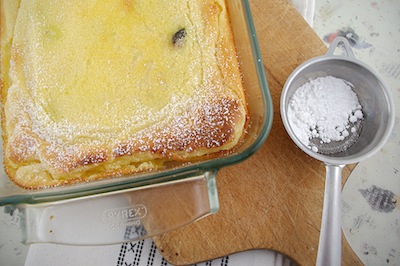
2011-05-05-IMGP5660.JPG


The Far Breton aux Pruneaux is a deep-rooted tradition in the Brittany region of France, a dessert specialty enjoyed since the 18th Century. Neither fancy, cute nor particularly trendy, the Far is a dense, oven-baked, barely sweet, custard-like flan, creamier and lighter than a traditional flan and it is usually studded with sweet prunes macerated in rum. All one needs to make a fabulous Brittany Far is the best quality eggs, butter, salted of course, sugar, flour and whole milk along with the prunes and a splash or two of rum. Preparing the batter is as easy as and similar to crêpe or pancake batter and while it is resting simply toss the prunes with rum and let the fruit macerate as you wait. Then just bake! Nothing is easier, nor can you find a tastier, homier, more traditional dessert than the Far Breton!
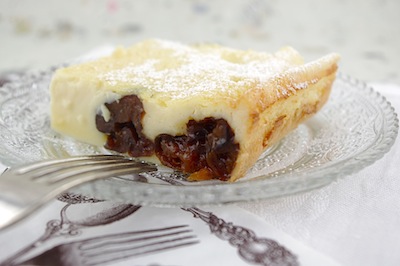
2011-05-05-IMGP5688.JPG


FAR BRETON

1 heaping cup (approximately 175 g) pitted prunes
2 Tbs rum*
3 large eggs
½ tsp vanilla
4 Tbs (60 g) sugar
4 gently rounded (not heaping) Tbs (75 g) flour
Pinch salt (add 2 pinches salt if using unsalted butter for the dish)
2 cups (450 ml, just under ½ litre) whole milk
1 Tbs (15 g) salted butter for the baking dish

* if you prefer not to add rum, simply replace with hot water to soften and plump the prunes, but feel free to increase the amount of rum in the recipe as well or add more prunes for a fruitier, sweeter dish. If omitting the rum, increase the vanilla to 1 teaspoon.

Prepare the batter and the prunes about 2 hours ahead of baking.

Place the prunes in a small bowl and add the rum or the hot water. Toss and set aside. Toss the prunes in the liquid occasionally so all are evenly macerated.

Break the 3 eggs into a medium-sized mixing bowl and whisk until very well blended. Whisk in the vanilla and the sugar. Gradually and carefully whisk in the flour and salt combined, whisking in a few tablespoons at a time and blending until you obtain a smooth, lump-free paste after each addition. Once all of the flour/salt is blended in and the batter is very smooth, creamy and thick, stir in about a third of the milk to loosen the batter. Stir or whisk in the milk in an additional 2 or 3 additions, being careful not to splatter!

Cover the bowl of batter with a plate and set aside at room temperature to rest for at least 2 hours.

Preheat the oven to 425°F (220°C). Put the butter in a glass/Pyrex or terra cotta baking dish measuring approximately 12 x 8 x 1 ½ - inches (30 x 21 x 3 cm) - my second Far was baked in an 8-inch (21-cm) square baking dish - and place in the hot oven until the butter melts. Carefully remove the hot baking dish from the oven and swirl as to spread the butter around the dish. Brush to evenly coat both the bottom and the sides of the dish. Spread the macerated prunes (do not add any of the liquid that remains in the bottom of the bowl) evenly over the bottom of the baking dish. Whisk the batter to blend then pour the batter over the prunes.

Place the baking dish in the oven and immediately lower the oven temperature to 375°F (190°C) and bake the Far Breton until just firm, puffed and golden around the edges and bottom, about 30 minutes.

2011-05-05-IMGP5694.JPG


The Far Breton is best eaten warm, dusted with powdered sugar. Once it cools to room temperature or is chilled in the refrigerator, it firms up further and has a slightly denser consistency like that of a good flan yet still remains creamier than a classic flan.
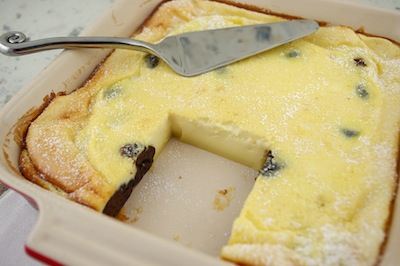
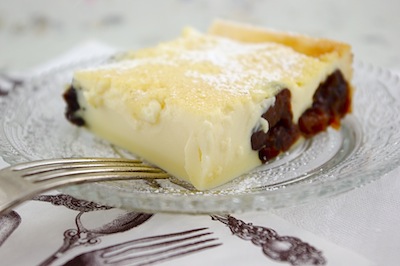
2011-05-05-IMGP5686.JPG
Jamie Schler lives, eats and writes in France. To read more of her work visit Life's a Feast.
 

Follow Jamie Schler on Twitter: www.twitter.com/lifesafeast

And a Recipe for Traditional Far Breton Each month as I sift, measure, fold and pipe out perfect little domes of batter and whip up deep, dark chocolate ganache for my French macarons, my husband,...
 
 
  • Comments
  • 55
  • Pending Comments
  • 0
  • View FAQ
Comments are closed for this entry
View All
Favorites
Recency  | 
Popularity
Page: 1 2  Next ›  Last »  (2 total)
photo
HUFFPOST SUPER USER
beachyg
12:28 PM on 05/12/2011
Jamie, it looks yummy, would love to try yours!!
09:16 AM on 05/12/2011
Fantastic article about food trends by @lifesafeast on Huff Post. A must read!
photo
HUFFPOST BLOGGER
Jamie Schler
Writer at Life's a Feast & Huff Post blogger.
09:20 AM on 05/12/2011
Oh thank you, you are so so sweet! I am so glad you loved it!
09:08 AM on 05/12/2011
As food bloggers and active twitter users we are constantly exposed to all these trends, I like and admire some of them [like Bakerella cake pops] but I think people go CRAZY [like the bacon thing] and then it gets kind of ridiculous. Trends are good because we are exposed to new things and like everything in life [fashion, technology] the food world needs these refreshments, but doesn't mean we have to like all of them or start adding bacon to all our cakes and cookies just because.

My grandparents and uncles [and now my dad who is a doctor turned agronomist] have always grown their own food, made their own tofu and soy sauce, raised their own pigs, cows and hens. My family is all about good food and home cooked meals, our reunions revolve around it and I'm really grateful because they taught me to eat well and appreciate good food. There is nothing I value more than those organic eggs from my mom's backyard, my dad's mangoes and avocados and my grandma's mochi, tofu, miso and soy sauce.

Instead of following the "this is why you're fat" trends I am now focusing on healthy, wholesome food. Trends will always be there, trends will always come and go. Some of them I will try but the rest are just there to amuse and sometimes annoy me :)

Great article and recipe, Jamie. xoxo
photo
HUFFPOST BLOGGER
Jamie Schler
Writer at Life's a Feast & Huff Post blogger.
09:21 AM on 05/12/2011
So very well said! "Trends will always be there, trends will always come and go. Some of them I will try but the rest are just there to amuse and sometimes annoy me." is perfect and says it all! Thanks a million for visiting, reading and leaving us these thoughtful words! xo
This user has chosen to opt out of the Badges program
08:13 PM on 05/11/2011
No mention of "tossed fries"? The trend of tossing just-out-of-the-fryer french fries with any number of things: jalapeno slices, shredded cheese, fresh spinach leaves (the hot oil quick wilts them), etc? Where does this fall on the divide?
photo
HUFFPOST BLOGGER
Jamie Schler
Writer at Life's a Feast & Huff Post blogger.
09:10 AM on 05/12/2011
Ha guess I simply have never heard of them? You tell me: a great evolution of the fry or a fad? Is everyone simply going so nuts that you can't get away from them and so far that people are tossing them with anything even remotely edible? :-) Fad!
This user has chosen to opt out of the Badges program
04:57 PM on 05/12/2011
I agree it's a fad- I was being sarcastic. Where one draws the line in cuisine defining what may actually influence a generation of chefs, eaters and cooks and what will not is not as simple as geography.
04:55 PM on 05/11/2011
Our technology has allowed us to be more accessible to what is happening all over the world with cuisine. What used to be only available through books, swanky restaurants, metro areas, and television is now mainstay via the internet. A plethora of information to educate and share allowing us to take our spin on it, however we interpret that.

Growing up in Florida within a European family lifestyle. I remember having our own vegetable garden, rooster and lamb at one point. Our neighbors not the slight bit entertained with my father’s farm, the rooster miraculously disappeared, the lamb too. There was something special about growing our own food seasonally. While eating a Mediterranean diet was more of a mainstream in our house, I found it a cultural difference to what was happening around me, in school, friends, and restaurants. I remember struggling at times with these differences as a teen, though I’m grateful for the impact it’s had on me today.

A tough economy where everything is outsourced and over-saturated, I think it’s great being exposed to new cultures, new foods and a new way of doing things – a mass evolution. It’s a really good thing and a great story, Jamie!

However, as much as I love cupcakes or macaroons, any kind of cake for that matter… it amazes me all the ways’ you can dress these lovely scrumptious sweets up and make them new. I’m blaming it all on the sugar rush!
photo
HUFFPOST SUPER USER
raker
10:19 AM on 05/11/2011
I remember when we learned that creme fraiche, the quintessential here-today gone-tomorrow American '80s food fad is a staple of French home cooking. So we had to have it, but it turned out once was enough. Vive la difference!

Today it's ramps, yesterday it was fiddlehead ferns, and tomorrow some expensive thing will come along and be completely "new" for a few months—until we decide we don't really like it as much as we thought we did. Take radicchio—please! But some will go from fad to classic. I still love the king of American fad food, pesto.
This user has chosen to opt out of the Badges program
photo
10:01 AM on 05/11/2011
I think part of America's trendiness comes from advertising and exposure. If a recipe makes it into Woman's Day, family Circle or martha Stewart; a lot of folks are going to try it. There is also the foody movement, which is competitive trendinest defined.

Could i get cocoa nibs with my braised short ribs and a can of pabst ?
08:11 AM on 05/11/2011
Very interesting to see how Americans get so excited about the new thing then use it to the point of depletion. Whereas Europeans tend to mull things over more. I think you're right that it's because the American cuisine isn't truly defined... so then food trends are treated in the same way as electronic trends.

Although I tend to think that even classics started out as a trend.
04:51 AM on 05/11/2011
Very interesting article. Although I have not experienced the European mentality in food trends I did read (think it was on the Expat Harem) that many Europeans look at distain at anything that is overly
marketed (such as Martha Steward and Oprah). Also, for generations, the food cultures of new immigrants in America was wiped clean in the hope to better assimilate them in their new country. Without a food culture, trends and gimmicks had a much better chance to flourish while in places like France tradition is still very important.
04:45 AM on 05/11/2011
Great article, Jamie. I think you could replace the reference to America with Australia throughout. The fervour surrounding a food trend here is very similar to that in America. I try to avoid food items that are overly trendy. When I became obsessed with macarons back in 2008, they were still uncommon here in Australia. Most people hadn't even heard of them. They were just a technical challenge for me. But then, almost out of no-where, they went global. 0 to 100 in practically 10 seconds almost! So after making hundreds and hundreds of macarons, I put my macaron making apron away for well over a year. I couldn't face them. I was put off by how trendy they had become. I am a simple home baker. I bake because I want to bring joy to my friends and family. Nothing more. Nothing less. Probably not dissimilar to many households around the world. I try to avoid anything too trendy. I think the Europeans have mastered this balance. I think I would be happy living there. :)
photo
HUFFPOST BLOGGER
Jamie Schler
Writer at Life's a Feast & Huff Post blogger.
05:39 AM on 05/11/2011
Thanks so much for your comment. I also started making macarons for the challenge (as a baker) but they were already a trend. As I also run a blog dedicated to getting people to bake macs maybe I am feeding into the trend but each challenge is more of a test of baking skill and creativity so I also understand this side of a food trend. But I think it is the only one I am involved in. :-)
04:24 AM on 05/11/2011
Interesting article Jamie. I am not sure if we don't have any foodtrends here in Europe but I do think that - speaking for the Dutch in particular - we tend to be more reserved with foodtrends and in general we can be quite negative too about such trends. In some ways it takes a lot longer for certain fads to gain a foothold in the Netherlands than possibly anywhere else in the world. I always use Starbucks as an example. They tried to work here some years ago but stopped as it turned out not to work. Dutch like their coffee (or used to like) homemade. Years passed but we now have a - quite popular - starbucks at Schiphol and slowly but surely we are getting more and more coffeeplaces here too.
So it takes longer but in the end we're pretty much open to most trends. Slow adapters we are for sure.
photo
HUFFPOST BLOGGER
Jamie Schler
Writer at Life's a Feast & Huff Post blogger.
04:39 AM on 05/11/2011
Yes I agree. Here in France things (as I mentioned) have taken hold like American cookies and muffins but it is really much more down keyed and down played. And I do not seem to see these food trends on European food blogs as I do on American food blogs. Except macarons? Thanks for adding to the discussion, Simone, always welcome and appreciated!
photo
WiseMona
Columnist for The Sunday Times
03:30 AM on 05/11/2011
Great article Jamie.
I lived in the US for 15 years and am now back at home in Ireland and 'see' the differences first hand. I think what is missing in the US (and increasingly so here in Ireland) is not so much the 'what' we are eating but the 'how'.

For almost 17 yrs now I have had breakfast in bed with my partner (every morning) and we have shared dinner together every-single-day with the exception of a few occasions when we have been separated due to out of town funerals/events etc.

Once the kids arrived into the mix it was even more important to break bread daily as a family to teach them the importance of the ridiculous (table manners) to the sublime (what we are eating).

Food cultures and history will only become rooted and traditional if we keep building on what has come before us and adding to our larder for want of a better word. (Hard work I know for working parents but vital.)

When we lived in Ohio there were many (many) people that had the same family-food ethos as ourselves and although it has not taken over in a large way the slow bubbling of the SlowFood movement is not not a 'fad'.

People are returning to the land and whether it is hip right now or not really does not matter.
All that matters is that we nourish the future so they can treasure the past.
photo
HUFFPOST BLOGGER
Jamie Schler
Writer at Life's a Feast & Huff Post blogger.
04:14 AM on 05/11/2011
Thanks for joining in the discussion, Mona, with your very wise words. I agree that many "fads" are actually much-needed and smart movements towards a better way of living and eating, like Slow Food, farmer's markets, etc. I find it funny, though, that things this important are actually treated as trends.
photo
HUFFPOST SUPER USER
Jeannette Lacey
11:54 PM on 05/10/2011
I am making this on Sunday....it looks divine!
photo
HUFFPOST BLOGGER
Jamie Schler
Writer at Life's a Feast & Huff Post blogger.
02:37 AM on 05/11/2011
Thanks and let me know how it comes out. We absolutely love it!
11:53 PM on 05/10/2011
Jamie, though I have several questions about the premises of the article that have been addressed here to some extent, my real concern is that you establish the binary: Europe (well-defined, more antiquated cuisine) and American (scattered and diverse) which forces you to read the Far Breton as a "deep-rooted" Breton tradition and a "traditional flan," and as if emerged fully formed from Bretagne's dairy production. However, a closer reading of this dessert's ingredient list which includes both sugar _and_ rum and Brittany's geographic location (surrounded by the former slave ports of Nantes and Saint-Malo) reveal this so-called "traditional" dessert to be already rooted in ("american-style") diversity. (You do point out that the dessert dates back to the precise moment when both sugar and rum would have been increasingly available, since no period saw a greater increase and sugar production and slave importation into France's caribbean sugar colonies).
The same, I would argue, goes for the previously featured, "traditional" Gateau Nantais. In other words, you appear using "traditional" (European) in opposition to "inspired by various cultures" (American), but in several cases, the desserts appearing to be most "French" are the by-products of colonial expansion and slavery into the Caribbean.
photo
HUFFPOST BLOGGER
Jamie Schler
Writer at Life's a Feast & Huff Post blogger.
02:42 AM on 05/11/2011
I totally agree with you. What I was pointing out was more the whole fad effect of already established foods like cupcakes or the turning of basics like heirloom tomatoes or bacon or pork belly into a craze; the whole idea of a trend. I tried to separate that from the process of cuisines evolving through outside (or inside) influences or experimentation or even as dietary awareness. Much of both American and European (or shall I say French?) cuisines came from expansion, colonization, immigration even slavery but that is a natural (no matter the cause whether positive or negative) evolution of a cuisine and not really a fad. Unless you are trying to say that rum, for examples, became a fad food thus integrated into all desserts of the region. Thanks for your thoughtful comments!
09:18 PM on 05/10/2011
Its custard with prunes.
photo
HUFFPOST BLOGGER
Jamie Schler
Writer at Life's a Feast & Huff Post blogger.
02:43 AM on 05/11/2011
Ha Ha Ha - baked custard with prunes yes it is! But boy oh boy is it divine!