People are inherently generous. There's more than moral obligation at play when you donate money to the Red Cross after reading about victims of a disaster, or offer to help a friend move. Evidence from experimental psychology suggests overwhelmingly that we help each other not because of the insistence of social contracts such as laws; we want to help. Beginning just after their first birthdays, infants engage in prosocial behavior, coming to the aid of strangers even in the absence of direct rewards. They also prefer to see others behave prosocially. At three months, when they can barely lift their heads, babies already prefer puppets that help another puppet over a visually similar terrycloth bully. Adults similarly prefer fairness, and in experiments, willingly pay hard-earned money to punish others who have acted unfairly. This effect would most likely have been on display if, by pitching in a few dollars each, Americans could have collectively revoked the bonuses Wall Street executives awarded themselves in the wake of the current recession.
An inborn tendency to share the feelings of others -- to feel joy at their joy, match suffering to their suffering (first labeled "Empathy" by psychologist and art theorist Theodor Lipps) -- probably forms the basis of our aversion to distress, and our willingness to help others. Empathy and altruism are evolutionarily old, as even non-human apes share emotions and respond to each others' distress: chimpanzees will forgo a chance to push a button and receive food if pressing that button also results in another chimpanzee being shocked. Apes in the wild are similarly prosocial, and will console the loser of a fight by putting their arm around his or her shoulders like friends buying each other a beer after a bad breakup.
However, despite its naturalness, empathy is a malleable reflex, deployed more under certain conditions than others. While we are driven by a desire to help each other, we can also avoid other people's pain by ignoring it or distancing ourselves. For this reason, the way news is communicated is critically important: it can nudge people towards either caring about others or turning away.
The invention of photography, videotape, and finally instantaneous global media has fundamentally changed the way we learn about the suffering of others. The accessibility of others' pain has grown in waves: from the first photographs of fighting and the wounded in the Civil War (pictures that had to be posed, due to the long exposures required by 19th century cameras) to cell-phone movies instantly uploaded by Hurricane Katrina victims. Initially, artists and journalists hoped that new media's vivid representations of suffering would incite a wholesale rejection of that suffering's causes. In Regarding the Pain of Others, Susan Sontag describes Ernst Friedrich's War Against War!, a 1924 photo essay depicting the horrors of World War I, which was created under the idea that people who witnessed images of such intense suffering could not possibly continue supporting war. Friedrich and others reasoned that viewers of these pictures would feel resonance with the pain being felt by these photographs' subjects, and be moved to do whatever they could to stop that pain -- in this case, becoming pacifists.
While Friedrich's hopes were obviously not met, the power of images to incite empathy and even influence policy also has contemporary cache. The "CNN effect" describes how, by airing images of suffering associated with crises such as conflicts in Rwanda and the former Yugoslavia, news outlets can create enormous pressure for governments to intervene, fueled by public outcry over the suffering of others. Media influence on public demands can be so great that former UN Secretary General Boutros Boutros-Ghali once complained, "CNN is the sixteenth member of the security council." The power of inciting empathy is not lost on politicians. President Obama's vivid descriptions of people's struggles -- for example, in his campaign-season "infomercial" -- and his appeal to viewers' empathy are tools through which he aims to increase public service in the United States to a level not seen since FDR's time. Governments can also restrict the display of suffering for political purposes: think of the Bush administration's refusal to show images of American soldiers' coffins, or the removal of the press from Gaza during the recent war there.
Communicating the suffering of others does not always stir empathy, and can even be counter-productive, for example when an inundation of suffering depicted in stories and pictures leaves people feeling helpless or exhausted. The term "compassion fatigue" was first coined to describe hospice workers, who -- after spending their professional lives exposed to fear and pain -- can find themselves drained of instinctual concern for others. With today's mass media, anyone with a newspaper or internet connection is able to receive daily, multimedia updates about crises -- man-made and natural -- affecting people all over the world. The resulting habituation, paired with a feeling of numbness, can drain our empathy, motivating us to stop caring about victims of tragedies. Cynically throwing our hands up at the surreal death tolls of natural disasters or massacres and changing the channel can be self-protective, "costing less" psychologically than vicariously experiencing the suffering of strangers.
It is the responsibility of scientists and journalists to work together in stopping such empathy fatigue, because empathy is the primary human quality that fuels our instinct to protect human rights around the world. While the main purpose of news outlets is to convey information objectively, that objectivity is in many ways unrealistic (think of Fox vs. MSNBC as they reported during the last election cycle). First, the actual information discussed in the news can vastly shift people's ideas of the issues that are most important. This is not a new insight: a set of studies conducted 20 years ago demonstrated that splicing in just 4 extra news pieces on a given topic, such as the US dependence on foreign oil, into a week's worth of news reports made viewers overwhelmingly count that issue among the 3 most pressing facing the country. Second, the way information is presented can cause the same story to affect people in different ways. For example, a recent study found that stories about tragedies framed in terms of human conflict or suffering attract readers' attention more than stories framed in terms the economic impact that those tragedies cause, resonating with Kurt Vonnegut's notion that "readers are human beings, mostly interested in human beings."
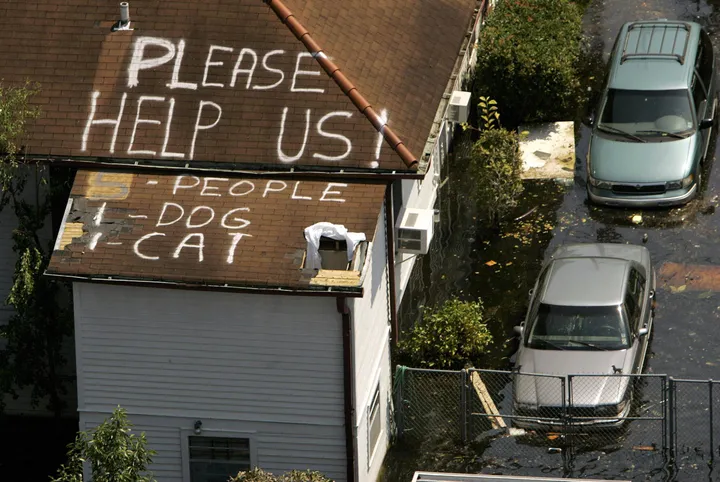
If journalists accept that they are primary forces in influencing the public, instead of invisible purveyors of facts, then their next big job is to figure out how they want to wield their influence. My belief is that the news should be made with full consciousness of the ways that news -- by definition -- drives human thought and emotion, and has the potential to mobilize our instincts to empathize with each other. Research in psychology suggests at least two important ways that journalists can keep people emotionally engaged with the news. First, it is critical to present not only pictures and facts about hardships suffered around the world, but also to pair these with narratives about the people affected. Without the personal component, it becomes easier for media consumers to decide that they have nothing in common with sufferers "out there, where bad things happen." Several studies have shown, for example, that it is easy to "infra-humanize" members of other races or groups: we perceive their basic emotions, such as fear and anger, but we don't acknowledge their experience of uniquely human emotions, such as remorse, embarrassment, or indignation. This was most evident in accounts of groups first coming into contact with each other: there are numerous accounts of indigenous cultures and European explorers mutually believing that their group contained the only "humans." Infra-humanizing probably developed as an instinct to protect one's group, but now exists as an especially insidious form of prejudice. While people may not think of members of a foreign culture as inferior, it's just that lack of thinking about other groups -- and their internal lives -- that can act as a shut-off switch to our sense of empathy and desire to help others who are not like us. For example, a study conducted just two weeks after Hurricane Katrina gutted New Orleans showed that people who infra-humanized disaster victims of other racial backgrounds were less likely to want to volunteer in relief efforts. The less we perceive we have in common with others, the easier it is to simplify their emotional experiences, and the less motivated we are to help them when in need.
The complex experiences of victims of disaster or war are too rarely the focus of media reports. Instead, in pictures and stories, we see distilled accounts of basic emotions such as fear or anguish. Such images may reinforce the notion that victims, unlike us, have very simple reactions to very horrible problems. Of course, famine and genocide seem like they should cause basic emotional reactions, but human experience -- even under extreme situations -- is more nuanced than an observer might guess. Presenting that complexity through personal narrative can help readers re-humanize sufferers from the other side of the world, see them as "like us," and motivate empathic and prosocial responding. Several studies have shown that something as simple as presenting someone's first and last names, or asking readers to wonder out loud about the mundane preferences of someone from another race ("Would they prefer grocery shopping or laundry? What do you think their favorite color is?") can erase automatic associations of that race with negative stereotypes. Actively asking people to "put themselves in the shoes" of someone from another group can exert even more powerful effects: motivating prosocial behavior and (at least temporarily) erasing stigmas about that group.
Because of this, news outlets wishing to combat empathy fatigue should start by following Vonnegut's insight, and presenting news as it affects individual human beings, human beings whose experience and emotional lives are as rich and complex as those of viewers themselves. Online news sources are an especially powerful example of how this type portrayal can work. Sites such as Alive In Baghdad, Mideast Youth, and the Common Language Project offer a unique opportunity for readers to experience 1st person narratives of people living through conflicts and in areas affected by crises. Such accounts can be especially effective in eliminating the sense of "otherness" that is easy to impose on victims half a world away.
Secondly, it is important to make salient to media consumers that they need not read passively about suffering, but can act -- at that moment -- to help the people they read about. As Sontag put it, "Compassion is an unstable emotion. It needs be translated into action, or it withers." People often offload responsibility for helping others, deciding that they cannot make a difference, or that someone else will. This point is made tragically by the story of Kitty Genovese, a Queens woman who was murdered in the parking lot of her apartment complex, within earshot of scores of witnesses who did nothing. Such diffusion of responsibility can be counteracted if -- at the moment that a reader feels empathy for others -- they are provided ways to act immediately, for example by making a donation or calling representatives and senators to demand intervention. Charities and political campaigns already do this, placing stories and emotional appeals directly next to their "donate" buttons. While news sources may believe that providing routes to action in their stories could violate objectivity, at least in the case of humanitarian tragedies, the opportunity to help - and to provide an outlet for consumers' empathic responses -- should overpower that objection.
A global media community has enormous potential specifically because it can eliminate the space between one person's pain and another's empathy. In this way, media can produce a "democracy of emotions," and transform our aversion to suffering into social pressure for our governments to act prosocially. Our desire to help each other is at the core of being human, but the ways we apply this instinct are flexible, and can be weakened by a sense of distance or helplessness. As such, it is critical for the press to keep psychology in mind, and do what they can to minimize the effects of empathy fatigue.