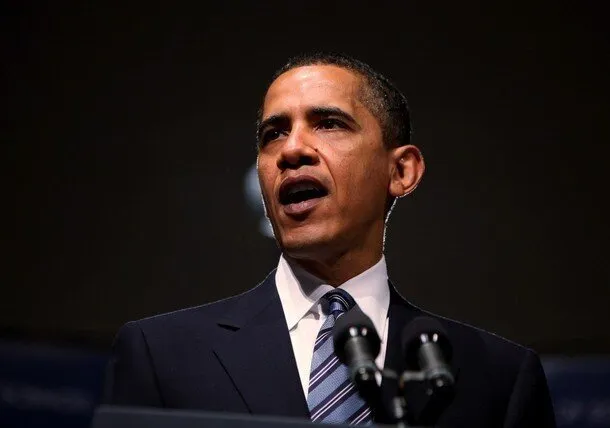
On President Obama's 100th day in office the White House asked Congress to address the issue of disparity in penalties for the use of powder/crack cocaine. This historic request follows a national lobby day held yesterday that was co-sponsored by a dozen advocacy groups.
The day brought together voters from Utah, California, Oklahoma, New Jersey, South Carolina and other states to pressure key members of Congress to eliminate the disparity between crack and powder cocaine sentences.
The groups held a breakfast briefing with members of congress and victims of the federal disparity on Tuesday morning. Chocolate bars weighing fifty grams, the equivalent weight that would trigger a 10 year mandatory minimum sentence for crack cocaine, were on hand to demonstrate to members of Congress just how small that quantity is compared to the 5000 grams -- five kilos -- of powered cocaine that garners the same penalty.
The 1986 and 1988 Anti-Drug Abuse Acts created a disparity in sentencing between two forms of cocaine, crack cocaine and powder, at the federal level even though scientific evidence, including a major study published in the Journal of the American Medical Association, has proven that crack and powder cocaine have similar physiological and psychoactive effects on the human body. It takes only five grams of crack cocaine (the equivalent of the contents of two sugar packets) to receive a five-year mandatory minimum sentence, while it takes 500 grams of powder cocaine to receive the same sentence.
As a presidential candidate, then-Senator Obama said the "war on drugs is an utter failure" and that he believes in "shifting the paradigm, shifting the model, so that we focus more on a public health approach." He also called for eliminating the crack/powder cocaine sentencing disparity, repealing the ban on federal funding for syringe exchange programs to reduce HIV/AIDS, and stopping the U.S. Justice Department from undermining state medical marijuana laws. Within 24 hours of taking office, the White House website made clear that Obama's campaign commitments to eliminate both the crack/powder disparity and the ban on syringe exchange funding were now official administration policy.
The Obama Administration has articulated the need to address this issue by completely eliminating the disparity. Current penalties for crack cocaine are excessively harsh and have little to do with an individual's actual culpability and more to do with the color of their skin. It's not fair and it's not working. While two-thirds of crack cocaine users are white or Latino according to the Substance Abuse and Mental Health Services Administration, more than 80 percent of those convicted in federal court for crack cocaine offenses in 2006 were African American.
Last year, the U.S. Sentencing Commission moderately reduced sentences for crack cocaine offenses and the U.S. Supreme Court also ruled that judges have the right to sentence people below the guidelines in Kimbrough v. the United States. However, judicial discretion is still undermined by the statutory mandatory minimum sentences that Congress enacted over 20 years ago, and those mandatory minimums are the source of the crack/powder disparity.
Thus far, two legislative proposals have been re-introduced in the House -- one by Rep. Sheila Jackson-Lee, D-TX, and one by Rep. Bobby Scott, D-VA. Both would end the disparity between powder and crack cocaine sentences. The Senate Crime and Drugs subcommittee will hold a hearing to discuss crack cocaine sentencing on Wednesday, April 29. The House Crime, Terror and Homeland Security committee also will hold a hearing on this issue on May 21.
The stars are aligning to ensure Americans will no longer be subjected to the same draconian policy set in the late 80s, which flies in the face of scientific and legal research. Congress and the administration have an obligation to fix this and show the country that our criminal justice practices will be fair and sentences proportional to the offense. We can no longer prioritize precious federal resources solely on the incarceration of individuals who are low-level, nonviolent drug users and sellers nor permit any racial group to continue to be unjustly targeted.
Jasmine L. Tyler is the Deputy Director of National Affairs for the Drug Policy Alliance. Anthony Papa is the author 15 to Life.