If you heard a collective gasp New Year's Day, that was the sound of New York Times readers, newly resolute about losing weight, reading Tara Parker-Pope's sobering article about the near impossibility of achieving that goal. Once we become fat, most of us, despite our best efforts, will probably stay fat. That's what Parker-Pope concluded in writing last Sunday's magazine piece, "The Fat Trap."
To be clear, I don't exactly share Parker-Pope's conclusion. While I agree that dieters have a heck of a time keeping off what they manage to lose, the difficulty, in my professional opinion, is in the dieting, not the hard-wiring. Human beings may be hard-wired to fight against weight loss, but that doesn't mean achieving a healthy, sustainable weight has to be a colossal fight.
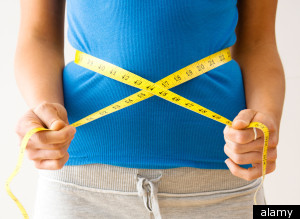
It wasn't our difference of opinion, however, that got me gasping. No, what took my breath away was the personal disclosure in the eighth paragraph. Turns out, Parker-Pope has tried and failed countless times to lose the 60 pounds she's slowly but surely gained since high school graduation. That, and after reviewing the depressing scientific evidence and her own discouraging weight-loss history, she hasn't given up on getting back to a healthy weight.
As a psychotherapist specializing in eating issues, I understand two things: 1) Weight-loss hope springs eternal. 2) There's good reason to hope, especially once you stop dieting and start taking better care of yourself. What I didn't quite understand was how an evenhanded writer could make such a pessimistic proclamation for the general public and yet wax optimistic about her personal situation.
To better understand, I decided to turn the tables on arguably the most prominent health journalist in America. Last year, Parker-Pope interviewed me about my weight loss views. This year, it was my turn to interview her about hers. What follows are questions and answers from that recent phone conversation.
Q. What were your hopes in writing "The Fat Trap"?
A. My hope was that people would leave the article feeling informed and empowered. That people would appreciate the candor -- the truth about my personal story, the truth about the science. [I got the story idea talking] with Dr. Michael Rosenbaum at Columbia about the science of weight loss. That one conversation was so personally helpful to me, I hoped that, in writing about it, it would be helpful to others. [He told me what dieters already know:] that most people who are fat, are going to stay fat. It's the truth, but for some reason as a culture, we dance around this issue. We're not doing anyone any favors by telling them it's easy [to lose weight] or that anyone can do it. The truth is: Once you've gained weight, it's really, really hard for most people to lose weight and keep it off. By not telling people this, we leave them thinking, that they're weak-willed, that they're failures. That's not true. It's so much more complex.
Q. In your article, you mention a few of your weight loss strategies: keeping a food and exercise diary, marathon training. What can you tell me about other strategies you've tried over the years?
A. My first diet was the Atkins Diet when I was 14. I wasn't even overweight; I was tiny. With a tremendous amount of effort, I did lose about eight pounds. But I grew up in family that never had dessert, and one night, my mother decided to serve blueberry turnovers. It was such a once-in-a-lifetime-moment to have dessert in our house, I indulged. I ate the turnover, stopped dieting and gained back the eight pounds. After that, I don't know how many diets I tried. Let's see: Weight Watchers, Jenny Craig, Slim Fast, South Beach, The Cookie Diet. The problem with dieting is you can get hyper-focused on certain foods. I was a vegetarian for a while, not for weight reasons, mostly ethical reasons. That focus on not eating meat became too much stress about food. I started eating too much dairy and developed almost an asthma-like condition. I realized in trying to change my eating in one direction, I'd gone in another.
Q. You actually sound like you were a naturally-thin kid.
A. I don't know about naturally thin, just super-active. I had an extremely high level of activity when I was a high school athlete. It was when I stopped that high level of activity because life got in way that I put on weight.
Q. Given the bleak news you've delivered about sustainable weight loss, why do you remain so optimistic?
A. If I had cancer and I was optimistic, you wouldn't think I was crazy. I don't want to give up on myself. I'm happier and more comfortable at a lower weight. Also, the lesson from the science is that it's possible [to lose weight], you just have to work really, really hard. I know I'm capable of hard work. Whether or not I can manage the hard work of my personal health vs. the hard work of my job vs. the hard work of being a single parent... It's a balance. I think we're all struggling to find balance in our lives whether or not we have a weight problem.
Q. You haven't publicly committed to doing anything about your weight concerns. Any thoughts on the direction you might be heading?
A. I think I'll continue to eat well. I'm lucky that I'm not tempted by fast food. My daughter loves healthy food. So food is not so much of a challenge. Honestly, my goal is try to work a little less, exercise a little more. I want to learn how to be as consistent with exercise as I am with brushing teeth. I would never skip brushing my teeth, but I will skip exercise. If I had an immediately life-threatening medical condition, I'd drop everything to take care of myself. It gets so much to what you've written about in your book, which really resonated with me. Part of the problem is that we're so hard on ourselves. We're so willing to neglect ourselves for other people. [In writing this article], I have stopped being so hard on myself. At some point, we all need to decide that taking care of our bodies is just as important as fulfilling our obligations at work or taking care of our families.
Q. Can you say more about your goal?
A. If you want me to quantify my goal, this might sound crazy, but I want to try to exercise 90 minutes to two hours a day. I think that's what it takes. One of things I learned from the people I interviewed is they don't do one thing. They always have something they can be doing: stationary bicycling, running, water aerobics class... I'm not focused on the scale, but increasing the time I devote to exercise. Once you have a weight problem, you have to be able to have a high level of exercise in your day to maintain your weight.
Q. Have you considered Oprah's final conclusion: Just say "no" to dieting and the bathroom scale? Just say "yes" to mindful eating?
A. I did that [mindful eating] about a year ago and promptly put on 15 pounds. There's truth to what she's saying -- I don't think dieting is the healthy way to go. It does a lot of damage. But I also think that if you have a tendency toward weight gain, you have to get on the scale because weight can creep on when you don't realize it. [Being mindful about eating is like saying] if I have diabetes, I'm going to be mindful about my diabetes, but I'm not going to monitor my blood sugar. That's crazy!
Q. In writing this piece, it sounds like you gained compassion for yourself and your mom, too. How do you imagine self-compassion might help going forward?
A. I really think the key to any kind of improvement, including weight loss, is you have to accept yourself as you are. You have to accept that if you don't change, you're OK the way you are right now. That's the starting point. I know if I don't achieve my goal, I'm OK where are I am.
Q. Has your daughter read the article? Are you giving her the same message you're giving your readers?
A. She hasn't read the article -- [she's 12] -- but we talked about it. I tell her how important it is that's she takes care of her body. I talk to her about finding things [activities] she can do and keep doing. I encourage her to play tennis. She loves to dance. She wants to take up Zumba. She's an awesome volleyball player. I wish I could go back to my 20-year-old self [and help her]. With my daughter I'm trying to do that a little bit. I want to set an example. I don't want her to see me dieting constantly. I'm really trying to encourage positive eating vs. deprivation. And balancing, so if she really wants a croissant for breakfast, we'll have salad and vegetables for lunch. We don't demonize food.
---
What I didn't say, but wish I had: keep practicing self-compassion. The more compassion you have for yourself, the greater your chances are for achieving that impossible dream: maintaining your healthy, sustainable weight.
For more by Jean Fain, L.I.C.S.W., M.S.W., click here.
For more on weight loss, click here.
Jean Fain is a Harvard Medical School-affiliated psychotherapist specializing in eating issues, and the author of "The Self-Compassion Diet." For more information, see www.jeanfain.com. Got comments on any of the above? Share your two cents in the Comments section.