
iPhone app iPad app Android phone app Android tablet app More

Featuring fresh takes and real-time analysis from HuffPost's signature lineup of contributors
Jeff DeGraff

GET UPDATES FROM Jeff DeGraff
 

The New Mass as New Coke

Posted: 01/06/12 04:40 PM ET

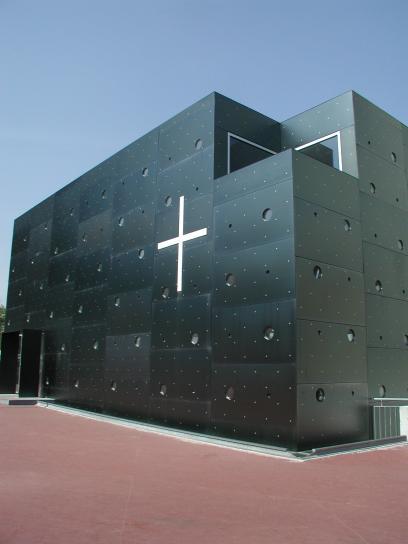
2012-01-03-modernchurch.jpg

I was in a positively ebullient mood as I went off to Christmas Mass at St. Mary's with my family in tow. The senses were amped up for the big production: stained glass, plainsong, frankincense and myrrh -- the works. A procession of children marched in neat rows up to the altar to light candles and stage the manger and with the precision of a marching band exited stage left ... who knows maybe to go on some exotic pilgrimage. It's happened before. (Kids are always part of the pageantry partially because we traditionally have so many of them.) The statues of saints, false idols to the uninitiated, looked down upon the faithful like acrobats from Cirque du Soleil about to spring onto a trapeze with a spinning ninja move. The company was in rare form and the sensual passion play, real theatre, had brought the house of God to its feet.

And that's when "it" happened. You know that moment in West Side Story where the Sharks and Jets are going to rumble and everyone sings "Tonight" in orchestrated counterpoint. That's the rhythm of the Mass. You know the longest running show on Broadway -- everyone knows the words and sings along. But someone blew their lines. I believe it all started with the priest, or was it the Vatican, I'm not really sure. All I know is that is that in an instant the synchronized syllables became a mush of puffery as the congregation struggled to make sense of the whole mess. You see, through decades of interminable Saturday's at Catechism we were all indoctrinated in the sacred language and rituals of the church. Altar boys like me were even fluent in the irregular Latin and dazzling medieval choreography. At least the priest faces the assembly now. It's not like they changed the lyrics to "Edelweiss" at a midnight showing of the Sound of Music. Prayers aren't just words. They are the way we talk with God. That's the brand promise of the universal church -- like McDonald's, it's the same everywhere. You can attend Mass in an overcrowded parking lot in China where services are in Cantonese and not miss a beat -- I've done it. All together now -- stand, kneel, cross yourself and repeat after me.

So Mass is now new and improved but not necessarily the good kind. It's more like Michael Bolton's foppish cover of "Georgia on My Mind" (Senator, you're no Ray Charles) or maybe the introduction of New Coke (Young man, you will drink it and like it). Yes, that's it -- the New Mass as New Coke.

Catholics aren't good at rebellion. We are after all a people under authority and our faith informs every aspect of our life. I know what it's like to be a non-conformist. I grew in Dutch Reformed western Michigan with a propitious Netherlander name. When teachers and friends alike learned that I belonged to the old church they assumed that something had gone terribly wrong. (Remind me to tell you about the time my tall blonde Hollander girlfriend broke up with me because I belonged to a "cult.") Just to keep the record straight -- yes, we are Christians -- and obnoxiously like to remind all detractors that Peter's church is the only one actually mentioned in the Bible.

In a recent article by former Maryland lieutenant governor Kathleen Kennedy Townsend in The Atlantic entitled "Out of Step with the Flock," she remarks, "As a woman and a lifelong Catholic, I sometimes marvel that faith can flourish despite the hierarchy's not infrequent disdain for the faithful." In this case she is specially addressing the treatment of women in regards to issues such as birth control but the sentiment can be aptly applied here more generally as well. Not surprisingly, there have been reprisals on Catholic.net and the like with same message -- God doesn't answer to popular opinion. Sadly, these rebuttals miss the point entirely. The Church doesn't belong to the Vatican, Cardinals or Bishops. It belongs to the faithful who are capable of interpreting the tenants of their faith for themselves. In short, we didn't ask for this change to the Mass and from all indicators didn't want it.

Pope John XXIII believed in his people. He convened the Second Vatican Council with representatives from all over the world and all points of view to give the church back to its laity. Funny thing is that when you trust your people they have a tendency to return the favor. I wonder if the current administration got that memo. Apparently we were not invited to the secret meeting of the Latin Club in the Domus Sanctae MarthĂŠ. "Consubstantial" -- really? That's the best you could do?

So now a simple neighborly blessing "and also with you" becomes a mystical incantation -- "and with your spirit." A humble request -- "Father, accept this offering" becomes a job for Noah Webster -- "Therefore, Lord, we pray: graciously accept this oblation of our service" -- oblation. Even Shakespeare didn't say oblation. Apparently the high flown language and symbolism of the Mass wasn't complicated enough.

Supposedly this was all done in the name of authenticity. If that were true, why not embrace the Jesus Seminar, a group of over one hundred of the world's foremost biblical scholars who have identified inaccuracies in the liturgy? Why not go back to the original language of the Bible -- Hebrew and Greek? Why not reconcile with the Eastern Orthodox Church which also has a legitimate claim as the original denomination? Some Jesuit scholars are now questioning if this new translation is indeed more accurate, but no matter, they are usually ignored and frequently excommunicated for their clever use of facts and their crazy powers of reason. Language is alive and updated with the times to be relevant to our lives -- like our beliefs. But these innovations move forward to keep up with us and our emerging needs -- not backwards to imagined halcyon days.

My church has some significant challenges these days. I guess if your religion is 2,000 years old and one out of every five people on the planet belongs to it there are bound to be some "management" issues. I propose that we "improve" the way we lead first and work on the letter of the law later.

I never liked New Coke, so I didn't buy it. I just kept drinking the regular brew. Similarly, I suggest that we say our prayers in our own voice. If that's the old way, great, or if you are feeling particularly creative maybe you make up your own words - just like the big shots do. Or we can just leave the translating to God.

Jeff DeGraff is a Professor of Management and Organizations at the Ross School of Business at the University of Michigan. To learn more about his book Innovation You and PBS Special by the same name, visit his web site at www.innovationyou.com or follow his blog on innovation at Jeffdegraff.com.


Follow Jeff DeGraff on Twitter: www.twitter.com/JeffDeGraff


  • Comments
  • 166
  • Pending Comments
  • 0
  • View FAQ
Comments are closed for this entry
View All
Favorites
Recency  | 
Popularity
Page: 1 2  Next ›  Last »  (2 total)
photo
Djay0252
America needs to Bless God
11:29 AM on 01/16/2012
The Catholic church needs to spend more time in focus with Jesus Christ and not Mother Mary....they spend too much time on religion and not the spirituality that Christ envisioned for His church.
photo
AUveritas
John 6:68
08:09 AM on 01/17/2012
Ever been to Mass?
05:07 AM on 01/18/2012
Your post doesn't make much sense. The Catholic Church is the Church Jesus founded on Peter.
photo
Djay0252
America needs to Bless God
09:21 AM on 01/18/2012
I grew up in a Catholic neighborhood and went to Catholic schools. Yes I agree with what you are saying but that is not what it is all about today
HUFFPOST SUPER USER
JRShire
08:58 AM on 01/13/2012
In the Episcopal Church's Book of Common Prayer, there are two major Rites for the Liturgy. Rite I is written in traditional language (thy's, thee's, thou's, and "with thy spirit" etc.) and is in continuity with prior Anglican liturgies. Rite II uses more contemporary language, in fact it is a lot like the post-Vatican II Liturgy (using language like "and also with you").

The funny thing is that the new Roman Liturgy seems like this weird, clunky, and awkward amalgamation of the Rite I and Rite II from the Episcopal Church. The language is the Rite I, but the pronouns are contemporary (and with thy spirit vs and with your spirit). It looses all the poetry that the traditional language has, and all the sense of neighborliness that the contemporary liturgy had. I do not like it.
05:44 AM on 01/14/2012
Many do not like it.
03:14 AM on 01/11/2012
What a travesty of an article. Your generation of Catholics cannot be marginalized enough. Ugh.
07:48 AM on 01/11/2012
SInce you seem to be condemning the article, I guess that means you are of the more conservative or traditional nature.

The sad part is the progressive Catholics don't have a problem with there being both progressive AND traditional liturgies in existence at the same time. Traditionalists tend to want their liturgy and no other.
10:49 AM on 01/11/2012
Right. Because when Benedict XVI said the TLM was never put aside and can still be used, NO ONE complained.
04:25 PM on 01/10/2012
Considering the new translation was introduced in the beginning of Advent four weeks earlier, it's strange that an active and attentive Catholic would not notice the changes until Christmas. Whatever the reason for that, it might be noted that the response of congregation to priest of "et cum spiritu tuo", now correctly rendered as "and with your spirit", is not "a simple neighborly blessing". It is precisely the "mystical" statement you don't like, reflecting an understanding that the roles of the priest and of the laity in the mass are not the same here. That it should ever have been turned merely into a "simple neighborly blessing" was a deformation and a perversion from the beginning, and it is vast improvement to have it rendered again with its real meaning.

Still, it's curious -- if you think that "simple neighborly blessings" are to preferred to the "mystical" language that is actually there in the Latin (because we remember that the English is only a translation of something else, right? ), then you could not have been happy all these years with such "mystical" greetings as "The Lord be with you." Would you be happier if we had changed that to the "simple neighborly blessing" of "Have a nice day!"? It certainly is no worse as a translation than what we have had to put up with since the 1970s, when the old translation was introduced -- and like the old translation, it has that really cool 1970s vibe...
08:07 AM on 01/11/2012
And the words in Latin are unchangeable and carved in stone because..., well just because.

This desire to use literal translation of the Latin is idolizing and worshiping one language above all others.
12:12 AM on 01/12/2012
The words in Latin were not unchangeable; the whole idea of the Novus Ordo (that is, the Mass of Paul VI) was that the Latin words had changed from the Latin words found in the so-called "Tridentine" Missal as last updated in 1962 to the new Latin words promulgated after the Second Vatican Council. The thing is, those words were still in Latin, and still needed to be translated.

Therefore, it isn't a question of a "literal" translation of the Latin (which would be awkward), butof a translation of the Latin original that is merely *competent*, which the old one was not. While you may like to pretend that English-speakers (and younger English-speakers at that) are the only people who count, the Church as a whole understands that American English-speakers are not the hub of the universe. The Church has been praying the same prayers in every country except those that have the shoddy, shabby, cheapjack English translation foisted on English speakers (and only English speakers) in the 1970s, and it is time the English-speakers caught up.
Unless you think Brady Bunch reruns and harvest-gold kitchens should be the model of taste and devotion for all humanity today, then you need to let go of the polyester leisure-suit version of liturgy known as the 1973 ICEL translation and start saying the same prayers that the rest of the Church has been saying in other languages for decades.
10:37 AM on 01/10/2012
Actually, SHakespeare does use "oblation"
07:01 AM on 01/10/2012
The Episcopalian Church still says "and also with you." Just saying...
08:09 AM on 01/11/2012
It's sad that the change has chipped away at some of the ecumenical aspects that the Catholic church has had with other churches.

At the same time, the traditionalist Catholic view of ecumenism seems to be, convert to their version of Catholicism. Any change by the Catholic church is heretical.
photo
HUFFPOST SUPER USER
JM817
09:27 AM on 01/09/2012
Some of the changes are not minor. A chalice poured out for many is not for all. Interestingly, the Spanish translation still says "todos" which is all.
09:05 AM on 01/09/2012
The change in language came about because John Paul II got bent out of shape because he didn't like hearing differences in phrasing from one country or parish to another, and he wanted hard-line conformity instituted. But what is the desired outcome? Putting "proper" language at all costs over and above relevancy to the people? Gee, I thought it was supposed to be about full and conscious participation in the Mass. I can't do that with these changes. So my responses stay just the same as they have. Those who want chalices can have them, but since we are all joined with the priest in the Eucharistic Prayer, I take great pleasure in substituting in the words "cup" and "for all." Then I can again feel a measure of the closeness and connectedness to God that previously permeated the Mass.
09:05 AM on 01/09/2012
Jeff's been reading my thoughts. New Coke is spot on! Some things never change. The Scribes and Pharisees are still alive and kicking. How dare someone like a Jeff DeGraff dare to view things differently than they do. Hang in there, Jeff and Catholic Man 441! To be Catholic is to embrace the idea of "Here Comes Everybody." The Church is huge, and certainly capable of embracing all. The failure of the hierarchy to carry that out is most disappointing, and I find the changes made to the liturgy to be a tremendous step backward---creating a wall of separation from God, not bringing one closer to God. Others may disagree, and that's their choice. However, I notice there is no edict coming down that all homilies must be the same, all music must be the same, all pews/chairs must be the same, etc. So where's the consistency?
07:42 PM on 01/08/2012
"The Church doesn't belong to the Vatican, Cardinals or Bishops. It belongs to the faithful who are capable of interpreting the tenants of their faith for themselves."

What a pitiful statement for a "Catholic" to make. As noted by others, the word is "tenets" but that merely betrays poor editing whereas the entire article betrays poor thinking and even poorer Catholic education. Under orthodox ecclesiology the Church belongs neither to the hierarchy nor to the faithful, but to Christ. Mr. DeGraff epitomizes the poor state of catechesis in the Church today and demonstrates just why the liturgical abuses of the last fifty years need to be rectified.

As a side note, I certainly hope that the photograph accompanying the article is not a Catholic church. The building is ugly and inauthentic in the extreme. One can picture some Protestant television "ministry" in such a building but never the holy liturgy.
07:36 AM on 01/09/2012
"As a side note, I certainly hope that the photograph accompanyi­ng the article is not a Catholic church. The building is ugly and inauthenti­c in the extreme. One can picture some Protestant television "ministry" in such a building but never the holy liturgy."

Well, your hopes have been dashed, unfortunately. It is a Catholic church.

In particular, it's the Church of Christ, Hope of the World, and it belongs to a Catholic parish in Vienna, Austria.

Personally, I think it's a beautiful example of modern architecture, especially when the dark color of the outside is compared to the light colors of the inside. Its simplicity is part of its beauty, with the light streaming in through the round windows, onto the light walls inside.

http://www.specifier.com.au/projects/religious/15974/Church-of-Christ-Hope-of-the-World.html

Not that I don't have appreciation for more traditional church architectures. I can and do admire and like both, and it's great that we live in a world where both are allowed to exist.
09:08 AM on 01/09/2012
The architecture is absolutely terrible. It looks ugly.
11:24 AM on 01/09/2012
Whatever the merits of this monstrosity are as a building, it is a mockery of what a Catholic church ought to be - which is why it is described as "controversial." Among it's many deficiencies: 1) it lacks anything that can be described as an altar - it merely has what appears to be a table; 2) it lacks any orientation - the people are not given a direction to pray; 3) it lacks any recognizable place of honor for the Tabernacle; 4) It lacks a crucifix and corpus behind the altar (having no altar at all in any event) thus violating canon law; 5; it looks like a theater for a performance, not the celebration of the sacraments.
09:01 AM on 01/09/2012
If the Church really only belongs to Christ, then who are you to decide that someone is not a true Catholic? How about leaving that decision up to God?
11:18 AM on 01/09/2012
No, the Magisterium of the Church tells who and what is authentically Catholic. People who raise specious objections to the liturgy, claim the right of private judgment, and believe in justification by faith alone, are not authentically Catholic.
06:47 PM on 01/08/2012
I just think this metaphor is terribly flimsy and incoherent. The Church celebrates Mass in Latin for almost two thousand years, then suddenly and poorly translates it into English in the 1970s, and only now that it's been retranslated in a way more faithful to the Latin is it New Coke? No way. If you're going to use the Coke metaphor, the post-Vatican II translation clearly has to be New Coke, and the 2011 translation an attempt at a return to Coca-Cola Classic. (And very delicious it is, in my opinion.)

P.S. "TENETS of their faith," not "tenants." I guess you could say some people are just renters....
07:42 AM on 01/09/2012
So allow both versions of the mass to exist side by side, and people can go to the mass that they find more "delicious" to use your description. Just like when both versions of Coke existed on the shelves. If you want a more faithful translation then by all means have it, but allow the people who prefer the "modern" or as you say"poorer" translation to continue using that if that is more spiritually fulfilling to them - more than half of them have been using it for their entire lives.
10:41 AM on 01/10/2012
Well, both do exist. But SOME Bishops do not like the Latin, so they ban it in their Diocese.
04:35 PM on 01/08/2012
The Jesus Seminar critiqued the _liturgy_?? Are you sure? I thought they were Bible scholars who issued critiques of the gospels.

Though as far as church politics goes I'm on the "left," so to speak, I really like the new translations. They are more beautiful than the old ones, which tended to be bland and trite. They are more accurate -- they bring back prhasing and concepts that have been effectively banned from English language liturgy since the 1970s. It's true, "consubstantial" is going to be incomprehensible to 99% of the people in the pews; I probably wouldn't have used that word. But there's no English equivalent to the Latin, and "one in being" was vague, and no one knew what it meant either. So, there's no simple solution to that problem. But mostly the new version of the mass is a great improvement.
02:24 PM on 01/08/2012
DeGraff is obviously not a regular Mass attendee and has little knowledge of his own liturgy. This is not a new Mass. It is the approved translation of the Third Edition of the Typical Latin Missal which has been around since 2003. Moreover, the new translation was put into practice on Advent (November 27th, 2010) so if Mr. DeGraff first encountered it on Christmas he'd not attended Mass in nearly a month at the very best.

And his reference to the "Jesus Seminar" as if it was authoritative on any subject is beyond asinine. This man is not a real Catholic. At best he's a secularist stooge who takes his family to Mass twice a year (Christmas and Easter) and a way of keeping contact with his "faith community."
04:06 PM on 01/08/2012
There was no outcry for a new translation. The new translation was put in place because the conservative branch of the hierarchy didn't like the old translation.

And as to saying whether someone is a real Catholic - judge not lest ye be judged. God decides, not you.
07:05 PM on 01/08/2012
On what basis is an "outcry" necessary for the hierarchy to require that the Church in North America use an approved vernacular translation of the current edition of the Roman Missal? We had been using the translation of the First Edition from 1962. The Second Edition was issued in 1975, and its translation had not been approved by 2003 when the Third Edition was issued. If there is a scandal here, it is that the national bishops conferences could not produce a faithful translation of the Roman Missal in 28 years. Unless you have a knowledge of liturgical Latin and the history of the Roman Rite, you have no basis to complain of either the 2003 Roman Missal or its approved English translation.

Real Catholics attend Mass at least once a week unless excused for compelling reason. It is obvious that Mr. DeGraff had not attended Mass since before Advent. Real Catholics also understand the maxim lex orandi lex credendi - whereas Mr. DeGraff recommends that the faithful pray not as the Church teaches but as he himself prefers. That will serve as an example of inauthentic Catholicism until another comes along.

Matthew 7:1 is one of the most abused verses in the Bible. It does not prohibit Christians from judging others, but merely from judging unfairly. In response I offer John 7:24 - "Judge not according to the appearance: but judge just judgment." A Catholic that refuses to pray as the Church prays is not a "real" Catholic.
09:08 AM on 01/09/2012
Excellent post. +1.
12:27 PM on 01/09/2012
Why thank you. There seem to be a great many "progressive" critics of Catholic orthodoxy on this blog. Probably about par for the HuffPo.
01:37 PM on 01/08/2012
Wow! Such harsh words... Earlier in 2011, the Dicocese where I live had a morning of reflection and discussion about the changes. I would describe as EXCITING! Do you realize there a words reincorporated in the Mass that have not been prayed out loud in hundreds of years?! My Hispanic friends who went with me learned that nothing would change for them, because this is how their Mass happens now. Convert or Cradle Catholic, embrace God, your faith, humankind and attend Mass at least once a week. Go to reconciliation regularly and it won't be about words it is all about your personal journey.
04:07 PM on 01/08/2012
I want the mass to use the words that were used for my entire life. Period. When the mass is changed back, I'll start going to mass again.

Keep in mind, I haven't changed anything. It's the church that changed. They moved away from us.
05:07 PM on 01/08/2012
I am sorry to hear that you are so hurt by the changes. Just so that you know, the words will most likely change in another 40 years. What we had was meant to be temporary. I think it is great that what we pray and say are the same words at the rest of my Hispanic friends...justin English. Another thought....If the words praise, honor, reflect our humbleness as we approach the high point of the Mass, is that all that matters? Everything that changed is not some evil conversion to push us to an opposite direction of Christ. I am just curious as to how the change was introduced to you. Does not sound nurturing at all.
09:03 AM on 01/09/2012
Get over it. The Church had an organically developed liturgy for 1500 years until the New Mass came. It was translated poorly, and now they are trying to make the translations more accurate.

Faithful Catholics will always stick with the Church, outside of which there is no salvation. Deliberately missing Mass is a grave sin. If you have missed Mass deliberately, I advise that you go to confession immediately.
07:18 AM on 01/08/2012
Perhaps you don't remember the Latin mass, but "and with your spirit" is a direct translation of "et cum spiritu tuo".

I dunno, Jeff, if we can master the term "transubstantiation", I think we can deal with "consubstantial". The changes, for the laity, aren't really that large, and my parish has thoughtfully left "cheat sheets" in the pews for the forgetful.
08:25 AM on 01/08/2012
More than half of the Catholics alive today, were born after the vernacular mass was introduced. There was no necessity to foist the new translation upon all Catholics simply to satisfy the needs of a group of conservative priests who want everyone to pray their way.

I stopped going to mass when the old missal's last mass was said in November. I will start going to mass again, when the old missal is restored, and I know that God is on my side, and that He does not view it as being a sin. In fact, He view what the church has done as the church sinning against me.
02:31 PM on 01/08/2012
And the "old missal" is the translation of the First Typical Edition of the Roman Missal of 1962? That's just plain silly. If the belated adoption of a faithful translation of the Third Typical Edition is grounds for you to commit the mortal sin of deliberately missing Mass, then you're not much of a Catholic to begin with.
10:45 AM on 01/11/2012
God looks an awfully lot like you.