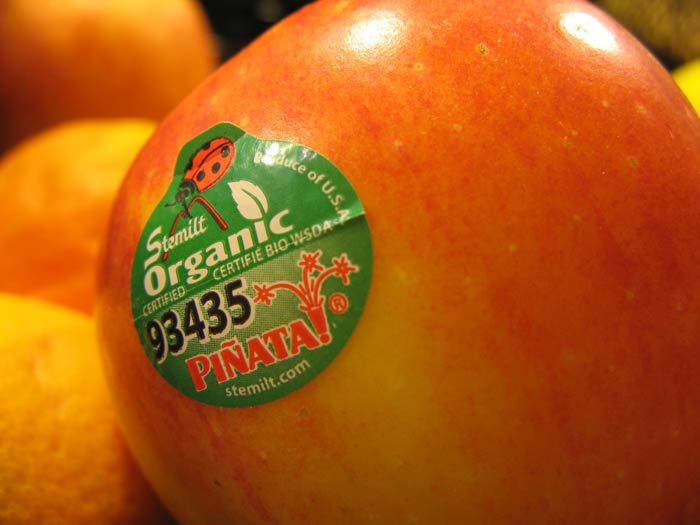
Let's put a rumor to rest. No, the 5-digit PLU codes on produce do not tell you what is genetically modified or natural. This urban legend has circulated long enough, even on the best of websites. It's time to take it down.
The 4-digit PLU codes on the sometimes-pain-in-the-neck labels glued to apples, for example, tell the checkout lady which is a small Fuji (4129) and which is a Honeycrisp (3283). She'll know what to charge you and the inventory elves will know what's what. If there's a 5-digit code starting with 9, then it's organic.
These numbers, organized by the Produce Marketing Association, have nothing to do with you. According to Kathy Means, Association Vice President of Public Relations and Government Affairs, this is an optional convention for retailers and their supplier and is not designed as a communication tool for customers. If you want to know which items are organic, look for the word Organic; and stop squinting at tiny codes.
GMO codes are hypothetical
Those that run PLU-universe figured that someday some retailer might want to distinguish between a GMO and a non-GMO for price or inventory purposes. So they created a convention of 5 digits starting with an 8, just in case it catches on. But it hasn't. No one uses that number 8 as far as we can tell. And why would they? Most Americans say they would avoid GMOs if they were labeled.
Some seed companies don't even want gardeners to know which seed is genetically modified. One company that sells zucchini seeds outfitted with virus genes announced that they would refuse to sell seed packets in Vermont, since the state legislature requires GM seeds to be labeled.
Shopping Guide helps you avoid GMOs
Where does that leave you—if you happen to be one of those finicky eaters who values your immune and reproductive systems, and don't want your kids to end up with the organ damage common among GMO-fed lab animals?
Fortunately, we've got you covered. Go to www.NonGMOShoppingGuide.com and peruse the long lists of non-GMO and GMO brands by category. Download a two-page version, order the pocket guide, or even equip your iPhone with the new app "ShopNoGMO".
Although a list of non-GMO brands won't help you figure out if your produce is genetically modified, the great news is that there are only 4 GMO veggies or fruits at this point: papaya, but only from Hawaii and no where else; some zucchini and yellow squash, and some corn on the cob. For these, unless it says organic or boasts a non-GMO sign in the store, eating them is a gamble. It could be GMO.
If you're not sure if GMOs are bad for you, we've got you covered there too. Visit www.HealthierEating.org, and read, listen, or watch, and find out why more and more doctors and medical organizations are prescribing non-GMO diets to all patients.
International bestselling author and filmmaker Jeffrey M. Smith is the executive director of the Institute for Responsible Technology. His first book, Seeds of Deception: Exposing Industry and Government Lies About the Safety of the Genetically Engineered Foods You're Eating, is the world's bestselling and #1 rated book on GMOs. His second, Genetic Roulette: The Documented Health Risks of Genetically Engineered Foods, documents 65 health risks of the GM foods Americans eat everyday. Both are distributed by Chelsea Green Publishing. To help you choose healthier, non-GMO brands, use the Non-GMO Shopping Guide.