- BIG NEWS:
- Glenn Beck
- |
- ABC
- |
- CBS
- |
- Oprah
- |
Last year, Stephen King gave an interview to USA Today in which he was asked to account for his critical renaissance. How did he make the move from pulp-peddling horror hack to an award-winning capital-A Author?
King was brutally frank. "Most of the old critics who panned anything I wrote are either dead or retired. The newer ones read me when they were young, which tends to make for an easier ride and more sympathetic readers."
My first thought was, "Wow, that's really harsh."
My second thought? "Wow, that's kind of true."
The critical landscape shifts with time. Ideas of what's important and what's not, what's literature and what's merely a book-shaped object, who's qualified to tell the big stories and what constitutes appropriate authorial behavior are all subject to interpretation, and to change.
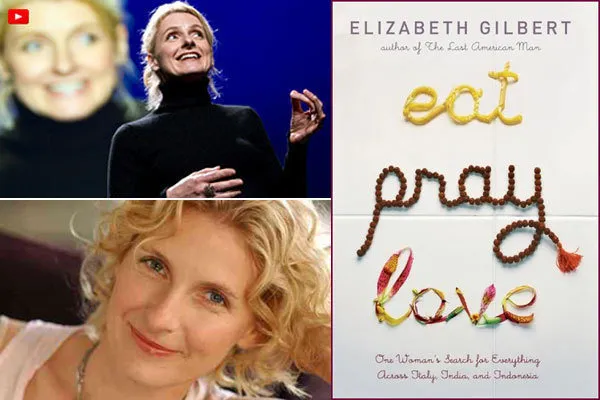
I was reminded of this when I read Ellen Heltzel's critique of a lecture featuring Ann Patchett and Elizabeth Gilbert.
Evidently, there was giggling involved.
"Here were she and Gilbert, two women writers I have long admired, chatting in front of hundreds of people like two girls at a slumber party. Longtime correspondents by mail, they owned up to their real reason for coming to Portland, which was so the two of them could spend time together. They went to yoga! They had lunch! They shopped! After offering this glimpse of their day, Britney and JLo -- I mean, Ann and Liz -- proceeded to talk about their lives with the once-over-lightly gloss that affected parts of Gilbert's phenomenal bestseller Eat, Pray, Love. Their verbal badminton was big on self-deprecation, but that hardly obscured the smugness in the air."
No word on whether the ladies gave each other pedicures, and whether the polish was sparkly, but it's safe to say that Heltzel was Not Amused.
"What would Philip Roth do?" she sniffs, in an essay posted on the National Book Critics Circles' website. Presumably, the answer she's looking for is not "write a book with an aging male protagonist whose struggles with identity and mortality are alleviated by an affair with the hot lady janitress." (And yes, I know The Human Stain isn't Roth's most recent work. I just really like writing 'hot lady janitress.')
There's a bit of a pot/kettle problem when Ellen Heltzel, of all people, goes after you for a lack of gravitas. Heltzel is one-half of a book-reviewing duo who style themselves "the Book Babes." They've got a website with a banner advising that "books are better than Botox," and have built a brand on an intimate, chatty, you-go-girl tone, which makes me wonder if Heltzel's rant isn't a cleverly camouflaged attempt to kneecap the competition.
If you've read Gilbert's work (and by now, who hasn't?), then you know that her confiding, urgent tone is precisely what so many women found irresistible.
If you've read Patchett's novels, you know that she's an impressive prose stylist, a big-deal writer with serious chops and the prizes to prove it....but if you've read Truth and Beauty, her memoir of her long and difficult friendship with the late Lucy Grealy, you also know that she spent large portions of her time in graduate school carrying her diminutive BFF around in her arms.
I doubt the audience was horrified by the easy, breezy intimacy that got Heltzel's panties so bunched. In fact, I'd bet many of them were charmed -- or, at least, aware, that it could have just as easily been two guys sitting around talking about comic books and Lost as two chicks discussing yoga.
Heltzel ought to know that these days, intimacy and candor are hardly unusual for writers of either gender. Rare is the author who doesn't blog, or Tweet or maintain a Tumblr, or sit for interviews about what he did on his summer vacations. Even Cormac McCarthy climbed off his high horse long enough for a televised chat with Oprah. Wake up and smell the Boniva -- it's a new day out there!
The double standard is still alive and well and lovingly tended by critics like Ellen Heltzel...but it's going to change.
The dichotomy of men writing big, important books about war and women writing little, lapidary books about domestic life is shifting, simply because, of the new crop of bright young boys, not many have been soldiers. Most of them are writing about assimilation and identity, or families in crisis, or exploited children, or office politics. In other words, girl talk...or at least subjects in which women writers can claim equal expertise.
Nor are today's male writers behaving like the Great White Men of the past. They're sneaking out of the house after curfew to write genre books under fake names, or superhero screenplays or appreciations of video games. Really, boys. Do you think Philip Roth's sitting around playing with his Xbox?
True, men's books are, still, almost always, taken more seriously. Yes, high-minded women writers have to struggle with a marketing machine that thinks that anything written by someone under forty with a functioning uterus should get a cute, sparkly cover and, often, few reviews. None of this will change overnight.
But it will change, because the people who think that a man's book has more worth just because it's a man's book -- who believe, as Heltzel writes, that "the bass voice still has more resonance than the soprano, metaphorically speaking," due to "our own internally wired biases" will eventually give way to those whose biases are wired quite differently.
Whether they're the graying literary lions who proudly profess that they don't read women, or female critics who can only get that giddy little thrill when the voice that speaks to them is basso profundo -- those folks are being downsized, they're getting laid off, they're seeing their book sections shuttered, they are (not that I'm wishing this on anyone!) shuffling off to that Great Reading Room in the Sky.
The writers and critics who will replace them will have come of age with different values, different experiences and expectations, different books under their belts. They'll have read Junot Diaz and Edwidge Danticat; Jonathan Safran Foer and Marisha Pessl, Gary Shteyngart and Lara Vapnyar, Keith Gessen and Rivka Galchen, Cormac McCarthy and Annie Proulx, Joshua Ferris and Kate Christensen, Ishmael Beah and Chimamanda Ngozi Adichie,
They'll believe that there's room for everyone on that stage, and that all of them, from the professorial lady writer who stands behind a podium to the authors who sit in armchairs, feet tucked cozily underneath them can, as Heltzel puts it, "serve themselves and the cause of literature." They'll know that literature need not speak in one (old, white, male) voice with its hands clenched tight on the podium - that it can, in fact, speak in many voices, that it can lecture, and laugh, and that it can also sing.
Bonnie Fuller: J. Lo To Naked Jen Aniston: Get Off My Magazine Covers!
Hollywood divas BELONG in the limelight. Did Marc Anthony doom his marriage by pushing J. Lo out of it?
Want to reply to a comment? Hint: Click "Reply" at the bottom of the comment; after being approved your comment will appear directly underneath the comment you replied to
In other words the novel is getting dumber and dumber
particularly the ones directed at teens. Thank God the
Sex And The City crowd have finally had their day
only to be replaced by vampires. If you still have to
compare female writers to McCarthy & Roth imagine how
bad things must really be.
Novels, movies, television and media are all being dumbed down. It is just easier to produce this drivel and anyway it is what our "No Child Left Behind" culture desires. It is much easier to control people that lack the ability to sense manipulation and so every major corporation encourages our downward slide. It won't be long until we are reduced to serfs serving feudal lords again.
How about Doris Lessing?
She tackles the ordinary everyday as well as the big-scale global themes.
Read "Martha Quest"!
Well, maybe aspiring women writers should:
1) Move South.
2) Use a pseudonym.
3) Write about people ---yeah, even women---who do something other than paint their nails, trade recipes, dote on their children (or grandchildren or nieces or...) and fret over their love lives.
For that matter, write about women who actually DO something! Like...take a raft trip down the Mississippi River, or accept a job studying birds in the wilderness, or survive a barefoot existence in a sleepy Delta town connected to the outside world by a crumbling two-lane highway and a lonely railroad track!
Just kidding about the first two suggestions, but not the last one.
And the NBCC didn't award a single woman nominee last night though the contenders were serious heavyweights: Jane Mayer, Marilynne Robinson, Elizabeth Strout, Brenda Shaughnessy, Annette Gordon-Reed, Brenda Wineapple, Honor Moore, Paula J. Giddings, Vivian Gornick, and Helene Cooper.
I have been baffled by the whole "chick lit/chick flick" genre. Not because I don't get it, but what I don't get is the virtual absense of novels written by women that don't cover ... family issues, bad males who done me wrong, BFFs and our shopping and lunching, "mommy and me," "cooking and getting on with my life after divorce, and the whole canon of topics these women writers couldn't write if they in fact weren't gendered female by birth. I am a woman, an avid reader of both fiction and non-fiction and I can say say quite firmly, contrary to the poster somewhere above, that male authors write about way more things than just "war." The exception to this of course is the female crime and mystery writer. But those are specific genres. But where are the strong, intellectually intriguing, well crafted page-turners that keep you riveted and curios until the end that don't center on the "powerful dynamics of" a romantic relationship, a mother daughter relationship, or two divorces? I understand the appeal of these stories to some people. But is that all women can write? And if so, it begs the question if it is not men, but women, who can only think with their hormones.
Oops, Akenanubis, I should have read your post before posting. My sentiments, exactly! I want to see some more Barbara Kingsolver-ish lit! More Isaac Denison (sorry, spelling). Even Lee Smith includes plenty of "women's issues", but her women tend to be out, doing something rather daring and exciting. (Won't spoil it----read "The Last Girls")
Women want to read about relationships, yeah, but they also crave ACTION!
Women, did you know that we females have a much higher tolerance for pain than men, and that we often can walk farther than men without collapsing? Many women also tolerate heat better than men, and... believe it or not, women are often better hunters and fishermen than men. I mean, fisher-women. Women are excellent drivers and pilots, and can often take more G's than men. And don't get me started on marksmanship, equine and dog-handling skills!
I've always been intrigued by the assertion that a writer wants to be "taken seriously". As the author of three books (two utter failures and third pending release into possible fail-hood), being taken seriously evokes images of weighty, important prose suitable for some Victorian Novel of the Month Club to peruse and ponder over cups of Earl Grey and butter scones, please pass the pretension. What if your subject matter is entirely lighthearted, fun, whimsical, and just plain silly? What hope is there in reaching Plateau du Serious? Did anyone ever take the late Douglas Adams seriously? Seriously, I’m being serious about the critical seriousness of his non-serious work. He sold millions of copies, and never once did he seek serious contemplation. I know, it’s just a saying. But a grain of sand can’t do much harm until it’s in your eye.
SOT
Couldn't agree more. I can not keep up with the writing world to the extent that I must know which bright young thing is the must-read serious author of the future. So, I do what I do with music. If a body of work becomes established (three novels, say), I begin to look for the author. I do this by wandering into a bookstore on my lunch hour, every now and then.
As to Douglas Adams, I was delighted to see him as assigned reading a couple of years ago for one of my high school age children. Maybe not so serious, but well worth your time and isn't that what matters?
a corollary: I've been having an ongoing dialogue with my friends about female film directors. As a former subscriber to Ms. and a supporter of women's opportunities/art and as someone who has worked with many female artists, I can't for the life of me figure out why so few female-directed films appeal to me. I noticed it a couple of years ago when discussing my favorite directors and now it plagues me. I even go out of my way to see female directors' films I think I might be interested in... to no avail. It's become an joke in my circle of friends.
I think it's simply that my inner world is quite different than that of most women; the things I think about and am intrigued by are of another world completely, at least generally speaking. It makes me marvel that I can even have relationships with women (which, strangely I do frequently and to great depths). I suppose we're more different than we like to admit.
surely there were great women of the past? george sand, willa cather, emily dickinson, elizabeth barrett browning (yes - let's bow to a few poets, transcendent explorers of universal themes and internal worlds) - what a false dicotomy to even contemplate -
Don't forget Flannery O'Connor.
Rather than focus on gender of the writers, the real difference is probably in what men and women like to read.
Today's popular fiction is tomorrow's classic literature. Jane Austen wrote "chick lit," if by that you mean novels that examined human lives in a particular cultural moment through the lens of love, money and marriage. Dickens and his contemporaries published much of their work serially, in popular periodicals. Shakespeare borrowed plots and made use of character types that can be found in books and movies today--"star cross'd lovers" and sociopathic villains with their outsized schemes (Iago, Don John in "Much Ado." Richard III). These writers are still read because they produce great stories and characters we can still care about. We can recognize something valuable about or for ourselves and our own world in their work.
I once saw a television show with a panel of book critics. When asked which contemporary writer would survive into the future, the verdict was unanimous: Stephen King.
I do think the age of seeing a book as mens fiction or womens fiction will be coming to an end. Novels about war aren't necessarily good books and novels about family life aren't necessarily bad books.
I'd read recently that most men under the age of 45 will read Joan Didion AND Norman Mailier. Speaking as a writer and reader, that has been my experience. I think the more interesting discussion will be about will white readers respect writers of color or will straight readers respect gay novels.
"I think the more interesting discussion will be about will white readers respect writers of color or will straight readers respect gay novels." That is what I wonder too. I hate that African-American lit is always shuffled off to the corner at the bookstore or library. I don't want our own "section", I want it mixed in with everything else with a wider chance of it being seen and read by many.
I hear you. I hate the principle but I love the game of discovering a book in a specialized section that can hold its own amongst the general book population.
Have to be careful about standing in an inappropriate section for too long, though, since the bookstores seem to double as a meet-market these days. Funny how other patrons jump to conclusions based upon your reading choices. I try to mix up the flavor of my acquisitions, just in case.
mary renault writes like a man. by that i mean she writes believable male characters in thought, act, and battle. i don't know how she does it, but i'm sure being a lesbian british expat in south africa isn't the key.
It's somewhat laughable to mention Cormac McCarthy in the same breath as these "new guard" writers. He's simply the most recently discovered of the great white authors. Not to diminish his work.
I'm surprised there was no mention of Marilynne Robinson. Her first two novels, Housekeeping and Gilead, were astounding. Power and scope more than a match for any male, and subject matter that transcends the norm.
A few scattered thoughts on this most interesting post!
1. Virginia Woolf would argue that women and the rhythms of their life are just as valid a subject for art as politics and warfare. And, Woolf was a living testament to this: in her books, the scene of woman buying lace or choosing a dress carried as much emotional power and significance as any battle scene.
2. There is a distinction to be drawn between serious literature and pop fiction. The genre of "chick-lit" that you are referring to, with glittery covers and glossy author photos is popular fiction. It doesn't represent serious literaure written by women. There's plenty of young female authors who are taken seriously because they write serious literature. I'm thinking of Zadie Smith, Kiran Desai, Sarah Hall. I believe they are all under 40.
Two of my male writing teachers (W.P. Kinsella and William S. Wilson, III) told me that Anne Tyler is the best contemporary American writer. Anne Tyler. Not Philip Roth, Ethan Canin, or Robert Olen Butler.
Just read a good novel by a new author, Ilana Stanger-Ross, whose 'Sima's Undergarments for Women' is garnering rave reviews.
You must be logged in to comment. Log in or connect with