Jeremy Rifkin

Jeremy Rifkin

Posted: February 8, 2010 07:30 AM

'Empathic Civilization': Why Have We Become So Uncivil?

What's Your Reaction:

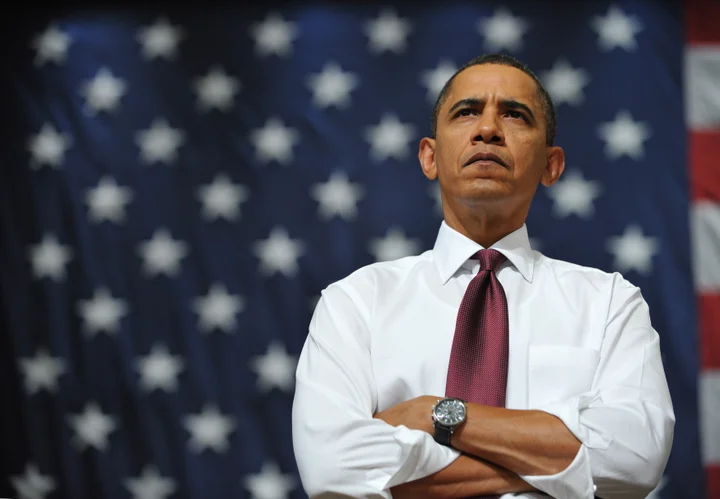
In the past two weeks, President Obama has made an unprecedented plea for civility in public discourse. Washington insiders say they can't ever recall a period in American public life as full of anger and polarization as now. TV and radio talk show hosts, in particular, have fanned the flames of hatred with occasional outrageous personal attacks on public figures and advocates of policy agendas with which they disagree. If we continue along this toxic road, it could lead to unfathomable damage to the American psyche. The question is "Why is The United States becoming so uncivil"?

When we talk about civility, we are really talking about empathy: the willingness to listen to another's point of view, to put one's self in another's shoes and to emotionally and cognitively experience what they are feeling and thinking. To civilize is to empathize.

Below all of the fiery rhetoric and finger pointing, the acid comments and degrading personal attacks, is a deep-seated fear and mistrust of the "the other"- in other words, a lack of empathy.

My sense is that the fear that is spreading like a wild fire across America is due, in large part, to a seismic shift occurring in our thinking about the most cherished values of American life: our notions of freedom, equality, and democracy. In other words, what we are really discussing- underneath the surface of the political and ideological debates- are our beliefs about the basic drives and aspirations of human beings.

Freedom in the nation state era has been closely associated with the ability to control one's labor and secure one's property, because that is the way to optimize pleasure and be happy. The classical economists argued that every individual is free to the extent he or she can pursue their individual self- interest in the material world. Freedom, in the rational mode, is the freedom to be autonomous and independent and to be an island to one's self. To be free is to be rational, detached, acquisitive, and utilitarian. The role of government, in turn, is to safeguard private property relations and allow market forces to operate, unfettered by political constraints. The conventional American dream is personal opportunity to succeed in the marketplace.

The empathic approach to freedom in the emerging Biosphere Age is based on a different premise. Freedom means being able to optimize the full potential of one's life, and the fulfilled life is one of companionship, affection, and belonging, made possible by ever deeper and more meaningful personal experiences and relationships with others--across neighborhoods, continents and the world. One is free, then, to the extent that one has been nurtured and raised in a global society that allows for empathetic opportunities at every level of human discourse. The new dream is the quality of life of humanity.

The litmus test for which definition of freedom is more salient is the deathbed judgment. When looking back on one's life, few would measure the meaning of their existence in terms of the money they amassed or the autonomy they achieved. In fact, as we've learned, greater wealth and autonomy tend to isolate one from meaningful relationships with others. Our lived reality becomes more insular and restricted and our lives more lonely. When near death, most people reminisce about the experiences of deep connections they had with others-- family, friends, and colleagues. It is the empathetic moments in one's life that are the most powerful memories and the experiences that comfort and give a sense of connection, participation, and meaning to one's sojourn.

These two very distinct ideas about freedom are accompanied by two very different ideas about the nature of strength and what it means to be courageous. When we think of freedom, we generally associate it with being independent. We go so far as to equate freedom with invulnerability, the totally self- contained person glorified in the sagas of the American frontier. The pioneers, mountain men, and cowboys, who set out alone to tame the wilderness, are romanticized as truly free spirits.

The empathic school takes a different approach, asserting that real freedom requires that one exercise vulnerability rather than invulnerability. If freedom is the ability to live out the full potential of one's possibilities and if the measure of one's life is the intimacy, range, and diversity of one's relationships, then the more vulnerable one is, the more open he or she will be to creating meaningful and intimate relationships with others. Vulnerable in this sense does not mean being weak, a victim or prey but, rather, being open to communication at the deepest level of human exchange.

To be vulnerable is to trust one's fellow human beings. Trust is the belief that others will treat you as an end not as a means, that you will not be used or manipulated to serve the expedient motives of others but regarded as a valued being. When one is treated by others as an end, not as a means, one becomes truly free. One can't really be free in a world where everyone mistrusts each other. In such a world, freedom is immediately reduced to a negative, the ability to close oneself off from others and be an island unto oneself. Authoritarian societies that promote paranoia and mistrust and pit each against the other, squash the spirit of freedom.

The idea of freedom has also historically gone in tandem with the idea of equality. The American and French revolutionaries viewed the two ideas as inextricably linked. They became the alpha and omega of the New Order of the Ages. Equality, in the rationalist mode, is a calculable legal phenomenon. Laws are enacted to guarantee political sovereignty, individual civil rights, and market access.

The empathic philosophers define equality more in psychological terms. They ask how one comes to think of others as equal to themselves and vice versa. They view empathetic extension as the great leveler, the force that breaks down the myriad forms of status and distinctions that separate people into subjects and objects. They remind us that as long as equality is narrowly measured in material terms--the opportunity to succeed in the marketplace, even if it's by merit rather than by hereditary claims--the end result will always be defined in terms of "mine" versus "thine." Wealth and professional and academic distinctions will continue to create status distinctions and divide one from another.

Empathic extension is the only human expression that creates true equality between people. When one empathizes with another, distinctions begin to melt away. The very act of identifying with another's struggle as if it were one's own is the ultimate expression of a sense of equality. One can't really empathize unless one's being is on the same emotional plane as another. If someone feels superior or inferior in status to another and therefore different and alien, it becomes difficult to experience their plight or joy as one's own. One might feel sympathetic to others or feel sorry for them or take pity on them, but to experience real empathy for another requires feeling and responding "as if " you "are" that person.

That doesn't mean that empathetic moments erase status and distinctions. It only means that in the moment one extends the empathic embrace, the other social barriers--wealth, education, and professional status--are temporarily suspended in the act of experiencing, comforting, and supporting another's struggle as if their life were one's own. The feeling of equality being expressed is not about equal legal rights or economic entitlements but the idea that another being is just like us in being unique and mortal and deserving of the right to prosper.

Status hierarchies are, of course, designed to create inequalities. Status is about rankings and the claiming of authority over others. Every society establishes various boundaries of exclusion. A highly stratified society generally is low on empathetic consciousness because such societies are segmented between so many status categories that the ability to empathize beyond one's own group, both up and down the hierarchy, is limited.

The ability to recognize oneself in the other and the other in oneself is a deeply democratizing experience. Empathy is the soul of democracy. It is an acknowledgment that each life is unique, unalienable, and deserving of equal consideration in the public square. The evolution of empathy and the evolution of democracy have gone hand in hand throughout history. The more empathic the culture, the more democratic its values and governing institutions. The less empathic the culture, the more totalitarian its values and governing institutions. While apparent, it's strange how little attention has been paid to the inextricable relationship between empathic extension and democratic expansion in the study of history and evolution of governance.

Reimagining freedom, equality, and democracy from an empathic perspective has far-ranging consequences for the kind of society that we choose to live in. We would need to rethink our parenting styles, educational systems, business practices and, even governance itself to reflect our empathic nature. This would constitute nothing less than a cultural revolution.

No one would deny that there is merit to our long-standing ideas about freedom, equality and democracy-especially the notions of personal responsibility, self-sufficiency, and the protection of basic economic and political rights. Still, it's hard to deny the fact that a younger generation is beginning to broaden and deepen its sense of freedom, equality and democracy in an increasingly interconnected, interdependent and collaborative world.

Perhaps what is needed is a more transparent public debate around our core views of freedom, equality and democracy. Maybe it is time to suggest a moratorium on the hyperbolic political rhetoric and incivility and begin a civil conversation around our differing views on human nature. This would offer us a moment in time to listen to each other, share our feelings, thoughts, concerns and aspirations, with the goal of trying to better understand each others' perspectives, and hopefully find some emotional and cognitive common ground.

 
In the past two weeks, President Obama has made an unprecedented plea for civility in public discourse. Washington insiders say they can't ever recall a period in American public life as full of ange...
 
Comments
614
Pending Comments
0
View FAQ
Comments are closed for this entry
Page: 1 2 3 4 5 6 7  Next ›  Last »   (14 pages total)
Show: 
photo
Lorianne   06:30 PM on 2/15/2010
big⋅ot⋅ry  /ˈbɪgətri/ [big-uh-tree]
–noun, plural -ries.

1. stubborn and complete intolerance of any creed, belief, or opinion that differs from one's own.
2. the actions, beliefs, prejudices, etc., of a bigot.

_______

Goes both ways folks.
photo
HUFFPOST SUPER USER
nltldoc   10:36 PM on 2/14/2010
The CONSCIENCE of a Society is manifest in it's SYSTEM OF LAWS.

When a Society's Legal System is based on ADVERSARIALISM, SELF-SERVING PROFITEERING and MANIPULATION of RULES...that Society gets what we have today in America.

THE GREATEST HAZARD TO THE AMERICAN PEOPLE IS THE DYSFUNCTIONAL LEGAL SYSTEM OF THE USA.
photo
AkiraBergman   09:26 PM on 2/14/2010
Civility is an act of balancing empathy with legality. No amount of emotion is enough to bond a large number of predators, which we essentially are, in a tight relationship without legality and its enforcement.

USA is suffering at both fronts. In fact the whole humanity are in a similar situation. The reasons are essentially the resource bottleneck we have entered (including climate change) and the communications revolution. They are compounding each other and creating great heat. I am afraid this will continue to increase until the unavoidable global unification in both empathy and legality.

We have to discard a number of redundancies to achieve this. At the top of the list are the nation states and the corporate and traditional entities hiding behind their sovereignty.
photo
HUFFPOST SUPER USER
earlyautumn   09:18 PM on 2/14/2010
A lovely intellectual article.

But to exclude the influence of "ignorant hate radio and TV" (Limbaugh, Savage, Coulter, and most of those at Faux News) in this discussion is a serious omission.

For more than two decades, Limbaugh has used the most course and flambuoyant and illogical means to demean liberals, democrats, the Clintons, college professors, and anyone else he deems to be too progressive for his backward, racist, and provincial tastes. When he held up a picture f te 13-year-old Chelsea Clinton and referred to her as the "White House Dog" there was little said in the main stream media. Today he is so powerful that there is not one GOP congressman who dares criticize him.

When dopey Ronald Reagan became president and removed the Fairness Doctrine for those who used the publicly owned airwaves, he set in motion the trend towards demonizing those who had been the heroes of our country since the time of FDR. (Liberals brought to us a healthy banking system, social security, Medicare, civil rights laws, the Marshall Plan, the GI Bill, the Fulbright Scholarhips, etc., etc. Once Limbaugh and his filth-purveying colleagues came to power, civility began to unravel in this country. Thank you Ronald Reagan, the spiritual father of hate radio and TV.
photo
Iammadashell   11:19 AM on 2/18/2010
I agree with you , my question to Mr Rifkin why did'nt he address this influence that obvious to most of us.
caseyblab   09:04 PM on 2/14/2010
The press itself has poisoned the public well- having "news" commentators call the president a socialist, a radical, etc etc would have been considered taboo even a few years ago. Men who cry, wear their religion on their sleeve, allow no discussion beyond their own fundamentalist viewpoints have cheapened the public discourse.
photo
HUFFPOST SUPER USER
zbowling   07:27 PM on 2/14/2010
predatory capitalism is commodifying human life and nature. 24 hour a day of lying liars and lies on TV and the pundits who exploit us.
http://www.huffingtonpost.com/tom-engelhardt/hold-onto-your-underwear_b_462094.html
TV should forced to broadcast civics lessons as well as basic Law, economic theory, and sociology, science, political science, and government.

Even our politicians test lower than the general population at civic literacy. It's no wonder we are in such a state of trouble.
http://www.americancivicliteracy.org/resources/quiz.aspx

Our society is ignorant and brutish and the less educated we become the worse it gets.
When we are not fighting to meet the even basic needs, kindness comes easier.

Empathy lessons should be given to politicians who have abandoned their duties and decide to put themselves first. Our leadership has failed us. They should be stripped of all money and property that they didn't have before entering politics.
photo
HUFFPOST SUPER USER
howdouno   05:42 PM on 2/14/2010
"Conversation means being able to disagree and still continue the conversation."
Dwight MacDonald, American editor.

What is so new, revolutionary, or shocking about Americans trying to actually listen to and understand another perspective?

Obama deserves praise for refusing to demonize his critics, but it's also quite legitimate for Americans to be profoundly upset with the corrupt bailout of Wall Street bankers as suffering expands on Main Street. Being civil remains essential, but it's not sufficient.
1murillo   03:25 PM on 2/14/2010
Rifkin, many words, yet you're looking for something to write about.
When the economy goes south the usual scapegoats (African-Americans, Latinos, immigrants,etc) are barely heard. When the economy goes south even more, there are more people to blame and more to do the blaming.
History's advancement is never linear, presently we're not going forward.
photo
HUFFPOST BLOGGER
Robert D. Stolorow   03:21 PM on 2/14/2010
Your work on "Empathic Civilization" is enormously important, and I applaud you for it.

In a number of my own HuffPost blogs (e.g.: http://www.huffingtonpost.com/robert-d-stolorow/imagine-a-world_b_179943.html ), I have similarly emphasized our need for a context of mutual understanding to hold, rather than evade, our existential vulnerability and anxiety in our current "Age of Trauma."
vringso   02:21 PM on 2/14/2010
i am assuming that the productive people of a civilized society are to have pity on people who are in need of food , clothing & shelter . that the needs of people are more important than the production of the social network. the more productive an individual becomes , the more that individual needs to be taxed to cover the short commings of the needy through pity . the aurther says that freedom comes through trust. trust a system of need ? i don't think so.
photo
WestcoastSteve   03:13 PM on 2/14/2010
Productive people in a civilized society should help people in need of food, clothing and shelter, or it is not a civilized society.

From what I can make out from your nearly incomprehensible post, you don't agree with this, because you object to taxes. So what are those people to do, just die because they are unproductive?

Survival of the fittest is not the recipe for a civil society, but it is an attitude all too common, especially for those on the Right, unless of course they get into trouble, then they are more than willing to accept help from the 'productive' members of society.

If I am am wrong about my interpretation of your post, please expand upon it so it is clearer, although I think I read it correctly.
photo
Roop Daug   04:59 PM on 2/14/2010
I think many would have no problem helping those who "can't", but I don't know why anybody would want to help those that "don't want to".
vringso   07:59 PM on 2/14/2010
you are are wrong . from what i gather in your collective thinking ,Robinhood was correct in stealing from the rich & giving to the poor. i am saying take back what was given to Wall St. or any kind of Govt. bailout & return a reward to the productive who have been taxed ,penalized ,whatever you call it. i call it the anti- Robinhood.
photo
WestcoastSteve   02:18 PM on 2/14/2010
Why does anyone think we, as a race, are any more civilized in 2010 AD than we were in 2010 BC?

Because we have better medicine? Neater gadgets? Democracy for a fraction of the people of the world?

I was a child of the nuclear age, growing up under the threat of nuclear annihilation (Which still exists, by the way. All those thousands of Russian, Chinese and American nukes haven't magically disappeared just because nobody talks about them much.)

How is the world civilized when nations still reserve the right to end life on Earth through nuclear war just to preserve some ideology or religion?

The average person knows how crazy and horrifying this is, much worse than the old days when people used to just worry about the barbarian hordes attacking their towns. At least you could build a wall to try to keep them out.

As ordinary people, we are supposed to be peaceful, polite and play by the rules. Yet the higher one looks in society, the bets are off. Ultimately, just taking what you want by force or theft is the way to do things.

So why is anyone surprised when these sorts of immoral attitudes start to appear in the common people? They are starting to get it: there are no rules, never were, if you have enough money or power.

I'm just surprised there hasn't been actual violence associated with politics in America, as the stakes for holding power have risen.
higherstrategy   01:56 PM on 2/14/2010
in a world that only moves for PAPER MONEY

well,

Kindness won't earn you much.

see the "Trickle down effect" of greed?
like what it does to your kids?
HUFFPOST SUPER USER
vew   01:34 PM on 2/14/2010
It's a revival of the 1960's and the cultural changes that period brought. It's the continuation of the Civil Rights era- the face of America is changing. When there are significant cultural changes occurring, there is always resistance from people who want to maintain the status quo. Who attends the Tea Party events? Older Americans for the most part who want to keep the past alive. The younger people may not be marching in the streets or closing down campuses; however, they are gaining control of the way we think nationally. I find them to be open to gay rights and the idea that women should have reproductive choice. They have friends from many different cultural and/or racial backgrounds. And they are aware of the changes taking place in the world because of their use of the internet. Since they live in larger cities because of school and/or work possibilities, they have a more urban view of life. They have a sense of volunteerism and a work ethic that stresses there needs to be time for family and friends. These concepts are slowing growing into a cultural pattern for America. They helped elect our first Black President. So the current anger in America and in our Congress is the old group trying to hang on to power. The cultural climate will change as younger people are elected to office.
photo
peterg76   01:10 PM on 2/14/2010
Because incivility works when the weak and cowardly do not stand up to it.
photo
WestcoastSteve   02:21 PM on 2/14/2010
That about nails it.
photo
HUFFPOST SUPER USER
Marianna Scheffer   12:59 PM on 2/14/2010
I don't care whether people are nice or not. I just want fair treatment in a secular civil society. I pull my weight as a citizen and expect others to do the same.
Duh!
HUFFPOST SUPER USER
vew   01:37 PM on 2/14/2010
As an older adult woman I to want fairness. But what is fair? Is it fair for us to enjoy the benefts of Medicare while our children/grandchildren can't affort health care.

Twitter Edition