Habeas rights have been trashed, prisoners have been tortured and held without trial for years at Gitmo and Bagram. Obama should finally show respect for the legal rights of prisoners held by the US.
The airwaves, newspapers and websites have been saturated with coverage of the rescue of Captain Richard Phillips, the US citizen who was being held by four Somali "pirates" on a small lifeboat in the Indian Ocean, following the unsuccessful attempt by the Somalis to take control of the US-flagged vessel, the Maersk Alabama, a ship owned by a Pentagon contractor.
While details are still emerging, there are definitely some serious questions looming about how the decision to use lethal military force was put into play--in particular three key questions: 1. The legality of the killing of the three Somali men; 2. The political decision to kill them in light of long term potential consequences; and, 3: The legal status of the fourth Somali "pirate" allegedly in US custody.
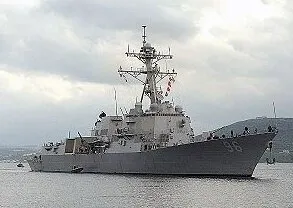
First the background: We are told that on Friday, President Obama gave the military the green light to use lethal force to rescue Phillips. We also know that a group of "Somali elders" believed they were negotiating with the US to try to bring about a peaceful resolution to the crisis. Reports indicate that the Somali elders asked that the four Somalis be allowed to return freely to Somalia without being prosecuted in exchange for releasing Phillips. That was reportedly rejected by the US. On Sunday, the Somalis were told the negotiations were over and that the Americans "had another action." Shortly after that, lethal force was used--with Navy SEAL snipers on board the USS Bainbridge shooting dead three of the Somali men. The Navy says the snipers took the action because they believed Phillips's life was in "imminent danger"--this allegedly came when a Somali was pointing an AK-47 at Phillips's back. A fourth Somali citizen is in custody, though it is unclear when exactly he was taken by the US. Reports indicate that he had been stabbed in the hand in the initial "pirate" raid on the Maersk Alabama and, before the Sunday raid, had voluntarily left the lifeboat holding Phillips to seek medical attention from the US warships and/or to negotiate with the US side.
I have been in touch with two well-respected legal scholars, Francis Boyle from the University of Illinois College of Law and Scott Horton, a military and constitutional law expert. Both agree that the US had legal justification to use lethal force against the "pirates." Boyle said, "Technically, piracy is a felony under US law. And deadly force can be used against someone involved in the commission of an ongoing felony."
For his part, Horton said: "The legal rule historically is that pirates on the high seas are fair game for any country's military. In this case they kidnapped a captain and threatened to kill him, so the use of lethal force against them was fine from a legal perspective. (The bigger question was whether it was a wise thing to do, of course, but that requires an assessment of the entire tactical situation, about which I don't know enough)."
On that question, Vice Admiral Bill Gortney, head of the U.S. Navy's Bahrain-based Fifth Fleet, seemed to realize that there may be significant consequences for the decision to kill the Somali men. "This could escalate violence in this part of the world, no question about it," Gortney said. As Reuters reported, "Somali pirates have generally not harmed their hostages and officials fear they could now act more violently."
As one "pirate" said, "The French and the Americans will regret starting this killing. We do not kill, but take only ransom. We shall do something to anyone we see as French or American from now." Another added, "As long as there is no just government in Somalia, we will still be the coast guard... If we get an American, we will take revenge."
On the issue of jurisdiction to prosecute the fourth Somali "pirate," Horton said, "Pirates can be tried anywhere that exercises jurisdiction. Here they attacked a US-flag vessel, which means that the United States would have criminal law jurisdiction if it chose to exercise it."
There are certain to be calls from blood-thirsty lunatics to send this Somali man to Guantanamo or Bagram with right-wingers like Newt Gingrich and Cal Thomas wrapping this into their tired "Obama is weak on terror" narrative. As Thomas wrote last week on the Fox News website:
What will the Obama administration do if the pirates are captured alive? He won't sent them to Gitmo, which he is closing down. Will they get ACLU lawyers? Will there be testimony from a "pirates rights" group? Will they be released on a technicality after a trial in U.S. courts? If there is not as forceful a response as there was during the Jefferson administration, it will invite more of these incidents. The world's tyrants are watching to see how President Obama reacts. The message they get will determine how they respond to America and whether we will be in greater peril.
Indeed, The Wall Street Journal on Sunday called for the Somali man in custody to be "transferred to Guantanamo and held as an 'enemy combatant,' or whatever the Obama Administration prefers to call terrorists." On this point, Horton points out an interesting distinction between the Obama and Bush administration positions on "pirates," particularly as it relates to the "terrorist" label.
The big legal issue is surrounding calling them "terrorists," which the Bushies did with regularity and Obama resisted. I think that Obama and his people are correct. These people were motivated by the desire to make money, pure and simple, which makes them conventional pirates. If they were labeled "terrorists," the insurance company and the ship charter company wouldn't be able to negotiate with them or make a payment. Pirates they can still pay off, which will often be the most sensible and least costly solution.
If the US decides to pursue prosecution of the Somali "pirate" in custody in a US court, he would hopefully have a right to a defense (which would clearly enrage the crazies) and the nature of that defense could well depend on what type of legal counsel he ends up with and how his lawyers present the motives of his actions, as described to them, in attempting to seize the Maersk Alabama. This could be a major test of Obama's legal interpretation of the rights of prisoners taken by the US in unusual circumstances (to put it mildly). In an era when due process has been trashed in the US and prisoners have been tortured at CIA "black sites" and held without trial for years at Guantanamo and elsewhere, Obama should allow exactly what Thomas and his ilk fear so much--respect for the legal rights of prisoners held by the US.
So what would a "pirate" defense actually look like? Remember, some Somalis--and other international observers-- do not exactly see the "pirates" as being 100% unjustified in their actions. This form of "piracy" really escalated after the 1991 collapse of the Somali government and Western ships allegedly dumping waste off the Somali coast and devastating the Somali fishing industry, a primary source of income in the Somali coastal areas where many of the "pirates" are based.
If Obama elects not to take the terrible option of sending the man to Guantanamo, it will be interesting to see if Obama elects to bring him to the US or, as has been suggested by some, prosecute him in Kenya.
As Professor Boyle pointed out, "certainly if he were tried in a United States federal district court, he could try to make the points [about dumping, etc], which is why they might send him to Kenya to avoid all of that... If i remember correctly, under the Geneva Convention definition of piracy (which is not precisely the same thing as the federal statute), the crime of piracy must be for a private purpose, not a public purpose. So he might be able to raise these issues on the question of intent--that he acted for a public purpose, not a private purpose."
Boyle later emailed me the following quote from St. Augustine:
Kingdoms without justice are similar to robber barons. And so if justice is left out, what are kingdoms except great robber bands? For what are robber bands except little kingdoms? The band also is a group of men governed by the orders of a leader, bound by a social compact, and its booty is divided according to a law agreed upon. If by repeatedly adding desperate men this plague grows to the point where it holds territory and establishes a fixed seat, seizes cities and subdues peoples, then it more conspicuously assumes the name of kingdom, and this name is now openly granted to it, not for any subtraction of cupidity, but by addition of impunity. For it was an elegant and true reply that was made to Alexander the Great by a certain pirate whom he had captured. When the king asked him what he was thinking of, that he should molest the sea, he said with defiant independence: "The same as you when you molest the world! Since I do this with a little ship I am called a pirate. You do it with a great fleet and are called an emperor."
Visit Jeremy Scahill's website: RebelReports.com