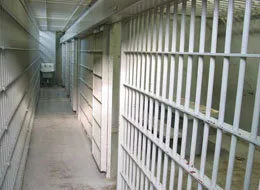
In a massive and utterly abstruse rewrite of the state's drug laws, Proposition 5's authors have crafted a bold and untested social experiment. The guinea pigs are the unfortunate souls who lives have been taken over by crack, heroin or methamphetamine. Invoking "science based" treatment as a type of talisman or cure-all, these true believers gut the ability of judges to hold accountable people repeatedly arrested for using and selling drugs, primarily methamphetamine. They do so by reducing parole from three years to six months and by depriving judges of the authority to impose meaningful sanctions for repeated drug abuse. In the Orwellian world of Proposition 5, the new form of drug treatment includes the right to keep using drugs.
It would be wonderful if "treatment" in the form of endless talk could overcome the horrible power of addition. Unfortunately, it can't. The California Judges Association, all California's drug court judges and chief probation officers oppose Proposition 5 because they know its utopian and unrealistic provisions will deepen drug dependency, not overcome it.
Proposition 5 is profoundly undemocratic because its provisions can only be changed by 4/5s of the state legislature and because it vests near total control of drug treatment in an unprecedented 23 member Treatment Diversion Commission, dominated by providers, criminal defense lawyers, drug researchers and policy activists. These are the very individuals whose livelihoods will benefit from the commission's funding decisions. It is also undemocratic because it presents to the voters a virtually unintelligible mass of statutory changes, wrapped in esoteric jargon that even law professors will struggle to comprehend.
Instead of elected judges making individualized decisions, disposition and treatment will in most drug cases devolve upon treatment providers, certified and governed by the all powerful Treatment Diversion Commission. In determining the appropriate treatment, Proposition 5 explicitly requires that judges order the treatment program recommended by the certified provider. Additionally, Proposition 5 provides very weak incentives for drug addicts to discontinue using drugs while in treatment. We know that the hammer of incarceration is often what is needed to assist an addict to get off his dependency. Jail for some users operates in a way similar to hitting bottom in the 12-step program. Conventional psychology tells us that effective reinforcement may be negative as well as positive.
The tragedy of drug dependency should not be captive to polarizing extremes. Certainly, California's criminal justice system and its revolving door prisons desperately need change. But reform, to be effective, must involve judges and probation officers as well as treatment advocates.
Proposition 5 was drafted without any public process and without seriously taking into account the well considered opinions of drug court judges who deal with drug abusers on a daily basis. It creates unaccountable and unelected bureaucracies that usurp the role of elected representative and locks them into fixed terms.
Such a radical restructuring of the way California deals with drug abuse should never be written into a ballot measure that allows for no amendments and no real critical scrutiny. Proposition 5 could have provided sensible, understandable and needed improvements to the criminal Justice System. Unfortunately, it did not. Not even close.
Related: Arianna Huffington: The Battle Over CA Prop 5: Special Interests Overwhelming the Public Interest
I voted against Proposition 5 because I have faith in you and believe your analysis is sincere and accurate. However, in general, I prefer treatment of drug offenders to incarceration. If Proposition 5 is not the answer, could you please let us know how best to address the problem?
George L Merkert III
For one thing, look at how they bought, paid for and corrupted Jerry Brown, one of the formerly reliable true progressives, the guy who ran a quixotic campaign against Clinton in 1992 pledging not to take any special interest money. Remember 1-800-92BROWN (or whatever it was)?
I guess a lot can happen between 1992 and 2008.
What they have been doing has obviously not been working. Do your research, and vote Yes on 5.
The idea of criminalizing heroin, cocaine, marijuana, etc. is totally arbitrary. Why this addiction and not mine? As a taxpayer, I would rather pay for treatment - and even for the drugs, if an addict cannot quit.
If the drugs were as cheap as a Hershey bar, perhaps users would not need to resort to criminal activity to pay for their fixes. Or if they're wealthy users, maybe they'll exchange Hershey for Godiva. I'm voting yes on 5.
At best it's a chemical dependency. It's not cancer or the flu. You don't "catch" it.
Diabetes is a disease. Dementia is a disease. Breast cancer is a disease.
Drug abuse is a chosen activity, and drug addiction is but one of its consequences.
And an addict won't change if "sentenced" to drug treatment, unless he happens to be just at that point where he actually WANTS to change.
Would that we could get rid of heart disease by justing wanting to change.
why are we just now hearing all of these specific arguments against 5-- why weren't these arguments clearly made in the materials mailed out? why aren't the arguments being made on the airwaves? why have you allowed the local media a pass on covering the propositions-- they have not devoted much time to them at all.
Lord only knows what info you might have to inform voters on the other propositions - but I guess we won't hear them in time. The sample ballot and bulletins sent out were the most poorly written I have seen in a long while.
It is a shame.
Treatment Courts have proven to be the most effective criminal justice tool to combat chemical addiction. Under a Drug Treatment Court model; punishment is the last resort. However, by refusing to impose structure; which is exactly what an addict needs and wants, is actually cruel. A Drug Court operates effectively using "tough love" in a time-tested system of "rewards and graduated sanctions"; under the National Association of Drug Treatment Court Professional’s “10 Key Components of a Drug Court. We didn’t enjoy placing anyone in jail.
I asked the jackpot question to those completing our program: "You were a hard case; missing treatment and Court. We issued several warrants and suddenly, you grabbed hold of the program and became an all-star. What was the difference?" The answer ALWAYS included the normal reasons of doing it; i.e. for my children, but "when you folks FINALLY gave me a few days in jail, it gave me time to think things over. I realized I didn't want to spend any more time there.”
California: “If it isn’t broken, don’t fix it.”
As long as the judges and prosecutors can get drunk after work, you are happy I guess. This has become a culture/class war between the right-wing alcoholics and the left-wing potheads. Only now there are many millions who want to have the right to use whatever recreational substance they like, as they do in most civilized countries.
Your opposition to Proposition 5 and disavowal of its usefulness as a tool for rehabilitation proves to me that you are not a progressive enough leader for California.
I understand you have designs on reclaiming the Governor's office in California - but you have lost your vision, Jerry Brown. You who was once a visionary leader have devolved into a government hack.
If you run for Governor again, I'm not likely to support you. Instead I will be looking for a leader who represents the vigor, the vision, the independence, and the humanity to lead the most progressive state in our union.
It is possible for him to just disagree with you. It doesn't always follow that there is a nefarious reason.
One thing that has always bothered my about liberals is the manner in which the demonize those who dare to disagree.
I'm a 5.5 years (retired) Prosecutor in the Buffalo (NY) Adult Drug Court; having attended numerous training conferences and am experienced dealing with a chemically addicted population of Participants. I've asked the jackpot question to those completing our program: "You were a hard case; missing treatment and Court. We issued several warrants and suddenly, you grabbed hold of the program and became an all-star. What was the difference?" The answer ALWAYS came to this; including the normal reasons of doing it for my children, but "when you folks FINALLY gave me a few days in jail to think things over, I realized that I didn't want to spend any more time here, ever again! It gave me time to think things over.”
We didn’t enjoy placing anyone in jail. Under a Drug Treatment Court model; punishment is the last resort. Instead, a time-tested system of "rewards and graduated sanctions" is what 20 years of American Drug Treatment Courts have proven to be the most effective criminal justice tool to combat chemical addiction.
"when you folks FINALLY gave me a few days in jail to think things over, I realized that I didn't want to spend any more time here, ever again! It gave me time to think things over."
Are you implying that A FEW DAYS in a jail - which by your definition would appear to be a structured secured environment - stopped the addiction, ended recidivism, and solved the drug problem in Buffalo? Are you implying that the few days spent in this 'contemplative' structured secured environment were without dependency therapy and STILL solved the problem? I'm unclear from your description what your program was, Prosecutor, although I welcome your knowledge of the issue from your years in the field. I also wish California sentences were mere "days" in jail rather than sentences of y-e-a-r-s for non violent drug offenders.
There is structure available OUTSIDE of prison, Prosecutor, which can be found in well-run, properly funded drug rehabilitation programs. Prop 5 offers non-violent drug offenders structured alternatives to prison that are worth the effort - and WORTH MY VOTE.
*http://orange-papers.org/orange-effectiveness.html
**http://orange-papers.org/orange-spirrel.html#judges
The law of the land is: AA is a religion (not spiritual), and as such cannot be forced on anybody.
Incarcerating drug users benefits neither society nor the individual using the drugs. Sending drug users to prisons harms families. Filling our prisons with drug users is expensive and takes penal resources away from violent offends that harm society to a much greater extenet than do recreational or habitiual drug users.
Nobody benefits from this probition.
Well, I guess one could say that "Big Incarcaration" benefits.